From an Oxford bicycle repair shop to Britain's biggest car maker, the Castle Bromwich Spitfire project, the college and foundation he endowed and the record of his political funding.
Morris, later Lord Nuffield, began as an Oxford bicycle repairer and went on to found Morris Motors. He also endowed Nuffield College and the Nuffield Foundation, leaving a substantial charitable legacy.
William Richard Morris, 1st Viscount Nuffield, built Morris Motors from a bicycle repair business in Oxford into one of Britain's largest car makers. He also endowed Nuffield College, the Nuffield Foundation and a range of other charities. His record includes a documented role as a financial backer of Sir Oswald Mosley and British fascism, which historians have examined closely alongside his industrial and philanthropic work.
Who was William Morris, Viscount Nuffield?
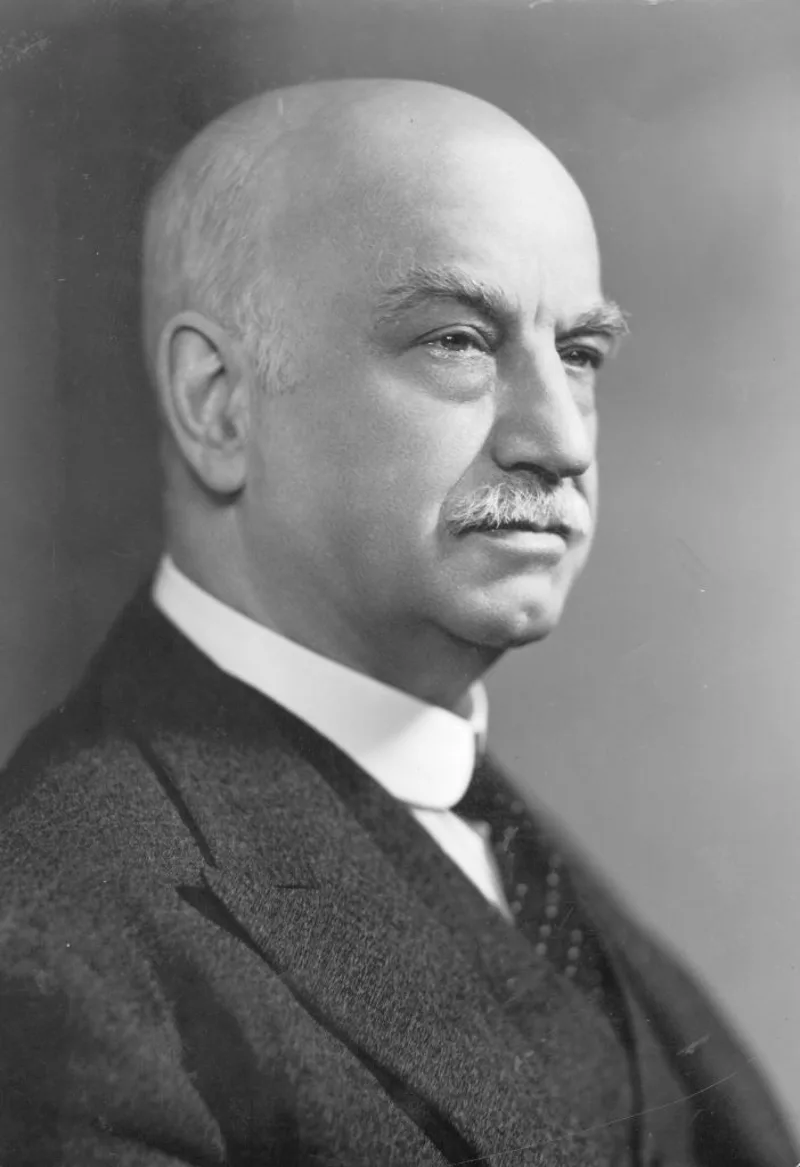
William Richard Morris, 1st Viscount Nuffield, was an English motor manufacturer and philanthropist, born in Worcester in 1877 and died in 1963. He founded Morris Motors and set up the Nuffield Foundation, and he took his title from the village of Nuffield in Oxfordshire, where he lived.
He was born at 47 Comer Gardens, a terraced house in Worcester, the son of Frederick Morris and Emily Ann, the daughter of Richard Pether. When he was three years old the family moved to 16 James Street in Oxford, and the city shaped the rest of his working life.
Morris married Elizabeth Anstey on 9 April 1903, and they had no children. He died in August 1963 aged 85, and the baronetcy and his two peerages became extinct with him.
From an Oxford bicycle shop to a car empire, a Spitfire factory that never delivered and a legacy of colleges and charities.
How did Morris start in business?
Morris left school at fifteen and was apprenticed to a local bicycle seller and repairer. When his employer refused him a pay rise, he set up a repair business at sixteen, working from a shed behind his parents' house. He then opened a shop on High Street, where he began to assemble bicycles under his own name.
He also raced his own machines, competing as far away as south London. He was champion of Oxford (City and County), Berkshire and Buckinghamshire over several distances.
He began to work with motorcycles in 1901, designing the Morris Motor Cycle. In 1902 he acquired buildings in Longwall Street, from which he repaired bicycles, ran a taxi service, and sold, repaired and hired out cars.
He held agencies for several car makers, including Arrol-Johnston, Belsize, Humber, Hupmobile, Singer, Standard and Wolseley. In 1910 the business moved into new premises that a local newspaper called The Oxford Motor Palace, and the name changed from The Oxford Garage to The Morris Garage.
How did Morris Motors grow in the 1920s?
Morris Motors expanded quickly after the First World War. Car output rose from 400 cars in 1919 to 56,000 in 1925, and Morris built or bought factories at Abingdon, Birmingham and Swindon to add to his works in Oxford.
The company's first car, the bullnose Morris, was designed in 1912 and built at a disused military training college in Cowley. It used bought-in components, including engines and axles from the United States. The outbreak of war turned the new factory to munitions, including 50,000 minesinkers for the North Sea Minefield.
Morris pioneered the introduction of Henry Ford's mass production techniques to the United Kingdom.
When suppliers ran into trouble, Morris often bought them outright. He took over the Hotchkiss engine business in Coventry in 1923 and renamed it Morris Engines Limited, bought the back-axle maker EG Wrigley and Company, and purchased the manufacturer of SU carburettors in 1926.
In February 1927 Morris paid 730,000 pounds for the assets of the collapsed Wolseley Motors, competing against Herbert Austin and others. The first Morris Minor, an 8 hp car with an overhead camshaft that Wolseley had been developing, appeared in 1928. The MG Midget of 1929 took its basis from the Minor.
He had also formed a joint venture with Edward G Budd of the Budd Corporation, called the Pressed Steel Company, which built a factory at Cowley in 1926. The two men's disagreements ended in 1930, when the High Court obliged Morris to surrender his holdings in the venture, and he lost the capital he had invested.
What happened in the 1934 Morris factory strike?
In July 1934 about 180 workers walked out of a Morris factory in what historians describe as a spontaneous strike. The reasons ranged from low wages to poor working conditions, and the workers did not have a list of specific demands.
Morris was politically opposed to trade unions and had said he would refuse to recognise any unions at his plant. Before the strike there had been very little union activity in his factories. The Communist Party of Great Britain sent an experienced activist, Abe Lazarus, who later became a notable political figure among Oxford's working classes.
On the eleventh day of the strike, the managers gave way. Wages were increased, and the company agreed to allow trade unions inside its factories, a settlement that marked the first successful strike in a Morris plant.
The result strengthened the Labour Party in Oxford, increased membership of the Transport and General Workers' Union, and gave the Communist Party the support of most Morris factory workers. It also helped communist beliefs gain wider acceptance across the city.
Why did the Castle Bromwich Spitfire project fail?
Nuffield offered his expertise to build a large Spitfire factory at Castle Bromwich, but by May 1940 not one Spitfire had been built there. The project's cost had grown from 1.125 million pounds to 4.15 million pounds, and Lord Beaverbrook took over aircraft production.
The Air Ministry ordered the Spitfire in March 1936, but by early 1938 no single aircraft had been made. Nuffield offered his own expertise and that of the Morris Organization to design and build a vast new factory at Castle Bromwich, claiming output four times that of any rival plant.
The Treasury opposed the idea at first, worried about his control over the design and the costs. The Nuffield Project was approved at 1.125 million pounds with Morris in charge, but within a year the cost had reached 4.15 million pounds, largely because the site layout and design kept changing.
Nuffield had claimed he could produce 60 Spitfires a week, yet in May 1940, at the height of the Battle of France, the factory had produced none. That month Beaverbrook was placed in charge of all aircraft production, Nuffield was removed, and the plant was handed over to Vickers, the parent company of Supermarine.
Building work continued for years. By 1942 Vickers had found cracks in the main building's brickwork, caused by different types of brick expanding at different rates, and the Treasury did not sign off the project's accounts until March 1944.
How did Morris's political funding become controversial?
Historians describe William Morris as politically anti-union and antisemitic, and they note that he financed Sir Oswald Mosley and the British fascist movement. He gave Mosley large sums between 1930 and 1932, and he stopped publicly supporting British fascists after 1932.
In 1930 he gave 50,000 pounds to finance Mosley's New Party, which was later absorbed into the British Union of Fascists. Between 1931 and 1932 he gave a further 35,000 pounds to fund the antisemitic newspaper Action. Mosley described Morris as his chief backer and spoke highly of him.
Morris ceased to give public support to British fascists after 1932, but he kept his subscription to antisemitic newspapers for many years afterwards. In 1934 he issued a public statement through The Jewish Chronicle repudiating fascism and antisemitism, and he announced a donation to the Central British Fund for German Jewry.
The historian Dave Renton describes Morris as the most important example of a wealthy supporter of Mosley's movement. Renton also describes him as fiercely antisemitic in private, citing a long subscription to an antisemitic newspaper, and says that Morris's personal papers contain antisemitic and pro-fascist remarks.
The workers in his factories are a separate part of the story. Despite Morris's own politics, workers who organised against low pay and harsh conditions helped to fuel a wave of left-wing political activism across Oxford in the 1930s.
Was there an attempt to kidnap Lord Nuffield?
Yes. Patrick Tuellman, a serial blackmailer, planned to kidnap Lord Nuffield in May 1938, asking for 100,000 pounds. An accomplice had betrayed the plot, and Oxford City Police prepared to catch him during the attempt.
Nuffield was briefed by the police and sat in on every planning meeting. On 28 May officers intercepted Tuellman's car in Cowley and found two automatic pistols, ammunition and items of disguise.
Birmingham Assizes tried Tuellman and convicted him on 22 July 1938. He received seven years of penal servitude.
What did Morris give to philanthropy?
Morris gave much of his fortune to charitable causes. He founded Nuffield College, Oxford, in 1937 as a postgraduate college, and it became the university's first co-educational college. In 1943 he also set up the Nuffield Foundation with an endowment of 10 million pounds, to advance education and social welfare.
In 1937 he gave 50,000 pounds to expand the Sea Cadet Corps and donated 60,000 pounds to the University of Birmingham for a building to house a cyclotron. In December 1938 he offered factory-built iron lungs to any hospital in Britain and the Empire that asked for one, and more than 1,700 were distributed.
Nuffield Place, his former home in Oxfordshire, passed to Nuffield College at his death and was later taken on by the National Trust, which opens it to the public. Several buildings and institutions carry his name, including a theatre at the University of Southampton and a care home in North Oxford named after his wife.
What honours did Morris receive?
Morris received a series of honours that track his rise. He was appointed an OBE in 1918, created a baronet in 1929, raised to the peerage as Baron Nuffield in 1934, and made Viscount Nuffield in 1938.
Further recognition followed: a Fellow of the Royal Society in 1939, a Knight Grand Cross in 1941 and a Companion of Honour in 1958. In 1937 he became Honorary Colonel of 52nd (London) Heavy Anti-Aircraft Regiment, Royal Artillery, a role he kept with its postwar successor.
How did Morris Motors become part of BMC?
In 1952 Morris Motors merged with the Austin Motor Company to form the British Motor Corporation, known as BMC. Nuffield served as its chairman for the first year.
He retired as a director of BMC in December 1952, at the age of 75, and took the title of honorary president. Leonard Lord succeeded him as chairman, but Nuffield still attended his office regularly and advised colleagues.
Earlier, in 1935, he had added Wolseley Motors to the Morris portfolio, and in 1938 he bought the bankrupt Riley (Coventry) and Autovia companies from the Riley family and sold them to Morris Motors.
William Morris career and legacy summary
| Year | Event | Detail |
|---|---|---|
| 1877 | Born in Worcester | 10 October; family moved to Oxford when he was three |
| 1901 | Motorcycle design | Designed the Morris Motor Cycle |
| 1912 | Bullnose Morris designed | Built at a disused military training college in Cowley |
| 1919 | Car output | 400 cars |
| 1925 | Car output | 56,000 cars |
| 1927 | Wolseley Motors assets | 730,000 pounds paid |
| 1934 | Factory strike | About 180 workers; wages raised and unions admitted |
| 1936 | Spitfire ordered | Castle Bromwich project followed |
| 1937 | Nuffield College founded | Postgraduate, first co-educational college of the university |
| 1938 | Kidnap attempt | Tuellman convicted on 22 July; seven years |
| 1943 | Nuffield Foundation founded | Endowment of 10 million pounds |
| 1952 | BMC formed | Morris Motors and Austin merged |
| 1963 | Death | 22 August, aged 85 |