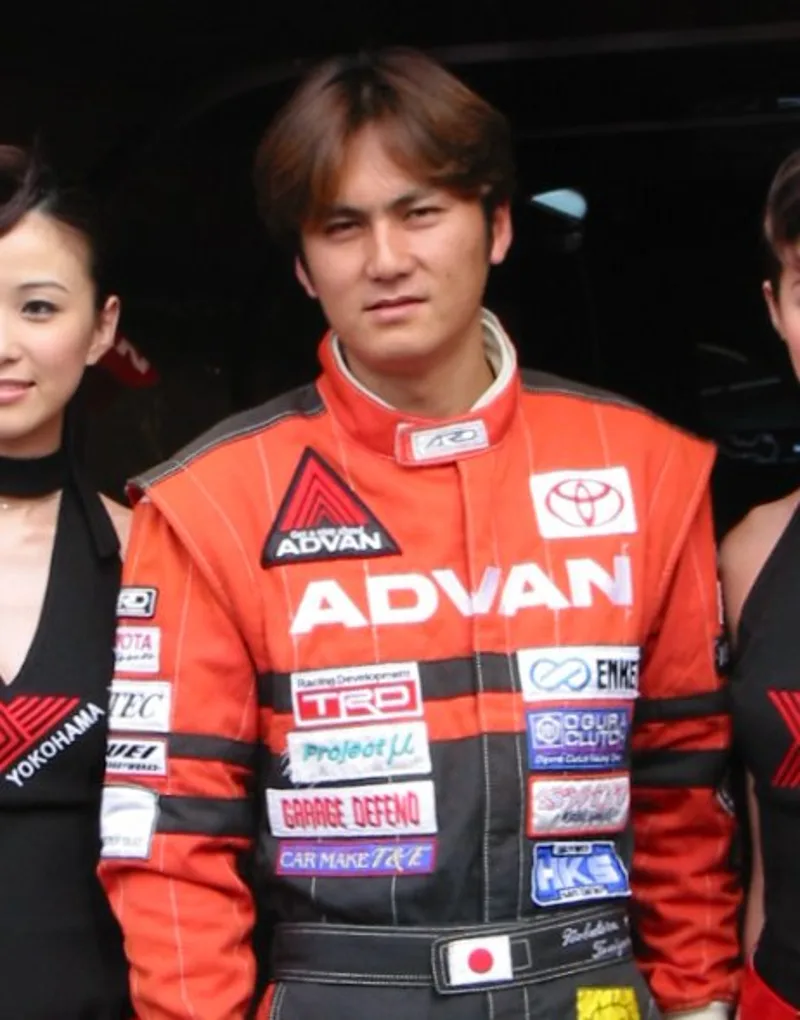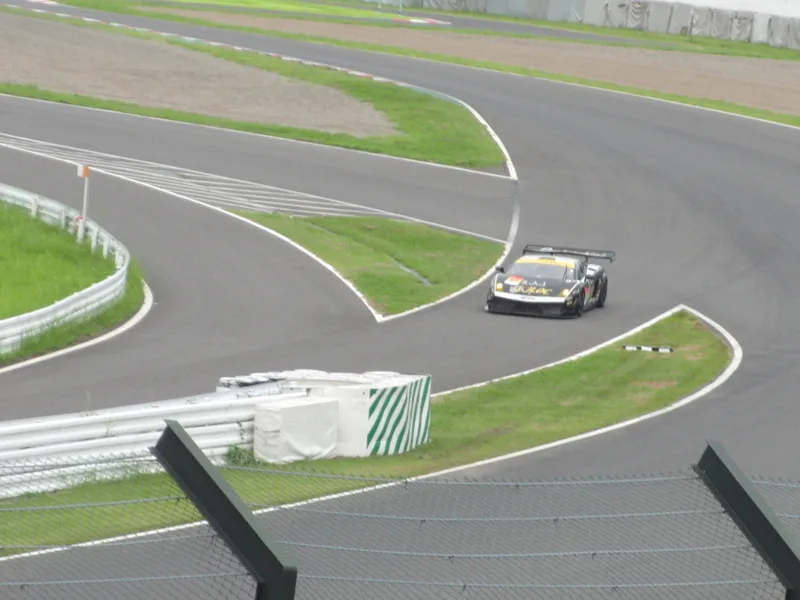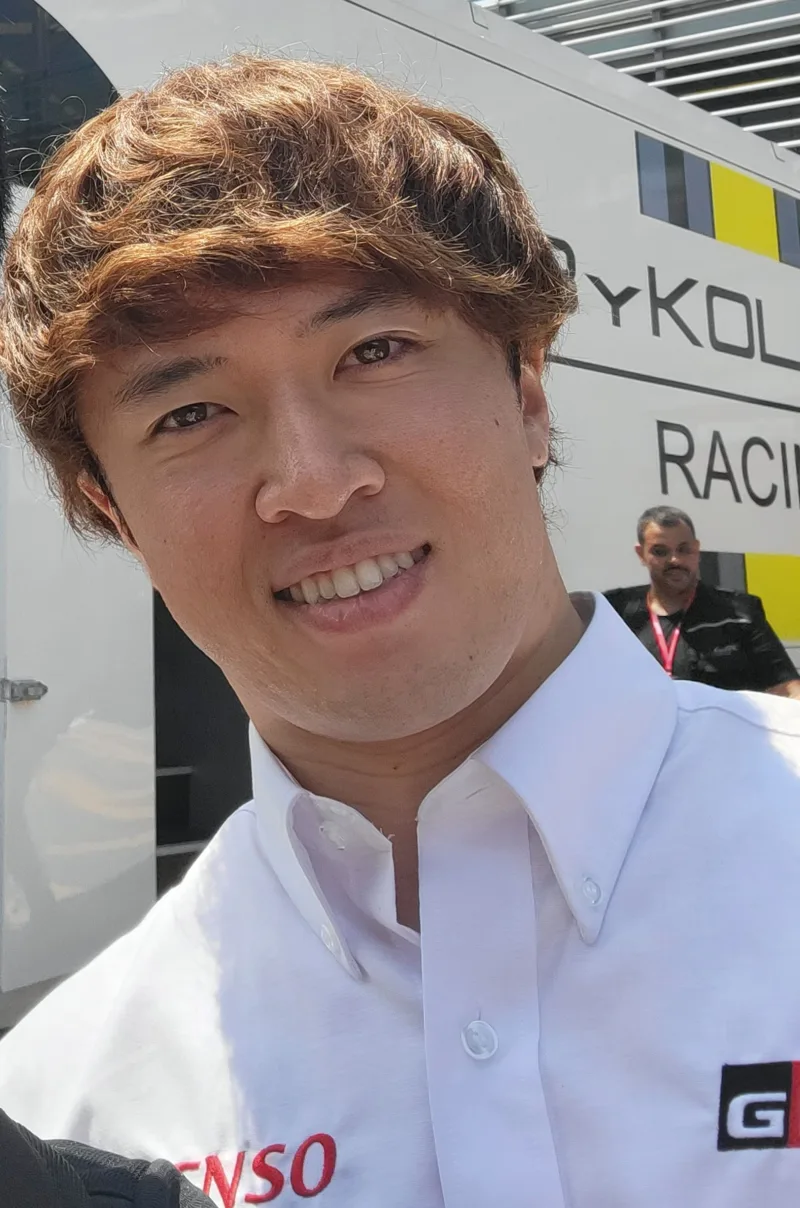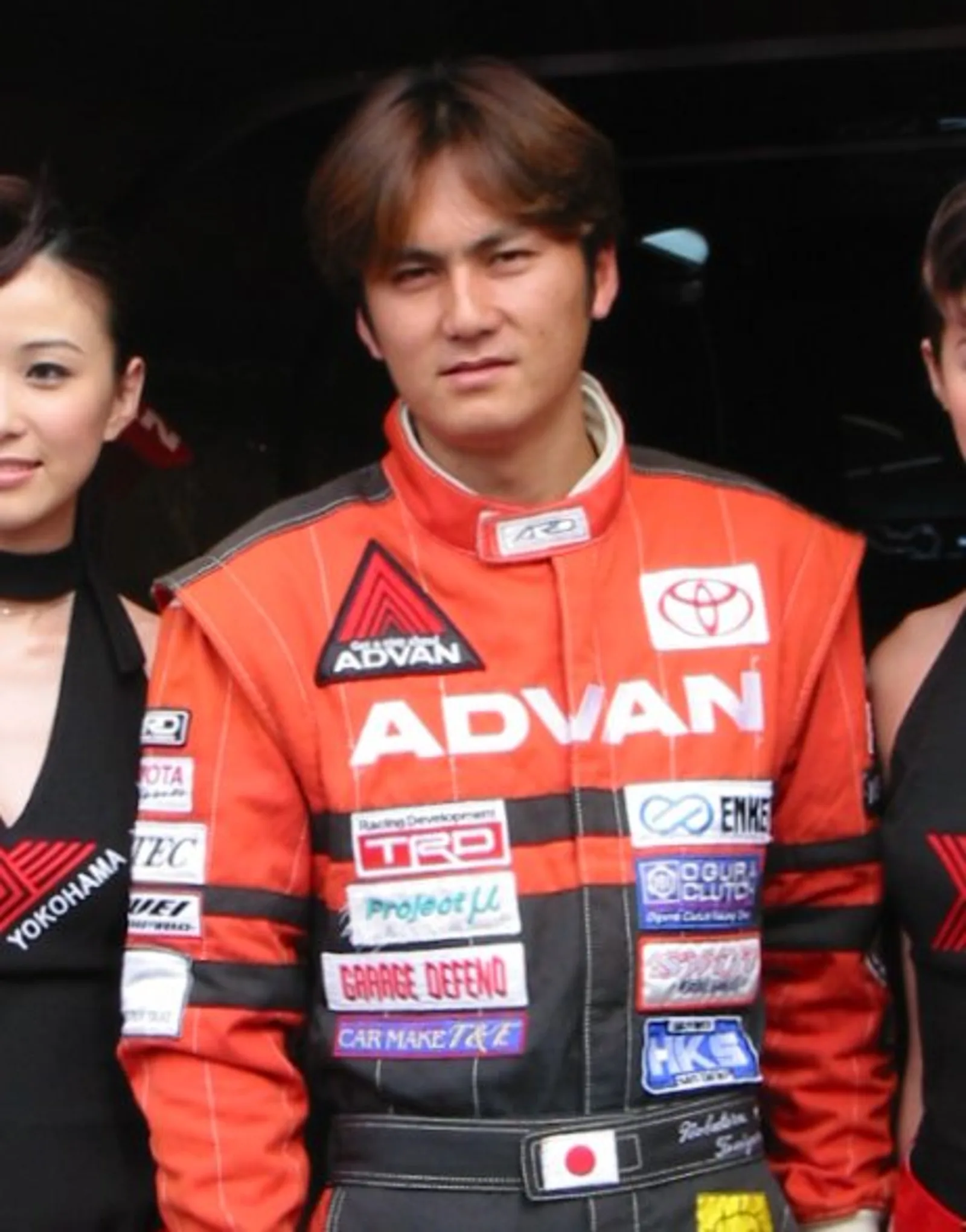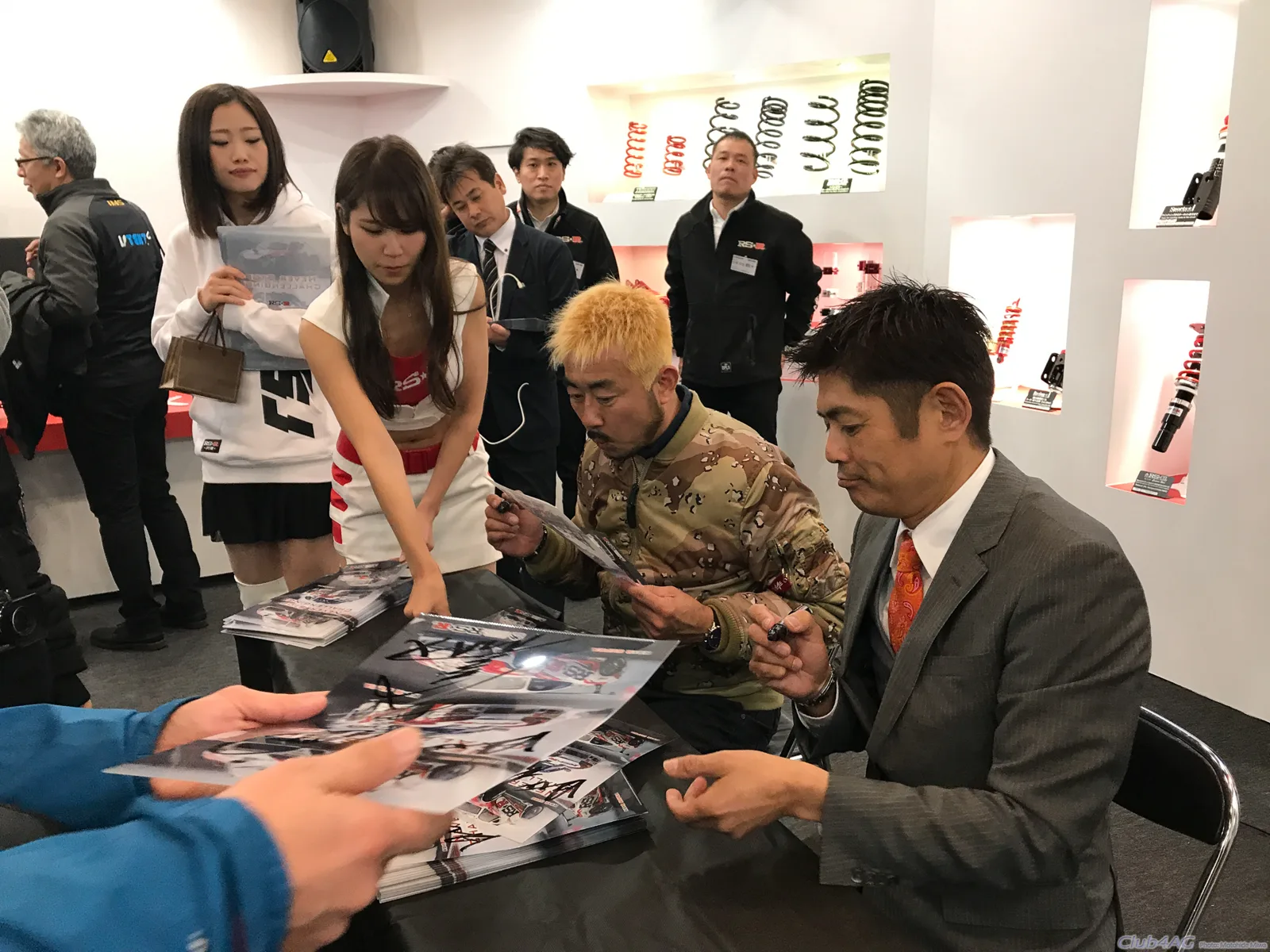
A former street racer, Orido won Super GT's GT300 title in 1997 and 2009, raced in GT500 and at Le Mans, and later judged D1 drifting.
Manabu Orido is a Japanese driver born in 1968 who won the GT300 class in Super GT in 1997 and 2009. He also raced GT500, the 2004 Le Mans 24 Hours and D1 drifting, and he won Super Taikyu ST-1 titles in 2018 and 2019.
Manabu Orido, known as MAX, is a Japanese racing driver who has competed across Super GT, endurance racing, drifting and the Super Taikyu series. He won the GT300 class championship in 1997 and again in 2009, and he remains active in several series, currently with apr. His career shows a driver who moved between circuits, drift events and endurance races with equal ease.
Who is Manabu Orido?
Orido was born on 3 December 1968 in Funabashi, Chiba, and is known by the nickname Monkichi. His current machines are a Toyota GR86 GT300 with apr in Super GT, an Aston Martin Vantage GT8R in Super Taikyu, and a BMW M4 GT4 in GT World Challenge Asia.
Outside racing he is a driving instructor, a television host, a simulator operator and the owner of two aero parts brands.
A street racer who became a two-time GT300 champion and later judged drifts, raced at Le Mans and built his own aero brands.
How did Orido start out in racing?
Orido began as a street racer before turning to touge, the mountain-pass style of driving. He made his professional debut in 1990, when he entered a drift contest organised by the magazine CARBOY. He won the event as grand champion, sponsored by the Bandoh Chain of Commerce, and then moved on to circuit racing.
In 1992 he made his debut in the Fuji Freshman series for Yokohama Rubber. He won a class in the NA-1600 category at Fuji and was a three-time winner in the N2-1600 class at Suzuka. Those results built his reputation before he reached the national sports car championships.
How did Orido become a GT300 champion?
He made his first JGTC appearances in 1996, driving part-time for Team JUN and Team Taisan Jr. In 1997 he joined Team Bandoh full-time and won the GT300 championship that year. He followed it with second place overall in 1998 and third in 1999, showing consistent pace across the seasons.
He continued to race in one-make events alongside his main programme. In May 2000 he took part in a commemorative Altezza one-make race at Fuji Speedway, driving an SXE10 RS200 Z Edition for TOM'S and Uetake Racing, and he finished second overall.
What were Orido's GT500 seasons like?
In 2000 he moved up to GT500 with Team Tsuchiya Engineering, driving a Toyota Supra alongside Mitsuhiro Kinoshita. The car was consistently in the points, but it did not match his GT300 form. The team's best finish was seventh at Mine, and the pair finished 18th overall with 11 points.
The following year Seiji Ara joined him, and the team's Supra struggled for pace against the other Toyota teams. Its best results were two seventh-place finishes at Motegi and Suzuka, and it failed to qualify at Fuji. Team Tsuchiya again scored 11 points and finished 19th.
In 2002 Orido drove for Team SARD with the French driver Jeremie Dufour, and at the opening round at TI Circuit Aida he took his first GT500 podium with third place. The team finished 14th overall with 33 points. In 2003 he partnered Dominik Schwager, and the team won its first GT500 race at Autopolis. They finished sixth overall, which was his best season in the class.
In 2004 he went back to Team Tsuchiya with Schwager, but the Nissan Fairlady Z dominated that season and the ADVAN Supra was inconsistent. Still, the pair scored podiums at Sugo and Autopolis, and the team finished 12th overall. In 2005 the team won the first race at Okayama in the Super GT era, finishing 13th overall with 26 points.
The 2006 season brought the Lexus SC430 GT500, which Team Tsuchiya ran with Takeshi Tsuchiya. The team trailed the leading Toyota squad TOM's, and the pair finished 19th overall. In 2007 they scored 20 points and ended 17th, as the Autobacs Racing Team Aguri NSX dominated the season.
Why did Orido return to GT300 in 2008?
Orido returned to GT300 in 2008 with Racing Project Bandoh, which had just debuted a new Lexus IS350 GT300 car mid-season. The team had a rough start with the new machine, but Orido won a race at Twin Ring Motegi and finished the season 12th overall.
He was then able to rebuild the team's form. The 2009 season began with a victory in the first round at Okayama, followed by consistent points finishes and podiums at Sepang and Autopolis. The team battled the JIMGAINER Ferrari F430 until the final race at Motegi, where Orido and his teammate Tatsuya Kataoka finished third to take the title.
How did the title defence go in 2010?
The 2010 season was much harder. The team started strongly with a podium at the first round in Suzuka, but the three-year-old Lexus IS350 lost pace as the season went on. They could not close the gap to the faster leaders and finished the year eighth overall with 33 points.
The Bandoh team then announced it would race a Lexus SC430 in GT500 for 2011. Orido moved to Team JLOC, known for its Lamborghini cars, and drove the No. 87 Gallardo RG-3 with Atsushi Yogo. He finished 11th overall that first year with 26 points.
What did Orido achieve with JLOC?
JLOC's 2012 season started badly, but Orido finished third in the next two races at Sugo and Suzuka and again at Motegi. That gave him eighth overall for the year. The 2013 season was disappointing, with two retirements and only three points finishes, and he ended 14th with 22 points.
In 2014 the Lamborghini lacked pace against most of the GT300 field. The one real highlight came at Sugo, where a sharp tyre strategy by the JLOC team gave the No. 88 MANEPA Lamborghini its first race victory. The 20 points from that win were the only points Orido scored that season, and he finished 16th.
He moved to the Huracan GT3 in 2016, and the car helped him to one podium and five points finishes, placing him 11th with 30 points. In 2017 he had another podium and finished tenth with 28 points before he left the team.
What happened to Orido's Super GT career after 2017?
For 2018 Orido left JLOC and took a sabbatical from Super GT. He became an executive advisor to Team WedsSport Bandoh, and late that season he replaced Kota Sasaki at Team apr from round six at Sugo onwards. He scored no points.
He returned to full-time Super GT in 2019 with apr, driving the Toyota Prius PHV GR Sport GT300 alongside Hiroaki Nagai. The team had little success in those years. Orido took no points in 2019, one point in 2020 for 29th overall, and eight points for 21st in 2021.
In 2022 apr moved to the Toyota GR86 GT300. Orido won one podium and scored a points finish, and the team finished the season with 14 points for him and 19th overall.
Did Orido race at Le Mans?
Yes. In 2004 he drove for the Choro-Q Racing Team in the 24 Hours of Le Mans in a Porsche 911 GT3 RSR. The team finished second in the GT class and 12th overall. The same year he raced in the Le Mans Endurance Series, finishing fifth in the GT class.
He also raced at the 2008 FIA World Touring Car Championship in rounds ten to twelve for Team Chevrolet RML, finishing with two points and 19th overall.
How did Orido perform in drifting?
Orido became one of the first judges of the D1 Grand Prix from 2001, and he also entered the series as a driver. In 2005 he drove a Toyota Supra for Team RS-R and won the third round, finishing 12th overall. He later returned with an Aristo in 2009, finishing 15th.
He had a podium at round four in 2010 and finished eighth overall that year. He won the third round in 2011 and placed 13th. In 2015 he won the fourth round at Ebisu, although he competed in only two rounds that season and finished 23rd overall.
Orido also competed in Formula Drift events, and from 2011 he joined Team RS-R in the Formula D Asia series.
What did Orido win in endurance and Asian racing?
In 2009 Orido won the overall title at the Malaysia Merdeka Endurance Race with the Petronas Syntium team, driving a BMW Z4 M Coupe to first place after 306 laps. The team finished third in class at the 2010 Dubai 24 Hour in the 24H Series.
Super Taikyu has been a major part of his recent career. He raced for D'station Racing from 2018, and he won back-to-back ST-1 class titles in 2018 and 2019 in a Porsche 911 GT3 Cup. He moved to ST-Z in 2020 and then back to ST-1 in 2022, where his team finished second in class with two wins and six podiums.
In 2023 Orido joined YZ Racing with Studie Team in GT World Challenge Asia, driving a BMW M4 GT4 with Masaki Kano. The pair scored six race wins and took the GT4 class title, along with the Japan Cup. At Okayama he famously pushed his car over the finish line after running out of fuel on the last corner, having been leading until that point.
Career summary by season
| Season | Team and car | Result |
|---|---|---|
| 1997 | Team Bandoh, GT300 | GT300 champion |
| 2000 | Team Tsuchiya, Toyota Supra, GT500 | 18th overall, 11 points |
| 2002 | Team SARD, GT500 | 14th overall, 33 points, first GT500 podium |
| 2003 | Team SARD, GT500 | Sixth overall, 57 points, first GT500 win at Autopolis |
| 2008 | Racing Project Bandoh, Lexus IS350 | 12th overall; Motegi win |
| 2009 | Racing Project Bandoh, Lexus IS350 | GT300 champion with Tatsuya Kataoka |
| 2011 | Team JLOC, Lamborghini Gallardo RG-3 | 11th overall, 26 points |
| 2014 | Team JLOC, Lamborghini Gallardo | 16th overall; Sugo win for the team |
| 2022 | apr, Toyota GR86 GT300 | 19th overall, 14 points |
What does Orido do outside racing?
Orido teaches safety driving at NATS, the Nihon Automobile Technical High School. Fans of the long-running Best Motoring DVD series know him as one of three presenters on its Hot Version segments, with Nobuteru Taniguchi and Keiichi Tsuchiya. He also coaches drivers on a simulator that he opened in 2013.
In 2013 he opened the 130R Yokohama professional driving simulator, where he coaches young drivers who want to improve their skills. He owns the RIDOX brand, which sells custom aero parts for the fourth-generation Toyota Supra, designed with Varis. His personal Supra has been featured in several Hot Version segments and in video games, including a rival car named after him in a Tokyo Xtreme Racer title.
In 2018 he launched AKEa, a body kit brand for modern cars. Its kits for the first- and second-generation Toyota 86 and the fifth-generation Supra are offered in unpainted, painted or carbon fibre versions.