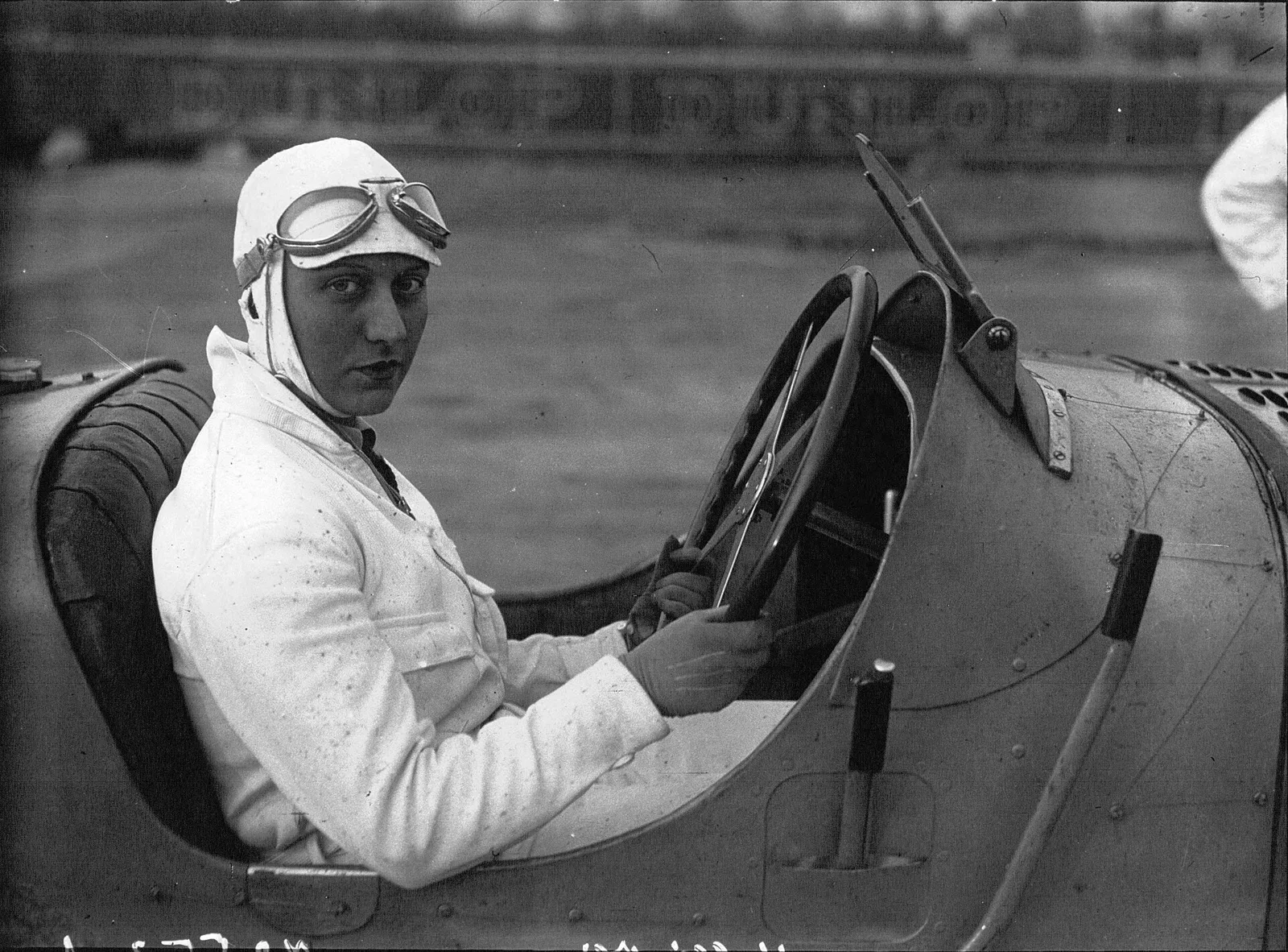
From Paris dance stages to Bugatti speed trials, a 1936 Brazil crash and a 1949 accusation that cost her sponsors.
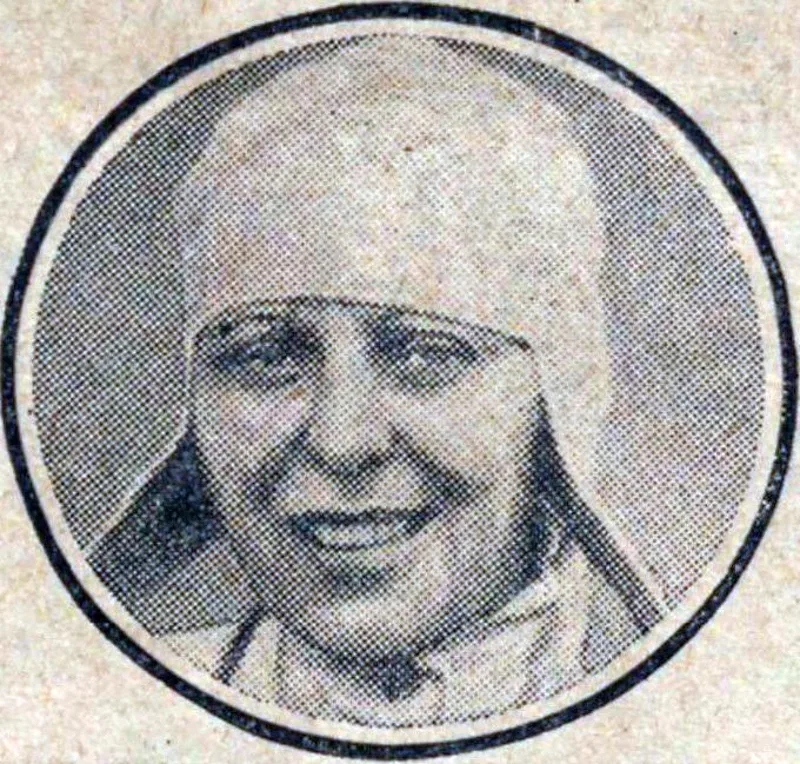
Helle Nice, born Mariette Helene Delangle, was a French dancer who became a racing driver in the late 1920s. She won the Grand Prix Feminin and the Actor's Championship in 1929 and raced across Europe and the United States until a 1949 accusation of collaboration ended her career.
Helle Nice began as a Paris dancer and became one of the few women to race in the late 1920s and 1930s. Her 1929 Grand Prix Feminin win opened a racing career that also took her to American dirt tracks and ended, in effect, with a 1949 accusation that cost her sponsors.
Who was Helle Nice?
Helle Nice was the stage name of Mariette Helene Delangle, a Frenchwoman born on 15 December 1901. She started out as a dancer in Paris, then turned to motor racing and competed in Grand Prix events, hillclimbs and rally events before her death in 1984.
Her father was a postman in Aunay-sous-Auneau, a village not far from Paris. When she was three she watched the 1903 Paris-Madrid race pass near Bourdiniere. In 1915 she moved with her mother to Sainte-Mesme, and some three years later she settled in Paris, where she rented apartments in the 17th arrondissement for about a decade.
A dancer who became a racer, competing in Grand Prix, hillclimb and rally events when few women did.
How did she build a career as a dancer?
In Paris she worked as an artist's model and as a dancer. She became the dance partner of Celestin Eugene Vandevelde and adopted the name Helle Nice.
Her act with Vandevelde performed at the Hotel Ritz and at Olympia Hall. By 1927 she was well known enough to be billed at the Casino de Paris, in a show headlined by Maurice Chevalier and called Wings over Paris.
A skiing trip at Megeve in 1929 injured the cartilage in her knee. She took a year to recover and then chose to move into motor racing rather than go back to the stage, a switch that took her into a field where women were rare.
How did she first try motor sport?
Her driving licence came in 1920, and she used a Citroen for a road trip around France. In 1921 she travelled to England with two men from a car accessory business, planning to race Gregoire cars at Brooklands, but the cars were never delivered and the race did not take place.
She was disappointed to find that the race was for men only. Her driving was not idle, however, and by the end of the decade she had won races in her own right.
What were her first results as a racing driver?
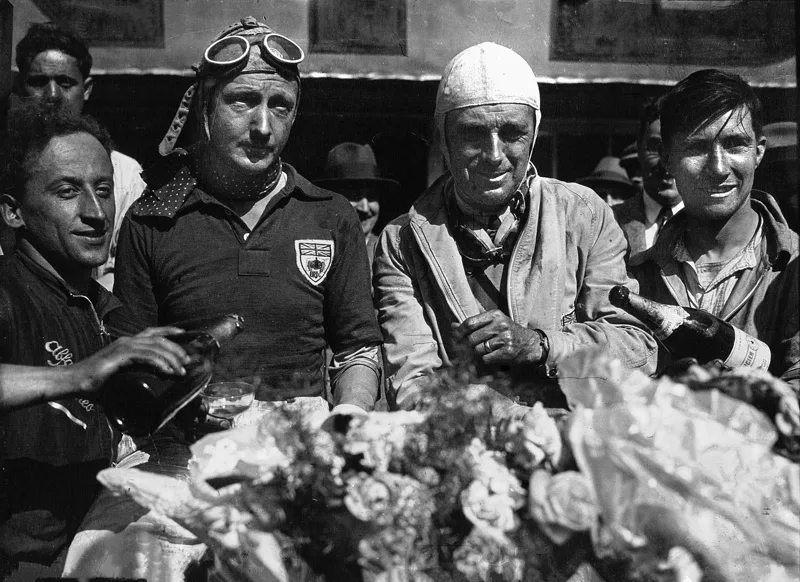
In June 1929 she entered the Grand Prix Feminin, a women's race, and came first. She also won the Actor's Championship that year, driving a Bugatti Type 43A roadster, and she claimed a 1928 Rosengart victory at Le Touquet.
Her preparation was demanding. She drove ten laps a day at the Autodrome de Linas-Montlhery and came first in an Omega-Six car during training. A sponsorship deal with Lucky Strike cigarettes followed, and she later bought a yacht and a black Hispano-Suiza.
How fast did her Bugatti runs go?
Ettore Bugatti asked her to take the wheel of a Type 35 for speed trials at Montlhery. In December she recorded 196.871 km/h over 5 km, and her best lap reached 197.7 km/h (123.56 mph). She bought one of the cars from those trials for 40,000 francs.
Her Bugatti period brought hard luck as well. At the Moroccan Grand Prix in Casablanca a fatal practice crash led her to withdraw. At the Le Mans circuit she later finished third of three.
What was her 1930 American tour like?
In 1930 she toured the United States as an exhibition driver on dirt tracks, practising at Harrington Park in New Jersey. She was paid US$200 for each event, and she was nicknamed the Speedbowl Queen while holding an Esso sponsorship deal. Her first appearance was at Woodbridge, and her engagement was extended after eight weeks.
Promoters claimed she was first woman to race cars in US. Earlier women, Joan la Costa and Elfreida Mais, had raced cars in the country, though none had raced on dirt tracks.
The tour carried real hazards. She raced at Langhorne Speedway, where deaths were frequent. Bill Albertson, who had shared tips with her, died at Orange County Fair Speedway in 1930. Herman Schurch, a friend of hers, lost his life on a practice run the following year.
She hit a pothole and crashed at Winston-Salem, North Carolina. After a stay in Florida she went back to Europe.
What did her Continental results look like in 1931 and 1932?
In July 1931 she took second place in the Coupe des Dames at Reims, behind Anne Itier. A month later she came ninth at the Grand Prix du Comminges and was the only woman in the field at the Monza Grand Prix in Milan.
In 1932 she claimed the Rallye Paris - Saint-Raphael Feminin, sharing the Alfa Romeo 6C with Odette Siko. At the Algerian Grand Prix in Oran she was second in the 2-litre category, but at the Moroccan Grand Prix she failed to qualify.
What happened in 1933 and at Dieppe?
A burst appendix cut her 1933 season short, and she entered fewer events. At the Monza event, which took place on a separate track on the day of the Italian Grand Prix, she started ninth. The women's Grand Prix went to her again at Montlhery.
The following year she raced the final of the Grand Prix de Dieppe, although women were not normally permitted in finals, and finished seventh. Her friend Jean Gaupillat had crashed into a tree in qualifying, and he later died.
Which results stand out in her racing career?
| Year | Event | Result |
|---|---|---|
| 1929 | Grand Prix Feminin | Won |
| 1929 | Actor's Championship | Won in a Bugatti Type 43A roadster |
| 1930 | US dirt track tour | Exhibition driver paid US$200 per event |
| 1931 | Coupe des Dames, Reims | Second to Anne Itier |
| 1932 | Rallye Paris - Saint-Raphael Feminin | Won, sharing the car with Odette Siko |
| 1933 | Monza Grand Prix | Started ninth |
| 1936 | Sao Paulo Grand Prix | Third before the crash |
| 1937 | Yacco oil endurance trials, Montlhery | Team set ten world records |
| 1939 | Comminges, Renault 4CV | Final race win |
What happened at the 1936 Sao Paulo Grand Prix?
She travelled to Brazil in 1936 with Arnaldo Binelli to race in two Grand Prix events. In the Sao Paulo race she was running third, behind Manuel de Teffe, when her Alfa Romeo struck a hay bale and ran into the grandstand. The impact killed six people, and more than thirty others were hurt.
She was thrown from the car and remained unconscious for three days. President Getulio Vargas came to see her in hospital. Back in France she was caught up in a scandal over importing cars without paying duty, and several other racing drivers, including Robert Brunet and Raymond Sommer, were convicted with her.
What did the 1937 Yacco trials involve?
In 1937 Nice took part in the Yacco oil endurance trials at Montlhery with three other women. She drove a Matford with a V8 engine in turns with them, and the team set ten world records over ten days and ten nights.
The following year Fritz Huschke von Hanstein asked her to join him in the Chamonix rally, driving a DKW. Her final race win came in 1939, in a Renault 4CV in the Comminges, shortly before war broke out.
Why was she accused of being a Gestapo agent?
Louis Chiron, a noted racing driver, accused her in 1949 of having been a Gestapo agent during the war, and he did so without evidence. The remark was made at a Monaco party held after the postwar Monte Carlo Rally, and the claim was never backed by facts.
Her biographer Miranda Seymour looked into what the evidence could have been. She found a picture of a German general in Nice's archives, and German archives in Berlin held no record that Nice had collaborated. Even so, the allegations were enough to deter sponsors and end her racing career.
In 1951 she was due to take part in the Nice Grand Prix, but a young Jean Behra replaced her at the last minute. No later racing attempt by her is on record.
How did her final years unfold?
In her later years Nice had little money and relied on the charity La Roue Tourne. She moved to Magagnosc in 1957, and Binelli left her three years later. She worked as a chauffeur and lived above the charity's offices in Paris.
She had returned to Nice by September 1984, when she was admitted for an operation on her legs. The operation was followed by a coma from which she never woke. She died in Nice in 1984, and La Roue Tourne arranged a memorial service before her ashes went to Sainte-Mesme.
How was her name brought back?
Interest returned in 2005, when Miranda Seymour published The Bugatti Queen, a biography that revived a name which had faded from view. Seymour has also conceded that parts of the book are conjecture.
In 2010 the Helle Nice Foundation put up a plaque in the graveyard. Her 1927 Bugatti Type 35B, once owned and raced by Brian Brunkhorst, sold at auction in 2014 during the Pebble Beach Concours d'Elegance for $2,970,000.
Why is her career still remembered?
She competed in Grand Prix, hillclimb and rally events in an era when few women raced. Her 1929 wins, her American dirt track tour and her Brazil crash form part of a record that the biography and the plaque helped bring back into view.
What set her apart from other drivers?
Few women raced against men in that period, and Nice did so in Grand Prix events, hillclimbs and rallies. She won the women's Grand Prix Feminin in 1929, and in 1932 she took a rally win in an Alfa Romeo 6C with Odette Siko.
Her 1931 entries show the same pattern. At Reims she raced against male drivers such as Louis Chiron and Marcel Lehoux, and at Monza she was the only female entrant.