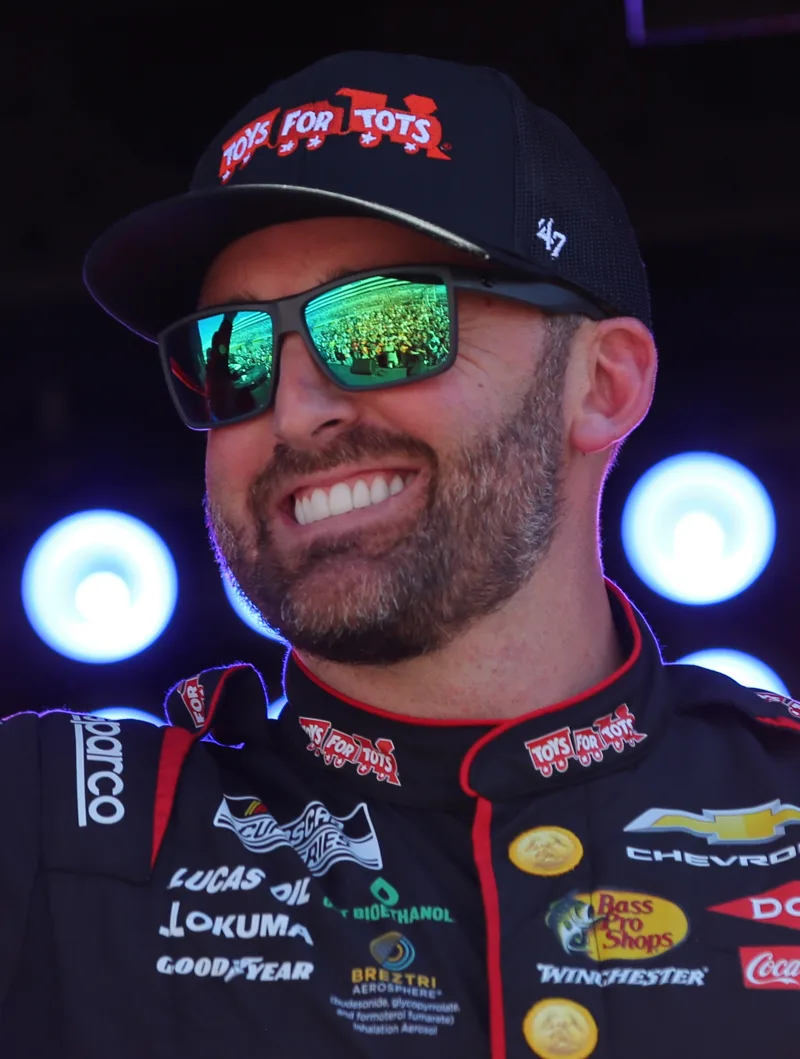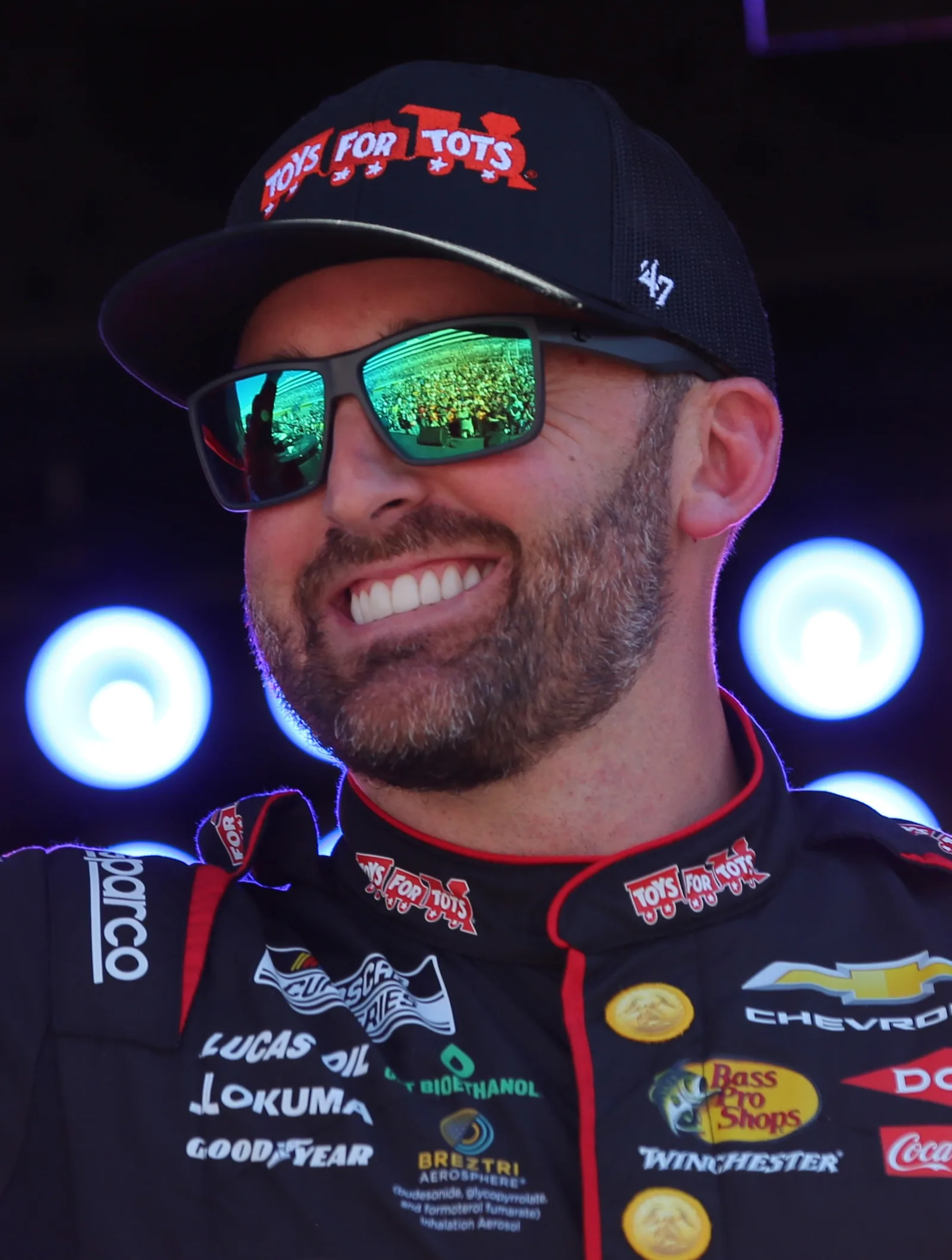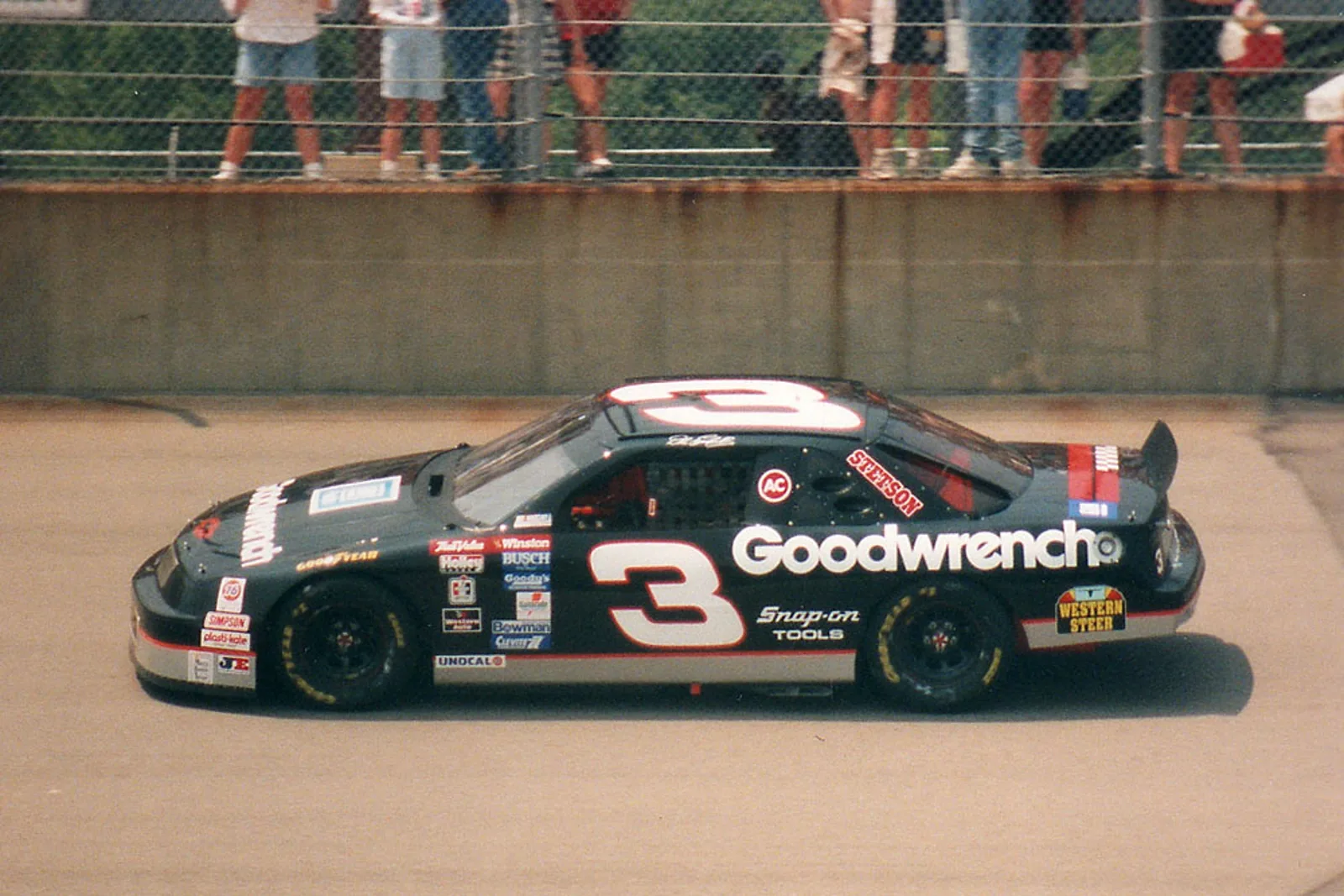
The number that carried Dale Earnhardt to six championships, was briefly the 29 after 2001 and returned in 2014 under Austin Dillon, who won the 2018 Daytona 500.
The No. 3 at Richard Childress Racing became a full-time entry in 1976 with Childress driving. Dale Earnhardt drove it to six championships, and after a period as the No. 29 the number returned in 2014 with Austin Dillon at the wheel.
The No. 3 car is the best-known number in Richard Childress Racing's history. It was first run by Richard Childress himself in the 1970s, carried Dale Earnhardt to six championships, and returned to the grid in 2014 under his grandson Austin Dillon. Across the decades the number has been tied to some of the sport's most famous moments, both on and off the track.
How did Richard Childress begin racing the No. 3?
RCR debuted at the 1969 Talladega 500 with a 1968 Chevrolet numbered 13. Childress drove the car himself and finished 23rd after axle problems. The team came back in 1972 for fourteen races with Childress at the wheel again, but it did not go full-time until 1976, when he began running the No. 3.
That first full-time season brought 11 top-10 finishes and an 11th-place points finish. Over the next few years Childress posted many more top tens and twice finished among the highest top-10 earners, although he was never a serious championship contender.
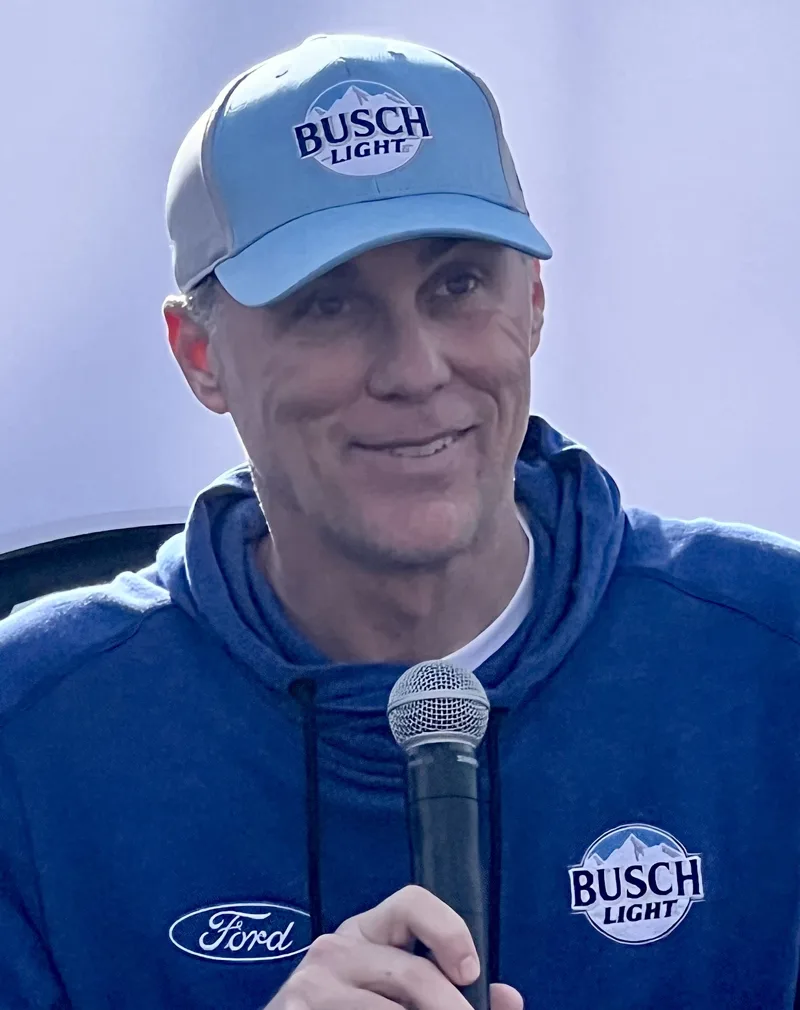
The number carried Dale Earnhardt through six titles, went to Kevin Harvick for a time and came back to the grid in 2014 with Austin Dillon.
Why did Childress hand the No. 3 to Dale Earnhardt?
In 1981 Childress decided to end his own driving career before the season was over, and he handed the No. 3 ride to the defending Winston Cup champion, Dale Earnhardt. Earnhardt brought his Wrangler sponsorship with him, and the handover came at a time when Childress was in debt. By the end of 1981 he owed $75,000, a debt that was paid off.
Earnhardt's first stint lasted only briefly. After posting six top tens, he left to drive for Bud Moore, and Ricky Rudd took his place for 1982 with Piedmont Airlines as sponsor.
How did Ricky Rudd's two years go?
Rudd drove the No. 3 in 1982 and 1983 and finished ninth in points in both seasons. He won twice in 1983. After the season, Rudd was replaced by Earnhardt, with Wrangler back as sponsor. In an odd twist, Rudd ended up in the No. 15 Ford Thunderbird from Bud Moore Engineering, the car whose Wrangler backing survived Earnhardt's departure. 15 Bud Moore Engineering Wrangler-sponsored Ford Thunderbird, which kept its sponsorship even after Earnhardt left.
How did Earnhardt's second run with the No. 3 unfold?
This time Earnhardt was back for good. He dominated the Winston Cup Series from 1986 to 1994 and won six championships in those years. Kirk Shelmerdine and Andy Petree were his crew chiefs, and Goodwrench replaced Wrangler as the primary sponsor after 1987.
Goodwrench executives first wanted the car to be bright blue and white, but Childress persuaded the company to run a mainly black scheme, which later became iconic. A 1996 injury nearly forced Earnhardt to miss a race, and his performance slowed. He went through 1997 without a win, which led many to speculate that he was losing his edge.
The next season he won the Daytona 500, ending a 20-race losing streak. The following year he won at Talladega, and he also stirred controversy by spinning Terry Labonte out to win at Bristol. In 2000 he won twice and finished runner-up to Bobby Labonte in points, and his fans hoped he was building toward a record eighth championship.
That was not to be. Earnhardt was killed in a collision on the last lap of the 2001 Daytona 500.
How did Kevin Harvick take over the No. 29?
After Earnhardt's death, Childress changed the car's number from 3 to 29, inverted the original paint scheme, and gave the seat to 25-year-old Busch Series driver Kevin Harvick. Harvick had been scheduled to drive a part-time No. 30 before a full-time move in 2002, but the loss of the seven-time Winston Cup champion pushed him into the spotlight.
Only three Winston Cup starts into his career, Harvick edged Jeff Gordon by .006 seconds at Atlanta, and he dedicated the Cracker Barrel 500 victory to Earnhardt. He posted another win at Chicagoland Speedway, finished in the top ten in points despite missing a race, and won the Rookie of the Year honours.
In 2002 his temper led him to announce on the radio that he would intentionally wreck another driver during a Craftsman Truck Series race. Because he was already on probation for an earlier incident, NASCAR benched him for the next race, and Kenny Wallace replaced him.
Harvick went on to win the Brickyard 400 and the Daytona 500. He posted career-best points finishes of fourth in both 2006 and 2008. The 14th-place runs of 2004 and 2005 were frustrating, and at one point he threatened to leave if performance did not improve. Reese's joined as co-primary sponsor in 2006, and he won at Phoenix that year.
For 2007 Shell Oil and Pennzoil took over the primary sponsorship, while Goodwrench moved to an associate role on the No. 29. Harvick won that year's Daytona 500 in a close finish with veteran Mark Martin, and he won the All-Star Race ahead of Jimmie Johnson. He finished 10th in points that year.
In 2008 he did not win but scored 19 top tens and tied his career-best fourth in the final standings. He won the 2009 Budweiser Shootout and finished second in the Daytona 500, but he missed the 2009 Chase and finished 19th in points.
How did Harvick's later seasons at RCR go?
Harvick was expected to leave after his contract ended in 2010. Instead, after a strong start that included the lead at the Daytona 500, runner-up finishes to Jimmie Johnson at Fontana and Las Vegas, and a win at Talladega over Jamie McMurray by a photo finish, he signed a multi-year extension in May 2010. He won the Coke Zero 400 at Daytona and the Carfax 400 at Michigan, and he finished third in the standings, the highest finish of his career at that point.
Shell and Pennzoil left for Penske Racing after 2010, and Budweiser became the primary sponsor in 2011. Harvick won three races early that year at Fontana, Martinsville and Charlotte, and he finished third in points for the second year in a row.
In 2012 Shane Wilson was his crew chief at Harvick's request, but after a difficult season Childress paired him with Martin. Harvick won once that year with Martin at Phoenix. In 2013 the team won four races and finished third again. Harvick later announced a move to Stewart-Haas Racing midway through that season, taking Budweiser and Jimmy John's with him.
How did Austin Dillon bring the No. 3 back?
On 11 December 2013 Childress named Austin Dillon, his oldest grandson, to succeed Harvick in 2014 with Rookie of the Year as a goal. The car went back to the 3, a number unused since Earnhardt died, and RCR kept paying for the rights to it.
New sponsor Dow Chemical joined existing RCR partners General Mills, American Ethanol, Bass Pro Shops and Realtree to fund the return of the No. 3. Dillon had run the number in earlier competition, including championship seasons in the Truck and Nationwide series.
The return was met with mixed reactions. Some fans welcomed it, while others objected that the number should have been retired. Dillon had permission from Earnhardt's family to use the number, and the rookie class he joined was one of the strongest in the series' history.
Dillon won the pole for the 2014 Daytona 500 and finished ninth in the race after avoiding serious damage in a wreck involving 13 cars. He finished 20th in points that year, and Kyle Larson took Rookie of the Year.
At the 2015 Coke Zero 400 at Daytona, Dillon was hit by Denny Hamlin's spinning car and flipped into the catchfence. He climbed out unharmed, but five fans were hurt by debris. He was credited with seventh, and he finished 21st in points for 2015.
In 2016 Dillon had strong early results and won his second career pole at Fontana. His first Cup win came in the 2017 Coca-Cola 600, after Jimmie Johnson ran out of fuel two laps from the finish.
On 18 February 2018, the 17th anniversary of Earnhardt's death, Dillon charged back in overtime to win his first Daytona 500. He finished 13th in points that season. At the Charlotte Roval he hit the outside wall twice, which ended his playoff run in the Round of 16.
What happened to the No. 3 from 2019 to 2022?
Danny Stockman was the crew chief in 2019, a role he had also held when Dillon won the Truck and Nationwide championships. Dillon earned two poles and his first career stage win at Michigan that year, but he failed to make the playoffs for the first time since 2015. Stockman stepped down at the end of the season, and Justin Alexander returned as crew chief for 2020.
In 2020 Dillon scored his first top five in nearly two years with a fourth at Las Vegas. On 19 July he broke an 88-race winless streak with his third career win at the O'Reilly Auto Parts 500 at Texas. That result put him in the playoffs and into the 2021 All-Star Race. RCR teammate Tyler Reddick finished second, an RCR one-two that had not happened since 2011.
In August 2020 Dillon tested positive for COVID-19 and missed the Daytona race, where Kaz Grala finished seventh in his Cup debut. Dillon returned the following week and finished the season 11th in points, his best since 2017.
Dillon finished third in the 2021 Daytona 500 but did not make the playoffs, ending the year 17th. In 2022 he won the Coke Zero Sugar 400 at Daytona to take the final playoff spot, and he was eliminated in the Round of 16 after a pileup at Bristol.
How did the penalties and crew changes affect the team after 2022?
On 28 October 2022 RCR announced that Keith Rodden would be the crew chief for 2023, after Alexander stepped down. Dillon started the 2023 season with a 33rd-place DNF in the Daytona 500. After the Martinsville race the No. 3 was penalised for an unapproved underwing assembly. The team lost 60 driver and owner points and five playoff points, and Rodden was fined US$75,000 and suspended for two races.
In 2024 Alexander returned as crew chief at Martinsville in the spring. At Richmond that summer Dillon ended a 68-race winless drought, but NASCAR later ruled the win encumbered, docking him 25 driver points and removing his playoff eligibility. After the Martinsville playoff race, the No. 3 lost 50 owner and driver points, and the team and Dillon were each fined US$100,000 for race manipulation.
On 20 November 2024 RCR signed Richard Boswell as crew chief for 2025. Dillon started 2025 with a 23rd-place finish at Daytona, scored three top tens in a row at Bristol, Talladega and Texas, and then won at Richmond right before the playoffs.
What is the legacy of the No. 3?
Childress, Earnhardt, Rudd and Dillon have all driven the No. 3, while Kevin Harvick carried the inverted 29 during the years the number was retired. Its history links the 1970s, the Earnhardt dynasty and the modern playoff era.
The number's return in 2014 remains a point of debate among fans. Dillon's own results, including his 2018 Daytona 500 win on the anniversary of Earnhardt's death, have been a central part of the story since.