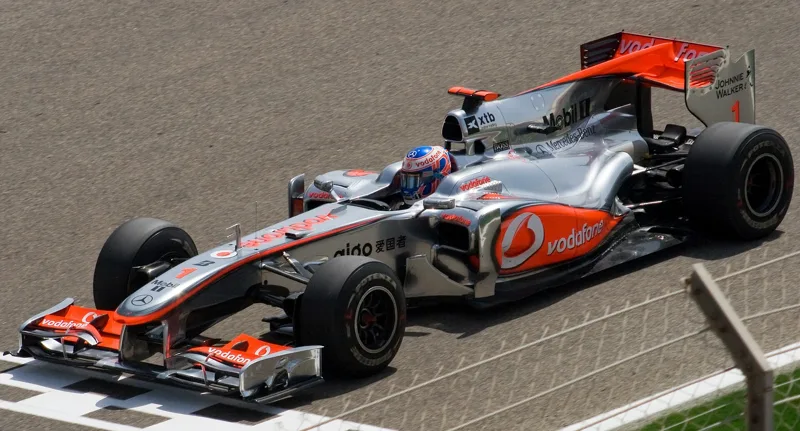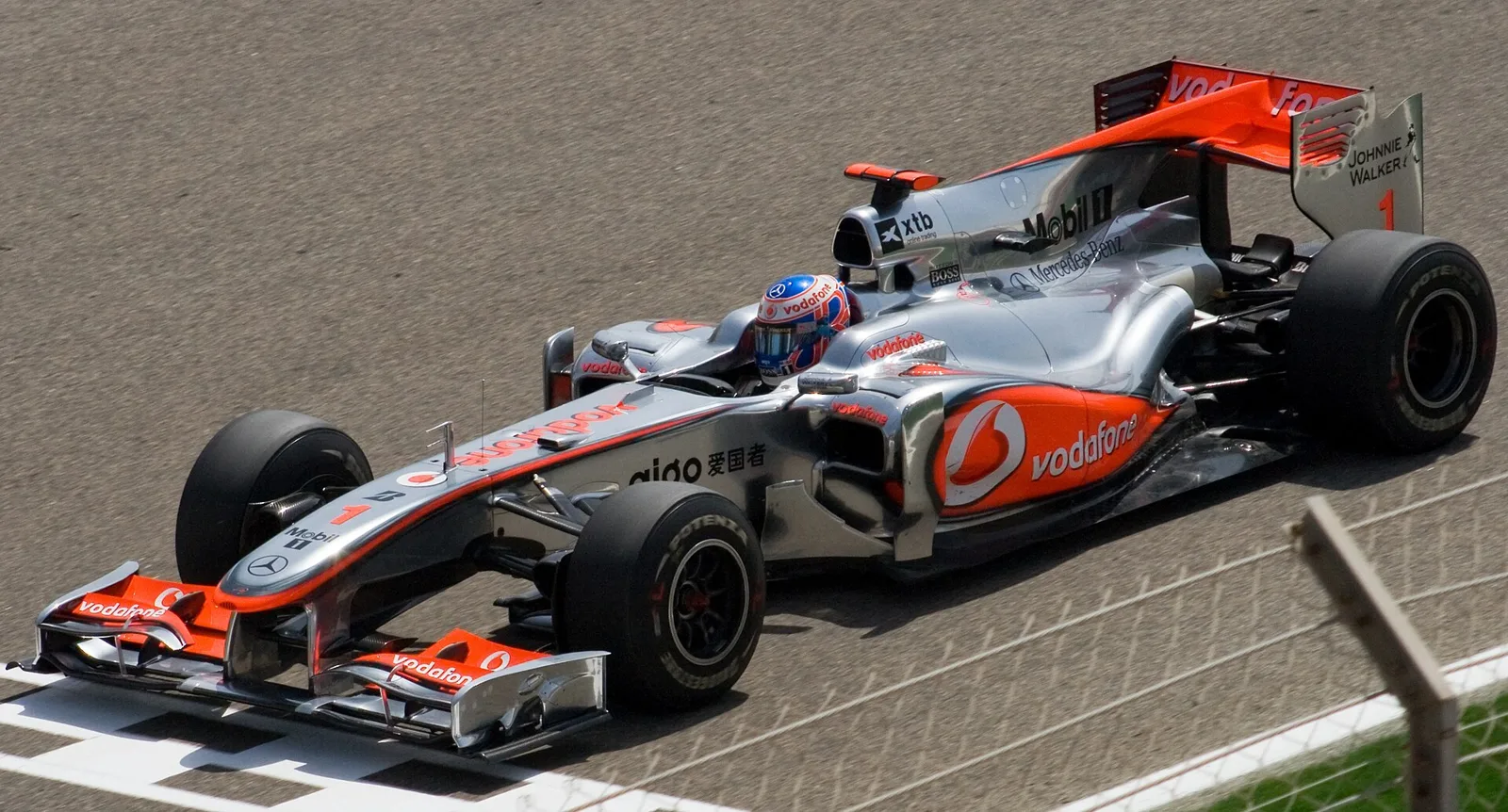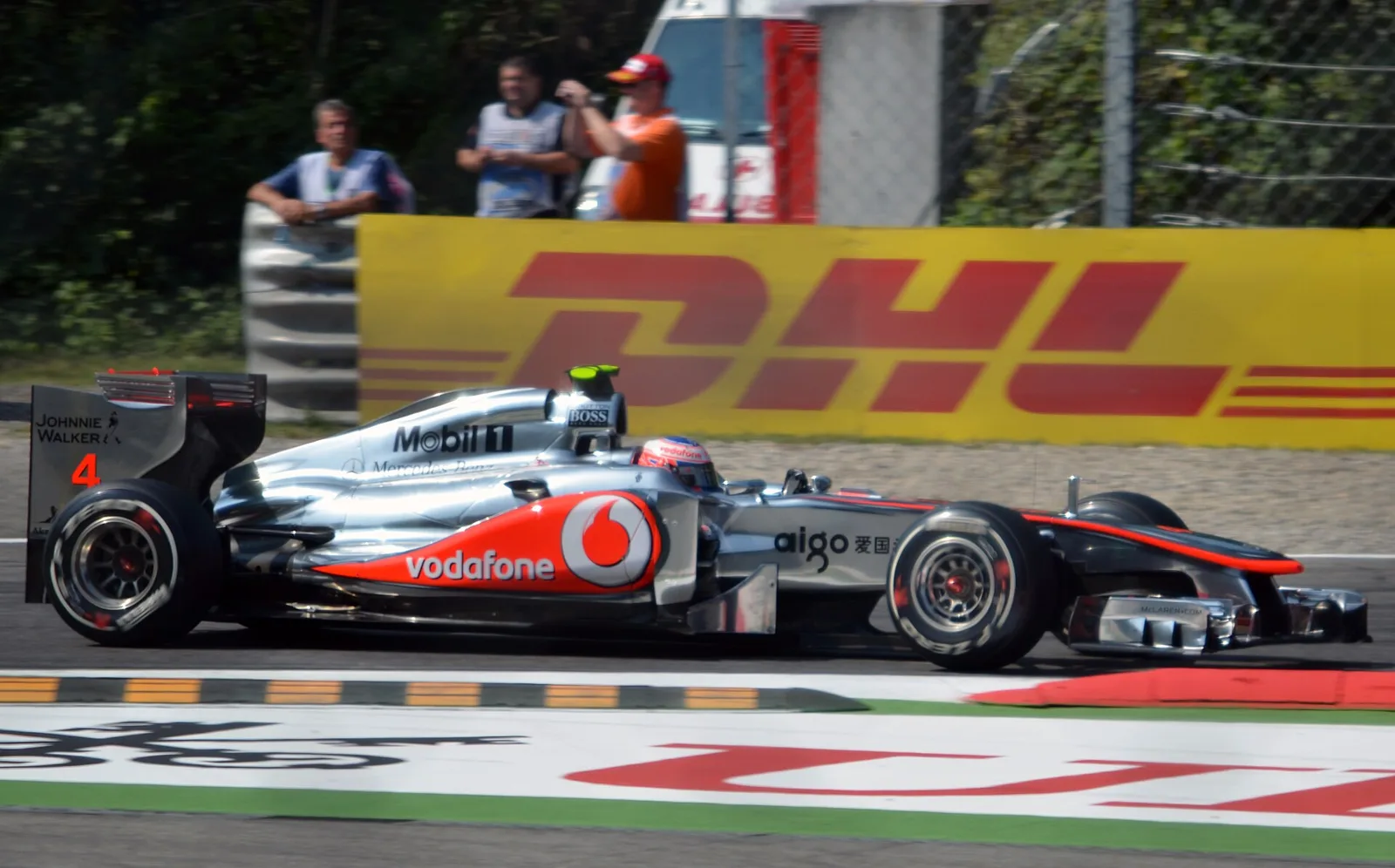
Paddy Lowe's sidepod idea, a Mercedes engine and two former champions who took six wins between them in 2011.
The McLaren MP4-26 was a 2011 Formula One car designed by McLaren and powered by Mercedes. Hamilton and Button drove it to six race wins between them, with Button winning the longest race in Formula One history in Canada.
The McLaren MP4-26 was the team's car for the 2011 Formula One season, launched in Berlin with Lewis Hamilton and Jenson Button at the wheel. Its L-shaped sidepods were the signature idea, and the car produced six race wins, although Red Bull's RB7 was usually the quicker machine. The season showed a fast car that needed luck and sharp race craft to win.
Who designed and drove the MP4-26?
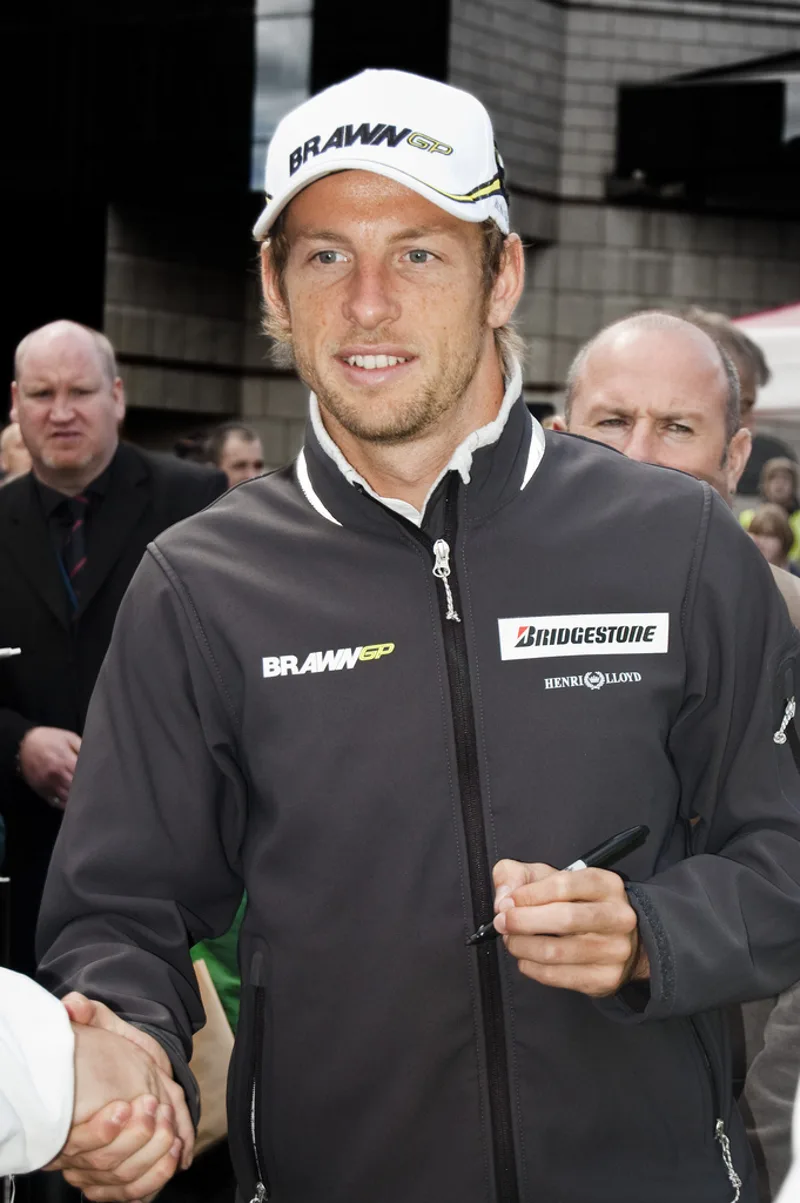
Technical director Paddy Lowe led the MP4-26 project for 2011, with Neil Oatley and Tim Goss working alongside him and Andrew Bailey and John Iley also in the design group. The car ran a customer Mercedes engine and was driven by 2008 champion Lewis Hamilton and 2009 champion Jenson Button.
The launch took place on 4 February at Potsdamer Platz, a Berlin square, a short time after the season's first test at Valencia. At those early tests, Gary Paffett, Hamilton and Button ran an interim version of the MP4-25, giving the team time to learn the final Pirelli compounds from the new supplier.
Two former champions, six race wins and a set of L-shaped sidepods that asked a simple question about airflow.
What made the sidepods unusual?
The MP4-26 was known for its unique L-shaped sidepods, which sat higher at the outer edge than near the centre. The shape carried air toward the beam wing at the rear, an area made more important by the ban on double diffusers in 2011.
The idea was not new. Benetton's B195 of 1995 and Ferrari's F310 of 1996 had used higher outer sidepods, but Paddy Lowe pushed the principle much further. The L-shaped ducts pushed turbulent air from the front wheels inwards and downwards across the body.
The rest of the car was built around that airflow. A tall, long nose was used to generate downward pressure, and the car was stretched to its maximum design length so that air reached each section in a stable state. The rear was packed tightly to feed clean air to a single diffuser, with a secondary intake to cool the gearbox and hydraulics.
McLaren admitted at launch that it had kept some novelties off the car. Rumours pointed to forward exhaust exits in the style of the Renault R31, and the team updated its exhaust system before the first race in Australia.
How did the 2011 season begin?
McLaren had been slow in pre-season testing, but the MP4-26 arrived in Melbourne quicker than the Ferrari. Hamilton qualified second, 0.778 seconds behind Vettel, and finished 22 seconds down after the Red Bulls dominated. Button's drive-through penalty dropped him from fourth to sixth.
Malaysia brought a closer fight. The top five qualifiers were separated by about a tenth, and Button finished on the podium two seconds behind Vettel. Hamilton lost ground after clashing with Alonso and taking a time penalty, leaving him eighth. McLaren was already 24 points behind the championship leader after two races.
China turned the tide for a while. Hamilton and Button had qualified second and third, and Vettel's poor start let Hamilton through. Hamilton took the lead from Vettel with four laps to go, while Button stopped in the wrong pit box and finished fourth.
Which races did the MP4-26 win?
Hamilton won in China, Germany and Abu Dhabi, while Button won in Canada, Hungary and Japan. Six wins in total gave the car a strong record, but Vettel's Red Bull was consistent enough to secure the title in Japan with races to spare.
Canada was the outstanding drive of the season. Button started seventh, made five pit stops and served a drive-through penalty, yet he still charged from last more than once. He pressured Vettel into a mistake on the final lap to take the lead, survived a puncture and a collision with Hamilton, and then waited out a two-hour red flag. The win made McLaren the only team whose two drivers had both won by that stage of the year.
Hungary gave Button another win in cold conditions, which suited the McLarens' mechanical grip. He passed Vettel early on, while Hamilton's race fell apart after two tyre changes to the wrong compound, a spin and a drive-through penalty. The victory came on Button's 200th Grand Prix.
Germany saw Hamilton narrowly miss pole before he won the race after overtakes on Mark Webber and Fernando Alonso. Japan produced Button's first win in fully dry conditions for McLaren. He had qualified only 0.009 seconds behind Vettel, and he passed the Red Bull driver during the second round of pit stops after saving his tyres.
The season ended with Hamilton's win in Abu Dhabi. Vettel retired on the first lap, leaving Hamilton to control the race from the front, while Button finished third despite losing KERS for much of the afternoon.
Season highlights
| Round | Highlight |
|---|---|
| Australia | Hamilton second on the grid, 22 seconds down at the finish |
| Malaysia | Button on the podium two seconds behind Vettel |
| China | Hamilton wins with four laps to go |
| Spain | Hamilton 0.6 seconds behind Vettel; Button completes a double podium |
| Canada | Button wins the longest race in Formula One history |
| Hungary | Button wins on his 200th Grand Prix start |
| Germany | Hamilton wins after overtakes on Webber and Alonso |
| Japan | Button wins; Vettel seals the drivers title |
| Korea | Hamilton takes pole and finishes second, Button fourth |
| India | Button second, Hamilton seventh after a collision with Massa |
| Abu Dhabi | Hamilton wins after Vettel retires on the first lap |
| Brazil | Button third, Hamilton out with a gearbox problem |
How did the late season go for McLaren?
The late races brought a mix of setbacks and success. Hamilton went off at Spa following contact with Kamui Kobayashi, Button recovered to the podium with the two Red Bulls ahead of him, and Vettel's lead stretched to 92 points at that stage of the year.
Monza brought Vettel another win from pole. Button took second and Hamilton fourth, after spending much of the race stuck behind Michael Schumacher. Singapore was Vettel's third straight victory and his ninth of the season, and Button's second place there lifted him into a position to challenge the title.
Hamilton claimed pole in Korea, McLaren's first since the 2010 Canadian race. He finished second there, while Button recovered to fourth. India brought Button second and Hamilton seventh after a clash with Felipe Massa, Abu Dhabi and Brazil closed the year, with Hamilton winning in the first and retiring from the second.
What was the MP4-26's legacy?
The MP4-26 is remembered for its L-shaped sidepods, which drew attention to the airflow around the car. It also showed that a car could win races through strategy and driver skill even when qualifying fell short. Its wins came in very different conditions, from changeable weather in Canada to the cold of Hungary.
The two drivers gave the car its record. Hamilton's three wins and Button's three wins came from different parts of the season.