From a 1984 All Star Racing start with five employees to a NASCAR-record 324 Cup wins, the team's story runs through its car numbers and the drivers who carried them.
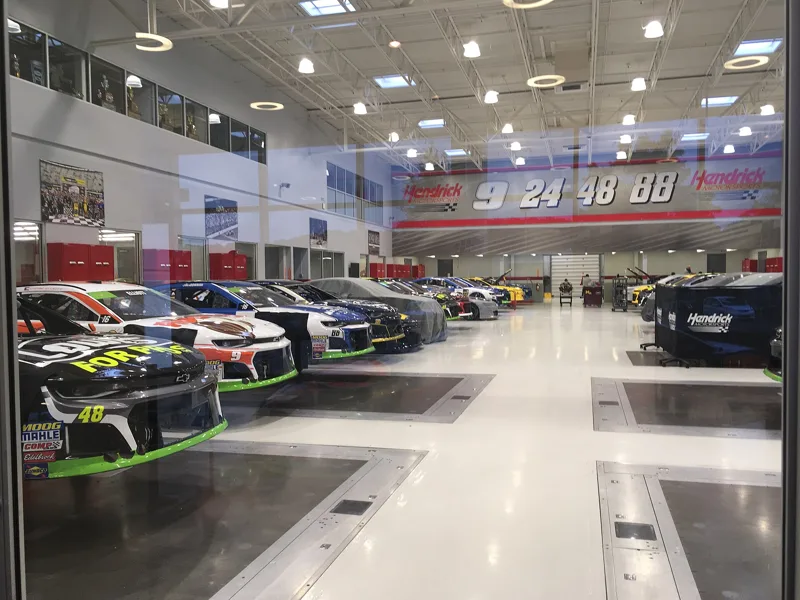
Hendrick Motorsports, which began as All Star Racing in 1984, is the most decorated organisation in Cup history. Cars numbered 5, 9, 24, 25, 48 and 88 have carried much of that record, across more than four decades of racing.
Hendrick Motorsports is an American racing organisation that competes in the NASCAR Cup Series. It was founded in 1984 as All Star Racing by Rick Hendrick, and it has since won a NASCAR-record 324 Cup Series races and 15 owners and drivers championships. Its race record also includes three Truck Series titles, one O'Reilly Auto Parts Series drivers' crown and 32 O'Reilly wins.
Much of the team's story is told through its car numbers. Each has had its own run of drivers, sponsors and crew chiefs, and several have changed hands or been renumbered. This article follows the main cars, from the rented-equipment start of the No. 5 to the modern No. 5, No. 9, No. 24, No. 48 and No. 88 teams.
How did Hendrick Motorsports start in 1984?
The team debuted in 1984 under the All Star Racing name with five employees, rented equipment and two cars. The highest-paid person earned only $500 a week. Hendrick first tried to field a car for seven-time champion Richard Petty, but the funding deal fell through, and he then looked at Tim Richmond and Dale Earnhardt before settling on Geoff Bodine.
Bodine drove the unsponsored No. 5 Chevrolet Monte Carlo that year. After a slow start, Hendrick told Bodine and crew chief Harry Hyde that the team might have to close because of funding. Bodine then won at Martinsville, which attracted sponsorship from Northwestern Security Life and kept the operation alive. The team won twice more that year and finished ninth in points.
A small 1984 team with five employees and rented equipment grew into the most successful organisation in Cup history by numbers.
What were the No. 5 years under Bodine and Rudd like?
Levi Garrett signed on for a multi-year deal in 1985, and Bodine earned three poles and climbed to fifth in points. In 1986 the team became a full-time multi-car operation with Bodine and Tim Richmond as drivers. Bodine won twice that year, including the Daytona 500, and finished eighth in points. He was winless in 1987 and thirteenth in points.
Ricky Rudd replaced Bodine in 1990 and won once, at Watkins Glen. In 1991 Tide became the sponsor, and Rudd finished second in points behind champion Dale Earnhardt, a career high. At Sonoma that year Rudd spun Davey Allison on the final turn and went on to win, but NASCAR penalised the team for rough driving and awarded the race to Allison. Rudd later left to form his own team, taking Tide with him.
How did Terry Labonte's No. 5 team win the 1996 title?
Terry Labonte, the 1984 Winston Cup champion, took over the No. 5 in 1994 with Kellogg's sponsorship. He won three races in each of 1994 and 1995, and in 1996 he beat teammate Jeff Gordon to the title by 37 points.
His 2000 season was disrupted by a broken leg from a crash at the Pepsi 400. He returned to form in 2003, finishing tenth in points and winning the Southern 500 at Darlington. He slipped to 26th in 2004 and announced his semi-retirement. Labonte scored 12 victories with Hendrick Motorsports in total.
| Car | Driver | Years | Highlight |
|---|---|---|---|
| No. 5 | Geoff Bodine | 1984 to 1989 | Martinsville win in 1984; Daytona 500 in 1986 |
| No. 5 | Ricky Rudd | 1990 to 1993 | Second in points in 1991 |
| No. 5 | Terry Labonte | 1994 to 2004 | 1996 Winston Cup championship |
| No. 5 | Kyle Busch | 2005 to 2007 | Youngest Cup winner at the time, at Fontana |
| No. 5 | Mark Martin | 2009 to 2011 | Four wins in 2009 |
| No. 5 | Kasey Kahne | 2012 to 2017 | Career-best fourth in points in 2012 |
| No. 5 | Kyle Larson | 2021 to present | Cup championships in 2021 and 2025 |
What did Kyle Busch's early years show?
Kyle Busch took the No. 5 in 2005, the younger brother of Kurt Busch. The development driver earned two wins that year, nine top fives and 13 top 10s, and he won the Rookie of the Year battle with ease.
How did Mark Martin and Kasey Kahne revive the No. 5?
Casey Mears drove the No. 5 in 2008, and Mark Martin joined in 2009 after leaving Dale Earnhardt, Inc. Martin won his first Hendrick race at Phoenix on 18 April 2009, the 36th win of his career. The move gave the team a veteran driver with a strong record on short tracks.
That Phoenix win was also Martin's 400th top-10 finish. He won four more races that season and finished second in points to Jimmie Johnson, and he slipped to 13th in 2010 and 22nd in 2011.
Kasey Kahne arrived for 2012 with crew chief Kenny Francis from Red Bull Racing. He won the Coca-Cola 600 that year, finished fourth in points, and won at Bristol and Pocono in 2013. A late win at Atlanta in 2014 locked him into the Chase. On 23 July 2017 Kahne held off Brad Keselowski in overtime to win the Brickyard 400, his 18th and final career win, 102 races after his Atlanta victory. That race prompted NASCAR to eliminate the Overtime Line.
Why did Kyle Larson's 2021 title matter for the No. 5?
Kyle Larson was announced for the No. 5 on 28 October 2020, a move that retired the No. 88 in the Cup Series. Larson won the Pennzoil 400 at Las Vegas in his fourth start with the team. The title made Larson the first champion in the car since 1996.
He then won three races in a row in the summer, and in the Playoffs he took the Charlotte Roval, Texas and Kansas. Hendrick sponsored him through its dealership group. He won the Phoenix Season Finale 500, his 10th win of the year, to take his first Cup championship. The title ended a 25-year drought for the No. 5, which had last won the crown when Terry Labonte took the 1996 Winston Cup. Larson won the title again in 2025, finishing third in the final race.
What did Larson do in 2023 and 2024?
In 2023 Larson won at Richmond and Martinsville, took his third All-Star Race and finished second in points. He also won at Darlington, a playoff win that gave Hendrick's engine department its 500th overall win, and at Las Vegas to reach the Championship 4.
In 2024 he won at Las Vegas, and at Kansas he beat Chris Buescher by 0.001 seconds, the closest finish in Cup history. At the Bristol Night Race he led 462 of 500 laps, a Hendrick record.
Larson signed a five-year extension on 11 February 2026, keeping him with the team through 2031. He began 2026 with a win at Gateway that ended a 51-race winless streak.
How did the No. 9 come about?
After the 2017 season the No. 24 car driven by Chase Elliott was renumbered No. 9, in honour of his father, Bill Elliott. Elliott won his first Cup race at Watkins Glen on 5 August 2018, which gave Hendrick Motorsports its 250th win and secured him a playoff place. He finished the season sixth in points.
Elliott's 2019 included five straight top-five finishes and his first superspeedway win, at Talladega, though inconsistency and six DNFs cost him. In 2020 he won the Cup championship, Hendrick's 13th. In 2021 he won the inaugural Texas Grand Prix at COTA, and in 2022 he won at Dover, Nashville and the Atlanta summer race, as well as at Talladega in the playoffs.
How did Elliott's later seasons go?
Elliott's 2023 season was disrupted by a leg injury from snowboarding, and Josh Berry drove the No. 9 as a substitute for several races. Elliott returned later in the year and missed the playoffs for the first time in his Cup career. The No. 9 still qualified for the owners' playoffs, and Elliott finished 17th in the drivers' standings.
He won at Texas on 14 April 2024, ending a 42-race winless streak, and in 2025 he won the season-opening Cook Out Clash. He earned his 20th career win at Atlanta that year. In 2026 he won at Martinsville and Texas.
What did the No. 24 and No. 48 teams achieve?
Jimmie Johnson signed with Hendrick in 2001 as a second-year Busch Series driver. He won three races in 2002 and finished fifth in points, and in 2006 he won his first Cup title and his first Daytona 500. His arrival set the No. 48 up as a major title contender.
He won the title again in 2007, with 10 wins, and in 2008 he tied Cale Yarborough's record with a third straight championship. In 2009 he won seven races and became the first driver to win four consecutive titles.
Johnson's 2011 season included a Talladega finish that he won by .002 seconds over Clint Bowyer, the closest in Cup history. He won a sixth championship in 2013 and a seventh in 2016, tying Richard Petty and Dale Earnhardt. His 2014 season was the first time he finished outside the top 10 in a season. His final full-time year was 2020, when Chase Elliott won the title.
Alex Bowman moved from the No. 88 to the No. 48 for 2021 and won at Richmond, Dover and Pocono that year. In July 2026 he announced he would retire after the 2027 season. Connor Zilisch was then announced to drive the No. 48 from 2028.
How did the No. 88 end?
Dale Earnhardt Jr. joined Hendrick in 2008 in the No. 88, after a deal with Robert Yates Racing. The No. 88 returned to prominence in 2014, when Earnhardt won four races, including the Daytona 500, both Pocono races and the fall Martinsville race. He announced his retirement in April 2017 after a final full-time season.
Alex Bowman then drove the No. 88 from 2018 to 2020. He won his first Cup race at Chicagoland in 2019 and his second at Auto Club Speedway in 2020, finishing a career-best sixth in points. The No. 88 was discontinued when Larson moved into the No. 5 for 2021.
What were the No. 25 and other cars?
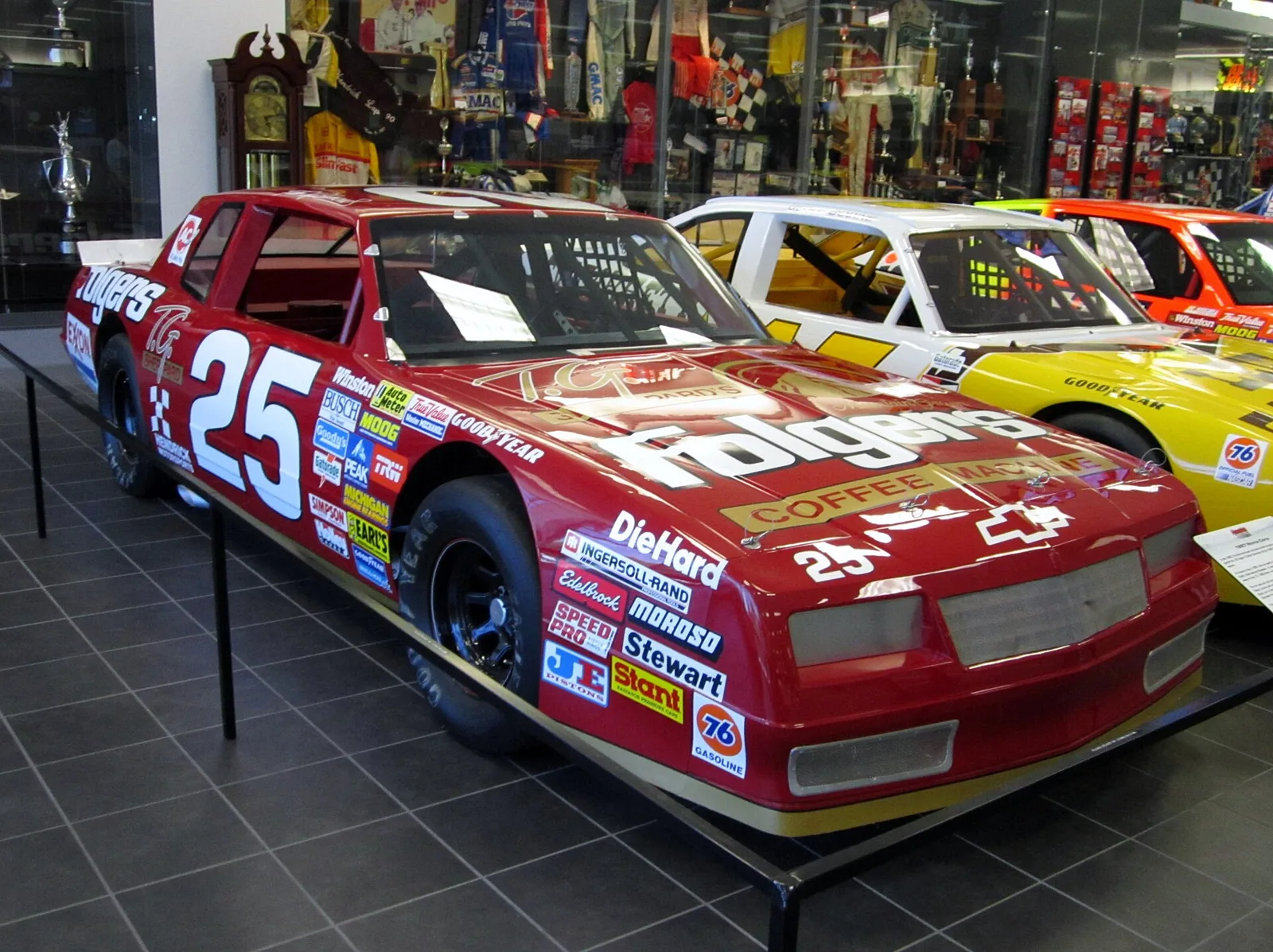
The No. 25 was owned for years by Rick Hendrick's father, Joe Hendrick. It debuted in 1986 as the organisation's second team, and Tim Richmond won seven races in it that year, finishing third in points. Its driver changes became a feature of the organisation's second-car programme.
Later drivers included Jerry Nadeau, who won at Atlanta in 2000, Joe Nemechek, who won at Richmond in 2003, and Brian Vickers, who joined in 2003 and won at Talladega in 2006. Casey Mears took the car to victory in the Coca-Cola 600 at Charlotte in 2007. The No. 25 then became a part-time car, and in January 2015 Chase Elliott was announced for five races in it.
What were the earlier No. 17 and short-lived entries?
Darrell Waltrip joined Hendrick in 1987 in the No. 17, with Tide as sponsor. He won nine races in his first three seasons with the team, including the 1989 Daytona 500. He left in 1990 to start his own team, taking the No. 17 with him, and the Tide sponsorship moved to the No. 5 with Ricky Rudd.
Several other numbers appeared briefly. Benny Parsons drove the No. 35 in 1987 as Hendrick's second team. Terry Labonte drove the No. 44 in 2005 and 2006 after semi-retiring. Al Unser Jr. qualified a Valvoline-sponsored No. 46 for the 1993 Daytona 500, and the No. 58 ran the 1995 season finale at Atlanta to help clinch Gordon's championship.
What is the team's place in the sport?
Hendrick Motorsports is the most successful organisation in Cup history by wins and titles, with 324 wins and 15 owners and drivers championships. Its story is less about a single driver than about a continuous supply of race-winning cars, crew chiefs and drivers across several numbers.