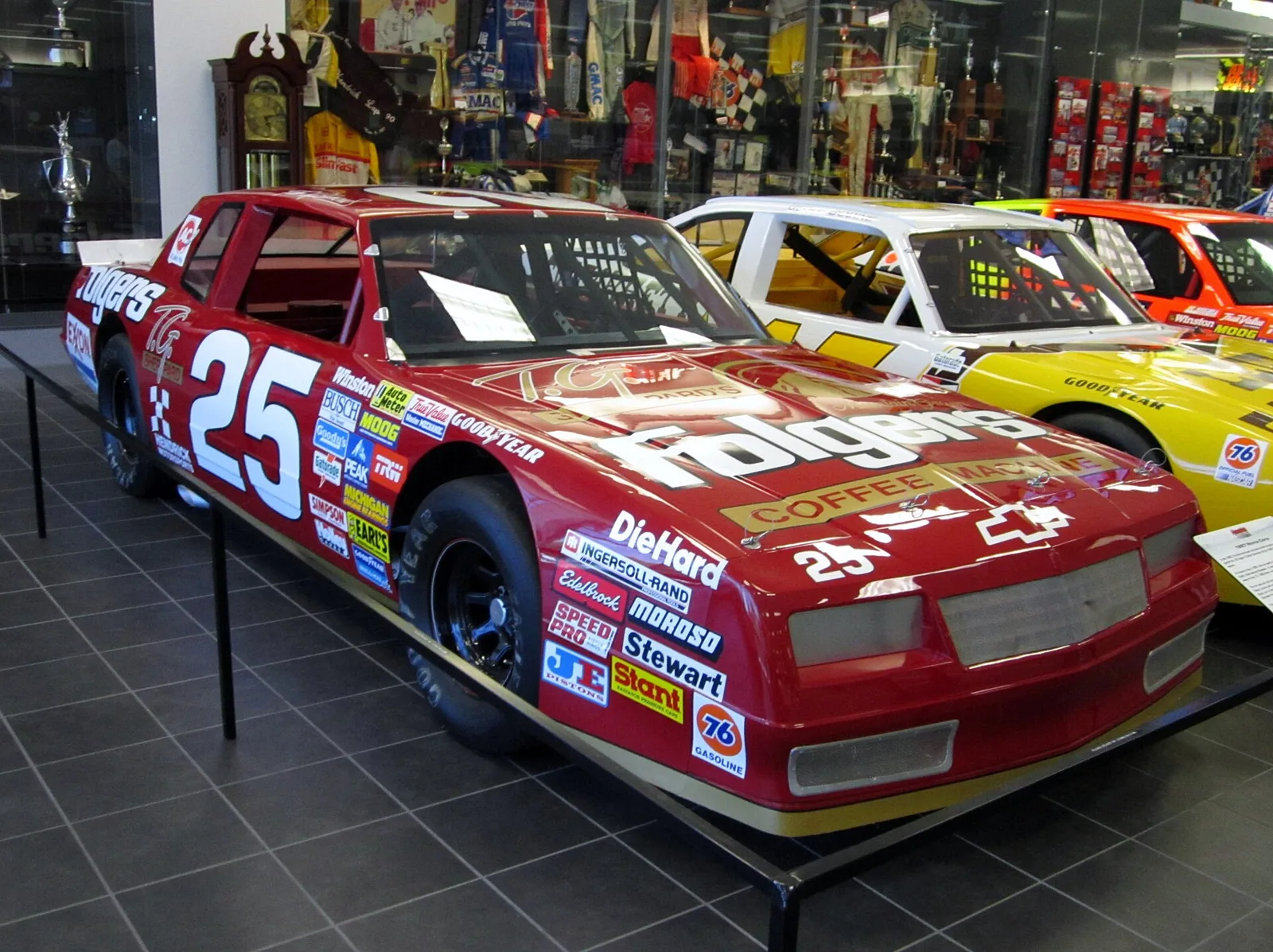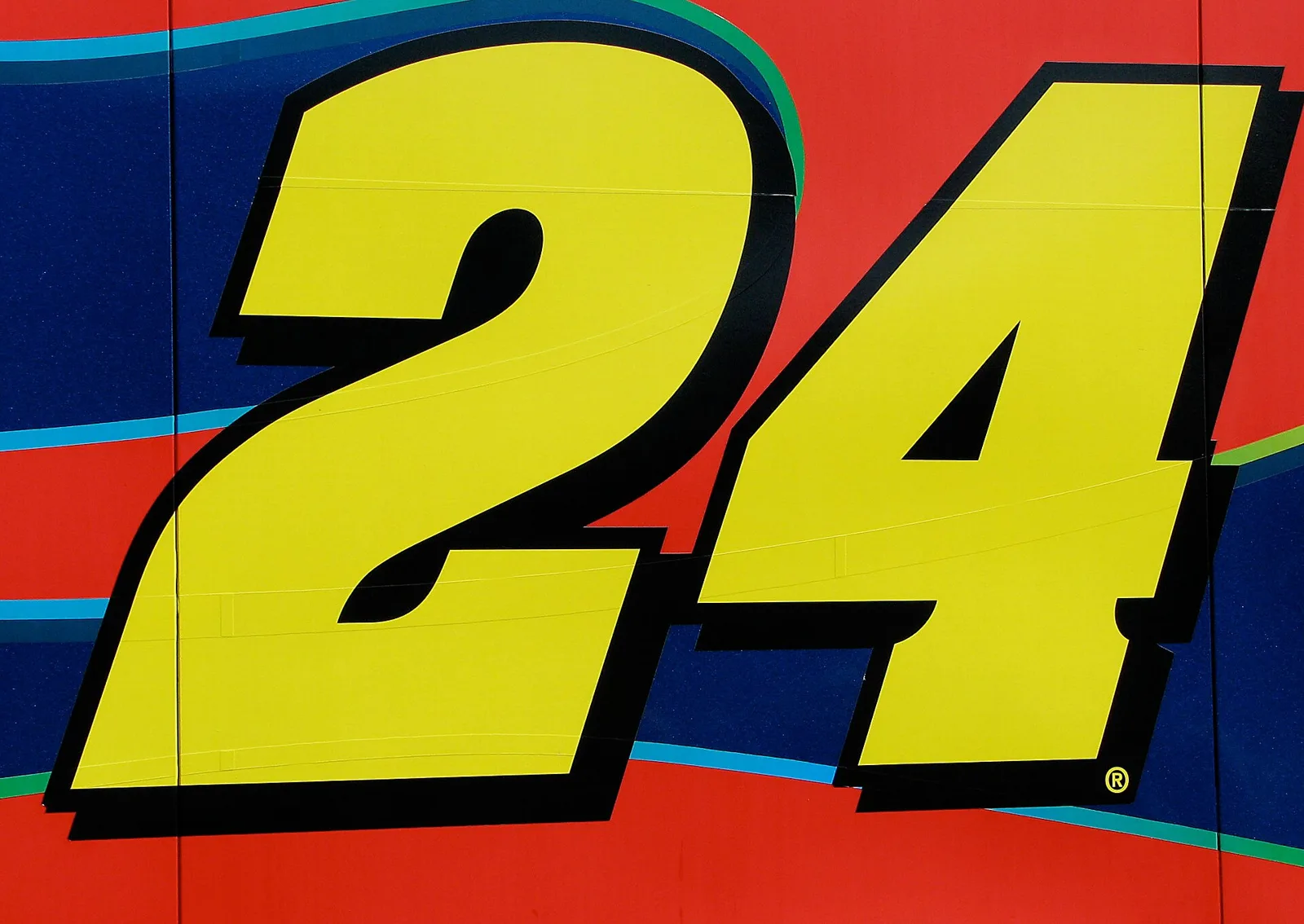
From Jeff Gordon's rainbow Chevrolet in 1992 to William Byron's back-to-back Daytona 500 wins, the No. 24 has carried one of NASCAR's best-known numbers through three drivers.
Hendrick's No. 24 has raced in the NASCAR Cup Series since 1992. Jeff Gordon drove it to 93 points-paying wins and four championships, after which Chase Elliott and then William Byron took over the car. Byron has also won two Daytona 500s in the car.
Hendrick Motorsports' No. 24 has competed in NASCAR's Cup Series since 1992. Jeff Gordon drove it for almost his entire full-time Cup career, winning 93 points-paying races and four championships. Since Gordon retired from full-time racing after 2015, the car has been driven by Chase Elliott and, from 2018, by William Byron.
The car's identity grew up around Gordon's rainbow colours and the crew that won with them. Its later chapters have been shaped by new crew chiefs, sponsor changes and a renumbering that moved the car's history into a new number. Taken together, the No. 24 is one of the most recognised numbers in the sport.
How did Gordon's No. 24 team begin?
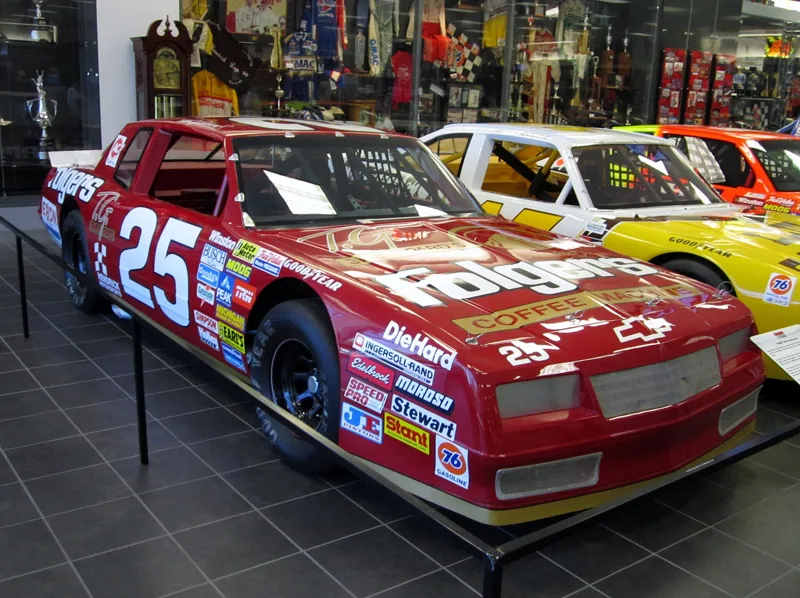
Gordon and crew chief Ray Evernham moved from Bill Davis Racing after Rick Hendrick saw Gordon win a Busch Series race at Atlanta in March 1992. The number was first meant to be No. 46, but a licensing dispute with Paramount Pictures changed it.
Gordon debuted in the 1992 Hooters 500 in a car painted in the DuPont rainbow scheme designed by Sam Bass. He qualified 21st but finished 31st following an accident. From 1993 the team ran full-time, and Gordon took fifth at the Daytona 500, 14th in points and the Rookie of the Year award.
One number, three drivers and more than a century of combined championship history, carried from a Gordon rainbow to a Byron Daytona 500 double.
What were Gordon's first title years?
In 1994 Gordon took his first Winston Cup win at the Coca-Cola 600, added the first-ever Brickyard 400 at Indianapolis, and ended the year eighth in points. He claimed the 1995 Winston Cup championship and finished second to Hendrick teammate Terry Labonte in 1996.
The mid-1990s crew earned the Rainbow Warriors nickname, taken from the car's bright paint and the matching jumpsuits of the pit crew. Evernham became known for his pit stop innovations. He used specialists, often former athletes, rather than regular team mechanics, and he trained them with choreography, agility work and weight lifting. He is widely credited with cutting a four-tyre stop from around 20 seconds to under 15.
| Season | Result |
|---|---|
| 1993 | Rookie of the Year; 14th in points |
| 1994 | First Winston Cup win at the Coca-Cola 600; first Brickyard 400 win |
| 1995 | Winston Cup championship |
| 1997 | Second championship; Daytona 500, Coca-Cola 600 and Southern 500 wins |
| 1998 | Third title; 13 wins in a season |
| 2001 | Fourth title; six wins and 24 top-10 finishes |
| 2007 | Six wins and a record 30 top-10 finishes; second in points |
| 2015 | Final full-time season; third in the points standings |
Why did the 1997 and 1998 championships matter?
Gordon won his second championship in 1997, winning three of the sport's crown jewel events: the Daytona 500, Charlotte's 600-miler and the Southern 500. The next season he claimed a back-to-back crown, his third overall, tying Richard Petty's modern-era record with 13 wins in a single season.
The team's run hit a bump the following season. Gordon won the Daytona 500 again, but the team lost its consistency and missed a third straight title. Evernham left to help Dodge return to NASCAR. Brian Whitesell took over and steered Gordon to victories in his first two races in charge. Later that year Gordon agreed a lifetime deal that gave him a stake in the team.
How did the 2000s change the team?
Robbie Loomis took over as crew chief in 2000, a season that brought Gordon's 50th career win at Talladega, though the team finished ninth in points. The No. 24 unveiled a new blue and red flame scheme in 2001, and Gordon responded with a six-win, six-pole season and 24 top-10s to win his fourth championship.
In 2002 Gordon became the car owner for rookie Jimmie Johnson's No. 48, a team that would later tie a NASCAR record with seven titles. In 2005 Gordon finished 11th in points, the first time he had been outside the top 10 since his rookie year. The next season, with crew chief Steve Letarte, he returned to the Chase and finished sixth.
In 2007 Gordon won six races and scored a modern-era record 30 top-10 finishes, but he still finished second in points behind teammate Johnson. The 2008 season was winless for the first time since his rookie year. For 2009 the team unveiled a new Firestorm scheme, and Gordon broke a 47-race winless drought at Texas on 4 April 2009.
What happened in the later Gordon years?
At the start of 2011 a Hendrick organisational shuffle moved Gordon and his sponsors to a new shop, and Alan Gustafson became crew chief. AARP became the team's primary sponsor, backing a "Drive to End Hunger" initiative with Gordon. Gordon won three races and finished eighth in points that year.
The 2012 season was less consistent. Gordon needed a late win at Pocono to reach the Chase, and at the AdvoCare 500 he wrecked championship contender Clint Bowyer, for which he was fined $100,000. He ended the year with Hendrick Motorsports' first Cup win at Homestead-Miami, the final race of a 20-year relationship with DuPont. Axalta Coating Systems took over the sponsorship.
Gordon made the 2013 Chase after the Spingate incident at Richmond, and the year after he was in position for the championship round until a late-race reshuffle at Phoenix left him just short. On 22 January 2015 he announced that the season would be his last as a full-time driver. 3M joined AARP and Axalta as sponsors, and Gordon won at Martinsville to end a 39-race winless streak, finishing third in the final standings.
How did Chase Elliott's two years go?
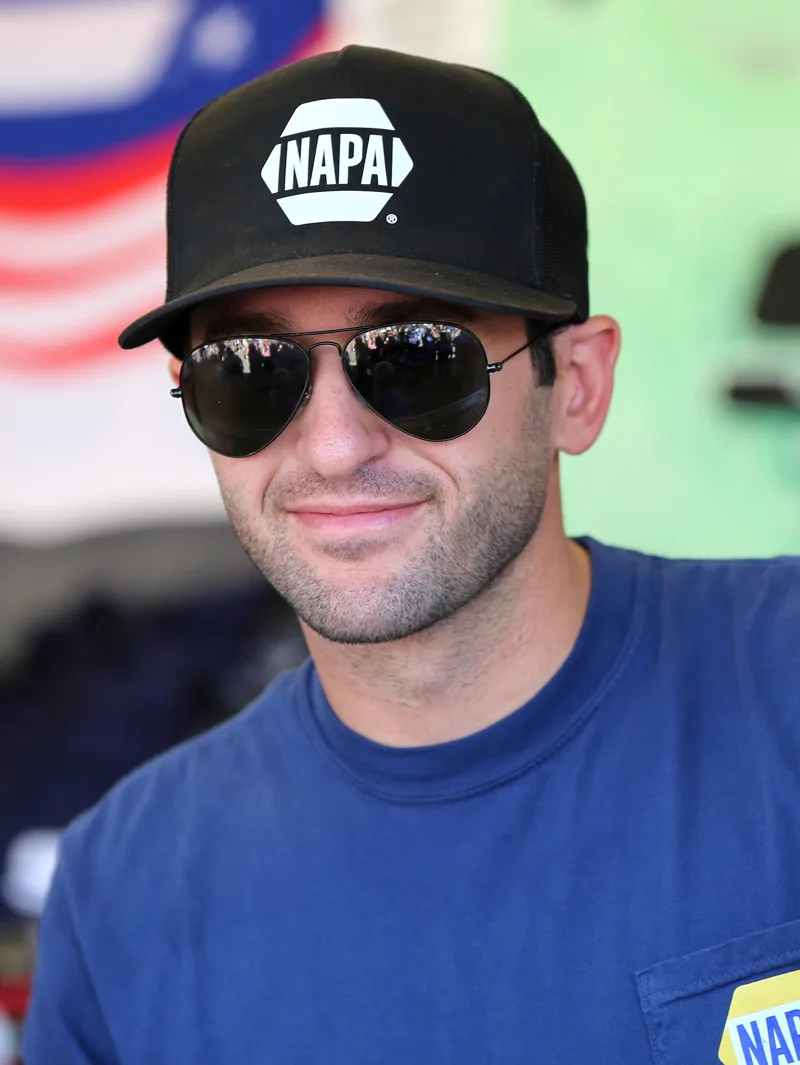
In 2016 Elliott, a Hendrick development driver, became the car's second pilot, with NAPA Auto Parts as primary sponsor. Elliott won the pole for his first Daytona 500 start but finished 37th after an early crash. Without a win all year, he still made the Chase and took the Cup Series Rookie of the Year award.
In 2017 Elliott finished fifth in a second season with the car. Hendrick then renumbered the No. 24 to No. 9, which let Elliott carry the number his father Bill had raced for 20 years. Rather than retire the No. 24, Hendrick switched Kasey Kahne's No. 5 to the 24 for rookie William Byron.
What was William Byron's first season like?
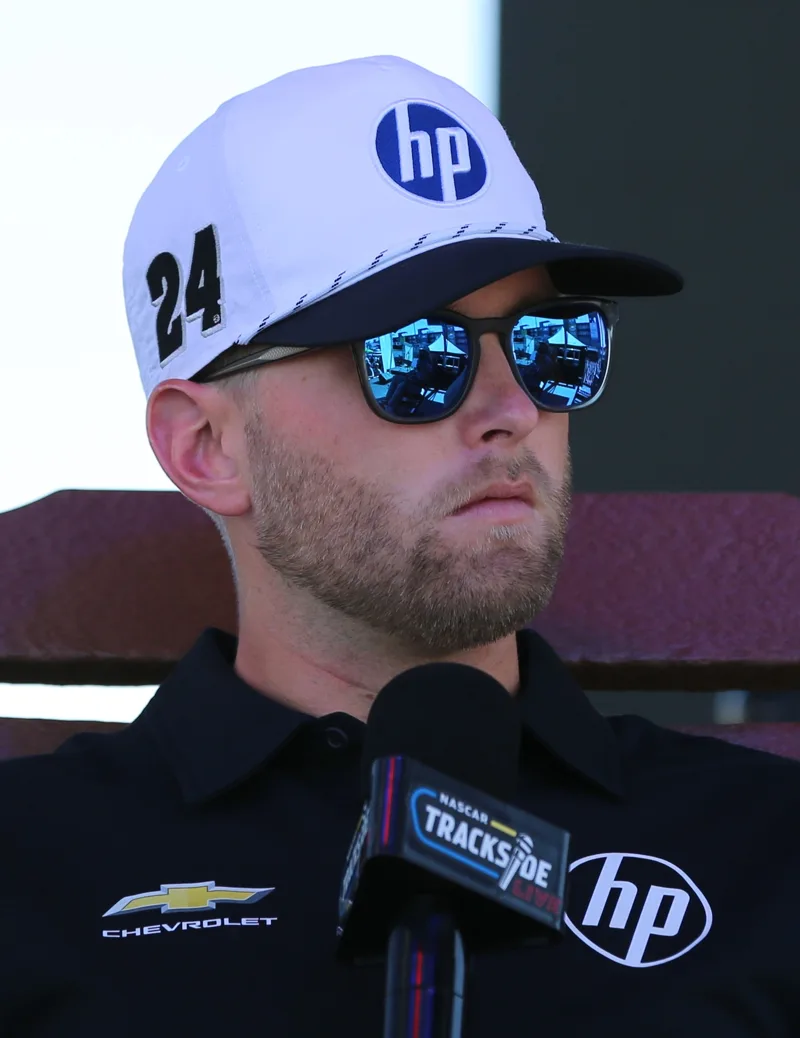
Byron and crew chief Darian Grubb struggled in 2018, finishing the year 23rd in points after only four top-10 finishes. After one season, Hendrick replaced Grubb with Chad Knaus, who had been crew chief for seven Cup titles on the No. 48.
The Byron and Knaus pairing improved results at once. Byron won the pole for the 2019 Daytona 500, added four more poles that season and finished 11th in points. On 29 August 2020 he won at Daytona, his 94th win for the organisation.
How did the 2021 and 2022 seasons unfold?
Before 2021 Rudy Fugle, who had been Kyle Busch Motorsports' crew chief, replaced Knaus on the No. 24. Knaus became Hendrick's vice president of competition. Fugle had been Byron's crew chief in the Truck Series in 2016, when he won seven races.
Byron's second career win came at Homestead-Miami in the third race of 2021, the 95th for the No. 24. He finished 10th in points that year. In 2022 he started with two DNFs, at the Daytona 500 and Fontana, then won at Atlanta and Martinsville. A penalty for a late incident at Texas, where he spun Denny Hamlin, was first a fine of US$50,000 with 25 points docked, then amended by an appeals panel to a US$100,000 fine.
What did 2023 and 2024 bring?
In 2023 Byron won at Las Vegas and then at Phoenix, but penalties for unapproved hood louvers and greenhouse alterations followed. Byron still won at Darlington, the car's 100th overall win. Fugle was suspended for four races, and an interim crew chief was also suspended.
In 2024 Byron opened the season by winning the Daytona 500, and he added wins at the Circuit of the Americas and Martinsville. At Martinsville, marking Hendrick's 40th anniversary, he finished ahead of Larson and Elliott for a team sweep of the podium.
How did the car perform in 2025?
Byron started 2025 with a second consecutive Daytona 500 win. He added a win at Iowa, and at Martinsville during the playoffs he won again to reach the Championship 4. A blown tyre late in the final race sent him into the wall, and he finished fourth in the championship.
What are the car's key records?
The No. 24 has produced a long string of milestones. Gordon's 93 points-paying wins and four titles are the core of its legacy, while Byron's 2023 win at Darlington was the car's 100th overall win. The car has also carried Hendrick's 300th Cup win and two Daytona 500 victories under Byron.