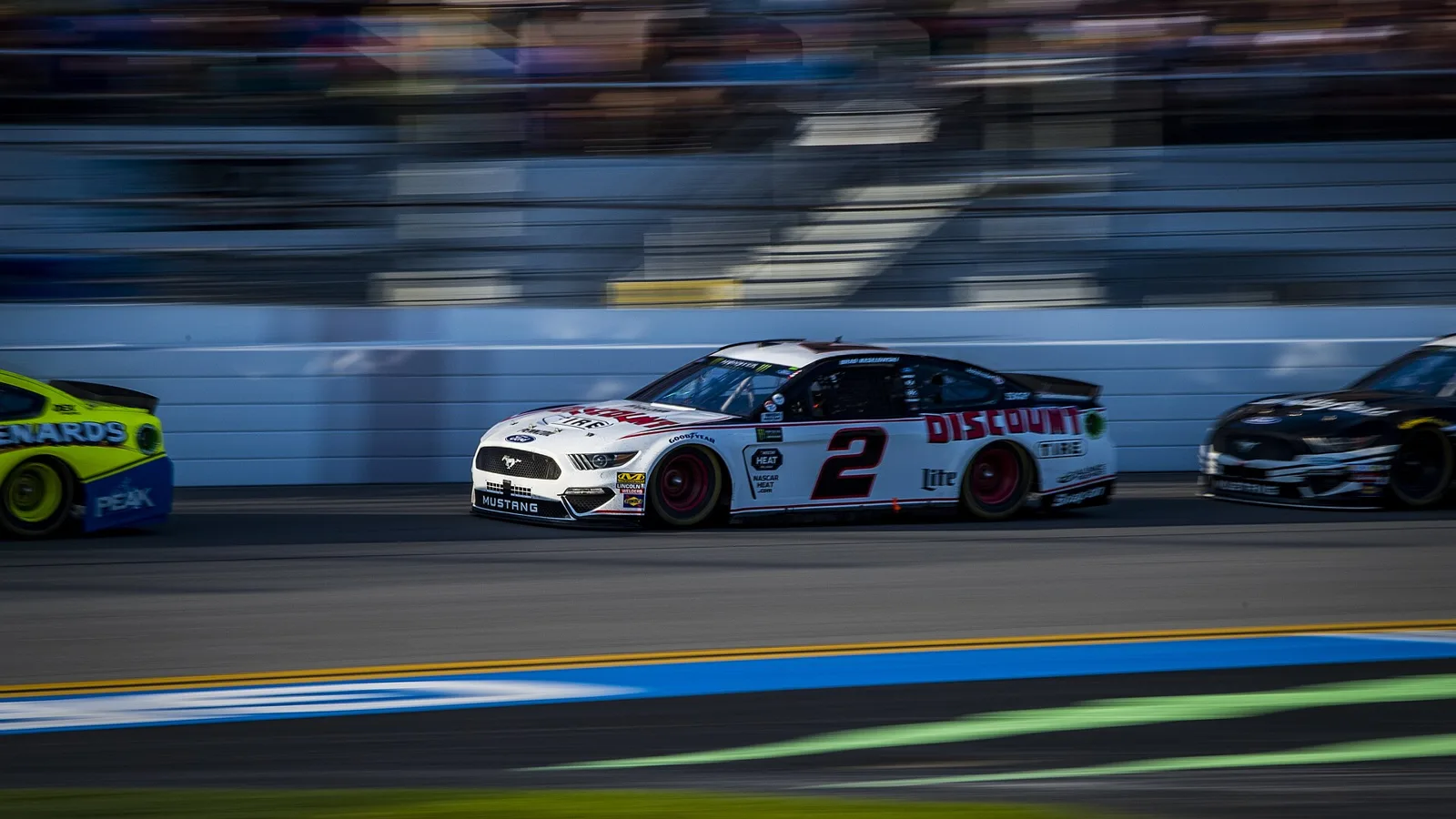
The Ford Mustang's debut race ended with a 207-lap overtime finish, a red flag and only 19 of 40 cars still running at the line.
Denny Hamlin took the checkered flag in overtime at Daytona International Speedway on 17 February 2019, after a run of crashes in the closing laps. It was the 61st running of the race and the debut for the Ford Mustang in the Cup Series.
The 2019 Daytona 500 was the 61st running of the event and the opening race of the 2019 Monster Energy NASCAR Cup Series season. It stretched to 207 laps because of an overtime finish, and Denny Hamlin beat his teammate Kyle Busch after three multi-car crashes in the closing laps.
When and where was the 2019 Daytona 500 held?
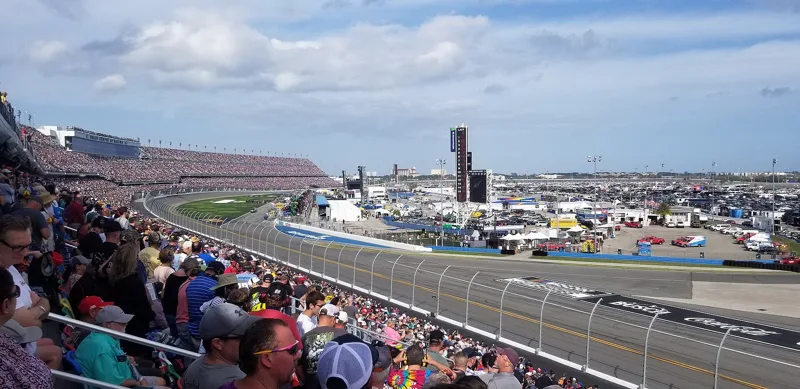
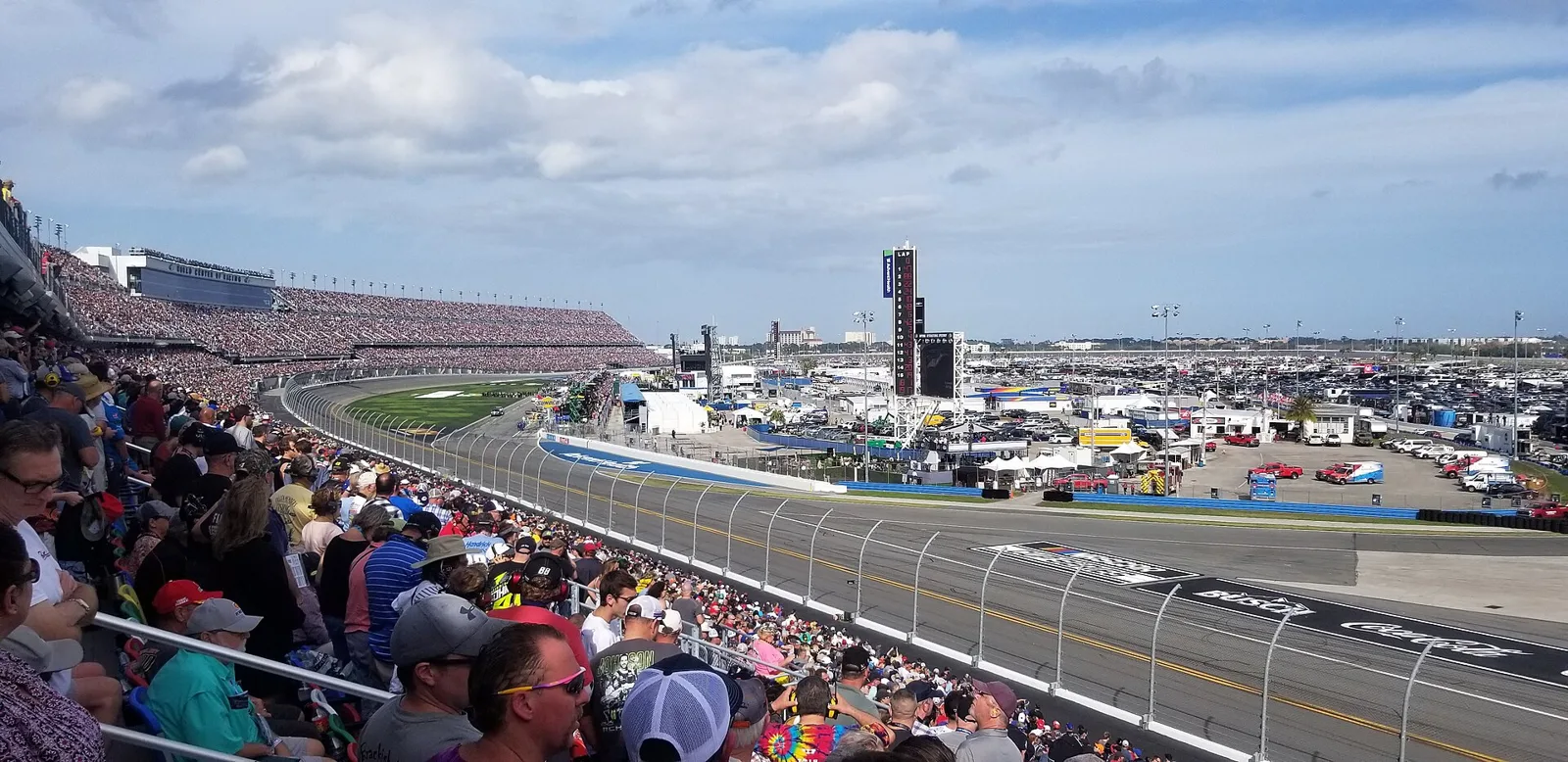
The race was held on 17 February 2019 at Daytona International Speedway on the 2.5-mile (4.0 km) asphalt superspeedway. The 207 laps were extended from a planned 200 because of the overtime finish, and only 19 of the 40 starters were still running at the flag.
The track is a four-turn superspeedway. Its turns are banked at 31 degrees and the front stretch, where the finish line sits, is banked at 18 degrees. The speeds recorded in practice and qualifying show how quickly the cars ran there that week.
A 207-lap race where the lead changed hands fifteen times and only nineteen cars were still running at the flag.
Why did the 2019 season opener stand out?
The race was the first event of the year, and it marked the debut of the Ford Mustang. Ford brought the Mustang in as the replacement for the Fusion.
It was also the first Daytona 500 since 1978 without an Earnhardt in the starting lineup. The absence of that name from the grid was one of the talking points of the week.
How did the Gander RV Duels set the starting grid?
The Gander RV Duels are two NASCAR Cup Series races of 60 laps, or 150 miles (240 km), held in the same week as the Daytona 500. They work as heat races that set the lineup. The first Duel covers cars that qualified in odd-numbered positions on pole day, and the second covers the cars in even-numbered positions.
The Duels set the lineup for positions 3 to 38. Positions 39 and 40 go to the two "Open" cars, which belong to teams without a charter and set the fastest times without locking in a Duel place. Each Duel counts as a full Championship Stage, but no playoff points are awarded. The top ten drivers in each Duel receive championship points.
What were the practice speeds before the race?
Five practice sessions ran before the race, two on 9 February and three more in the days after the Duels. Martin Truex Jr. was quickest in the first session at 45.937 seconds, or 195.920 mph (315.303 km/h). Bubba Wallace led the second at 46.149 seconds, which was a speed of 195.020 mph (313.854 km/h).
Kyle Busch took the third session at 44.936 seconds, which equated to 200.285 mph (322.327 km/h). Paul Menard was fastest in the fourth at 44.830 seconds, or 200.758 mph (323.089 km/h). Michael McDowell closed the programme on 16 February with a best of 47.012 seconds, or 191.440 mph (308.093 km/h).
Who won the pole for the 2019 Daytona 500?
William Byron secured the pole with a lap of 46.319 seconds, which corresponded to a speed of 194.305 mph (312.704 km/h). Starting from the pole put him on the inside of the front row.
Byron led that first lap, but the early laps showed that the field would not stay in its grid order for long. The pole did not guarantee the win, and by the end of the race Byron was caught up in one of the biggest accidents of the afternoon.
Who took part in the pre-race ceremonies?
Houston Texans linebacker J. J. Watt served as grand marshal. He became the first NFL player to give the drivers the command to start their engines in the race's history. The honorary starter was New England Patriots wide receiver Julian Edelman, who waved the green flag.
Edelman had been named the MVP of Super Bowl LIII earlier that month. He said before the race that the drivers were completely crazy for holding speeds near 200 miles per hour for three hours, and that they had to focus in extreme conditions to do it.
How did the first stage unfold?
Byron led the opening lap, but Ricky Stenhouse Jr. got past him on lap 3 and held the lead by lap 5. Matt DiBenedetto challenged Stenhouse on lap 7 and moved in front on lap 11, which set the pattern of constant swaps at the front.
The first caution came on lap 21, after Corey LaJoie's right-front tyre blew and left debris on the track. Some drivers pitted during the green-flag run, and Stenhouse led the field back to speed at the lap 25 restart. Kyle Busch took the lead on lap 35.
The second caution, on lap 50, was the race's first multi-car wreck, in turn two. Kurt Busch cut across the nose of Stenhouse and spun. Bubba Wallace was then tapped from behind by Tyler Reddick and collided with Kurt Busch. The incident also caught Austin Dillon and Jamie McMurray. Kyle Busch held the lead, won the first stage and earned 10 playoff points.
What changed in the second stage?
Joey Logano led the field to the restart on lap 66, but Daniel Suarez took the lead before Logano passed him straight back. When Logano pitted on lap 73, Daniel Hemric gained the lead, and Matt DiBenedetto went ahead on lap 74.
DiBenedetto had recently joined Leavine Family Racing, which had formed a technical alliance with Joe Gibbs Racing, and the link showed. He kept the lead until the next caution. That caution came on lap 107, when Casey Mears and Parker Kligerman crashed in turn one. Ryan Blaney took over the lead and held off the pack to win the second stage and add 10 playoff points.
How did the final stage break down?
William Byron regained the lead at the lap 126 restart. Green-flag pit stops began with 44 laps to go, and two laps later a pit-road crash involving B. J. McLeod and his Rick Ware Racing teammate Cody Ware sent Tyler Reddick over the rear of Jimmie Johnson's car, damaging both cars.
Kyle Busch took the lead off pit road, but Jamie McMurray had stayed out and led the field back to green with 33 laps left. Denny Hamlin took the lead from him with 31 to go. A debris caution followed with 27 to go, then Kyle Larson crashed after a blown left-rear tyre with 20 to go, and Brad Keselowski blew a left-rear tyre and spun with 14 to go.
With 10 laps left, Paul Menard bumped Matt DiBenedetto at the wrong angle in turn three and turned him across the front of the pack. The wreck collected 22 cars in total. DiBenedetto had led a race-high 49 laps and was in the middle of one of the sport's biggest upsets when he was collected. The red flag stayed out for about 20 minutes to clear the wreckage.
How did the race reach overtime?
The race restarted with six laps to go, and Kyle Busch led on the restart. He was chasing his first Daytona 500 win on his 15th attempt. Then Ricky Stenhouse Jr. tried to squeeze in beside Kyle Larson to make it three wide and made contact, sending him into Kevin Harvick. Seven cars were collected in that crash, and Ryan Preece threaded through the gap on the apron to take seventh.
The race restarted with two laps to go and Denny Hamlin took the lead. Clint Bowyer then cut across the nose of Michael McDowell going down the backstretch. That sent Bowyer into William Byron and Chase Elliott, and the twelfth and final caution of the race collected eight cars. It brought out another red flag and set up overtime.
Who won the 2019 Daytona 500 in overtime?
On the overtime restart Hamlin jumped to the front and held off the pack to win his second Daytona 500, and his first win since 2016. Kyle Busch, Erik Jones, Joey Logano and Michael McDowell completed the top five.
The top ten also included Ty Dillon, Kyle Larson, Ryan Preece, Jimmie Johnson and Ross Chastain, in that order. For Chastain it was his first top-ten finish in the Cup Series, which made his afternoon a career milestone despite the chaos around him.
| Finish | Driver | Notes |
|---|---|---|
| First | Denny Hamlin | Won in overtime; second Daytona 500 win after 2016 |
| Second | Kyle Busch | Teammate at Joe Gibbs Racing; chasing a first Daytona 500 win on his 15th try |
| Third | Erik Jones | Top five finish |
| Fourth | Joey Logano | Top five finish after an early lead |
| Fifth | Michael McDowell | Top five finish after the late wrecks |
| Sixth to tenth | Ty Dillon, Kyle Larson, Ryan Preece, Jimmie Johnson, Ross Chastain | Chastain's first career top-ten finish in the Cup Series |
Why did the win mean so much to Joe Gibbs Racing?
J. D. Gibbs, the son of Joe Gibbs and a former college football player and NASCAR driver, had died on 11 January at the age of 49. Hamlin's victory came a little more than a month later, and it was seven days before Gibbs would have turned 50.
The win was special for Hamlin and Joe Gibbs Racing, which had lost one of its own more than a month before the race. It came in the first race of the season, and it carried a particular weight for the whole organisation.
What were the key race statistics?
The race produced 15 lead changes among nine different drivers. There were 12 cautions for 47 laps, and two red flags lasting a combined 39 minutes and 38 seconds. The stage lengths were 60, 60 and 80 laps, with the final stage carrying the overtime.
The race lasted three hours, 45 minutes and 55 seconds, and the average speed was 132.792 mph (213.708 km/h). Only 19 cars were still running at the end, and only 14 drivers completed every lap of the race.
How was the 2019 Daytona 500 broadcast?
Fox has carried the race in the United States since 2001, with exceptions in 2002, 2004 and 2006. Mike Joy called the race, three-time winner Jeff Gordon joined him in the booth, and Darrell Waltrip worked his final Daytona 500 as a commentator.
Fox Sports LA aired a Spanish-language broadcast with Jessi Losada on play-by-play. The Motor Racing Network carried the race on radio and SiriusXM NASCAR Radio simulcast it. Dave Moody called the first two turns from the Sunoco tower outside turn two, while Mike Bagley covered the backstretch from a spotter's stand.