Rain delayed the opening race of 2020 by a day, then a late overtime finish ended with Ryan Newman's car flipping across the line.
Denny Hamlin won the 2020 Daytona 500 by 0.014 seconds over Ryan Blaney. The 209-lap race was delayed by rain, ran into overtime and ended with a dramatic crash for Ryan Newman on the final lap.
The 2020 Daytona 500 was the 62nd running of the event and the first race of the 2020 NASCAR Cup Series season. Rain pushed it back by a day, and Denny Hamlin won in overtime by 0.014 seconds after a massive crash on the final lap in which Ryan Newman was seriously hurt.
When and where was the 2020 Daytona 500 held?
The race was held on 16 and 17 February 2020 at Daytona International Speedway, a 2.5-mile (4.0 km) asphalt superspeedway. It covered 209 laps, because the overtime finish added nine laps to the planned 200. It opened the NASCAR Cup Series calendar for the year. It was also the final Daytona 500 start for Clint Bowyer, Reed Sorenson and Brendan Gaughan, and the last one for Leavine Family Racing, Premium Motorsports and Germain Racing.
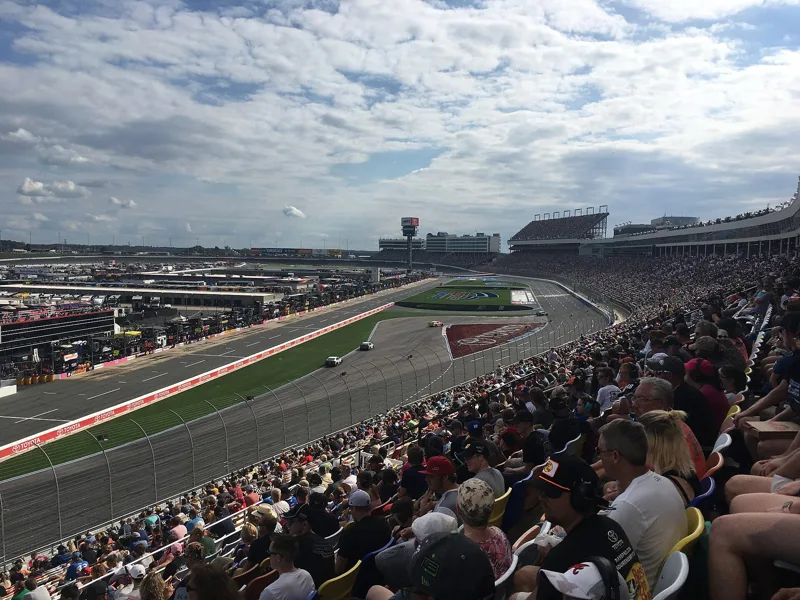
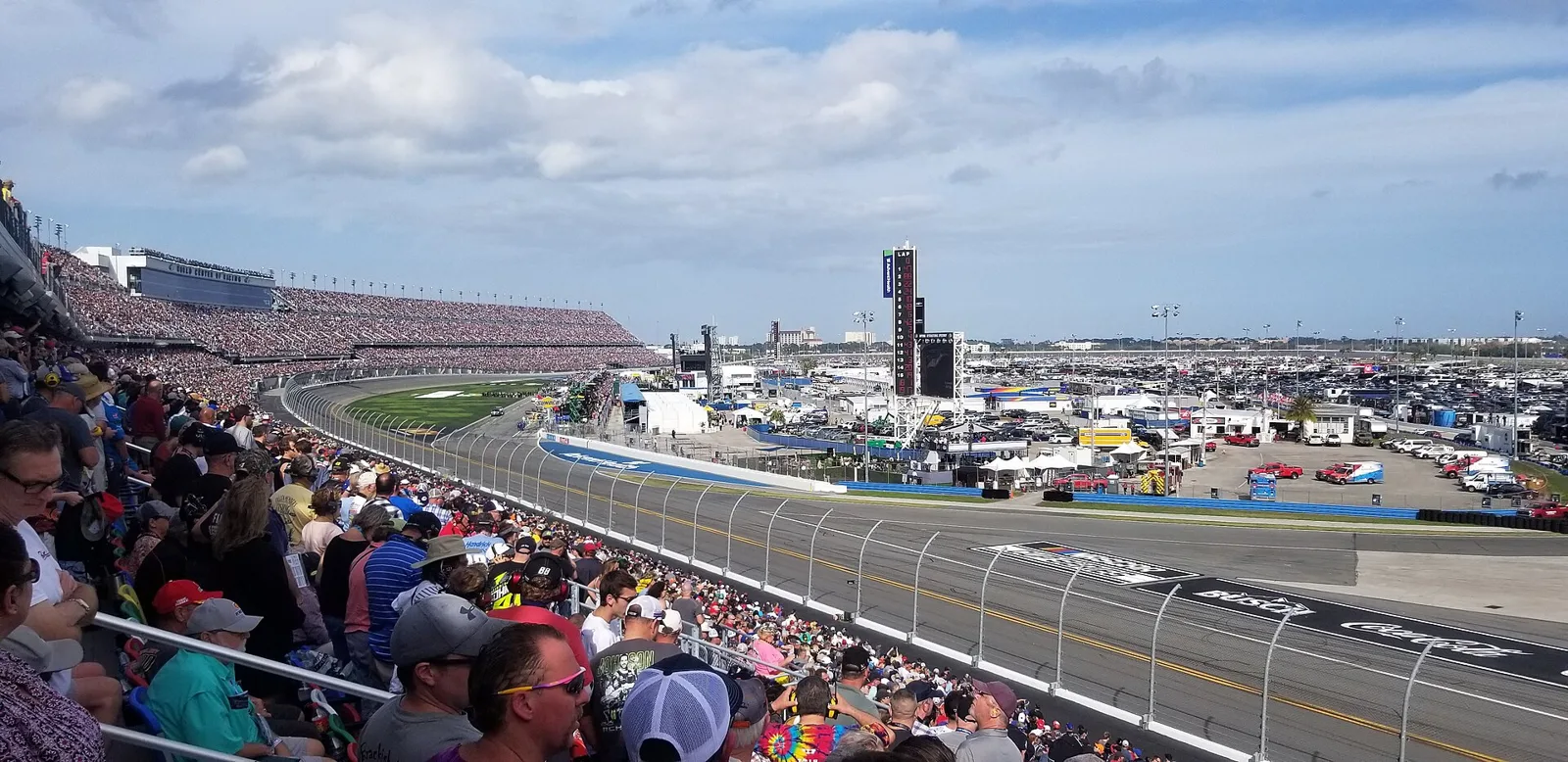
The track has four turns, each banked at 31 degrees, and the front stretch, which carries the finish line, is banked at 18 degrees. The closing laps were decided on that front stretch, and the finish line sat in the middle of the chaos that ended the race.
A rain-delayed opener that ended on the last lap, with a 0.014-second margin and a crash that changed the afternoon.
Why was the 2020 race delayed?
The race was due to start on 16 February at 2:30 p.m. Eastern, but rain brought a red flag and the cars were taken down pit road. The red flag lasted just over an hour before it was lifted and the field took the start, with pole sitter Ricky Stenhouse Jr. leading the first lap.
Rain returned on lap 20 and caused the race to be suspended. It did not resume that evening. Instead it was postponed to the following day with a 4 p.m. start. It was only the second Daytona 500 to be postponed by rain, after the 2012 race.
The track dried overnight, and the teams used the time to change tyres and fuel. The cars came back out the next day once the 4 p.m. start was confirmed.
Who took part in the opening ceremonies?
President Donald Trump served as grand marshal. Before the rain interrupted the start he drove a couple of pace laps in the motorcade, and the opening lap was run behind the official presidential state car.
WWE wrestler Sheamus drove the pace car for the opening laps, and Dale Earnhardt Jr., a two-time winner of the race, waved the green flag to start it. The ceremonies therefore combined political, entertainment and racing figures on the same afternoon.
How fast were the cars in practice and qualifying?
Ty Dillon set the pace in the first practice session at 44.206 seconds, a speed of 203.592 mph (327.650 km/h). Bubba Wallace led the second session at 45.878 seconds, or 196.172 mph (315.708 km/h).
William Byron was fastest in the third practice session at 43.991 seconds, which equated to 204.587 mph (329.251 km/h). Joey Logano closed the programme in the final session with a best of 44.884 seconds, or 200.517 mph (322.701 km/h).
Ricky Stenhouse Jr. claimed the pole with 46.253 seconds, a speed of 194.582 mph (313.149 km/h). Qualifying fed into the Bluegreen Vacations Duels, which set the rest of the grid.
How did the Bluegreen Vacations Duels set the grid?
The Bluegreen Vacations Duels are two NASCAR Cup Series races, each of 60 laps or 150 miles (240 km), run in the same week as the Daytona 500. Cars that qualified in odd-numbered spots race in the first heat, and those in even-numbered spots race in the second.
The Duels set the lineup for positions 3 to 38. The two Open cars, which belong to teams without a charter, fill positions 39 and 40 after setting the fastest times without a Duel place. Each Duel counts as a full Championship Stage, although no playoff points are awarded, and the top ten in each receive championship points.
How did the first two stages unfold?
Stenhouse led the opening lap, and most of the field then ran single file on the high lane until the rain caution on lap 20. Once the track was dry, Brad Keselowski led the restart on lap 26 and Aric Almirola took the lead on lap 29.
Keselowski regained the lead and Ryan Newman went to the front on lap 39. Almirola took the lead back the next lap after the two raced side by side for two laps. Chase Elliott led on lap 44, and the race continued in a mostly single-file pattern on the high lane.
On lap 59 William Byron was turned by Ricky Stenhouse Jr. down the backstretch and hit the inside wall head-on, which ended his afternoon. Elliott held off the pack to win the first stage. Denny Hamlin took the lead for the stage-two restart on lap 72.
A crash on lap 90 involved rookie Quin Houff, who was turned across Almirola's nose and hit the outside wall, collecting B. J. McLeod. Both drivers retired. Hamlin came in for stops, rejoined the front on the exit of pit road and kept the lead to the stage-two finish on lap 96.
What happened during the final stage?
When Hamlin left pit road for the start of the final stage, Elliott was second, but he was then penalised for carrying equipment out of his pit box. His gas can jammed and came loose, and Martin Truex Jr. struck it, which sent Elliott to the back of the field.
Hamlin led the restart on lap 136, and Ryan Blaney took over on the next lap. The lead then changed hands among Stenhouse and Blaney before Kyle Busch took it on lap 141. It was his 16th attempt to win the Daytona 500, and he was looking to end the wait.
Brad Keselowski led on lap 149, and Joey Logano, Jimmie Johnson and Alex Bowman each held the front during the stops that followed. Stenhouse spun off turn four after being reared by Erik Jones, but no caution flew. Kyle Busch's engine began to fail, and smoke poured from his exhaust until he retired.
Ryan Newman took the lead with 17 laps to go. Almirola then received a big push from Logano and bumped Keselowski, which turned Keselowski into the pack and started a wreck down the backstretch that collected 19 cars. The red flag was out for about 10 minutes while the cars were removed.
How did the race reach overtime?
The race restarted with 10 laps to go, and a seventh caution followed when Reed Sorenson and Timmy Hill crashed off turn two. The race went green again with four laps to run, and Hamlin took the lead from Newman with three laps remaining.
With two laps left, Ross Chastain took a strong run on Ryan Preece. Preece moved to block him and made contact, which sent Chastain sideways into the outside wall in front of the field. The wreck collected nine cars, and the red flag came out again for about 10 minutes. It also set up overtime.
The ninth and final caution came on the overtime restart when Justin Haley got loose and hit Clint Bowyer and Michael McDowell, sending both spinning. That set up a second overtime attempt. Hamlin took the lead on the new restart after a big push from Ryan Blaney, and he held off Newman as they took the white flag.
On the final lap Newman led with a push from Blaney, and Blaney moved into second. Blaney tried the outside and then the inside through turns three and four, but Newman blocked both attempts. Blaney pushed Newman to the line, hooked his right rear and sent Newman spinning.
Newman hit the outside wall at close to full speed and his car went upside down. Corey LaJoie then struck the driver's window and sent the car into the air, where it barrel-rolled before it landed on its roof just short of the finish line. Hamlin's margin over Blaney was 0.014 seconds, the second-closest finish in Daytona 500 history.
What happened to Ryan Newman?
LaJoie's front end was destroyed and caught fire, but he walked away with no injuries. Newman was unconscious and did not answer when crew members asked whether he was all right. Rescue crews reached him quickly, but it took nearly 15 minutes to extract him, because the car had to be turned upright and its roof cut away.
Newman was taken to Halifax Medical Center with serious injuries that were not believed to be life-threatening. He had a brain bruise and was released from hospital on Wednesday, 19 February, two days after the crash. He sat out the next three races, with Ross Chastain driving his car in that stretch, and came back at the Real Heroes 400.
Many outlets credited his survival to the safety features NASCAR had introduced after Dale Earnhardt died in the 2001 Daytona 500.
How did the winners celebrate?
Hamlin and his crew were unaware at first of how serious Newman's crash was, so they began celebrating on the infield grass. The crowd booed Hamlin heavily when he got out of his car, and he was booed again in victory lane. Joe Gibbs issued an apology for the team's celebration.
Hamlin said he only understood the severity when NASCAR cancelled the usual front-straight interview with the winner. The victory was his third Daytona 500 and his second in a row, the first back-to-back wins in the race since Sterling Marlin won in 1994 and 1995.
Who were the top finishers?
| Finish | Driver | Notes |
|---|---|---|
| First | Denny Hamlin | Third Daytona 500 win; by 0.014 seconds |
| Second | Ryan Blaney | Hooked Newman's right rear on the final lap, sending him spinning |
| Third | Chris Buescher | Top five finish |
| Fourth | David Ragan | Top five finish |
| Fifth | Kevin Harvick | Top five finish |
| Sixth to tenth | Clint Bowyer, Brendan Gaughan, Corey LaJoie, Ryan Newman, Kyle Larson | Newman finished ninth after his crash and was seriously injured |
What were the key statistics?
The race had 23 lead changes among 13 drivers. There were nine cautions for 39 laps, and three red flags, one for weather and two for accidents. The race time was three hours, 42 minutes and 10 seconds, and the average speed was 141.11 mph (227.09 km/h).
The margin of victory was 0.014 seconds. Hamlin took the lead on the second overtime restart, and Blaney's final-lap push decided how close the finish would be.
How was the race broadcast?
Fox has carried the Daytona 500 in the United States since 2001, with exceptions in 2002, 2004 and 2006. Mike Joy called the race with three-time winner Jeff Gordon, and Jamie Little, Regan Smith, Vince Welch and Matt Yocum worked pit road. Larry McReynolds and 2010 winner Jamie McMurray offered analysis from the studio in Charlotte.
The Motor Racing Network, which has covered the race since 1970, carried the radio coverage alongside SiriusXM NASCAR Radio. Alex Hayden, Jeff Striegle and 1989 champion Rusty Wallace worked the booth, while Dave Moody called the first two turns from the Sunoco tower.