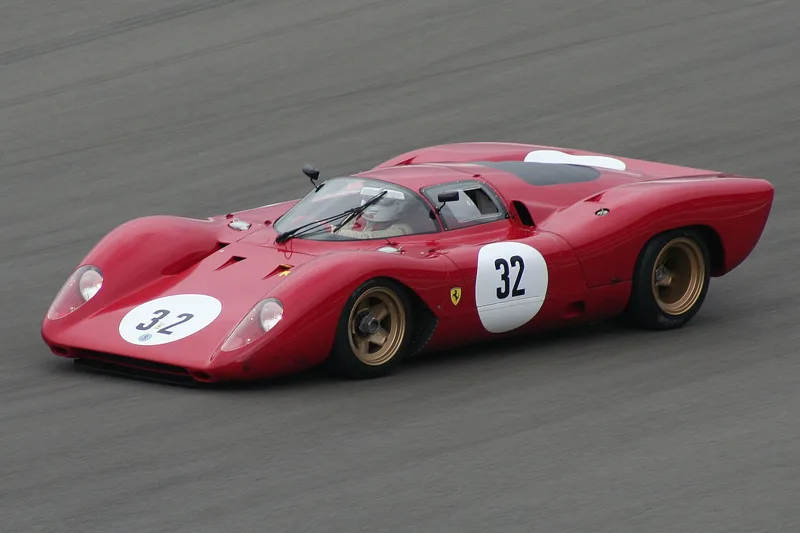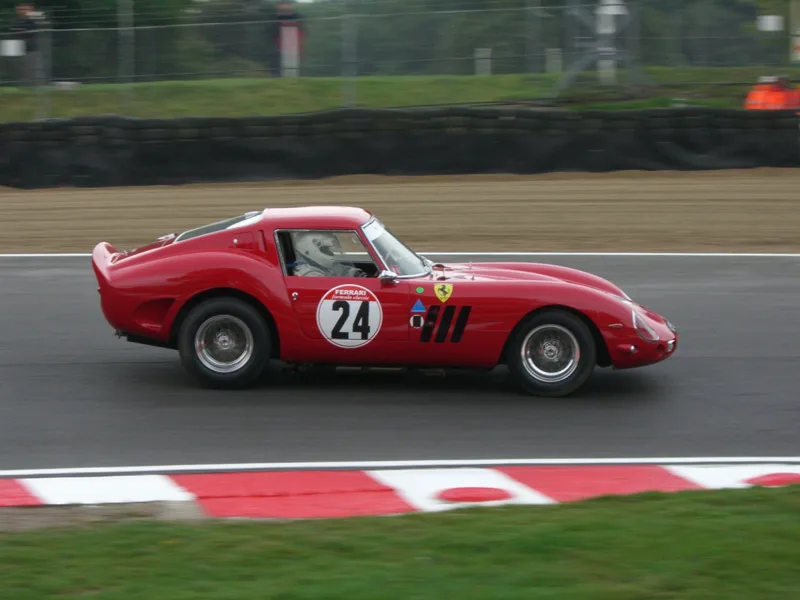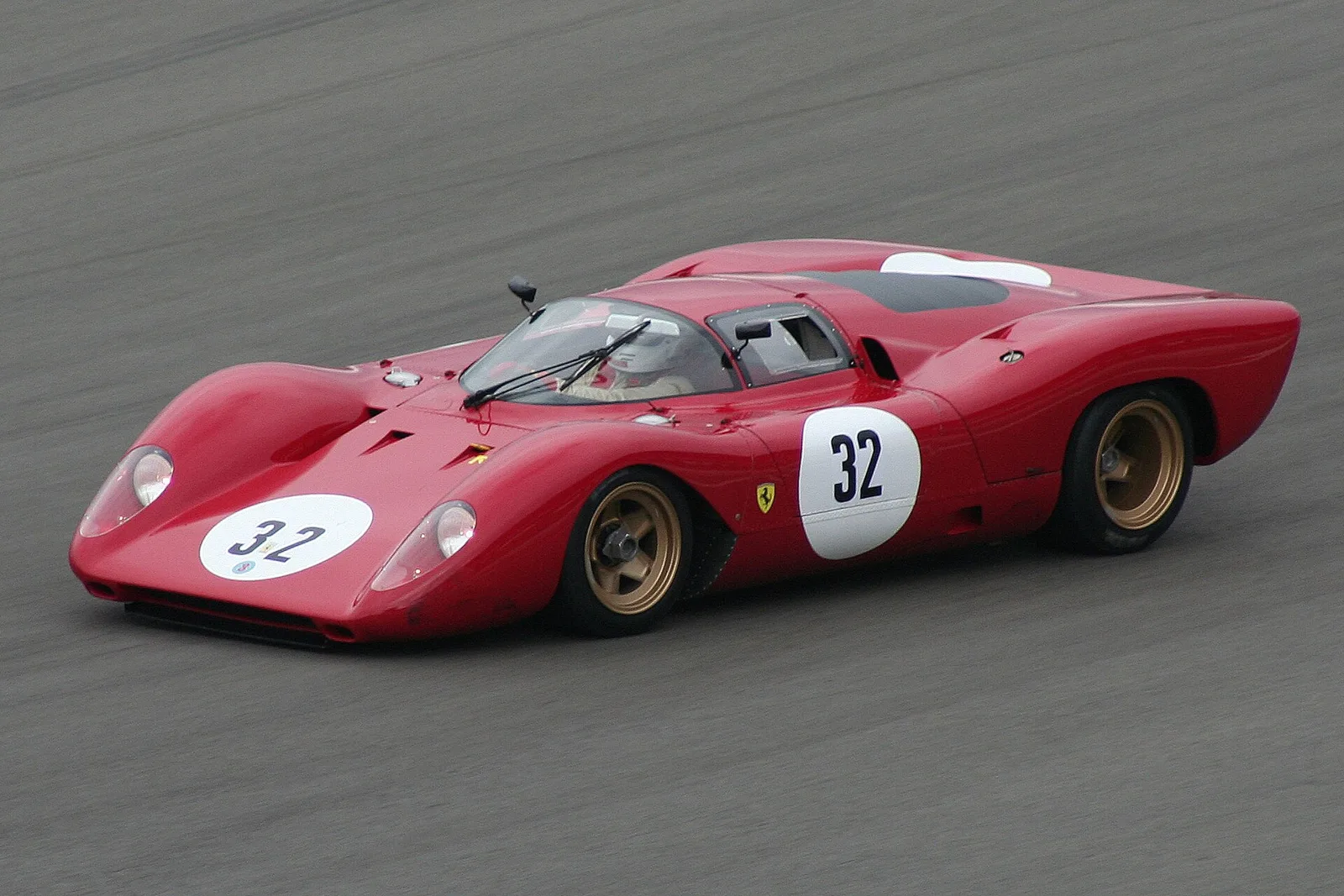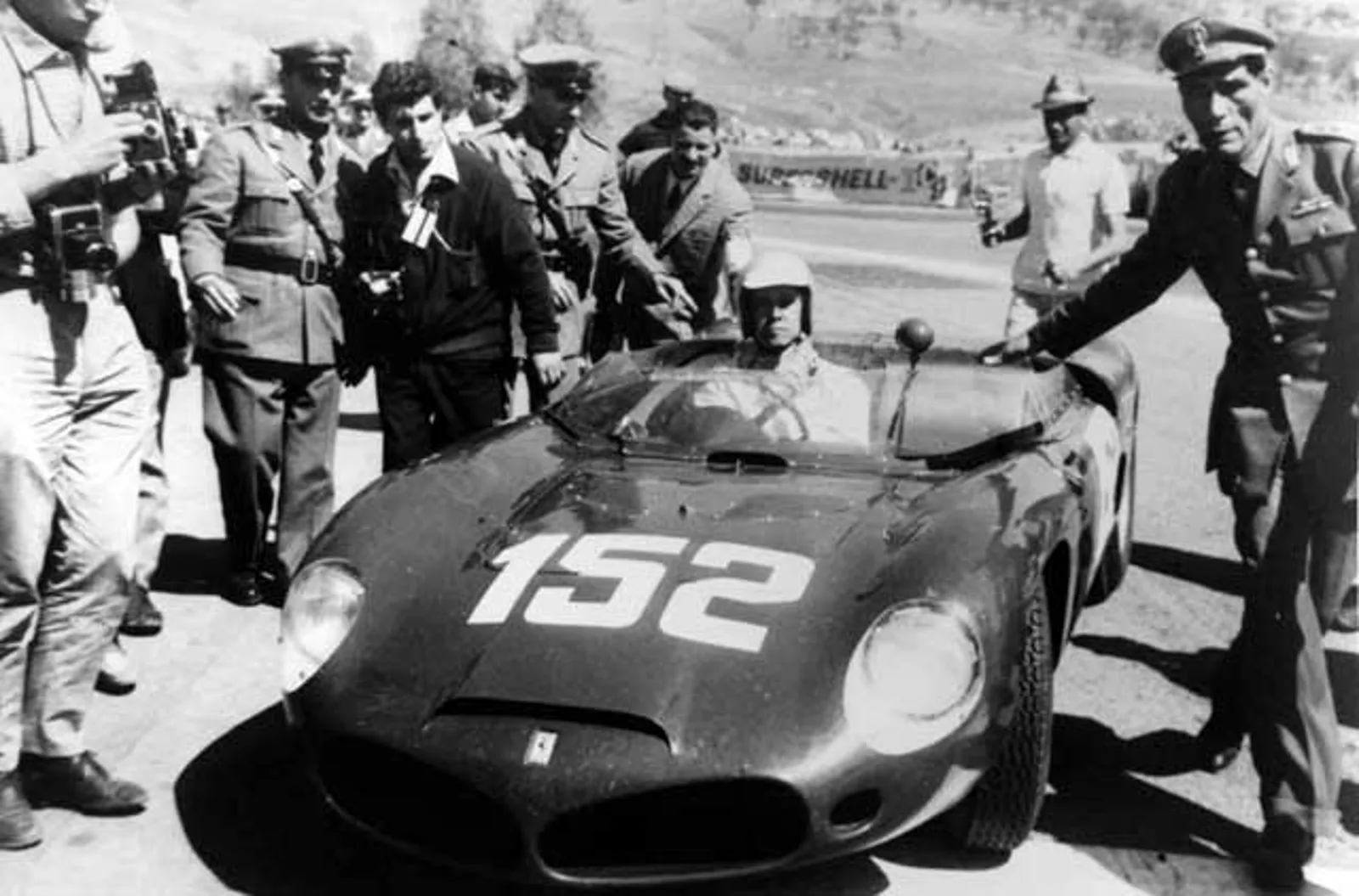
Six chassis, Dino V6 and V8 engines and sharknose bodywork: the early-1960s SP series won two Targa Florios and the 1962 European hill climb title.
The Ferrari SP, or Dino SP, was a series of rear mid-engined sports prototypes from the early 1960s. Built in six chassis with V6 and V8 engines, the cars won two Targa Florio races and the 1962 European Hill Climb title.
The Ferrari SP, also called the Dino SP, was a series of Italian sports prototypes built in the early 1960s. Every model had a rear mid-engine layout, which was a first for a Ferrari sports car, and the series produced major results including two overall Targa Florio victories.
Only six chassis were built, and several of them were changed into different specifications during their careers. The series won the 1962 European Hill Climb Championship in the Sports Cars class and the 1962 Coupe des Sports title, which made it a key step in Ferrari's move towards mid-engined machinery.
Why did Ferrari build a mid-engined sports prototype?
Enzo Ferrari denied in January 1959 that a rear-engined car was in development, yet he had quietly given Carlo Chiti the job of building one. Chiti was to develop a rear-engined Formula One car and a rear-engined sports car, both ready for the 1961 racing season.
Chiti chose Vittorio Jano's 2.4-litre 65 degree Dino V6 as the basis for both designs, because its light weight and compact size suited a mid-engined layout. The engine had already been used in the 246 F1 and the 1960 Dino 246 S.
The first car, the 246 SP, was unveiled at a press conference on 13 February 1961. The design answered a clear need, because rear-engined competitors had begun to appear in both Grand Prix and sports car racing, and Ferrari's front-engined cars were no longer enough on their own.
The series was intended to keep Ferrari competitive in sports car racing, and it did so almost immediately. The model proved its capability at the 1961 Targa Florio, where it scored an outright win and added points to Ferrari's total in the 1961 World Sportscar Championship.
A mid-engined Ferrari that was built in just six chassis, won the Targa Florio and gave the company its first rear-engined sports car.
What engines did the SP series use?
The series began with Jano's V6 Dino engines in both 60 and 65 degree forms, all with dry sump lubrication and five-speed manual transmissions. Later in the series came a new 90 degree V8 designed by Carlo Chiti, which was used in only a few cars.
The 246 SP used a 65 degree V6 of 2.4 litres, which produced 270 PS (199 kW; 266 hp) and was fed by three Weber 42DCN carburettors. Every 246 SP chassis was supplied with two engine short blocks, and one set of heads was moved between them as required.
The 286 SP used a 60 degree V6 of 2,862.78 cc with 260 PS (191 kW; 256 hp). Only one example was built, and it never raced, because the large-capacity V6 was soon dropped in favour of Chiti's V8 engines.
The 248 SP introduced a 2,458.70 cc V8 with 250 PS (184 kW; 247 hp). It was the first fully Ferrari-developed 90 degree V8, and only two 248 SPs were produced before both were modified into larger 268 SP cars.
How was the 246 SP built and bodied?
The chassis was a tubular steel tipo 561, with all-round independent suspension and disc brakes on all four corners. Durability came first in its design, because Ferrari wanted the cars to survive harsh endurance races, and the rack and pinion steering was a new technology for the company.
Dunlop discs measuring 12 inches (30 cm) in diameter were fitted front and rear, with the rear brakes mounted inboard at the transaxle. The five-speed transaxle was designed by Giorgio Salvarani and was shared by all the SP-series cars.
The bodywork came from Carrozzeria Fantuzzi, whose owner Medardo Fantuzzi worked with Carlo Chiti on the shape. Panels were hand-shaped from 22 gauge aluminium over wire forms, and each body shell had its own craftsman, which is why no two bodies were exactly alike.
The car's most famous feature was its pair of twin front air intakes, a sharknose arrangement that Chiti's wind tunnel work confirmed. Ferrari used the same nose on its 1961 Formula One car, and the design became a signature of the company's racers that year.
Early testing exposed a problem. A vertical tail fin caused instability at Modena Autodrome, and the team removed it and added a 5 inches (13 cm) rear spoiler. Ritchie Ginther had suggested the spoiler, drawing on his experience of aircraft during the war.
How did the 246 SP perform in 1961 and 1962?
Chassis 0790 was presented at the 1961 press conference and won the 1961 Targa Florio. It ran out of fuel at the 1961 Le Mans, an error that came down to a miscalculation of the fuel load for the long straight.
Chassis 0796 crashed during the 1961 Targa Florio, but it returned in 1962 and won that race with Rodriguez, Gendebien and Mairesse. That victory contributed to the 1962 Coupe des Sports title.
Chassis 0790 was also a winner in 1962, when Mike Parkes took the Guards Trophy at Brands Hatch. It was converted into a 196 SP specification in 1963, which changed its place in the series.
For 1962 the windscreens and rear bodywork were lowered in response to a change in the FIA regulations, which improved aerodynamics and driver visibility. The 246 SP gained a reputation for an extremely hot cockpit, a problem that the team tried to reduce with ventilation changes.
What was the 196 SP and how did it win the hill climb title?
The 196 SP was a 1962 model fitted with a 2.0-litre single overhead camshaft V6 of 1,983.72 cc, which used bore and stroke measurements of 77 by 71 mm. It produced 210 PS (154 kW; 207 hp) at 7500 rpm, and it was introduced early in 1962.
Ludovico Scarfiotti drove the 196 SP for Scuderia Sant'Ambroeus, a team managed by the Ferrari sporting director. Scarfiotti won five of the six hill climb races the team entered between June and August, which helped Ferrari claim the 1962 European Hill Climb Championship.
Scuderia Ferrari 196 SPs also took 2,000 cc class wins at the 1962 and 1963 Targa Florio. Four 196 SPs were built in total, including converted cars that had started life as larger 246 SP or 268 SP models.
What did the 248 SP and 268 SP add?
The 248 SP was the first of the V8 cars, and its 90 degree engine was designed to replace the Dino V6. The 268 SP enlarged the V8 to 2,644.96 cc, which lifted output to 265 PS (195 kW; 261 hp) at 7000 rpm and gave the team a larger engine for the 3.0-litre Sport and Prototype classes.
Only three 268 SPs existed, and all of them were converted from other models. Chassis 0798 was the first 268 SP, converted from a 248 SP, and it is the only one that survives in 268 SP form.
Chassis 0798 was later restored by Pierre Bardinon, the Ferrari collector who bought it after several races in the United States. The car kept its original 2.6-litre engine through all of this, although its bodywork changed many times during its racing career.
What are the main Ferrari SP specifications?
| Specification | Detail |
|---|---|
| Series | Ferrari SP (Dino SP), early 1960s sports prototypes |
| Layout | Rear mid-engine |
| Chassis | Tubular steel tipo 561, all-round independent suspension, disc brakes |
| 246 SP engine | 2.4-litre 65 degree Dino V6, 270 PS (199 kW; 266 hp) |
| 196 SP engine | 2.0-litre V6, 1,983.72 cc, 210 PS (154 kW; 207 hp) at 7500 rpm |
| 286 SP engine | 2,862.78 cc V6, 260 PS (191 kW; 256 hp) |
| 248 SP engine | 2,458.70 cc V8, 250 PS (184 kW; 247 hp) |
| 268 SP engine | 2,644.96 cc V8, 265 PS (195 kW; 261 hp) at 7000 rpm |
| Transmission | Five-speed transaxle designed by Giorgio Salvarani |
| Chassis built | Six in total |
What happened to the individual chassis?
Chassis 0798 is the best-documented car in the series. It was converted from a 248 SP and entered the 1962 Le Mans, where it retired after 18 hours. Later that year it finished eighth overall at the Nassau Trophy, and in 1963 it was sold to the independent driver Buck Fulp.
Chassis 0802 suffered a major practice accident at the 1962 Targa Florio, before being rebuilt and converted into a 196 SP. Chassis 0806 failed to finish the 1962 1000 km Nurburgring after a crash, and it was later converted into a 196 SP as well.
Private entrants kept these cars running long after the factory had moved on, and the later results, though modest, show that the chassis still had racing life left in them.
How did the SP cars fare in the United States?
Several SP cars found a second life with private entrants in the United States. Buck Fulp took chassis 0798 to a series of American events, and Bob Grossman won a class at Bahamas Speed Week in a 196 SP, which showed the cars could still compete with private teams.
Fulp's time with the 268 SP included a 34th-place finish overall at the 1963 Sebring 12 Hours. He had retired early with a broken suspension, but the car came back to finish in the results, which was a respectable outcome for a converted prototype.
The American races were a long way from the factory programme that had produced the Targa Florio wins. Chassis 0798 kept racing in SCCA events through the 1960s, long after its factory days, before a collector bought it. Their results show how a converted prototype could still earn points and class honours after its works career had ended.