Renault titles, a fourth-place finish in 2022, a double podium in 2024 and a switch from Renault engines to Mercedes power.
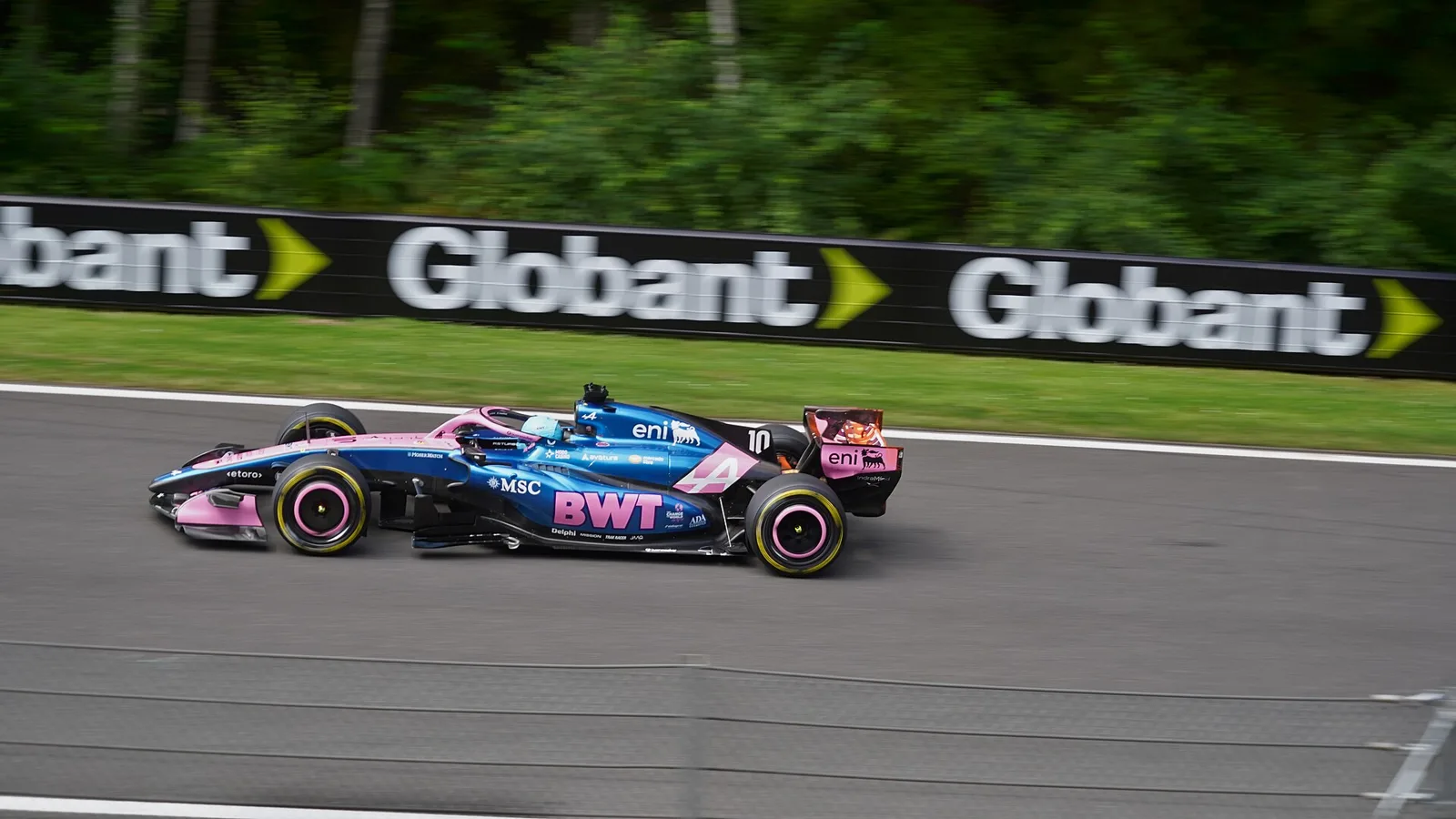
Alpine F1 Team is the current name of the Enstone-based team that first raced in 1981 as Toleman. Under the Alpine brand, from 2021, it ran Renault engines until the end of 2025 and then became a Mercedes customer in 2026. Its only win under the Alpine name came at the 2021 Hungarian Grand Prix.
The Enstone team first competed in Formula One in 1981 as Toleman. Since then it has raced as Benetton, Renault and Lotus, won two drivers' titles under Benetton and two more under Renault, and in 2026 began racing with Mercedes power.
Where did the Alpine team come from?
The team first raced in 1981 as Toleman, working from a base in Witney, England. After the Benetton Group bought it in 1986, it raced as Benetton, and the operation grew into the Enstone outfit that the paddock knows today.
Benetton moved the team to Enstone before the 1992 season, and it was there that Michael Schumacher won the drivers' titles in 1994 and 1995. Benetton also took the Constructors' Championship in 1995.
Renault acquired the team in 2000 and renamed it the Renault F1 Team in 2002. The Constructors' Championship came to the squad in 2005 and 2006, and Fernando Alonso won the drivers' title in both of those seasons.
The Lotus years were shorter. Lotus Cars joined as a sponsor in 2011, and the name became Lotus Renault GP. Genii Capital took a majority stake in 2012, and from that season until 2015 the team raced as Lotus F1 Team.
The Alpine brand had tried Formula One before, in 1968, when the sports car maker built an A350 powered by a Gordini V8. Testing with Mauro Bianchi at Zandvoort showed the engine made around 300 horsepower, against about 400 from the Cosworth V8s, and the project ended.
In 1975 the company built the A500 prototype to test a turbocharged V6 for Renault's factory team, and that engine debuted in 1977.
From Toleman in 1981 to a Mercedes customer in 2026, the Enstone team has changed names more often than its base.
How did the team become Alpine?
The Alpine name arrived in stages. In September 2020 Groupe Renault said its works team would use the Alpine brand to promote its sports car arm, which meant retiring the Renault F1 Team name after five years.
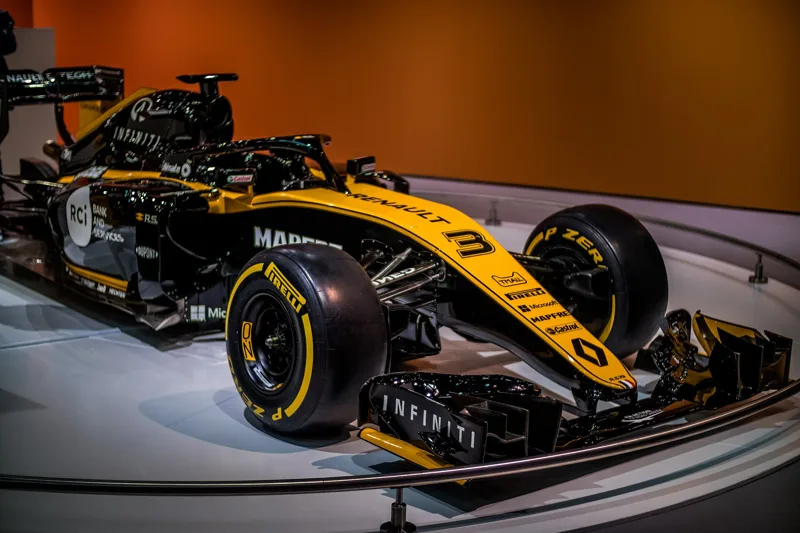
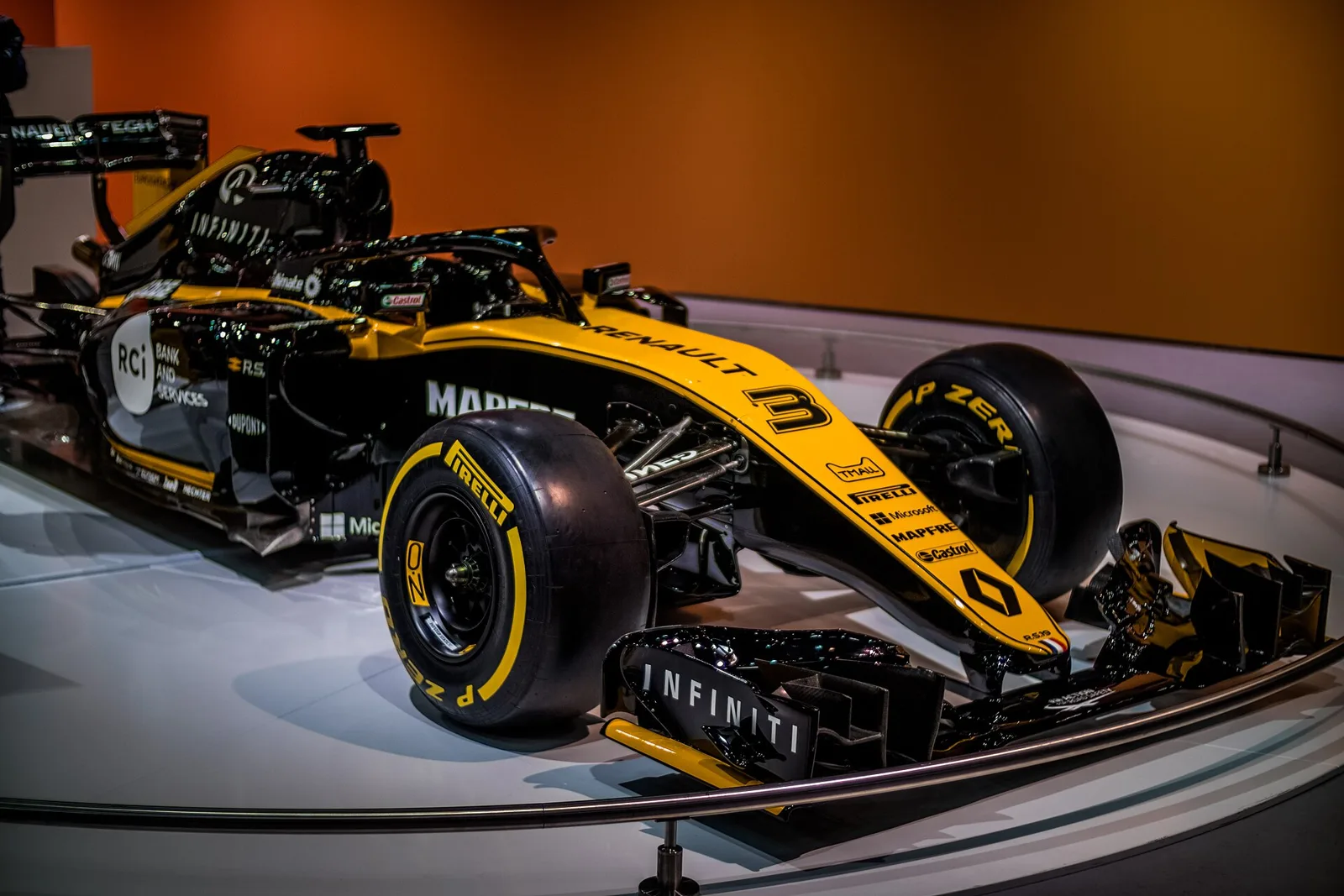
Renault had taken the team back for a second time at the end of 2015 and raced it as Renault from 2016 until the end of 2020. The Alpine F1 Team name took effect for 2021, and the car was run with Renault power.
In June 2023 a group of investors agreed to pay 200 million euros for a 24% stake in the team. Two investment firms, Otro Capital and RedBird Capital Partners, were among the buyers alongside Maximum Effort Investments, and the actor Ryan Reynolds was among the backers.
Further minority investors joined later in 2023, including NFL players, a golfer, a former heavyweight boxing champion and footballers. In 2025 Renault sold more shares to new financial partners, reducing its own holding to approximately 60%, and in 2026 reports suggested Otro Capital wanted to offload its holding.
Works operations occupy a 17,000 m2 (180,000 sq ft) building on a 17-acre (6.9 ha) plot in Enstone. By May 2023 the company counted about 1,000 people there and 350 at the power-unit centre in Viry-Chatillon.
How did Alpine perform as a Renault works team?
Alpine's most significant result came in 2021, when Esteban Ocon won the Hungarian Grand Prix. That remains the team's only win under the Alpine name. In 2022 the team finished fourth in the Constructors' Championship, its best placing to date.
Renault's personnel changed as the rebrand went ahead. Cyril Abiteboul stepped away as team boss, and Davide Brivio, who had worked with Suzuki in MotoGP, took over. Fernando Alonso returned for 2021 to replace Daniel Ricciardo, and Ocon stayed on from the 2020 line-up.
The season opened badly, with Alonso forced to retire after debris made his car overheat, and Ocon caught up in a collision with Sebastian Vettel. Despite that, the team scored in the next fifteen races. Ocon's Hungarian win was the first by a French driver for a French team since Olivier Panis won the 1996 Monaco Grand Prix for Ligier, and the first in a French car with a French engine since Alain Prost's 1983 Austrian win.
Alonso also reached the podium in Qatar, starting third after two rivals took grid penalties. In January 2022 Marcin Budkowski stepped down as team principal and Alain Prost also left the board, while Otmar Szafnauer, formerly of Aston Martin, took over.
Bruno Famin, a former FIA official, was recruited as executive director at Viry-Chatillon to lead power-unit development. Oscar Piastri moved into the test role in 2022, and BWT became title sponsor in February under a deal framed around sustainability.
Alonso qualified second for the Canadian Grand Prix in 2022, his best grid slot since the 2012 German Grand Prix, before finishing ninth. The team's fourth place that year came from steady points finishes, because neither driver stood on the podium during the campaign.
Why did 2023 bring so much change?
Alonso moved to Aston Martin for 2023 because he wanted a multi-year extension, and Alpine was only willing to offer one more year. Piastri was announced as his successor, but he immediately denied having a contract to race for the team.
A hearing of the Contract Recognition Board in September 2022 found that Alpine had no valid contract with Piastri, so he was free to race for McLaren in 2023. Szafnauer criticised him publicly, saying he should show more loyalty to Alpine.
Szafnauer and sporting director Alan Permane left after the Belgian Grand Prix weekend. Philippe Krief replaced Laurent Rossi as chief executive in July 2023, and chief technical officer Pat Fry also left, joining Williams at the end of the year.
The season finished sixth in the Constructors' Championship. Gasly and Ocon each took a third-place finish, at Zandvoort and Monaco respectively, but the Renault power unit was reportedly costing the team about half a second per lap. Without that deficit the car could have matched the Mercedes.
What happened to Alpine in 2024 and 2025?
At Bahrain in 2024 the squad filled the last two grid slots in qualifying and finished 17th and 18th. Matt Harman, the technical director, and Dirk de Beer, who ran aerodynamics, then left, and the squad moved to three technical directors covering engineering, aerodynamics and performance.
Flavio Briatore returned as an executive adviser in May 2024. He had led Team Enstone from 2000 to 2009 before resigning during a race-fixing scandal, and his return was a controversial one.
Ocon and Gasly collided at Monaco on the opening lap, and Ocon later received a five-place grid penalty in Canada. Ocon announced he would leave at the end of the season, and during the Belgian weekend Famin stepped down as team principal, with Oliver Oakes taking over from the Dutch Grand Prix.
The 2024 double podium came at the Sao Paulo Grand Prix, where Ocon finished second and Gasly third behind Max Verstappen. The result moved the squad from ninth into sixth in the standings, and it was the first double podium carried out under the Alpine banner.
Gasly stayed for 2025, which became Alpine's last year with a works Renault engine. Jack Doohan was promoted to a race seat in place of Ocon, who had joined Haas. The season started badly, and after the first three rounds the team sat at the bottom of the table, the only squad yet to score.
Doohan picked up four penalty points on his Super Licence after wheel-to-wheel incidents in China, and Gasly was disqualified from the Chinese Grand Prix when his A525 was found to be underweight. Doohan then crashed heavily in practice in Japan.
After Miami, Oliver Oakes resigned and Flavio Briatore became the de facto team principal, while racing director Dave Greenwood took on Oakes's formal duties. Franco Colapinto replaced Doohan on a rotating seat from the Emilia Romagna round, and Doohan was demoted to reserve driver.
Colapinto's time was marked by a heavy crash in qualifying at Imola, and Gasly scored a point at the Spanish Grand Prix. The team finished last in the Constructors' Championship in its final year with a works Renault engine.
| Season | Engines | Highlight |
|---|---|---|
| 2021 | Renault | Ocon wins the Hungarian Grand Prix |
| 2022 | Renault | Fourth in the Constructors' Championship, the best finish to date |
| 2023 | Renault | Sixth overall, with a third-place finish for each of Gasly and Ocon |
| 2024 | Renault | Double podium at the Sao Paulo Grand Prix |
| 2025 | Renault | Last in the Constructors' Championship |
| 2026 | Mercedes | Sixth at the time of writing; Gasly takes his first career pole at Monza |
What does the move to Mercedes power mean for Alpine?
From 2026 Alpine runs Mercedes engines and gearboxes as a customer team, while Groupe Renault remains the majority owner. The change followed Renault's decision to end its engine programme after the 2025 season, which it announced on 30 September 2024.
The early results were encouraging. The Mercedes gearbox helped both drivers score after 3 races, and Gasly claimed a Monaco podium that was later removed when two five-second penalties were reinstated. He then secured a shock first career pole at Monza, and the squad sits sixth in the table at the time of writing.
Gucci takes over the title sponsorship from BWT in 2027, when the team will race as Gucci Racing Alpine Formula One Team. For 2026 Alpine kept Gasly and signed Colapinto for a full-time drive.
What is Alpine's place in the sport today?
Alpine's history runs from a 1968 attempt by a sports car maker to a Mercedes-powered team in 2026. The thread connecting the two is a squad that has repeatedly changed its identity while keeping its base at Enstone.
The line-up has also been part of the brand's story. Alonso's return in 2021 and the arrival of Gasly and Colapinto in 2026 show a squad that has relied on experienced and emerging drivers alike.
Automobiles Alpine also supported Signatech in the World Endurance Championship, and the team's esports side took a title of its own. Otis Lawrence took the 2026 esports crown while driving for Alpine Sim Racing, a sign the brand reaches beyond the racetrack.