George Russell led every lap on the way to a first Grand Slam, while a close finish and two safety cars reshaped the title picture.
George Russell won the 2026 Azerbaijan Grand Prix at the Baku City Circuit on 26 September, after starting from pole and leading every lap. Max Verstappen was second and Isack Hadjar third, both for Red Bull, and Antonelli's championship lead was cut to 66 points.
George Russell won the 2026 Azerbaijan Grand Prix by 0.196 seconds, one of the closest finishes in Formula One history. It was his third win of the season and the first Grand Slam of his career, achieved with pole, victory, every lap led and the fastest lap. The result also trimmed Kimi Antonelli's championship advantage over him, which fell from 81 points to 66.
What was the background to the race?
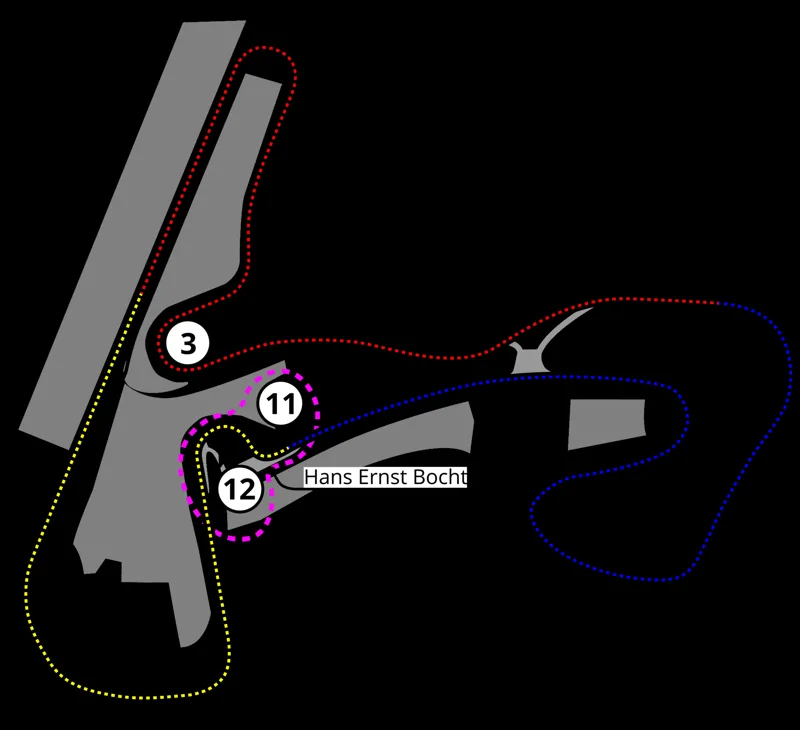
The Baku City Circuit hosted the race for the tenth time, after a single European Grand Prix in 2016. It was the fifteenth round of the 2026 season and the ninth running of the Azerbaijan Grand Prix, held across the weekend of 24 to 26 September.
Going into the event, Antonelli led the drivers' standings with 292 points, 81 ahead of Russell in second and 101 ahead of Hamilton in third. Mercedes led the constructors with 503 points, ahead of Ferrari on 358 and McLaren on 306.
Organisers had first planned the race for 27 September. The start was brought forward a day so that Remembrance Day could be observed, after the promoter and public authorities made the request.
Isack Hadjar returned to the Red Bull line-up after recovering from a wrist injury he had suffered before the Dutch Grand Prix. Pirelli selected its C3, C4 and C5 compounds, designated hard, medium and soft respectively.
A 0.196-second win, a first Grand Slam and a title lead cut to 66 points made Baku one of the tightest races of the season.
Who won the 2026 Azerbaijan Grand Prix?
Russell crossed the line first on 26 September 2026, 0.196 seconds clear of Verstappen. Isack Hadjar finished third, giving Red Bull its first double podium since the 2024 Chinese Grand Prix. Russell's win was his third of the season and the eighth of his Formula One career.
Russell took pole in qualifying with a time of 1:42.526. That lap was 0.837 seconds faster than Charles Leclerc's, and it was his fifth pole of the season.
He led every lap, but the race was never comfortable. Russell had made light contact with the wall at turn fifteen around half distance and asked Mercedes to check his tyre pressures before carrying on. Verstappen kept him under pressure through the final stint, and the margin at the flag was the smallest of the season.
How did practice set up qualifying?
Russell was quickest in the first practice session on 24 September, with Verstappen and Leclerc behind him. The second session that day was topped by Russell again, ahead of his teammate Antonelli and Verstappen.
A red flag interrupted the second session when Lindblad hit the barriers at turn eight. Verstappen then went fastest in the final session on 25 September, ahead of Russell and Hamilton, which made the Red Bull a contender for qualifying.
How did qualifying shape the grid?
Russell's margin over Leclerc was 0.837 seconds, and Piastri came 0.001 seconds short of second spot. Antonelli hit the inside wall at turn one during Q1 and damaged his suspension. Although an earlier lap had been enough to reach Q2, he took no further part in the session and started sixteenth.
Russell had led the first segment in 1:43.615, ahead of Verstappen and Hadjar, and improved to 1:43.462 in Q2. Sainz and Colapinto made the final segment, while Bearman missed Q3 by 0.092 seconds and qualified eleventh. Verstappen reported that his Red Bull was bottoming out, which compromised his braking.
Pierre Gasly benefited from a tow from his Alpine teammate Colapinto in the second segment. In the final segment Norris and then Piastri held provisional pole, with Piastri gaining from a slipstream, before Russell went faster on his last run. Norris had a lock-up on his final lap and was unable to respond.
Four grid penalties reshuffled the order behind the front row. Sainz went from ninth to fourteenth after failing to slow for yellows, and Perez dropped three places for impeding Piastri in Q1. Alonso and Stroll took 30-place and 20-place penalties for exceeding their power unit element quotas, and Bottas was promoted to nineteenth as a result.
What happened at the start?
Russell kept the lead at the start, with Piastri passing Leclerc for second. Hadjar recovered to fourth and passed Leclerc too, after which Red Bull told Hadjar to let Verstappen through into third. Antonelli began from sixteenth and dropped to seventeenth before the first lap was over.
Verstappen gained places on Gasly and Hamilton during the opening exchanges, and Norris moved ahead of Hadjar. Russell completed the opening lap in the lead, with the field still tightly bunched behind him.
Hadjar said afterwards that he had more pace on soft tyres, but the team kept the order. The team principal, Laurent Mekies, said Red Bull believed this offered its best chance to challenge Piastri and Russell, expecting a safety car that would let Verstappen switch to softs.
Antonelli then worked his way back through the field, passing Bearman to reach the top ten on lap 17. Norris lost a place to Hamilton after a braking error. Lance Stroll retired with a water pressure problem, and Fernando Alonso returned to the pits and retired as well.
How did the safety cars change the race?
Alexander Albon crashed into the barriers, which brought out the first safety car and removed Russell's lead of about eleven seconds over Piastri. Russell and Verstappen switched to soft tyres during the stoppage, while Piastri, Hadjar, Leclerc and Hamilton fitted mediums. Gasly, Antonelli and Norris also switched to softs, while Carlos Sainz Jr., who had stopped before the safety car came out, lost out to drivers who were able to pit during the neutralisation.
The race resumed on lap 36 with Russell still in front and Verstappen passing Piastri for second. Colapinto locked up approaching turn one on the inside of Gasly, struck his teammate, and Gasly's car then collided with Norris. Gasly and Norris stopped at the scene, and Colapinto retired with collision damage, which brought out a second safety car. Arvid Lindblad and Liam Lawson also made contact in a separate collision that spun Lawson around. Both continued, and Lindblad received no penalty. Antonelli also took floor damage in contact with Bearman at the restart.
On lap 40 Piastri locked his brakes at turn one with Hadjar pressing him. He ended up in the escape road and tumbled from third to fifteenth. That mistake lifted Hadjar onto the podium and moved Leclerc, Hamilton and Antonelli up behind him. Antonelli passed Hamilton for fifth but could not find a way past Leclerc before the flag.
What decided the margin at the finish?
Russell lifted for the yellow flags caused by Bottas's late accident and lost the power he expected when he accelerated again. Verstappen closed rapidly on the run to the line, but Russell held on by 0.196 seconds. It is one of the smallest winning margins in Formula One history.
The margin was the smallest since Rubens Barrichello won the 2002 United States Grand Prix by 0.011 seconds over Michael Schumacher. Russell's Grand Slam came from leading every lap and recording the fastest lap as well as taking pole, and Russell said the lift for the flags had cost him the power he needed.
Hadjar finished third on his return from a wrist injury, and Leclerc took fourth ahead of Antonelli and Hamilton. Lindblad passed Ocon on the run to the flag for seventh, and Bearman finished ninth, giving Haas a double points finish. Sainz recovered to tenth, while Hulkenberg and Lawson were outside the points in eleventh and twelfth.
How did the title fight change?
Antonelli kept the championship lead, but his advantage over Russell fell from 81 points to 66 with eight rounds remaining. Antonelli recovered from sixteenth to fifth, and Mercedes extended its constructors' lead over Ferrari to 160 points.
Antonelli still leads the drivers' table, while Mercedes remains first among the constructors.
What penalties followed the race?
Bortoleto received a ten-second penalty for overtaking under yellow flags, which dropped him from thirteenth to fifteenth and moved Piastri and Perez up. Colapinto's ten-second penalty was converted into a five-place grid penalty for the Bahrain Grand Prix.
Lando Norris criticised Colapinto after the race, calling for a one-race ban without naming him. Alpine's executive advisor, Flavio Briatore, said he was disappointed and apologised to Norris and McLaren.
Colapinto apologised for the collision, and Norris later issued a public apology to Colapinto. Alpine issued a statement condemning online abuse of the drivers involved in the dispute.
What was the final top ten?
| Position | Driver | Team | Note |
|---|---|---|---|
| First | George Russell | Mercedes | Pole, win, every lap led, fastest lap |
| Second | Max Verstappen | Red Bull | 0.196 seconds behind |
| Third | Isack Hadjar | Red Bull | Returned after a wrist injury |
| Fourth | Charles Leclerc | Ferrari | Passed Piastri earlier in the race |
| Fifth | Kimi Antonelli | Mercedes | Recovered from sixteenth on the grid |
| Sixth | Lewis Hamilton | Ferrari | Ahead of Antonelli at the restart |
| Seventh | Arvid Lindblad | Racing Bulls | Passed Ocon near the finish |
| Eighth | Esteban Ocon | Haas | Held off Lindblad |
| Ninth | Oliver Bearman | Haas | Double points with Ocon |
| Tenth | Carlos Sainz Jr. | Williams | Recovered after the grid penalty |
The top ten put Russell at the front and gave Red Bull the podium with Hadjar's return. Ferrari and Mercedes shared fourth to sixth, while Haas took a double points finish through Ocon and Bearman.