Ground effect returned, Max Verstappen took a second title and Red Bull won the constructors' crown for the first time since 2013.
The 2022 Formula One World Championship was the 73rd season of the top category of open-wheel racing. Max Verstappen won his second title, Red Bull Racing took the constructors' championship, and a new ground effect rulebook reshaped the grid over 22 Grands Prix.
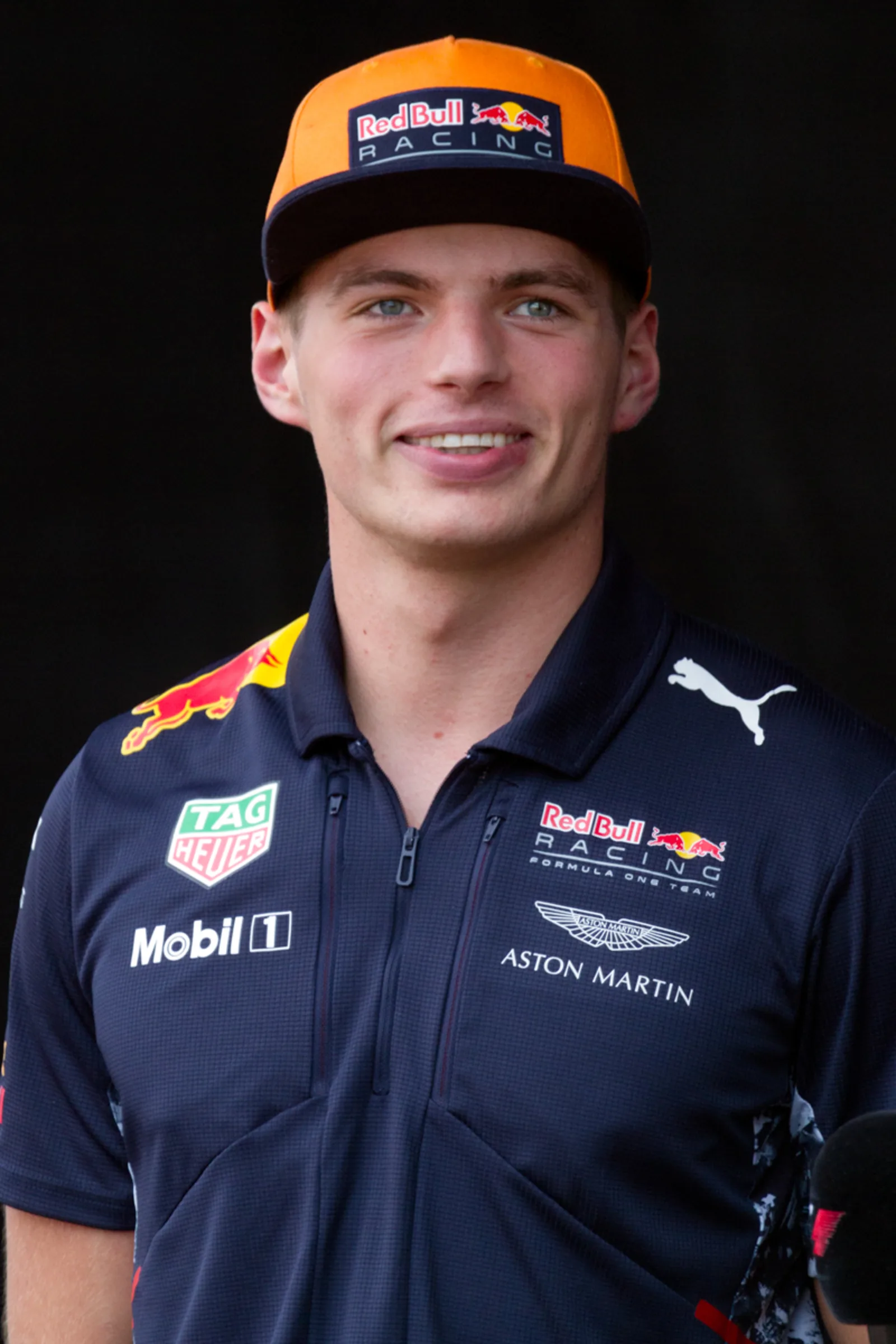
Ground effect aerodynamics returned to the sport in 2022, and the 73rd running of the top class opened a new technical era. Max Verstappen claimed his second world title at the Japanese Grand Prix, while Red Bull Racing secured the constructors' crown at the United States Grand Prix. Mercedes, the defending constructors' champions, won only one race and finished a distant third.
What was the 2022 season?
The championship was contested over 22 Grands Prix held around the world. It ended sooner than in recent years to keep clear of the FIFA World Cup. Drivers and teams fought for the world titles under a new rulebook that had been planned for 2021 but was postponed because of the COVID-19 pandemic.
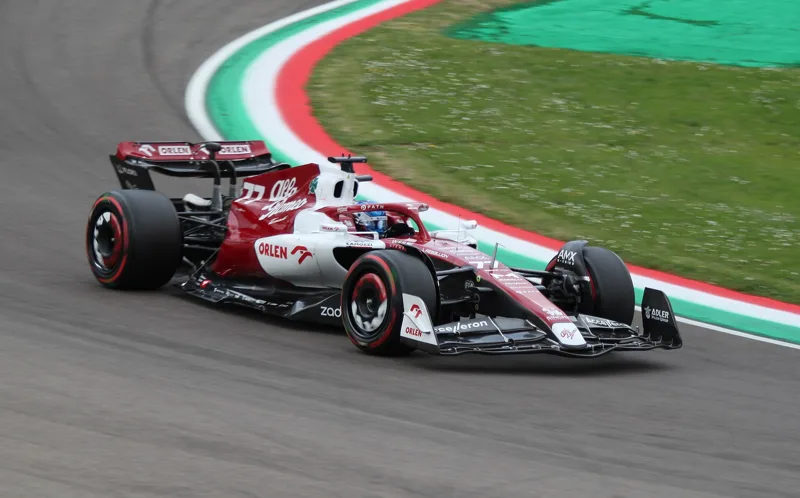
Several familiar faces left the grid. Kimi Raikkonen retired after the 2021 season, having won 21 races, and Valtteri Bottas moved from Mercedes to Alfa Romeo to take his seat. George Russell stepped up to Mercedes from Williams, and Alex Albon, who had raced in the 2021 Deutsche Tourenwagen Masters series, took the Williams seat.
Pirelli supplied tyres to every team. The calendar changed as well. The Miami Grand Prix made its debut in Florida, at a circuit in Miami Gardens, while the Australian, Canadian, Japanese and Singapore races returned to the schedule.
Ground effect came back in 2022, and with it came a season in which one team set the pace and the rest had to catch up.
Why did the technical rules change so much?
The 2022 rules brought back ground effect and moved most of the downforce to the underside of the car. The aim was to reduce the turbulent wake behind each car so that drivers could follow more closely. The FIA also expected the performance gap between the fastest and slowest cars to be halved compared with 2021.
Adrian Newey, the Red Bull designer, called these the most significant changes in Formula One since the 1983 season. The rules were written to be deliberately restrictive, because the sport wanted to stop teams producing radical designs that made overtaking harder. A specialist working group of engineers searched for loopholes before publication.
Bodywork was simplified to remove the complex devices that had shaped airflow around the car. Bargeboards were eliminated, the front wing and its endplates were simplified, and the front wing had to connect directly to the nosecone. Rear wings became wider and sat higher, and new restrictions limited the use of exhaust gases to generate downforce.
The working group's figures made the case clear. A car built to the 2019 rules, trailing another car, had only 55% of its normal downforce, while a 2022-specification car could keep up to 86%. Parts were also classified into listed, standard, transferable, prescribed and open-source categories, and the gearbox and fuel system were standardised until 2024.
How did porpoising become a problem?
Porpoising happened when a low-riding car lost its ground effect as airflow under the floor was interrupted. The car stalled, lifted, and was pulled back down once airflow re-established, and repetition produced a bouncing motion. Bottoming out, where a low floor scraped uneven tracks, could add to the problem.
By June 2022 a number of drivers had voiced worries. Kevin Magnussen of Haas spoke of nerve issues, and both Mercedes drivers complained of back pain. Daniel Ricciardo of McLaren described the sensation as being rattled or shaken, which made the issue hard to ignore.
The FIA responded with a technical directive that addressed the flexibility of the plank underneath the car, through an amendment to Article 3.15.8 of the rulebook. Its introduction was first planned for the French Grand Prix but was pushed back to give teams time to comply, and it applied from the Belgian Grand Prix onwards.
Who ran race control in 2022?
Michael Masi was removed from the race director post following a review of the 2021 Abu Dhabi race, and the FIA restructured race control. Niels Wittich and Eduardo Freitas shared the director's role on an alternating basis. Their rotation was dropped before the United States Grand Prix.
The FIA added a virtual race control system, similar to the video assistant referee used in football. Teams were banned from lobbying race officials, and radio exchanges between teams and officials stopped being broadcast on television to protect those officials.
Rotation had drawn criticism from drivers, and Freitas faced scrutiny over his handling of the Japanese Grand Prix. Wittich then ran race direction alone for the final four rounds.
Power units and standardised parts
The 2022 power unit formula was largely kept as it stood. Earlier planning had proposed removing the MGU-H and raising the rev limit by 3,000 rpm, along with components that could be swapped between suppliers, but no new manufacturer committed to the sport. The existing suppliers therefore proposed keeping the formula to hold down development costs.
Honda agreed to keep supplying Red Bull Racing and AlphaTauri, with the engines rebadged as Red Bull Powertrains. Red Bull had said it could not develop a brand new engine, so the other nine teams agreed an engine development freeze until 2025.
Standardised parts were another feature of the new rules. Gearboxes and fuel systems were standardised until 2024, tyre warmers became a common item for every team, and BBS supplied the wheel rims to all teams under a four-year deal.
How did the rules change the sprint format and points?
Points went to the top ten classified finishers, plus a fastest lap point for a driver finishing in the top ten. The sprint paid points to the top eight. Ties were settled by countback, so the driver with more Grand Prix wins ranked higher.
The sprint returned at three events: Emilia Romagna, Austria and Sao Paulo. Eight finishers now scored, and the quickest qualifier was recorded as the official pole sitter.
Shortened races also changed. Points now required at least two laps under green flags, and a suspended race that could not be restarted paid out on a sliding scale:
- Less than 25% of the scheduled distance: points to the top five, 6-4-3-2-1.
- 25% to 50%: points to the top nine, 13-10-8-6-5-4-3-2-1.
- 50% to 75%: points to the top ten, 19-14-12-10-8-6-4-3-2-1.
- More than 75%: full points.
How did the opening rounds unfold?
Ferrari started the year strongly. Charles Leclerc took pole and the win in Bahrain, with Carlos Sainz second and Lewis Hamilton third. Leclerc then won in Australia from pole, took the fastest lap and was in front throughout, which gave Ferrari its first grand slam since 2010.
Saudi Arabia went to Verstappen after a late overtake on Leclerc, and Sergio Perez took his maiden pole there. Verstappen's Emilia Romagna weekend was stronger still. He won the sprint, then won the Sunday race from pole for the second grand slam of his career, and Red Bull recorded its first one-two since the 2016 Malaysian Grand Prix.
Miami was the first race at the Miami International Autodrome, and Verstappen took the win from Leclerc and Sainz. Spain followed, with Verstappen winning after Leclerc retired from pole with a turbo and MGU-H failure on lap 27. Perez let Verstappen by on lap 49 in that race.
How did the mid-season rounds unfold?
The middle rounds brought a run of Red Bull results. Monaco was won by Perez after a race that was stopped following a crash by Mick Schumacher. Canada returned to the calendar after a wet qualifying session, and Verstappen won from Sainz and Hamilton.
- Britain: Sainz took his first pole, and after a red flag restart he won his first Formula One race.
- Austria: Verstappen won the sprint, but Leclerc won the Grand Prix after a power unit issue ended Sainz's race.
- Hungary: Russell took his maiden pole, and Verstappen recovered from the lower half of the grid to win from Hamilton.
- Belgium: Verstappen and Perez secured a Red Bull one-two, with Sainz on the podium.
- Netherlands: Verstappen started on pole at his home race, and a virtual safety car helped him keep the lead.
- Italy: Verstappen won under the safety car after Ricciardo stopped on track.
The Dutch Grand Prix also produced a conspiracy theory about Red Bull's strategy team, which the stewards looked into. Their only action was to reprimand Tsunoda for undoing his belts on track.
How did the closing rounds decide the titles?
Singapore was the first race in which Verstappen could win the title mathematically, needing a 22-point margin over Leclerc. Perez won that race after a delay of more than an hour caused by thunderstorms, with Leclerc second and Sainz third. Verstappen finished seventh.
The title was settled at the Japanese Grand Prix, where Verstappen won by just under 27 seconds. Poor weather greeted the start, and an accident involving Sainz brought a red flag after two laps. Criticism followed the recovery vehicle used during the stoppage. Racing resumed behind the safety car, and only 28 laps were completed before the three-hour limit ended the event. His lead of 113 points left 112 still available.
Red Bull then clinched the constructors' title at the United States Grand Prix by outscoring Ferrari by 22 points. Mexico City brought Verstappen his 14th win of the season, a record for a single season. Sao Paulo brought Russell his first Formula One win and Mercedes its first one-two since 2020.
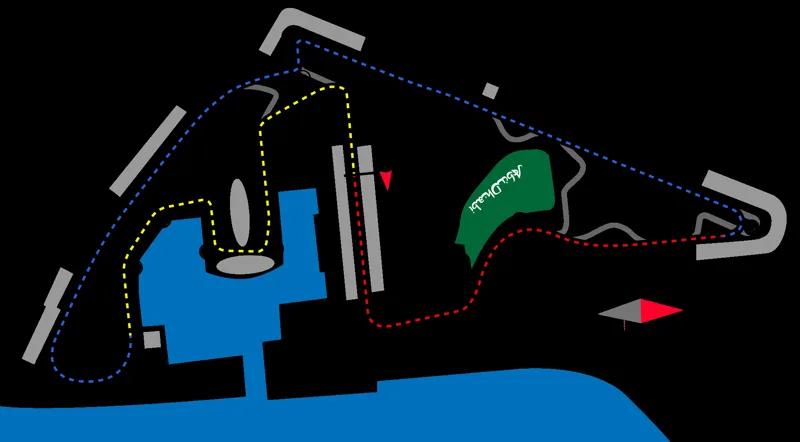
The season ended in Abu Dhabi, where Verstappen took his seventh pole and his 15th win. Leclerc held off Perez for second, and Vettel retired from his final race.
Who won each Grand Prix in 2022?
| Grand Prix | Winner | Key point |
|---|---|---|
| Bahrain | Charles Leclerc | Sainz second, Hamilton third |
| Saudi Arabian | Max Verstappen | Perez took his maiden pole |
| Australian | Charles Leclerc | First Ferrari grand slam since 2010 |
| Emilia Romagna | Max Verstappen | Second grand slam; Red Bull one-two |
| Miami | Max Verstappen | First race at Miami International Autodrome |
| Spanish | Max Verstappen | Leclerc retired from pole on lap 27 |
| Monaco | Sergio Perez | Race stopped after a crash |
| Canadian | Max Verstappen | Returned to the calendar |
| British | Carlos Sainz | His first Formula One win |
| Hungarian | Max Verstappen | Russell's maiden pole |
| Italian | Max Verstappen | Won under the safety car |
| Singapore | Sergio Perez | Delayed by thunderstorms |
| Japanese | Max Verstappen | Title clinched, by just under 27 seconds |
| Mexico City | Max Verstappen | 14th win of the season |
| Sao Paulo | George Russell | Mercedes one-two |
| Abu Dhabi | Max Verstappen | 15th win and seventh pole |