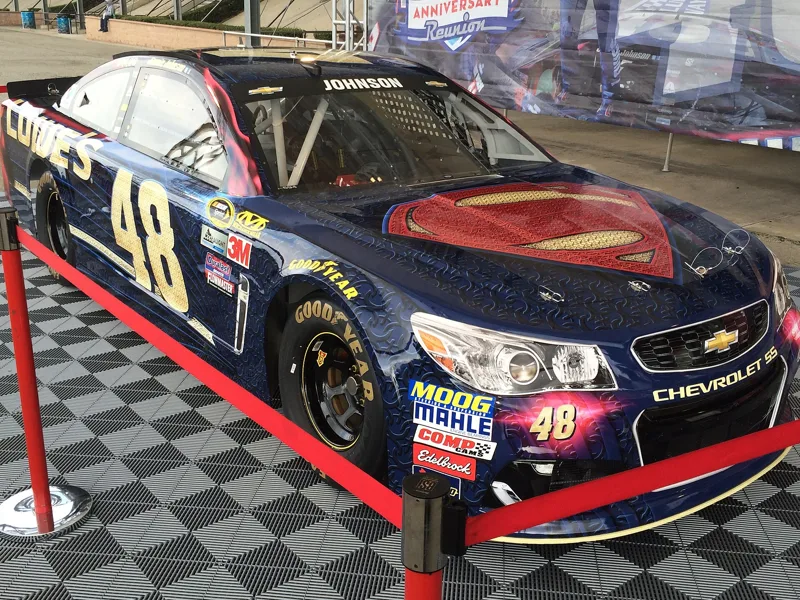
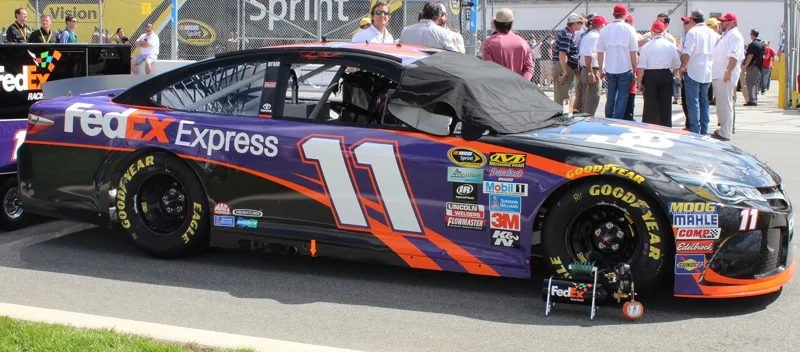
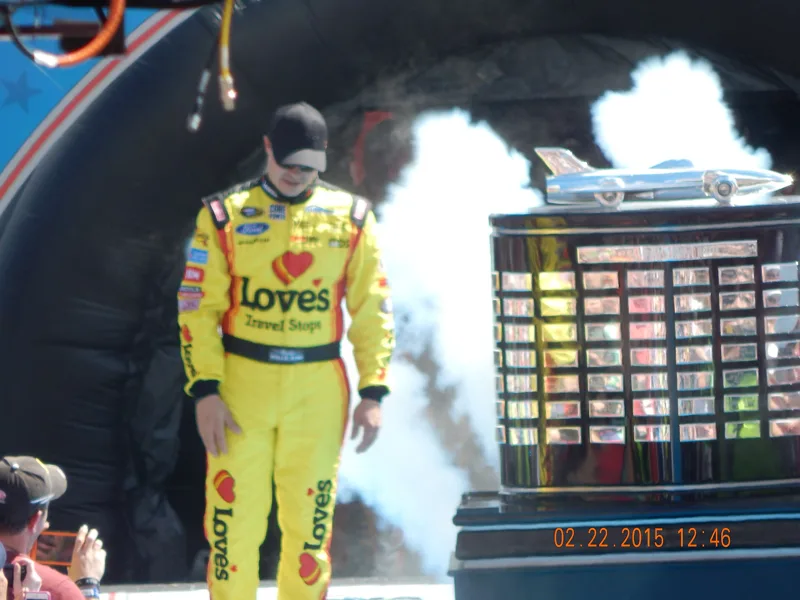
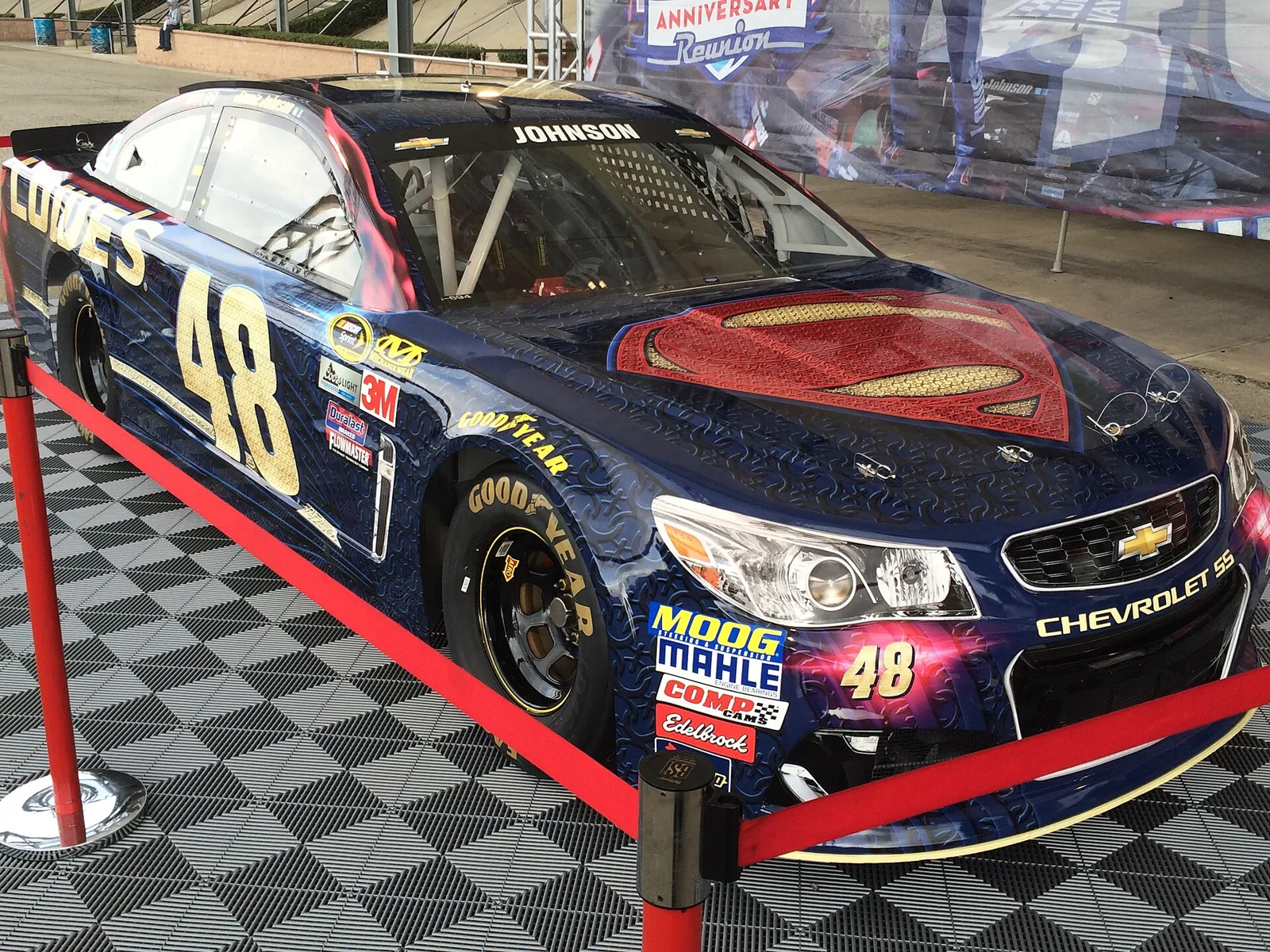
Jimmie Johnson's overtime win at Atlanta Motor Speedway tied Dale Earnhardt for seventh on the all-time wins list, after 28 lead changes.
Held at Atlanta Motor Speedway on 28 February 2016, this NASCAR Sprint Cup event was the second race of the season and ended in overtime. Jimmie Johnson took the win, his 76th career victory and a share of seventh on the all-time wins list with Dale Earnhardt.
The 2016 Folds of Honor QuikTrip 500 was the second race of the NASCAR Sprint Cup Series season, run on 28 February 2016 at Atlanta Motor Speedway in Hampton, Georgia. Jimmie Johnson won it after an overtime finish, his 76th career victory, which tied him with Dale Earnhardt on the all-time list. The race ran 330 laps with 28 lead changes, and a late spin by Ryan Newman set up the overtime.
What was the Folds of Honor QuikTrip 500?
The event took its name from its two co-sponsors, the company QuikTrip and the nonprofit Folds of Honor. The money raised supported educational assistance for the families of U.S. service members who were killed or disabled in the line of duty, which gave the race a charitable purpose alongside its place in the championship calendar.
It was the second race of the 2016 season, so the standings were still young. Fox carried the television broadcast in the United States, and the radio coverage came from the Performance Racing Network and Sirius XM NASCAR Radio.
Johnson held the lead when the final caution flew, and his 76th win tied him with Dale Earnhardt for seventh all-time.
Where was the race run and how long was it?
The race was held at Atlanta Motor Speedway in Hampton, Georgia, on a 2.48 km (1.54 mile) asphalt quad-oval intermediate speedway. The race was scheduled for 325 laps, but an overtime finish extended it to 330 laps. Its race time was 3 hours, 15 minutes and 38 seconds, at an average speed of 155.863 mph (250.837 km/h).
Kurt Busch later described the track as a place that tests the driver, the car and the tyres all at once, and the race bore that out with a long string of lead changes.
Who was in the championship picture before the race?
Denny Hamlin started the weekend as the points leader, holding a five-point advantage over Martin Truex Jr. Kyle Busch was third, six points back, while Kevin Harvick was fourth, eight points back. Carl Edwards was fifth, nine points back, so the top five were separated by very little heading into the race.
That tight margin meant little separated the leaders after two races. Harvick said afterwards that his team would look to bounce back the following week at Las Vegas.
How small was the field for the race?
Only thirty-nine cars were entered, which made it the smallest field for a Sprint Cup race since the 1996 Tyson Holly Farms 400, the final Cup race at North Wilkesboro Speedway. The entry count was also the lowest since 1993. The entry list came out on the Tuesday before the race.
Three drivers changed for the weekend. Ty Dillon took over the No. 14 Stewart-Haas Racing Chevrolet, Jeffrey Earnhardt drove the No. 32 Go FAS Racing Ford, and Michael McDowell returned to the No. 95 Circle Sport-Leavine Family Racing Chevrolet.
Who was fastest in practice and qualifying?
Kyle Larson set the fastest time in the first practice session, with a lap of 28.740 seconds at 192.902 mph (310.446 km/h). In the final session Denny Hamlin was quickest, at 29.419 seconds and 188.450 mph (303.281 km/h).
Kurt Busch took the pole at 28.938 seconds, or 191.582 mph (308.321 km/h). His brother Kyle had his time disallowed after a post-tech violation. The rear toe of the car sat above the maximum allowed after pre-inspection. Kurt's pole was his 20th career pole, and Jamie McMurray joined him on the front row.
Trevor Bayne called it his best qualifying performance on a non-restrictor-plate track, while Adam Stevens, crew chief of the No. 18 car, said the load on the track had moved the car a little more than the team expected.
How did the race unfold on track?
Kurt Busch led the field to the green flag at 1:17 p.m., and he built a one-second lead after 15 laps. Martin Truex Jr. reached his bumper after 30 laps, but Truex then lost ground and was passed for second by Matt Kenseth. Harvick made an unscheduled stop for a flat right-front tyre on lap 40.
A round of pit stops shuffled the order, and by lap 60 Kenseth was challenging Busch for the lead. He dove underneath into turn 1 on lap 65 and pulled away over the next few laps. Kenseth then had to serve a pass-through penalty for improper fueling. He said afterwards that he had not seen the flag or heard any warning about the rule, and he finished 31st, two laps down.
Harvick took the lead on lap 117 and retained it through the pit cycle. He later passed Truex for the lead on lap 136 and led a race-high 131 laps overall. Kurt Busch led 62 laps on his way to a fourth-place finish. The first caution of the race came on lap 210 when debris on the backstretch brought out the yellow, and the restart came with 108 laps to go.
How did the final laps decide the result?
The closing stage was a tyre management battle. Truex passed Harvick with 68 laps to go, and Truex had the lead again with 65 laps remaining. Going into the final 40 laps Johnson held a 12-second advantage over Harvick, and he kept the lead through the later pit cycles.
Harvick cut that gap in half with 20 laps left, and by the final three laps he was about five seconds behind. Ryan Newman then spun on the front stretch, which brought out the second caution of the day and forced an overtime finish. The field pitted for new tyres, and Johnson remained in front after returning to the track.
The race ended under caution. The only wreck of the day took four cars out, and Johnson was in the lead when the final caution flew. Almirola, caught up in the crash, said the tyre fall-off had sent the car sliding around the track.
Who finished in the top positions?
| Position | Driver | Highlight |
|---|---|---|
| 1 | Jimmie Johnson | 76th career win, tied with Dale Earnhardt on the all-time list |
| 2 | Dale Earnhardt Jr. | Second, after a poor start to the season at Daytona |
| 3 | Kyle Busch | Had his pole time disallowed before the race |
| 4 | Kurt Busch | Pole winner who led 62 laps |
| 5 | Carl Edwards | Fifth; praised the lower-downforce package |
| 6 | Kevin Harvick | Race-high 131 laps led; stumbled on the final restart |
| 31 | Matt Kenseth | Penalised for improper fueling, two laps down |
How did the pole sitters judge their qualifying runs?
Kurt Busch described his pole lap as an awesome effort from the car, and he credited the team for dialling in the set-up across all three rounds of qualifying. He warned that Atlanta is easy to overdrive, because the track challenges the driver, the car and the tyres together, and he said he had tried not to slide a tyre on his final lap.
Jamie McMurray said he was proud of the whole shop after taking the front row, and he pointed out that the team's 1.5-mile program had not been where it needed to be the year before. NASCAR's Scott Miller said teams had asked for the rear toe check and NASCAR had put it in place, which is why the No. 18 car failed while the cars that went through inspection passed.
What penalties followed the race?
NASCAR issued penalties on the Wednesday after the race. The No. 78 team was given a P3 penalty for a roof flap problem found during pre-race inspection, and its crew chief, Cole Pearn, was suspended for one race and fined US$50,000. Martin Truex Jr. also lost 15 points in the standings.
The No. 3, No. 27, No. 31, No. 47 and No. 95 teams were each docked 10 points for P2 violations.
Why did the 2016 race matter?
The win was Johnson's 76th in NASCAR's top series. That tied him with Dale Earnhardt for seventh on the all-time wins list, and it placed him third in the modern era of wins, which begins in 1972. The result also moved him up to sixth in the points standings.
It was his fifth win at Atlanta and the 14th at the track for Hendrick Motorsports. Chevrolet, the winning manufacturer, still left Atlanta trailing Toyota by three points in the manufacturers standings.
What did the drivers say after the race?
Johnson called the win an honour, and said the chaos at the end had made him lose sight of the record until he was on his victory lap. Earnhardt Jr. finished second and said the result was important after a poor run at Daytona, because two bad finishes would have left the team in a deep points hole.
Edwards praised the lower-downforce package and asked NASCAR to keep moving in that direction. He called it real racing, said he was worn out, and urged that Atlanta never be repaved, while Harvick said his car had developed handling problems late in the race and that his team had a slow pit stop that cost track position. Harvick still praised his crew for hanging in there all day. Harvick had led the most laps at Atlanta for the third straight year before the final restart went against him.
Who called the race on television and radio?
Fox televised the race with Mike Joy in the booth, alongside Jeff Gordon, a five-time Atlanta winner, and Darrell Waltrip, a three-time winner at the track. Jamie Little, Vince Welch and Matt Yocum worked pit road for the television crew.
On radio, the Performance Racing Network handled the call and Sirius XM NASCAR Radio simulcast it. Three voices worked from the booth as the field ran down the front stretch, and two more called the turns from billboards. Brad Gillie, Brett McMillan, Jim Noble and Steve Richards covered pit road.