A largely clean superspeedway race decided by the closest margin in the event's history, with Denny Hamlin edging Martin Truex Jr. at the line.
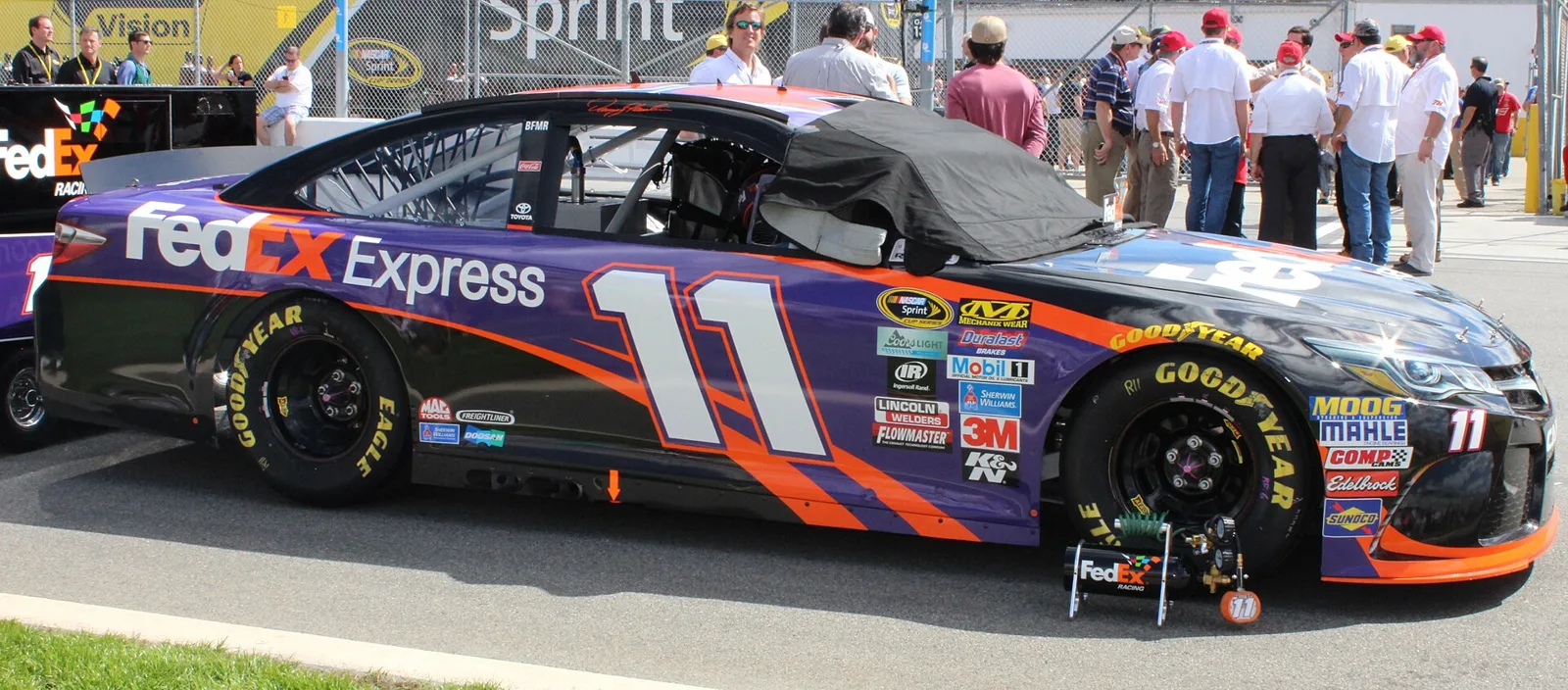
Denny Hamlin claimed the 2016 Daytona 500, the 58th edition and the season opener, by 0.010 seconds over Martin Truex Jr. The margin was the closest in the event's history, and the 200-lap race was largely free of a big accident.
The 2016 Daytona 500 was the 58th running of the event and the first race of the NASCAR Sprint Cup Series season. Denny Hamlin won in a photo finish over Martin Truex Jr., by 0.010 seconds, the closest finish in the race's history. Kyle Busch, Kevin Harvick and Carl Edwards completed the top five, and the race was largely free of the multi-car wreck that often decides superspeedway events.
Why was the 2016 Daytona 500 significant?
The race was run over 200 laps on the 2.5-mile asphalt superspeedway on 21 February 2016. It opened the season and set the tone for the year ahead, with the leading teams looking for an early advantage in the points standings.
The race also marked a turning point in the driver line-up. It was the first Daytona 500 since 1992 and 1998 without Jeff Gordon and Tony Stewart on the grid. Gordon had retired at the end of 2015 and called the race from the commentators' stand, while Stewart had been injured in a dune buggy accident outside San Diego.
A largely clean superspeedway race decided by 0.010 seconds, the closest finish in the history of the Daytona 500.
How did the track and rules shape the event?
Daytona International Speedway is one of six NASCAR superspeedways, along with Auto Club Speedway, Indianapolis, Michigan, Pocono and Talladega. The standard track is a four-turn superspeedway that is 2.5 miles (4.0 km) long, and the 180-acre infield includes Lake Lloyd, a 29-acre lake that has hosted powerboat racing.
The speedway was built by Bill France Sr., and its first Daytona 500 was held in 1959. It has been repaved in 1978 and 2010, and its infield was renovated in 2004. The race has been the highest-rated auto race of the year on US television since 1995.
For 2016 the restrictor plate holes were reduced from 29/32nd to 57/64th of an inch during Speedweeks. The green-white-checkered procedure also gained an overtime line, a change that followed a botched final restart at Talladega in October 2015.
Who was in the entry list?
The entry list came out on Friday, 12 February, at 12:05pm Eastern time, and 44 cars were entered. A number of drivers changed teams after the Homestead race, which had shuffled the seats for the new season. Elliott replaced the retired Jeff Gordon in the No. 24 Hendrick car.
Clint Bowyer moved into the No. 15 from Justin Allgaier, while Brian Vickers drove the car numbered 14 in place of the injured Tony Stewart. Other swaps included David Ragan in the No. 23 and Regan Smith in the No. 7.
How did practice go?
Dale Earnhardt Jr. was fastest in first practice at 46.364 seconds, which equated to 194.116 mph (312.399 km/h). Joey Logano was quickest in second practice at 45.934 seconds, and Michael McDowell set the fastest time in third practice at 44.961 seconds.
Brian Scott was fastest in fourth practice, while Kyle Larson and Michael Waltrip had to start at the rear of their Duel races after a four-car crash in turn one. Jimmie Johnson set the pace in fifth practice at 46.619 seconds, and Denny Hamlin was fastest in seventh practice at 45.077 seconds. Earnhardt was fastest in the final session at 45.655 seconds.
How was qualifying organised?
Qualifying at Daytona uses two rounds of single timed laps, and the fastest 12 drivers advance to the final round. Chase Elliott won the pole at 45.845 seconds, a speed of 196.314 mph (315.937 km/h), and he became the sixth rookie to take the pole for the Daytona 500.
Ryan Blaney qualified seventh and Matt DiBenedetto 24th, both comfortable in the field on speed. Martin Truex Jr. could not post a time because of a roof flap problem, and Harvick and Vickers had their times disqualified after their track bars failed inspection.
| Starting order | Driver | Note |
|---|---|---|
| 1 | Chase Elliott | Pole, 45.845 seconds |
| 7 | Ryan Blaney | Qualified on speed |
| 24 | Matt DiBenedetto | Qualified on speed |
What happened in the Duels?
The Can-Am Duels were two races of 60 laps, each 150 miles (240 km), that set the lineup for positions three to 38. Dale Earnhardt Jr. won the first Duel, leading 43 of its 60 laps, and Michael McDowell raced his way into the Daytona 500 from that event.
Kyle Busch won the second Duel, leading 35 of 60 laps. That race ended under caution after a wreck on the final lap in turn one, which collected Jimmie Johnson, Matt Kenseth and Martin Truex Jr. Robert Richardson Jr. transferred into the 500 from the second race.
How did the early laps unfold?
Chase Elliott led the field to the green flag at 1:33pm, and he and Earnhardt jumped ahead of Logano to control the field. Earnhardt took the lead on lap 5 and blocked the advances of Logano and Hamlin. Kyle Busch then dived under him in turn three to lead on lap 19.
That same lap brought the first caution, for a two-car wreck on the front stretch. Elliott got loose exiting turn four, came across the nose of Carl Edwards and destroyed the front of his car. Hamlin left pit road with the lead after the first round of stops, and Waltrip was penalised for his crew going over the wall too soon.
The race restarted on lap 26, and after five laps Hamlin pulled clear of Kurt Busch. He held the lead unopposed for a while, and Johnson tried to lead the outside line forward before it lost momentum.
What were the middle stages like?
A multi-car wreck on the front stretch on lap 57 brought the second caution. Brian Vickers spun exiting turn four, and Carl Edwards was turned into the wall while trying to avoid him. Hamlin and Martin Truex Jr. traded the lead on pit road, and Johnson left the stop ahead after taking right-side tyres only.
On lap 79 Kyle Busch drove under Johnson in turn two to take the lead. A third caution came on lap 92 for a wreck in turn two involving Matt DiBenedetto and Chris Buescher. Buescher described it as the hardest hit he had ever taken, and he was taken to the infield care centre.
The race restarted on lap 100 and formed three separate lines for a moment before the pack broke up. A fourth caution came on lap 119 when debris from Greg Biffle's car lay on the track in turn three. Cycles of green-flag stops followed, and the lead changed hands several times as the top cars pitted in sequence.
How did the closing laps go?
The fifth caution came with 29 laps to go, after Earnhardt got loose exiting turn four and slammed the inside wall. The restart came with 25 laps left, and a sixth caution with 18 laps to go followed a two-car spin on the backstretch involving Greg Biffle and Danica Patrick.
With 12 laps to go Kenseth led, and the Toyota drivers had agreed to work together until the last lap, when they would race each other. On the white flag lap Kevin Harvick drafted up the outside to pass Carl Edwards, and Denny Hamlin saw the advance and moved from fourth to the outside to block it.
Harvick clipped Hamlin on the back straight, but Hamlin still surged to the front past Kyle Busch and Truex and came level with Kenseth. Kenseth came down on Hamlin, lost control and fell back to finish 14th. Hamlin and Truex then drag raced to the line, and Hamlin prevailed by 0.010 seconds.
Who was the winner?
Hamlin said in victory lane that the win was the best of his career, calling the Daytona 500 the pinnacle of the sport. He credited a plan the Joe Gibbs Racing drivers had agreed overnight, and said he had never seen it executed so flawlessly.
Truex said he had done all he could, and that he had led but been caught in the last second. He praised the teamwork with the Joe Gibbs drivers and said he had been beaten by a couple of feet. Kyle Busch took third and said the race was a much better place to be than watching from the sidelines. Joe Gibbs Racing drivers took the top three places, with Hamlin, Truex and Kyle Busch all in the team.
How did the statistics compare?
The race had 20 lead changes among 15 different drivers and six cautions for 31 laps. It lasted 3 hours, 10 minutes and 25 seconds at an average speed of 157.549 mph (253.551 km/h). Hamlin led a race-high 95 laps on his way to the win.
The win was Hamlin's 27th career victory, the first of the 2016 season and his first at Daytona International Speedway. It was also the fifth win at the track for Joe Gibbs Racing. Hamlin left Daytona with a five-point lead over Truex, and Toyota led Chevrolet by eight points in the manufacturer standings.
| Finish | Driver |
|---|---|
| 1 | Denny Hamlin |
| 2 | Martin Truex Jr. |
| 3 | Kyle Busch |
| 4 | Kevin Harvick |
| 5 | Carl Edwards |
| 6 | Joey Logano |
| 14 | Matt Kenseth |
What were the wider details of the race?
The race was broadcast on Fox, with Mike Joy, Jeff Gordon and Darrell Waltrip in the booth. The Motor Racing Network carried the radio call, with Joe Moore and Rusty Wallace in the booth, and the event featured WWE wrestler John Cena as a pace car driver.
Several drivers made their last Daytona 500 starts in 2016, including Bobby Labonte, Brian Vickers, Michael Annett and Carl Edwards.
Why did the 2016 race matter?
The race showed how a superspeedway event could finish without the big accident that often decides it. It also showed how a team-based plan could still produce a result that came down to a few hundredths of a second. The new season opened with a sharp reminder of how small the margins are at Daytona.
For Hamlin it was a career milestone, and for Joe Gibbs Racing it was another win at a track where the team had already been strong for years.