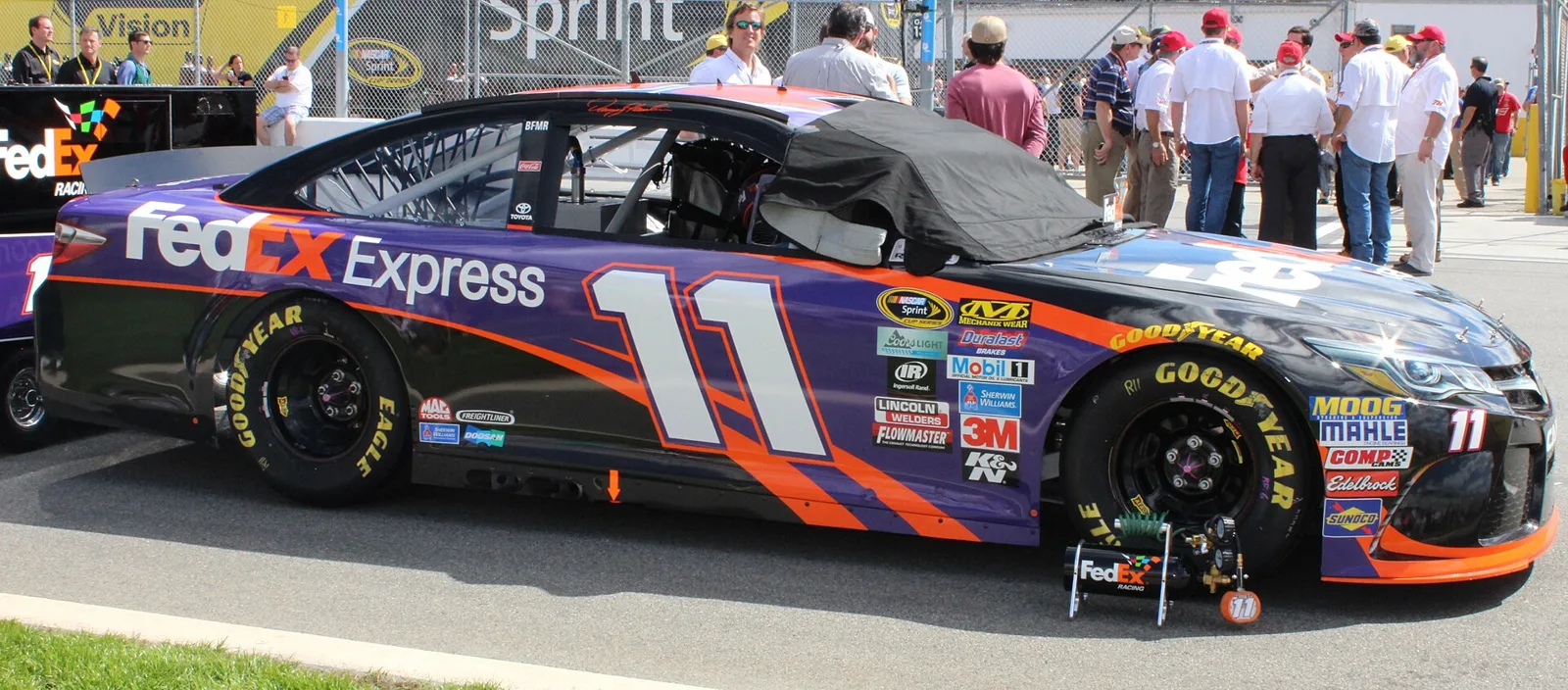
A race halted for more than six hours, a multi-car crash that reshaped the field and a second Daytona 500 win for Earnhardt Jr.
The 2014 Daytona 500 opened the Sprint Cup season and was won by Dale Earnhardt Jr. after a rain delay of more than six hours. He held off Denny Hamlin in a race with 42 lead changes that was settled by a final-lap restart.
Dale Earnhardt Jr. won the 2014 Daytona 500 for Hendrick Motorsports, his second victory in the event and the end of a 55-race winless run. A rain delay of 6 hours and 22 minutes, the longest in the race's history, interrupted an afternoon that was already packed with contact, cautions and lead changes.
What happened in the 2014 Daytona 500?
This was the 56th edition of the Daytona 500, and it opened the 2014 Sprint Cup calendar. The distance was 200 laps, or 800 km (500 miles), around a 2.5-mile superspeedway that Daytona has used since 1959.
Denny Hamlin crossed the line second, and the leading group was completed by Brad Keselowski, Jeff Gordon and Jimmie Johnson. Across the afternoon there were seven cautions, 42 lead changes shared by 18 different drivers, and one red flag that lasted for hours.
A race halted for six hours, a multi-car crash and a second Daytona 500 win for Earnhardt Jr.
Why does the 2014 result stand out?
The victory gave Earnhardt his second Daytona 500 and ended a Cup winless streak that had lasted 55 races.
The race also drew attention to the rookie class. Five of the eight drivers in that class made their Sprint Cup debuts in the Daytona 500, and polesitter Austin Dillon finished ninth to become the top rookie of the race. Alex Bowman and Brian Scott were the next best rookies, in 23rd and 25th.
What makes Daytona International Speedway unusual?
Daytona is one of six superspeedways that host NASCAR's top series, alongside Michigan, Auto Club Speedway, Indianapolis, Pocono and Talladega. Its four turns are banked at 31 degrees, and the front stretch, where the finish is decided, is banked at 18 degrees.
The track was built by NASCAR founder Bill France Sr. on the site of the former Daytona Beach Road Course, and the first Daytona 500 was run there in 1959. Its 180-acre infield is one of the largest of any track on the NASCAR circuit.
The track also hosts ARCA, AMA Superbike, USCC, SCCA and motocross events. Its sports car course runs 5.73 km (3.56 miles), and the 12 ha (29-acre) Lake Lloyd sits in the infield, where it has been used for powerboat racing. The speedway has been renovated several times, with its infield rebuilt in 2004 and its surface repaved in 1978 and 2010.
How did the entry list and practice sessions look?
The entry list appeared on 14 February with forty-nine drivers entered for the race. Paul Menard set the fastest time in the first practice session at 313.890 km/h (195.042 mph), while Ryan Newman was quickest in the second, with a lap of 46.072 seconds.
On 19 February A. J. Allmendinger led the third practice session at 45.096 seconds. During that session Logano and Kenseth made contact, sending rookie Parker Kligerman into the catch fence, where his car landed on its roof. It was the first flip of his racing career.
Four drivers, including Logano and Kligerman, had to change to spare cars before the Budweiser Duels. Blaney also pulled out, because his team could not find another car.
Josh Wise stalled at the entrance to pit road before the Duels, took his car to the garage, and was eliminated from the Daytona 500 as a result. Wise was not the only driver whose weekend was cut short by a mechanical setback that week.
Denny Hamlin was fastest in the fourth practice, Ricky Stenhouse Jr. in the fifth and Kurt Busch in the final session, where he set a time of 45.541 seconds.
How did qualifying play out?
Austin Dillon claimed the pole with a lap of 315.462 km/h (196.019 mph), a time of 45.914 seconds. Martin Truex Jr. was second on the grid, and the pair gave a strong opening statement for the weekend.
Dillon dedicated the result to his team and to the birthday of head engine builder Danny Lawrence. His crew chief, Gil Martin, described the pole as a dream come true for an organisation that had watched Dillon grow up .
What happened in the Budweiser Duels?
In the first Duel Austin Dillon led the opening 14 laps before Dale Earnhardt Jr. took over on lap 15. Matt Kenseth edged Kevin Harvick and Kasey Kahne in a three-wide photo finish, while Harvick was later disqualified for exceeding the maximum split on his track bar, although his qualifying speed still put him in the field.
In the second Duel Brad Keselowski led until his lap 35 pit stop, when he was penalised for speeding on exit. Hamlin took over with 22 laps remaining and won under caution. Johnson ran out of fuel on the last lap, hit the wall and triggered a multi-car crash, and Bobby and Terry Labonte qualified through the second race.
How did the race begin?
Dillon started from the pole and led only the first lap before Hamlin took over. Kurt Busch took the lead on lap 11, and the first caution on lap 23 came when Kyle Larson spun in turn two after suffering two flat tyres.
An engine failure for Martin Truex Jr. on lap 31 brought out a second caution, and rain began to fall. A red flag came out on lap 39 while Kyle Busch was leading, and a tornado warning issued at 2:50 p.m. local time sent spectators out of the grandstands.
How long was the rain delay?
This was the longest rain delay in the history of the Daytona 500. Racing resumed at 8:52 p.m. local time.
Race statistics later recorded the stoppage as 6 hours, 21 minutes and 40 seconds, a small difference that reflects how the timing was measured. Fox used the wait to replay its 2013 broadcast, which confused many viewers who did not realise it was a repeat.
What happened after the restart?
Seven laps were run under caution before the race resumed on lap 47 with Kyle Busch still in front. Busch and Kasey Kahne then traded the lead, and Keselowski and Joey Logano of Team Penske took it for several laps.
Paul Menard led seven laps in the middle stint. Around lap 85, the green-flag pit cycle gave Trevor Bayne, Aric Almirola and A. J. Allmendinger each held the lead briefly, as several others did through different pit strategies. Moisture at the pit exit then sent Kahne spinning into the grass, and Kyle Busch was penalised after pulling an air hose from his pit stall.
What was the Big One?
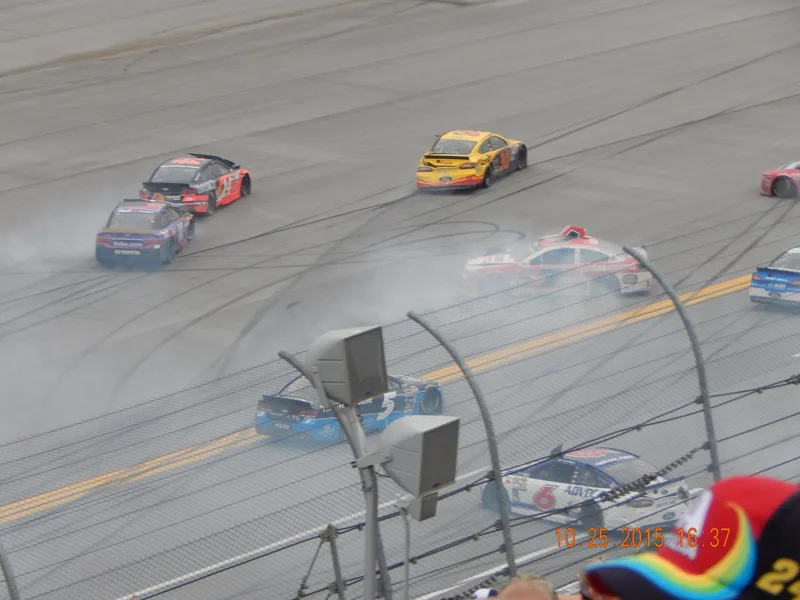
On lap 145 a third caution came after Kevin Harvick and Brian Scott made contact at the exit of turn four. Scott hit Aric Almirola, and the wreck collected Danica Patrick, Michael Waltrip, Parker Kligerman, Paul Menard and a number of other cars.
Patrick's car was turned around and slammed into the outside wall in a section that had no SAFER barrier. She said her car had felt strong all week and that it could have moved forward. Waltrip, who was also caught in the wreck, said he would be fine, although another car had 'cleaned our clock from behind'. A SAFER barrier was added to that stretch later in the year, before the summer's Coke Zero 400 was shortened by rain.
How did the closing laps unfold?
Greg Biffle took the lead on lap 151 after pit stops. Earnhardt Jr. quickly regained it, and the two swapped the lead several times before Carl Edwards took his own turn at the front.
On lap 162 Kyle Larson spun in turn four after contact with Dillon, causing damage to a long list of cars. Earnhardt regained the front on lap 183, which proved to be his final time out front, and a fifth caution followed on lap 184 when Trevor Bayne's car snapped loose and hit the outside wall.
When the field resumed on lap 188, Earnhardt moved in front of Johnson. On lap 194 Dillon turned Ryan Newman, and the sixth caution set up a two-lap shootout for the final restart.
Earnhardt launched off the last restart ahead of Jeff Gordon, and the battle for the runner-up spot involved Gordon, Hamlin, Johnson and Keselowski. On the final lap Kevin Harvick tried to force his way between Jamie McMurray and Kyle Busch in turn four, and his car hit the wall and collected several others.
What were the final results?
Earnhardt held off Hamlin to take the checkered flag. The table lists the finishers that defined the race.
| Position | Driver | Note |
|---|---|---|
| 1st | Dale Earnhardt Jr. | Hendrick Motorsports; second Daytona 500 win, ending a 55-race winless streak |
| 2nd | Denny Hamlin | Held off by Earnhardt Jr. in the closing laps |
| 5th | Jimmie Johnson | Finished in the top five alongside Keselowski and Gordon |
What do the race statistics show?
The race lasted 3 hours, 26 minutes and 29 seconds, at an average speed of 233.82 km/h (145.29 mph). There were 42 lead changes among 18 drivers, and the seven cautions covered 39 laps in total.
This was also the final Daytona 500 start for Terry Labonte, who made his 32nd appearance in the race, second only to Dave Marcis on the all-time list. Marcos Ambrose made his last Daytona 500 start as well, and both veterans were part of a field that was changing around them.
Dillon, Alex Bowman and Brian Scott finished ninth, 23rd and 25th respectively, which made Dillon the top rookie.
Who covered the race?
The broadcast booth on Fox was made up of Mike Joy, Larry McReynolds and Darrell Waltrip, the same team that had worked the race for years.
Fox televised the race, and it was the last Daytona 500 for Steve Byrnes, Krista Voda and Jeff Hammond on the network. During the rain delay Fox repeated the 2013 race, and the replay of Jimmie Johnson's winning moment prompted many congratulatory messages to the driver.
On the MRN crew, Dave Moody called the first and second turns, Mike Bagley covered the backstretch, and Jeff Striegle worked turns three and four. Pit road was staffed by Winston Kelly, with Steve Post, Woody Cain and Pete Pistone.
The Motor Racing Network carried the race on radio, a service it has provided since 1970, with Joe Moore and Barney Hall in the booth. Winston Kelly led the pit-road reporting, and Sirius XM NASCAR Radio simulcast the broadcast.