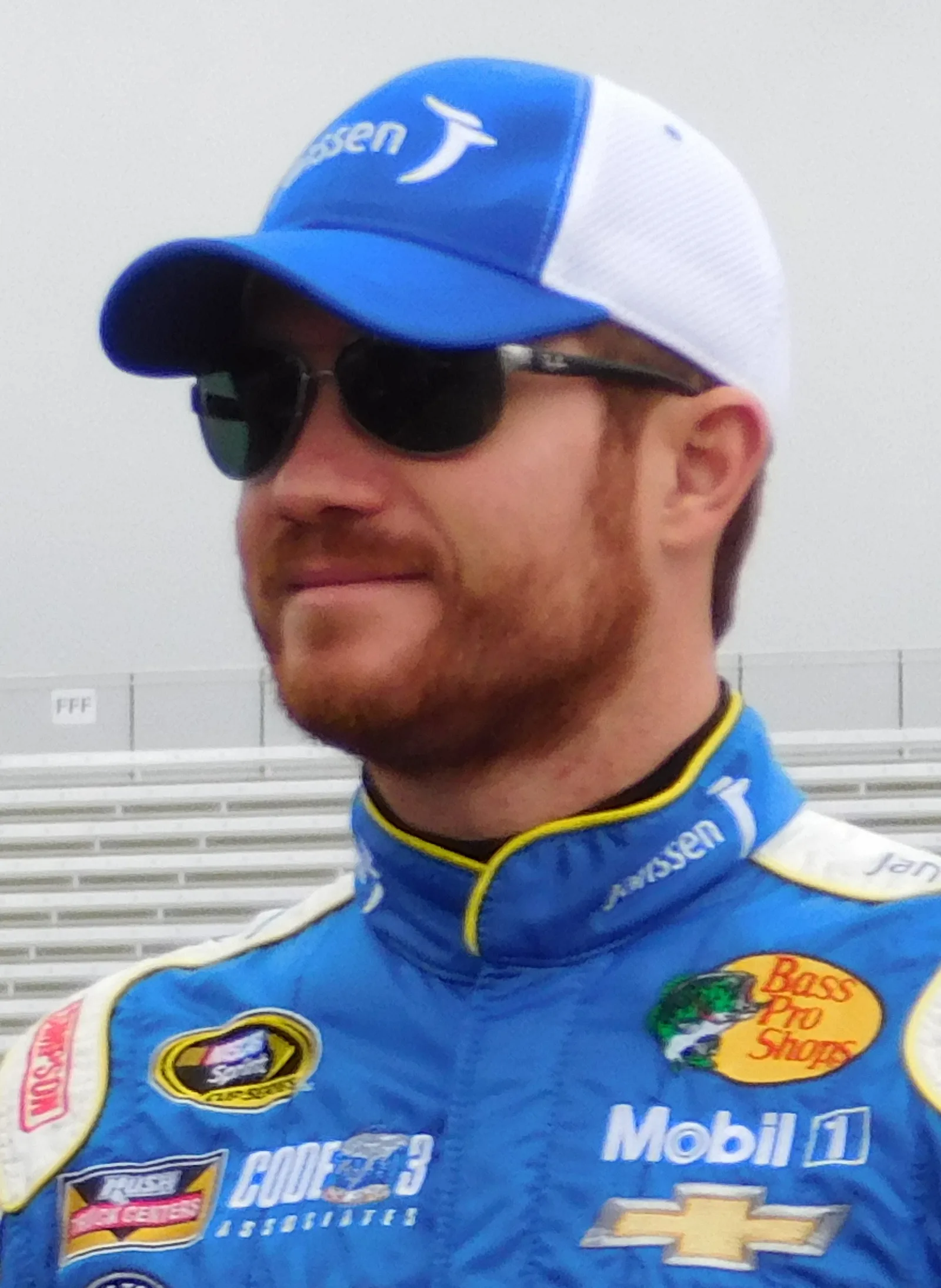

From the 2003 Busch Series title with Hendrick Motorsports to Red Bull's first Cup win and the blood clot problems that interrupted his later seasons.
Born 24 October 1983, Vickers won the 2003 Busch crown for Hendrick and went on to take three Cup victories, at Talladega in 2006, Michigan in 2009 and New Hampshire in 2013. Medical setbacks repeatedly interrupted his time in the sport.
Brian Vickers is a former American stock car driver best known for the 2003 Busch Series title he won with Hendrick Motorsports. He later raced Cup cars for Red Bull and Toyota and took wins for both, but a string of blood clot problems from 2010 onward repeatedly broke into his career.
Who is Brian Vickers and how did his racing begin?
Brian Lee Vickers was born in Thomasville, North Carolina, on 24 October 1983. He took up go-karting in 1994 and, across the following three years, collected eighty race wins in the World Karting Association. He also took three titles during that stretch.
One of those championships came in 1995, a season in which he contested the title against Mike Schwartz, who had already won three times in the series. His early career then moved through several junior series before he reached national stock car racing.
In 1998 he moved up to the Allison Legacy Series and recorded five wins during the year. A stint in the NASCAR Dodge Weekly Racing Series followed in 1999, and then he switched to USAR ProCup, where he earned Rookie of the Year honours.
Two wins came in 2000. A year later he added five more and finished second in points.
Three Cup wins, a Busch title at twenty years old and a career repeatedly interrupted by medical setbacks.
How did Brian Vickers's first Busch Series starts go?
His Busch Series debut was the 2001 race at Milwaukee, in a No. 29 entry run by his father's BLV Motorsports operation. Starting from thirtieth on the grid, he crashed and came home 37th. Across three more outings that year, his best was 25th at North Carolina.
In 2002 he competed in 21 Busch events in his father's No. 40 Dodge Intrepid, chasing Rookie of the Year honours. Seventh place at the Hardee's 250 in Richmond was his only top ten, and he finished the season thirtieth in series points.
How did Brian Vickers win the 2003 Busch Series championship?
Vickers claimed the 2003 NASCAR Busch Series title by fourteen points over David Green. He had moved into the No. 5 GMAC Chevrolet of Hendrick Motorsports, taking over from Ricky Hendrick after his family team ran short of money. He won three races along the way.
He was twenty years old when he took the crown, which made him the youngest Busch champion in the series' history up to that point.
His first Cup start came at Charlotte that year, in the UAW-GM Quality 500, where he qualified twentieth and crossed the line 33rd in the No. 60 Haas Automation Chevy. Four more Cup races followed in Hendrick's No. 25, a UAW/Delphi-backed car, and he qualified in the top five each time.
He came close to two poles at Phoenix and Rockingham that season, though only one of those five Cup starts produced a top-twenty finish.
How did Brian Vickers perform in full-time Cup racing, 2004 to 2006?
In 2004 Vickers ran full-time in the No. 25 Cup car, backed by Ditech and GMAC. He won two poles, took four top-tens and finished third in the Rookie of the Year standings, behind Kasey Kahne and Brendan Gaughan. Those results framed his first full Cup season.
In 2005 he won the Nextel Open exhibition race, though his last-lap move on Mike Bliss ended in contact that spun Bliss out. The win earned him a place in the Nextel All-Star Challenge, where he placed third. He ended the season 17th in Cup points with ten top-tens.
Busch Series work returned in 2005 too. At Watkins Glen he placed third in the No. 5 car, and five further races used the No. 57.
A seventh-place start to 2006 came at the Daytona 500. By the end of that year he had fifteenth in points, nine top-tens and a victory at Talladega.
Friction within Hendrick Motorsports overshadowed the 2006 season. On 25 June Vickers said he would leave the team and join the new Team Red Bull for 2007.
What happened at the 2006 UAW-Ford 500?
At the UAW-Ford 500, Vickers was running third behind Dale Earnhardt Jr. and Jimmie Johnson on the final lap. He tried to bump-draft Johnson past Earnhardt, but his timing was off and he could not stay on Johnson's inside line. He caught Johnson's right rear, triggering a caution, and Vickers went on to win.
Johnson was furious, and Knaus, his crew chief, challenged Vickers's intentions behind the bump. Johnson went on to take the 2006 title at Homestead-Miami Speedway, while Vickers also won a one-off Autozone West race at Sonoma that season for Hendrick.
How did the Red Bull years, 2007 to 2009, unfold?
In 2007 Vickers piloted the No. 83 Red Bull Toyota Camry, with crew chief Doug Richert and A. J. Allmendinger as his teammate. A blown tyre during his Daytona 500 qualifying race meant he did not make the field, which set a difficult tone for the new team.
The team bounced back the next week with a tenth-place finish at the Auto Club 500 in California, which was also Toyota's first Cup top-ten. Two weeks later Vickers led the first lap of a Cup race for Toyota, at Atlanta.
On 27 May 2007 Vickers delivered Toyota's first top-five at the Coca-Cola 600. The Charlotte weekend began with a new Toyota engine, and Vickers led more than seventy laps. Late on, the power steering failed, and a tyre went, sending him into the turn four wall.
A debris caution came out just as he entered pit road, which kept him on the lead lap. Richert then used pit strategy to salvage the race, and Vickers finished fifth.
Richert was dismissed late in 2007 and Randy Cox took over. Team Red Bull concentrated on developing its Car of Tomorrow, due to compete full-time from the next season, and Vickers struggled through the final races of the older car.
Vickers ended up thirty-eighth in points after failing to qualify for thirteen races. Allmendinger, his teammate, missed nineteen races and finished forty-third. A disqualification at the 2007 Lenox Industrial Tools 300 followed three failed post-qualifying inspections.
Across 23 outings he collected a single top five and five top-tens. His average finish was 25.1, and five races ended early.
For 2008 Vickers had a new crew chief, Kevin Hamlin. He earned a place in the fiftieth Daytona 500 by finishing eleventh in the Gatorade Duel, which put him in the field on his own merit. His next four starts averaged a twenty-first place, and one of them was a ninth at Atlanta.
Red Bull's crew took the 2008 pit stop competition at All-Star weekend. The following weekend Vickers led sixty-one laps of the Coca-Cola 600 until a lost left rear wheel sent him into a crash about halfway through.
He followed with second at Pocono, behind Kasey Kahne. He started every race that season and recorded three top-fives and six top-tens, averaging 20.7 and finishing nineteenth in points.
How did Brian Vickers win at Michigan in 2009?
Vickers won the 2009 Carfax 400 at Michigan from pole, his second Cup victory and Red Bull's first in the series. He got there with a late-race gamble that skipped the pit stop under the race's final caution, and Jimmie Johnson ran dry with just over three laps left.
Coming to the final restart Vickers was ahead, with Johnson second. With a little over forty laps left he trailed Johnson for most of the run, saving fuel while the leader pushed.
It was also Red Bull's first NASCAR sponsorship win. Two days later Vickers agreed a multi-year extension with the team.
What else happened in Brian Vickers's 2009 season?
The 2009 season began with a Daytona 500 incident involving Dale Earnhardt Jr. and included several poles across the year. Vickers finished twelfth in the standings, which took him into the Chase, and he ended the year with six poles.
At Daytona, Earnhardt got a run on the inside of Vickers on the backstretch. Vickers blocked, and Earnhardt's clip to the left rear fender sent Vickers spinning into the field. Vickers said Earnhardt should have been black-flagged, while Earnhardt later said he had not realised Vickers was a lap down and apologised.
The Auto Club 500 pole came with a rear-of-the-grid start after an engine change, and Vickers came home tenth. At the Kobalt Tools 500 he was at the front all afternoon and chasing Kurt Busch for the win when Robby Gordon's tyre failure brought out a caution, and he finished fifth.
Further poles followed at Richmond, Michigan, Sonoma and Chicagoland, and Vickers also took the pole for the Carfax 250. Finishes in those races included fifteenth at Richmond, sixteenth at Sonoma and seventh at Chicagoland.
The season closed with twelfth in the standings, his best points finish until then, and a Chase berth after seventh at Richmond. His six poles trailed only Mark Martin's seven, and he added four top-fives, thirteen top-tens and an average finish of 17.3.
Why did Brian Vickers miss most of 2010?
Vickers missed most of 2010 after a medical condition, later identified as clots in his legs and lungs, ended a run of 87 consecutive starts. Before that he had three top-tens in his first eleven races. The condition returned several times over the following years.
The problem surfaced publicly on 13 May 2010, when he was ruled out of the Autism Speaks 400 at Dover and Casey Mears was lined up to replace him. Vickers had hoped to drive a few laps before a relief driver took over for the points, but he was not cleared to do so.
Six days after leaving hospital, on 21 May, he was announced out for the rest of the year. Reed Sorenson and others, including Kasey Kahne, filled the seat, and he finished 2010 with three top-tens in eleven races.
How did Brian Vickers return in 2011 and 2012?
Vickers was cleared to race in 2011, and he finished 31st at Daytona. A week later at Phoenix, contact with Matt Kenseth started a thirteen-car pileup. He ended the year 25th overall in points with seven top-tens, and then Red Bull shut its Cup team, leaving him without a ride for 2012.
BK Racing bought the assets and made Vickers an offer for 2012, but he turned it down and stayed out of the car.
In March 2012 he took the Michael Waltrip Racing No. 55 Toyota for the Bristol, Martinsville and Loudon rounds, splitting the seat with Mark Martin and Michael Waltrip. On debut in the car he led 125 laps and dominated the first half before finishing fifth.
Later he drove the car at Sonoma and Watkins Glen, taking his total to eight races. He also took a Ferrari for the team in GTE-AM at Spa's six-hour race and at the 24 Heures du Mans.
What happened at Martinsville and New Hampshire in 2013?
In 2013 Vickers passed Danica Patrick for eleventh on the final lap at Martinsville, only to be spun by Kevin Harvick. At New Hampshire he won his third career Cup race after a late pass on Tony Stewart, and the win ended a 75-race winless streak.
Harvick deliberately spun him, having been upset by earlier contact. Vickers answered by bumping Harvick on the way to pit road after the race, and the two drivers briefly argued.
While Denny Hamlin recovered from injury, Vickers took the wheel of the FedEx-sponsored No. 11 at Texas, Kansas and Richmond. At Talladega he took over for Hamlin on lap 23, but was caught up in a multi-car crash less than fifteen laps later.
At New Hampshire he had also led 63 laps in the Nationwide race, finishing second to Kyle Busch. The following day he beat Busch to the Cup victory, passing Stewart late while Stewart's car ran out of fuel.
On 13 August 2013 Michael Waltrip Racing announced him as the full-time No. 55 driver for 2014 and 2015. In September the team was caught in an effort to manipulate the Federated Auto Parts 400, aimed at helping Martin Truex Jr. reach the Chase. Vickers was one of the drivers identified. The penalty was a record $300,000 fine, along with fifty championship points removed from each car.
On 14 October 2013 Vickers was ruled out for the rest of the year after doctors discovered a clot in his right calf, similar to the trouble that had sidelined him in 2010. Elliott Sadler drove the car in the final four races.
Did Brian Vickers race in 2015?
Brian Vickers was sidelined for much of 2015 after heart-related surgery and further blood clots. He ran no more races that year after his planned return fell through, and his seat went to Michael Waltrip, then Brett Moffitt, and finally David Ragan.
On 15 December 2014 the team said he would miss part of 2015 because his body had rejected an artificial patch, implanted in 2010 to close a hole in his heart. Corrective surgery followed that December, and in January 2015 he was cleared to return in March.
The planned debut was Las Vegas on 8 March, and NASCAR granted him a waiver so he could be eligible for the Chase if he qualified.
More blood clots forced him out again before the 2015 Auto Club 400. He began taking blood-thinning medication and was told he could not race for at least three months. On 28 April David Ragan took the car for the rest of the year.
He then became an analyst for NASCAR on NBC, calling a selection of Sprint Cup races for the network that year.
What was Brian Vickers's last Cup role?
Stewart-Haas Racing brought Vickers in on an interim basis for the No. 14 Chevrolet SS after Tony Stewart was hurt in a sand rail crash. Ty Dillon took the races that carried Bass Pro Shops sponsorship, and Vickers drove the rest.
His best result that season was seventh at Martinsville's STP 500.
How did Brian Vickers's Cup career add up overall?
Vickers won three Cup races: Talladega (2006), Michigan (2009) and New Hampshire (2013). His best full season in points was twelfth in 2009, while medical issues kept him out of the car for long stretches. Those absences are central to any assessment of his Cup years.
| Year | Series | Team | Highlight |
|---|---|---|---|
| 2001 | Busch | BLV Motorsports | Debut at Milwaukee, 37th after a crash |
| 2003 | Busch | Hendrick Motorsports | Champion, by fourteen points |
| 2003 | Cup | Hendrick Motorsports | Debut at Charlotte, 33rd |
| 2006 | Cup | Hendrick Motorsports | Talladega win, fifteenth in points |
| 2007 | Cup | Team Red Bull | Fifth at Charlotte, first Toyota top-five |
| 2009 | Cup | Team Red Bull | Michigan win from pole, twelfth in points |
| 2010 | Cup | Team Red Bull | Season ended by blood clots after 87 consecutive starts |
| 2013 | Cup | Michael Waltrip Racing | New Hampshire win, ending a 75-race winless streak |
| 2016 | Cup | Stewart-Haas Racing | Interim driver, seventh at Martinsville |