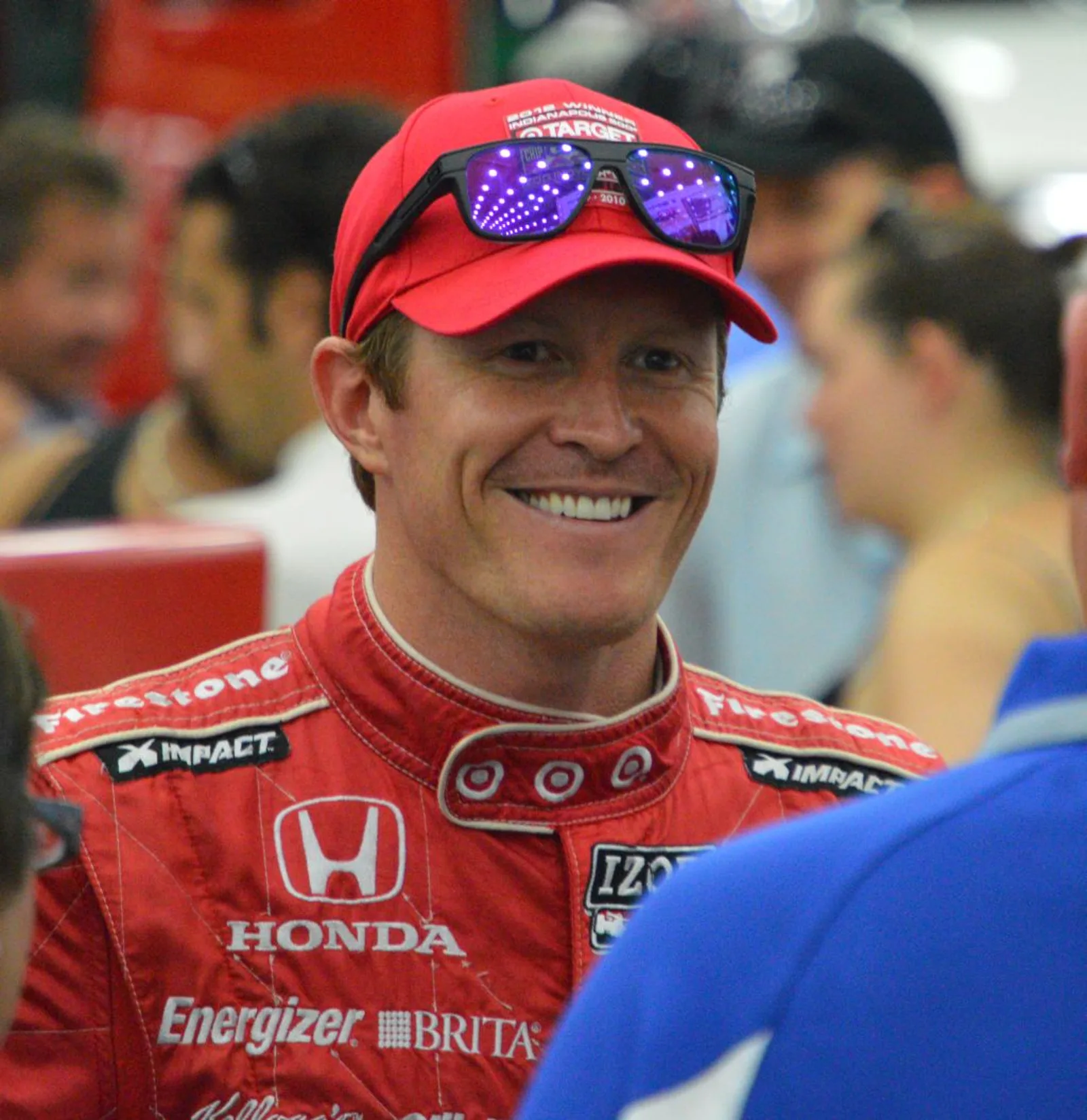
Scott Dixon won six races, the Indianapolis 500 and the first championship after the Indy Racing League and Champ Car merged, while Franchitti, Hornish and Sharp left the series.
Scott Dixon claimed the 2008 IndyCar Series title for Chip Ganassi Racing, his second, and the first championship of the unified era after the merger. Hideki Mutoh took Rookie of the Year, while Dixon's six wins included the Indianapolis 500.
The 2008 IndyCar Series was the 13th season of the series and the 97th recognised season of top-level American open-wheel racing. Scott Dixon, driving for Chip Ganassi Racing, won six races, including his first Indianapolis 500, and took the first championship of the unified era, while Hideki Mutoh won Rookie of the Year for Andretti Green Racing.
It was a year of reunion and reshaping. The Indy Racing League and Champ Car agreed to become a single entity, the Champ Car World Series was cancelled, and the field was filled with former Champ Car teams. Some of the biggest names left for NASCAR, and the points race was decided by consistency and fuel management rather than by a single dominant driver.
Why did the 2008 season mark a turning point?
The season was historically significant because it brought American open-wheel racing back under one roof. The two series had competed for 12 years before the managements agreed to unify. Announced on 22 February 2008 and detailed at a press conference on 27 February, the deal ended the Champ Car World Series as a stand-alone series, with its teams and venues folding into the IndyCar calendar.
The merger was not painless. The offer of free cars and engine leases to Champ Car teams that would run the full IndyCar schedule was first made in November 2007, and talks continued through the winter. Six of the nine Champ Car teams were able to continue, while the Panoz DP01 chassis was made obsolete after a single year and Cosworth ended its role as an engine supplier in Indy car racing.
Critics said the merger was a takeover rather than a merger, and some pointed to the late timing for Champ Car teams and the loss of several staple Champ Car events. Still, the agreement drew wide support from both sides of the split.
Dixon's 2008 title was the first of the unified era, and it was built on six wins, consistency and careful fuel management.
What did the new money and rules look like?
The series reworked how it paid teams. IndyCar TEAM, a revenue-sharing plan, guaranteed at least US$1.2 million for each car on the full schedule, while race purses were eliminated for every event except the Indianapolis 500. Cash bonuses went to the top five in every race, and the champion took home $1 million, as in earlier seasons.
The Indianapolis 500 remained the big prize. The winner received US$2.5 million, 33rd place paid at least $270,000 and the total purse was at least US$13.4 million, not counting contingency awards. For comparison, the 2007 winner had received $1,645,233 for the same race.
On track the rule book changed too. Paddle shifters became mandatory for full-time entrants, and the cars carried a Zylon synthetic-fibre intrusion barrier. Fuel mixture adjustment was reinstated, and oval qualifying moved from a two-lap average to a four-lap average, similar to the traditional Indianapolis method. The road and street course format became a three-round knockout, with the top six in the Firestone Fast Six battling for pole.
Who drove for whom in 2008?
The biggest move came when Dario Franchitti left Andretti Green Racing for NASCAR with Chip Ganassi Racing, while Sam Hornish Jr. moved to a full NASCAR programme with Penske, effectively leaving the IndyCar Series after eight seasons. Ryan Briscoe returned to a full IndyCar seat with Penske's No. 6, and Hideki Mutoh, backed by Honda, took Franchitti's No. 27 car at Andretti Green Racing.
Other departures were just as notable. Scott Sharp left Rahal Letterman Racing for Highcroft Racing in the American Le Mans Series after a legal fight with the team, and Kosuke Matsuura moved to Formula Nippon. Tomas Scheckter joined Luczo-Dragon Racing's No. 12, and Ryan Hunter-Reay took the No. 17 car at Rahal Letterman Racing. E. J. Viso drove HVM Racing's No. 33 and Enrique Bernoldi joined Conquest Racing.
The new teams were a patchwork. Dale Coyne Racing ran Bruno Junqueira and Mario Moraes, Vision Racing ran two cars with A. J. Foyt IV and Ed Carpenter, and Will Power joined KV Racing Technology's No. 8 with the backing of Team Australia. Several former Champ Car operations were reconstituted under new names, and some teams were forced to rebuild their programmes after the merger.
How did the 2008 season open?
The season began at Homestead on 29 March with Scott Dixon taking pole and winning the GAINSCO Auto Insurance Indy 300. Dixon beat Danica Patrick into the first turn and led most of the race, while Dan Wheldon started at the back after a crash in qualifying and charged through to third. Both Vision cars finished in the top ten.
St. Petersburg was won by Graham Rahal, who was 19 years and 93 days old when he took the flag. That made him the youngest winner in IndyCar Series history and the fourth driver to win in his first start, and he beat Marco Andretti's record set in 2006. A multi-car incident in the early laps and a late restart with just under four minutes to run decided the result, with Helio Castroneves finishing second.
The Indy Japan 300 at Motegi was the only race held outside the United States that season. Qualifying was rained out, so the lineup followed the points, and Danica Patrick won in a race that became a fuel-saving battle. Patrick became the first woman to win a top-level American open-wheel race, after a final charge in which Castroneves ran out of fuel and Ed Carpenter also had to pit for fuel.
The Long Beach round was run under Champ Car rules, which meant a standing start, a two-day qualifying format and a time limit of one hour and 45 minutes rather than a set number of laps. Will Power took the lead into turn one from fourth place and led 81 of the 83 laps, relinquishing the top spot only during pit stops. It was the final race of the Champ Car era.
What happened at the 2008 Indianapolis 500?
Scott Dixon took pole at 364.301 km/h (226.366 mph) and led 115 of the 200 laps, including the last 29, to win his first Indianapolis 500. Several cars were involved in crashes during the race, including Tony Kanaan, Graham Rahal, Jeff Simmons and Justin Wilson. Late in the race, with 29 laps left, Ryan Briscoe clipped Patrick's car as she left the pits, and both cars were damaged.
Patrick and Briscoe were fined $100,000 and placed on probation for their part in the incident. For Dixon the win was a career milestone, and it put him among a small group of drivers to take the championship and the 500 in one year, for the third season running. Dixon's pole run had set the tone for the whole race.
How did the summer rounds shape the title race?
The Kansas round, which followed the Indy 500 and Indy Japan events, was Dan Wheldon's. He led the final 49 laps to win, his first IndyCar victory since April 2007. Milwaukee followed with Ryan Briscoe taking his first career IndyCar win. Briscoe's victory was also Penske's 300th win in all motorsport series, a landmark for the team.
Texas was a different sort of race. Ryan Hunter-Reay lost control and touched wheels with Marco Andretti, and the finish came under caution. Dixon slipped past Andretti for the lead with six laps to go, and Castroneves finished second. Iowa went to Wheldon, and Chip Ganassi Racing donated the race winnings from both of its cars to Iowa flood relief, which was a notable gesture for the team.
Richmond was won by Tony Kanaan, his first victory of the season. The race started under caution and was disrupted by several crashes, but Kanaan led from pole and held off the field for the win. At Watkins Glen Hunter-Reay took his first IndyCar victory, after Dixon spun out during the restart and collected Briscoe. Hunter-Reay, who had no need to save fuel, won easily.
Nashville was another rain-shortened race, cut to 171 laps. Dixon led Dan Wheldon when the race reached the 160-lap mark and both drivers gambled on the rain returning. When the rain began to fall, Dixon was in front and the red flag was shown after lap 171, and the race was called fifteen minutes later. Dixon was declared the winner.
| Race | Winner | Notable detail |
|---|---|---|
| Homestead (GAINSCO Indy 300) | Scott Dixon | Led most of the race from pole |
| St. Petersburg | Graham Rahal | Youngest winner in series history |
| Indy Japan 300, Motegi | Danica Patrick | First female winner in top-level American open-wheel racing |
| Long Beach | Will Power | Led 81 of 83 laps under Champ Car rules |
| Kansas | Dan Wheldon | Led the final 49 laps |
| Indianapolis 500 | Scott Dixon | First Indy 500 win, led 115 laps |
| Milwaukee | Ryan Briscoe | First career IndyCar win |
| Texas | Scott Dixon | Race finished under caution |
| Iowa | Dan Wheldon | Race winnings donated to flood relief |
| Richmond | Tony Kanaan | First win of the season |
| Watkins Glen | Ryan Hunter-Reay | First IndyCar win |
| Nashville | Scott Dixon | Rain cut the race to 171 laps |
| Kentucky | Scott Dixon | Sixth win of the season |
| Sonoma | Helio Castroneves | First win of the year after many second places |
| Detroit | Justin Wilson | Castroneves penalised for an illegal block |
| Chicagoland | Helio Castroneves | Started last and won |
| Surfers Paradise | Ryan Briscoe | Won his home race |
How did the closing rounds decide the title?
Dixon's title push came from a run of wins and steady finishes. He won Kentucky, his sixth win of the season, after Castroneves ran out of fuel on the final corner. Castroneves finally claimed his long-awaited win of the year at Sonoma, which narrowed the gap to Dixon, and the championship battle tightened.
Detroit was controversial. Castroneves appeared to make an illegal block late in the race, and the officials penalised him, allowing Justin Wilson to take the win by more than four seconds. At the finale in Chicagoland, Castroneves started last after moving his car below the white line in qualifying. His drive from 28th to first was the furthest any IndyCar Series winner had come from the back of the grid.
Dixon finished second at Chicagoland, only 0.0033 seconds behind Castroneves, which was the second-closest finish in the 12-year history of the series. Mutoh finished 22nd and secured Rookie of the Year honours for Andretti Green Racing.
What were the final standings?
Dixon finished the season as champion, his second title and the first of the unified era. He won six races, including the Indianapolis 500, and he was the third straight driver to take the championship and the 500 in the same year.
The field was packed with strong results. Castroneves was a constant threat, and Briscoe took his first win in a season that also gave Penske a 300th victory. Franchitti, Hornish and Sharp, who had all left the series for NASCAR or sports car racing, having combined for five championships and 46 wins during their open-wheel careers.
Why does the 2008 season matter?
The 2008 season is remembered as the first season of a combined American open-wheel series. It brought Champ Car's former teams and venues into the IndyCar calendar, and it showed how a single championship could be contested by drivers from different traditions. Dixon's title was built on consistency and fuel management, and his Indy 500 win was the highlight of his season.
The television picture was also changing. The Homestead opener was broadcast on ESPN2, and Helio Castroneves's success on Dancing with the Stars, which reached a final-show audience of 24.90 million, gave the series a wider profile that season.