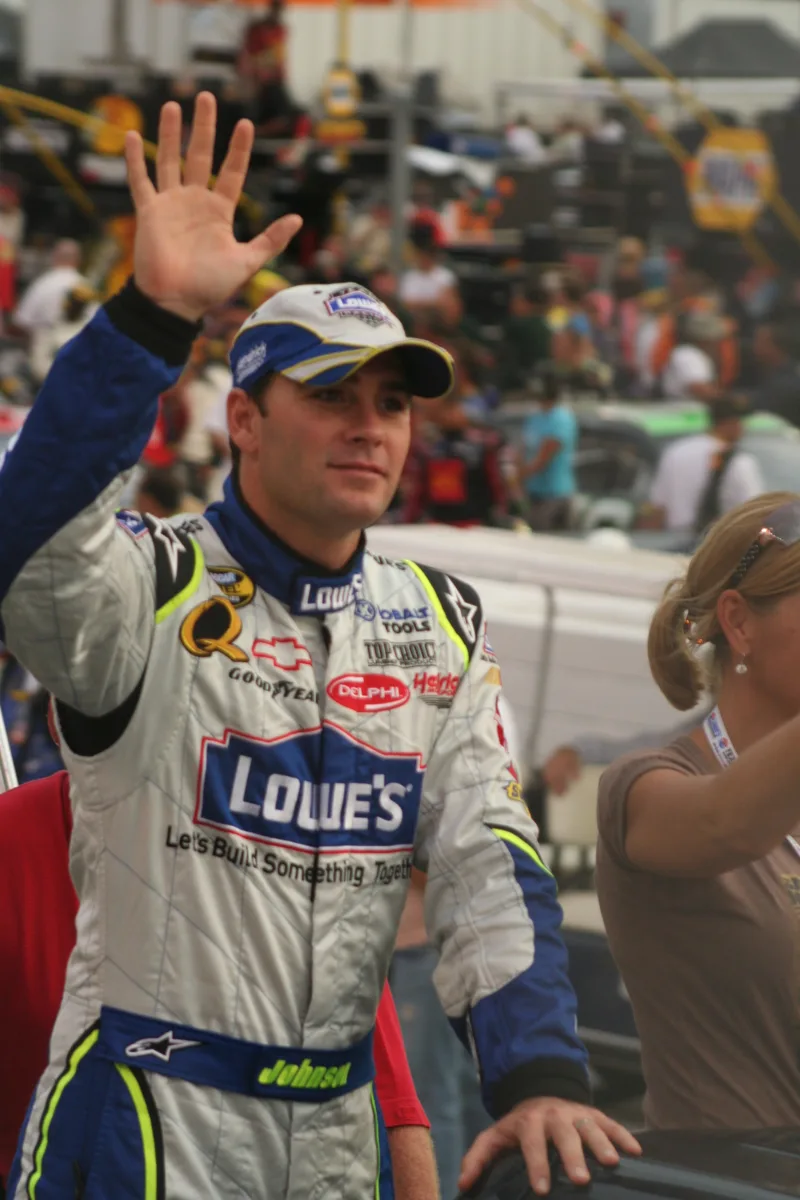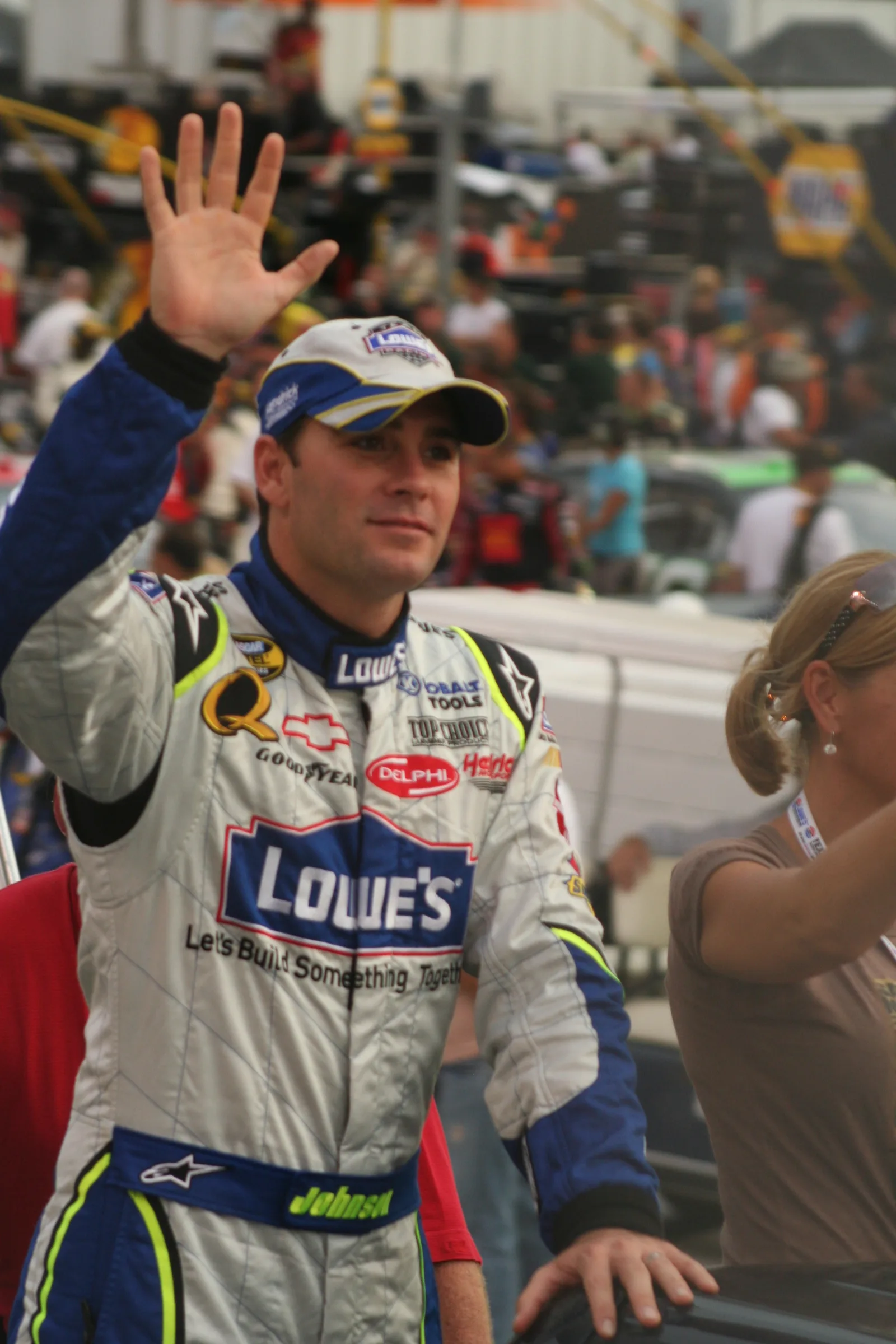
Jimmie Johnson won his second straight championship in a season of rule disputes, sponsor fights and Toyota's first full year at the top level.
The 2007 season, the 59th of top-level stock car racing in America, saw Jimmie Johnson win his second straight title for Hendrick Motorsports. Toyota made its debut, the Car of Tomorrow ran 16 races, and the Nextel name was dropped for 2008.
The 2007 Nextel Cup season was the 59th year of top-level stock car competition in America and the 36th of the modern Cup era. Jimmie Johnson of Hendrick Motorsports took his second consecutive title, finishing 77 points clear of teammate Jeff Gordon. It was also the final year the series carried the Nextel name, and it marked Toyota's first season in the top division.
Who won the 2007 Nextel Cup championship?
Jimmie Johnson won the 2007 Nextel Cup championship for Hendrick Motorsports, his second title in a row. He finished seventh in the season finale at Homestead-Miami Speedway, which was enough to win the title by 77 points over Gordon after a long campaign.
Johnson won ten races during the year, and four of those came in a row late in the season. He became the first driver since Gordon in 1998 to combine ten wins with a four-race winning streak in one season, and the run helped him protect his place at the top of the Chase.
Gordon had a strong year of his own. He finished with 30 top ten results, a Modern Era record that broke a tie he had shared with Dale Jarrett, who had 29 top ten finishes in his 1999 title season. Chevrolet took the manufacturers' championship with 26 wins, ahead of Ford's seven.
Johnson's second title came from a late run of wins, while the Car of Tomorrow divided the garage and set the rules for the years ahead.
How did the Chase for the Nextel Cup work in 2007?
The Chase for the Nextel Cup decided the title over the final ten races of the season. Twelve drivers qualified automatically following the Chevy Rock and Roll 400, and each Chase driver's points were reset to 5,000, plus ten points for each win in the first 26 races.
The Chase also gave more weight to winning. The race winner received 185 points, up from 180, and a driver could collect as many as 195 points for a victory once bonus points for leading laps were added. The changes were announced at the start of the year, when the series media tour was held in Charlotte.
The Chase schedule alternated between conventional stock cars and the Car of Tomorrow, which ran at New Hampshire and Dover and also at Talladega, Martinsville and Phoenix. ABC carried all ten Chase races, marking the network's return to the sport after a long absence, and the broadcast schedule gave the playoffs a large audience.
What was the Car of Tomorrow?
The Car of Tomorrow was a new design used in 16 races during 2007, ahead of its adoption across the full schedule in 2008. The project began after Dale Earnhardt died in the 2001 Daytona 500, and its brief was to improve safety, performance, competition and cost efficiency.
Opinions were divided. Some drivers argued that the car made races boring and uncompetitive, while others saw it as a necessary step toward a safer and cheaper machine. The debate carried into the car's first full season, and it shaped how teams approached the rest of the decade.
The season finale was the last race under the Nextel name, and it also marked the final full-time use of the fourth-generation car in service since 1992. The Car of Tomorrow took over the schedule from the following year.
How did Speedweeks and the Daytona 500 open the season?
Speedweeks began with the Budweiser Shootout on February 10, a non-points race that brought together past pole winners and Clash winners. Tony Stewart took the checkered flag, but a five-car wreck followed when Dale Earnhardt Jr. made contact with Elliott Sadler near the finish line.
Toyota made its first appearance in the series during that weekend, and Dale Jarrett drew the pole position in the draw for starting spots. Jarrett slid to the back early and stayed there, while Brian Vickers, the other Toyota driver, finished eighth after working his way through the field.
The Daytona 500 was a chaotic race. Robert Yates Racing had swept the front row in qualifying, and Michael Waltrip's No. 55 team had been penalised after an unauthorised fuel additive was found in its intake manifold. Kevin Harvick won by 0.020 seconds over Mark Martin, becoming the 31st different winner of the race.
What were the main regular-season highlights?
The regular season produced several standout performances. Jeff Gordon won the Subway Fresh Fit 500 at Phoenix, tying Dale Earnhardt's total of 76 wins, and Tony Stewart won the USG Sheetrock 400 at Chicagoland to end a run of 20 races without a victory.
Casey Mears won the Coca-Cola 600 after 154 previous attempts. The 600-mile race ended with Mears running out of fuel after he had crossed the finish line. Earlier in the year Martin Truex Jr. had won his first Cup race at the Autism Speaks 400 at Dover, leading 216 of the 400 laps.
Juan Pablo Montoya became the first Colombian-born winner in the series at the Toyota/Save Mart 350 at Sonoma, and Jamie McMurray won the Pepsi 400 by .005 seconds over Kyle Busch. Johnson's autumn included the Sharp AQUOS 500 in California, the Chevy Rock and Roll 400 at Richmond, and then four straight Chase victories.
Which controversies dominated the 2007 season?
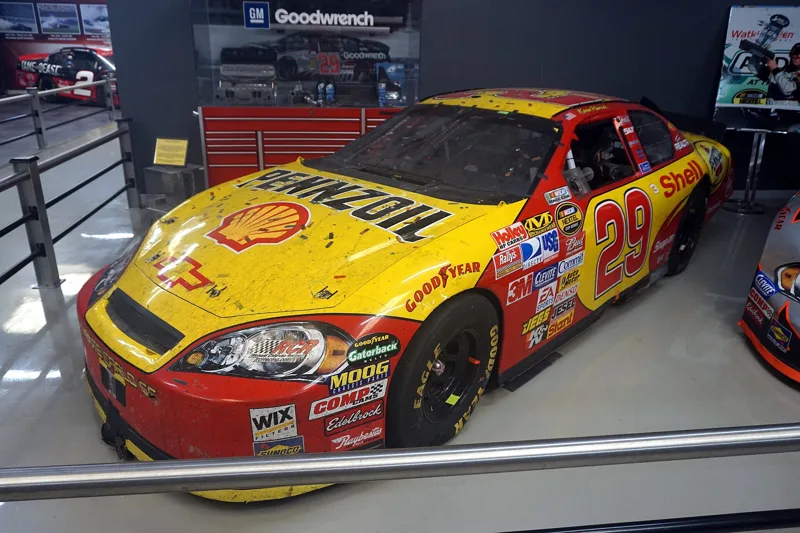
The 2007 season was marked by disputes over sponsorship, illegal modifications and team ownership. The AT&T decal fight, the Motorola decal on Robby Gordon's car and a Shell logo controversy all drew attention from fans and the sport's governing body.
NASCAR penalised five teams for illegal modifications during Daytona 500 qualifying. The Michael Waltrip Racing No. 55 team was hit hardest, with a fine of $100,000 and the loss of 100 owner and driver points, while the team's crew chief and race director were suspended.
Dale Earnhardt Jr. signed a five-year deal with Hendrick Motorsports on June 13, moving into the No. 88 Chevrolet. A wave of ownership changes followed, which the press called Merger Mania, and Dale Jarrett announced his retirement from full-time driving at the Bank of America 500 weekend.
How did Toyota's arrival change the series?
Toyota made its Nextel Cup debut in 2007 with the Camry, and as a newcomer the manufacturer finished the year without a race win. The manufacturer ended the standings with 116 points, behind Chevrolet, Ford and Dodge in its debut year.
The arrival of Toyota was tied to changes at Joe Gibbs Racing, which switched from General Motors to Toyota after a long alliance that began in 1992. The decision was confirmed on September 5, and Hall of Fame Racing said it would also move to Toyota if Joe Gibbs Racing did so.
How did the Chase races unfold?
The first Chase race was the Sylvania 300 at New Hampshire on September 16, where Clint Bowyer entered the playoffs as the only driver without a win and then dominated. He led 222 of the 300 laps for his first career victory, in his 64th start, and all 43 starters finished.
Carl Edwards won the Dodge Dealers 400 at Dover on September 23, his third win of the season, and Johnson took the pole, his second of the season. The LifeLock 400 at Kansas on September 30 was shortened to 210 laps by two rain delays, and Greg Biffle won it. Jeff Burton drew a penalty for working on his car during a red flag, which sent him to the end of the pit queue.
The UAW-Ford 500 at Talladega on October 7 was the first Car of Tomorrow race with restrictor plates. Michael Waltrip took the pole, and seven of the top ten qualifiers were Toyotas. Jeff Gordon scored his 80th career win by charging past Jimmie Johnson on the last lap, which gave him the points lead.
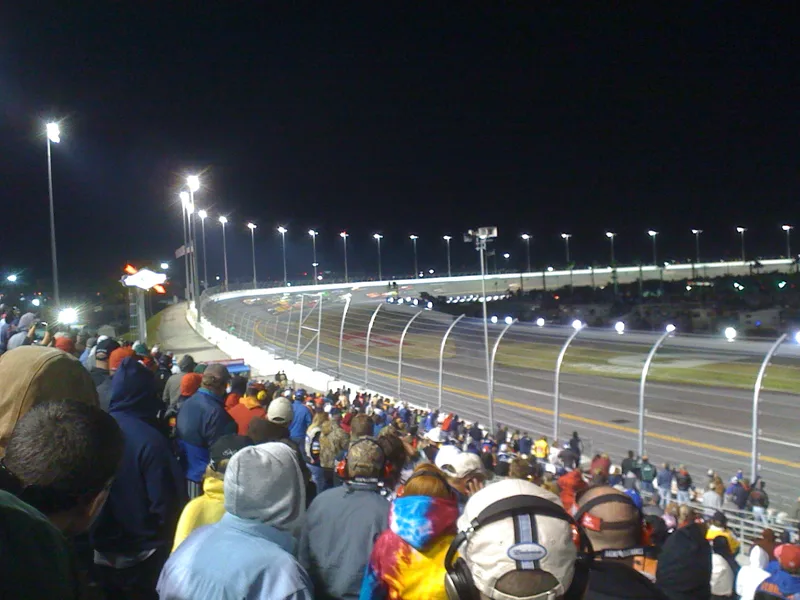
The October 13 event was the sole Saturday night race of the Chase. Gordon overcame a fuel problem to win, his first victory at the track since 1999. Johnson's Martinsville win on October 21 began the run of four straight victories that carried him to the title.
The season finale, the Ford 400 at Homestead, was decided by Johnson's seventh-place finish. Matt Kenseth led 214 laps for his second win of 2007, and Johnson clinched the championship by 77 points over Gordon, who finished 30 top ten times in the season.
How did the rookies and newcomers fare?
The most publicised rookie was former Formula One driver Juan Pablo Montoya, who drove Chip Ganassi Racing's No. 42 Dodge after Casey Mears left the team. Montoya had been criticised for his aggressive style in open-wheel racing, but he tamed it enough to win at Sonoma and take the first foreign-born Rookie of the Year title in the series.
Montoya's Sonoma win was the first by a foreign driver since Earl Ross of Canada won at Martinsville in 1974. The result also gave Chip Ganassi his first win since 2002, a long gap for a team owner who had struggled in recent seasons.
David Ragan, who took over the No. 6 ride from Mark Martin, finished fifth in the Daytona 500 in his first Cup season, and he went on to have a mixed year. Paul Menard and A. J. Allmendinger also found the going tough, and Michael Waltrip raced with a team that had lost its crew chief. The group of rookies showed that the path into the series was narrow.
How did the ownership changes reshape the teams?
Several teams changed hands during 2007, reshaping the grid and the shape of the sport's business. Roush Racing sold 50 percent of its operation to the Fenway Sports Group, and the team was renamed Roush Fenway Racing as a result.
Dale Earnhardt Inc. merged with Ginn Racing on July 24, taking on the No. 01 ride of Mark Martin and Aric Almirola. The next day Newman/Haas/Lanigan Racing bought Robert Yates Racing, although the deal was called off when Robert Yates retired and his son Doug Yates took the team forward as Yates Racing.
Ray Evernham's team merged with George Gillett's group in August and became Gillett Evernham Motorsports. Michael Waltrip Racing was set up with Robert Kauffman and Michael Waltrip as equal partners, and Cal Wells, a former owner, was named chief executive. Each change added a new partner and a new set of pressures to the teams involved.
Race winners at a glance
| Race | Track | Winner |
|---|---|---|
| Daytona 500 | Daytona International Speedway | Kevin Harvick |
| Auto Club 500 | California Speedway | Matt Kenseth |
| Samsung 500 | Texas Motor Speedway | Jeff Burton |
| Subway Fresh Fit 500 | Phoenix International Raceway | Jeff Gordon |
| Autism Speaks 400 | Dover International Speedway | Martin Truex Jr. |
| Coca-Cola 600 | Lowe's Motor Speedway | Casey Mears |
| Pocono 500 | Pocono Raceway | Jeff Gordon |
| Toyota/Save Mart 350 | Infineon Raceway | Juan Pablo Montoya |
| Pepsi 400 | Daytona International Speedway | Jamie McMurray |
| UAW-Ford 500 | Talladega Superspeedway | Jeff Gordon |
| Watkins Glen | Watkins Glen International | Tony Stewart |
| Ford 400 | Homestead-Miami Speedway | Matt Kenseth |