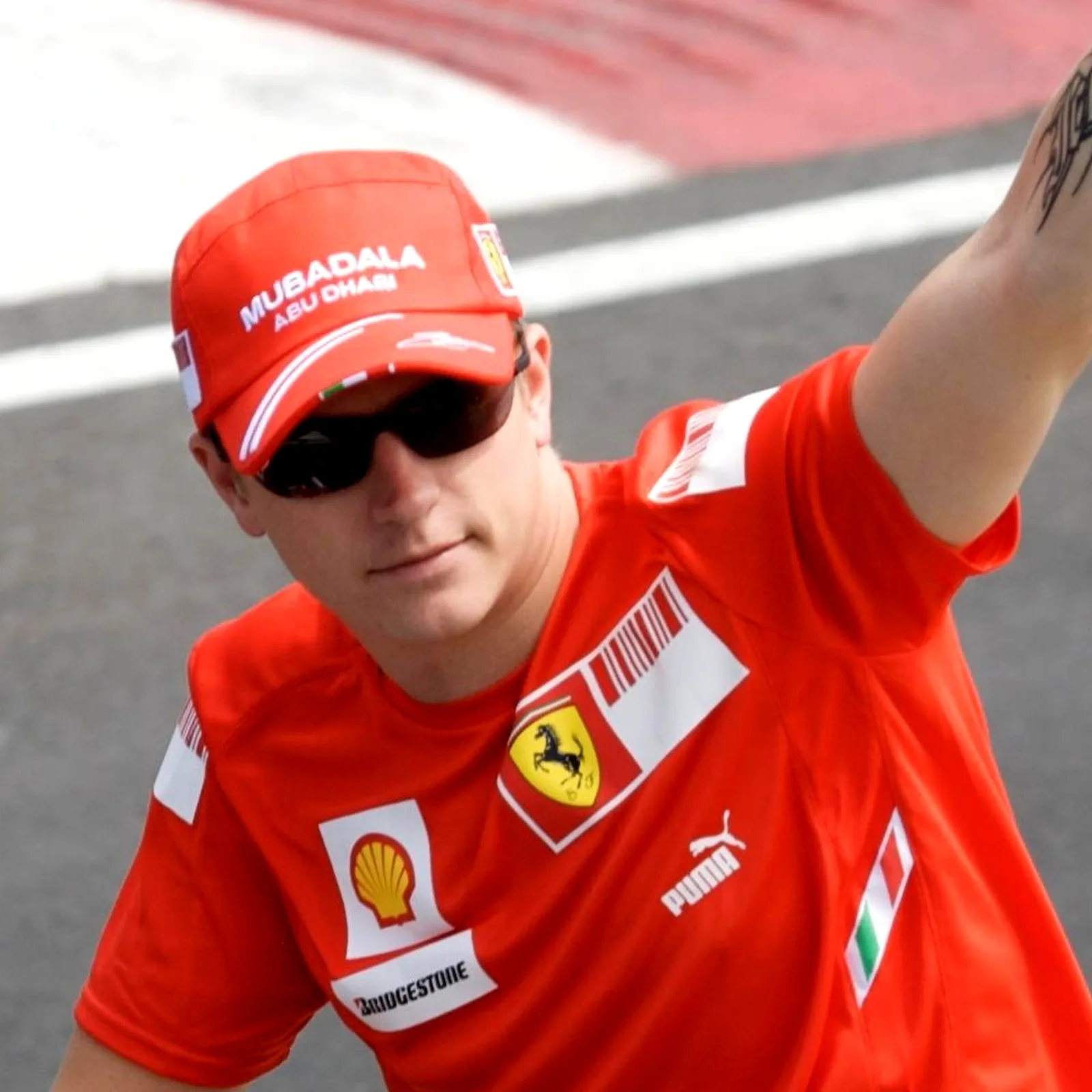
A spy scandal removed McLaren from the constructors' table, and Kimi Raikkonen took the drivers' crown by a single point after starting the final race in third.
Kimi Raikkonen won the 2007 Formula One World Championship by one point, taking the title with a final race win from third place. Lewis Hamilton and Fernando Alonso finished on 109 points each, and Ferrari took the constructors' title after McLaren's exclusion.
Raikkonen claimed the 2007 Formula One title by one point, starting the final race third in the standings. The championship was the sport's 61st season, held over seventeen events from 18 March to 21 October. Ferrari also clinched the constructors' title at the Belgian Grand Prix, after McLaren had been removed from the table.
Who won the 2007 title?
Raikkonen won the drivers' title on the final race day, finishing with 110 points. Hamilton and Alonso both finished on 109, and the tie for second was settled by countback. Hamilton took second place on the strength of five second-place finishes to Alonso's four, after the pair had each won four races.
Raikkonen became the third Finnish driver to win the title. His late charge came after a difficult start to the season. He was also the first driver since Giuseppe Farina in 1950 to win the championship after entering the final race third, which underlined how unlikely the result looked before the start.
One point decided a season in which a spy scandal removed McLaren from the constructors' table.
How did the espionage row shape the championship?
McLaren were removed from the constructors' table after an espionage affair involving Ferrari's technical information. The team was found guilty of theft and illegal use of confidential data, and it received no constructors' points from the races that followed. The ruling reshaped the constructors' table for the rest of the season.
McLaren challenged the eligibility of certain cars at the finale, and the challenge could have altered the standings. On 16 November the International Court of Appeal rejected it, which confirmed the championship results as they stood.
The exclusion meant Ferrari could clinch the constructors' title in Belgium, where Raikkonen won from Massa and Alonso. Ferrari beat BMW Sauber to the crown once McLaren's results had been removed.
What regulation changes shaped the 2007 season?
Bridgestone was the sole tyre supplier for 2007, after Michelin ended its Formula One involvement at the end of 2006. Each driver had 14 sets of dry-weather tyres for the weekend, with four sets for Friday only and ten for the rest of the weekend. Both hard and soft compounds had to be used during each race.
Engine development was locked down from the Japanese race of 2006, so the same units were used through 2007 and 2008. Standardised engine control units were scheduled from 2008, and traction control was allowed for one last year after its return in 2001.
Other changes covered safety and procedure. Every car carried a cockpit light system, with LEDs of at least 5 mm, and a rescue warning light connected to the FIA data logger. Friday practice was extended from 60 to 90 minutes, and teams were limited to 30,000 kilometres of testing each year.
Who were the main driver changes?
Fernando Alonso left Renault for McLaren after five years, and he was the only driver on the 2007 grid with a previous title. Kimi Raikkonen replaced the retiring Michael Schumacher at Ferrari, and Heikki Kovalainen took Alonso's seat at Renault.
Juan Pablo Montoya's move to NASCAR, announced on 9 July 2006, had already ended his Formula One career. Lewis Hamilton, who had been confirmed as McLaren's second driver in November 2006, made an immediate impact. Robert Kubica moved up to a race seat at BMW Sauber after Jacques Villeneuve's contract was terminated, and Alexander Wurz stepped up at Williams in place of Mark Webber, who moved to Red Bull Racing alongside David Coulthard.
Sebastian Vettel replaced Scott Speed at Scuderia Toro Rosso in the middle of the year, after an alleged altercation between Speed and the team principal. Vettel had made his debut the same season for BMW Sauber at the United States Grand Prix, replacing the injured Kubica.
How did the season start?
Raikkonen won the season opener in Australia, becoming the fourth driver to win on his debut for Ferrari. Alonso took second, and Hamilton, in his debut season, finished third. The opening rounds set the pattern for the rest of the year, with Ferrari and McLaren trading wins.
Ferrari had led much of the early testing, but Malaysia showed that McLaren could beat them on Sunday. It brought Alonso his first win with McLaren, with Massa on pole and Hamilton second. Massa then led every lap to win in Bahrain and again in Spain, and Hamilton finished second in both. Hamilton, still a rookie, was already fighting at the front.
Hamilton's early results made him one of the stories of the year, even before his first win. Monaco went to Alonso, who beat Hamilton after the pair had lapped the rest of the field apart from Massa. At this stage McLaren looked dominant, with Hamilton and Alonso regularly in the top two.
Which races changed the title race?
The Canadian Grand Prix was one of the most dramatic races of the era. It featured four safety car periods, and Robert Kubica crashed heavily at a peak deceleration of 75G. Hamilton won that race for his first Formula One victory, taking pole and then leading to the finish.
- United States: Hamilton led from the start and beat Alonso after a side-by-side battle at around 300 km/h.
- France: Ferrari took its first one-two of the season, with Raikkonen ahead of Massa.
- Britain: Raikkonen won, and Hamilton took a distant third after taking his third pole.
- Germany: Hamilton's run of nine consecutive podiums ended after he aquaplaned in heavy rain and finished ninth.
- Hungary: Alonso was demoted to sixth after a qualifying incident, and McLaren lost constructors' points while Hamilton won.
- Turkey: Massa dominated, and Hamilton finished fifth after a tyre failure.
- Italy: Alonso won from Hamilton, and McLaren was later excluded from the constructors' standings.
- Belgium: Raikkonen won, and Ferrari clinched the constructors' title.
How did the Japanese and final races decide the title?
The Japanese race relocated to Fuji Speedway, and treacherous weather marked it, with the start made behind the safety car. Hamilton survived a brush with Kubica to win from Heikki Kovalainen and Raikkonen, and Kovalainen's second place gave Renault its only podium of the year. That result kept the three title contenders close going into the finale.
The final race decided the championship. Hamilton was the favourite before it, with 107 points to Alonso's 103 and Raikkonen's 100. Hamilton started second but dropped to the back after a gearbox problem, and he recovered only to seventh. Raikkonen won the race and the title by a single point.
The season ended with McLaren and Ferrari on top of the standings, while Renault were uncompetitive. The R27 car took Renault only to third in the constructors' table after McLaren's exclusion, and the team went without a win for the first time since 2002.
What did the 2007 results look like at a glance?
| Grand Prix | Winner | Key point |
|---|---|---|
| Australian | Kimi Raikkonen | Won on Ferrari debut |
| Malaysian | Fernando Alonso | First win with McLaren |
| Bahrain | Felipe Massa | Led every lap |
| Spanish | Felipe Massa | Hamilton second again |
| Monaco | Fernando Alonso | Hamilton second, Massa not quite lapped |
| Canadian | Lewis Hamilton | Maiden win after four safety cars |
| United States | Lewis Hamilton | Beat Alonso side by side |
| French | Kimi Raikkonen | Ferrari one-two with Massa |
| British | Kimi Raikkonen | Hamilton third |
| Hungarian | Lewis Hamilton | Alonso demoted to sixth |
| Turkish | Felipe Massa | Hamilton fifth after tyre failure |
| Italian | Fernando Alonso | McLaren later excluded |
| Belgian | Kimi Raikkonen | Ferrari clinched constructors title |
| Japanese | Lewis Hamilton | Treacherous weather at Fuji |
| Final race | Kimi Raikkonen | Title by one point |
Pre-season testing and calendar changes
Pre-season running began in November 2006 at Bahrain and continued in February 2007 at Catalunya, with ten of the eleven teams taking part. Alonso and Raikkonen were absent because their contracts still ran with Renault and McLaren, while Jenson Button missed the tests after a rib injury from a go-karting accident.
Ferrari led the early tests, with Massa topping the times and Luca Badoer also quick. Those early results hinted at Ferrari's strength during the season. When testing resumed at Jerez on 6 December, Ferrari was again at the front, and Hamilton then took the fastest time the following day, a second quicker than Renault's Giancarlo Fisichella.
The calendar also changed. Germany went without a Grand Prix that year, a gap not seen for decades, because the rights to the name were disputed between Hockenheim and the Nurburgring, and the Nurburgring event kept the European title. The Japanese race left Suzuka, where it had run since 1987, for Fuji Speedway.
Belgium returned after a one-year absence. No single country hosted two races, a first in decades.
Team, engine and sponsor changes
Honda ran an Earth livery on its RA107 with no sponsor, the first sponsor-free season for a team since 1968. Williams moved from Cosworth to Toyota engines on a three-year deal until 2009, while Red Bull Racing used Renault engines and Spyker took Ferrari units. Scuderia Toro Rosso ran 2006-spec Ferrari engines.
Cosworth withdrew from Formula One as an engine supplier on 30 September 2006, which meant that no Cosworth-powered cars competed for the first time since 1962. The company said it would return from 2010. Spyker announced Etihad Airways as its title sponsor on 15 March 2007.
Ross Brawn, who had spent ten seasons as Ferrari's technical director since 1997, moved on to become team principal of Honda in 2008. McLaren lost its Vodafone deal, which had been signed late in 2005, and Ferrari began a new partnership with Alice, a brand of Telecom Italia.