Mika Hakkinen won his first race of 2000 after Michael Schumacher's stop went wrong, a Ferrari mechanic was seriously hurt and Coulthard raced a week after surviving a plane crash.
The 2000 Spanish Grand Prix was held on 7 May at the Circuit de Catalunya in Montmelo, Catalonia, as round five of the season. Mika Hakkinen won the 65-lap race for McLaren, with David Coulthard second and Rubens Barrichello third.
Mika Hakkinen won the 2000 Spanish Grand Prix for McLaren, his first victory of the season. Michael Schumacher had started from pole and led most of the afternoon, but a delayed pit stop and a slow puncture handed the advantage to his rival. A McLaren one-two left Ferrari's constructors' lead much smaller than it had been before the race.
What was the 2000 Spanish Grand Prix?
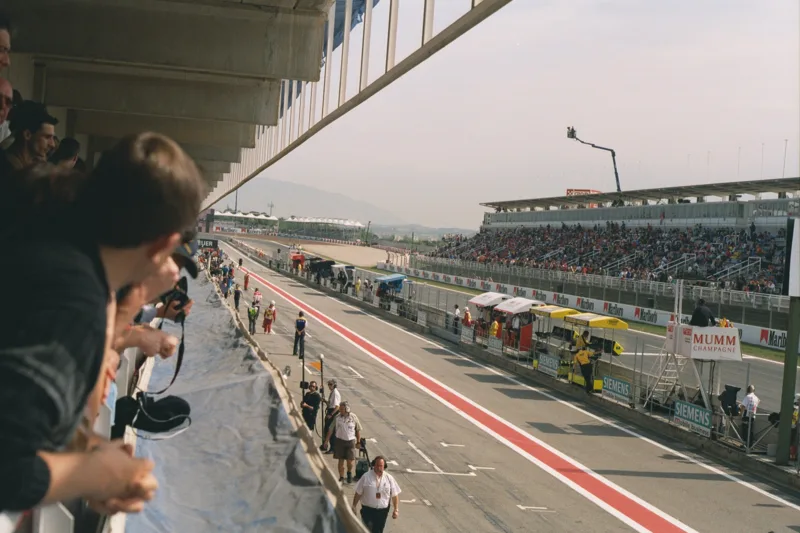
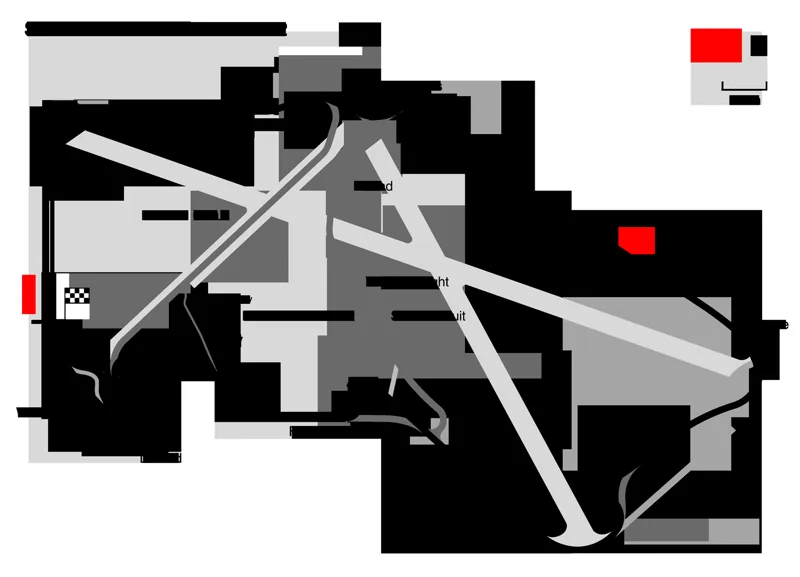
The race was the fifth round of the 2000 season and the 42nd Spanish Grand Prix. It was held on 7 May 2000 on the 4.730 km (2.939 mi) clockwise Circuit de Catalunya in Montmelo, which had hosted the Spanish race for the tenth time. Around 79,000 spectators watched the 65-lap event.
The race came two weeks after the British Grand Prix, and it was one of the early European rounds of a 17-race season. Bridgestone was the sole tyre supplier, bringing soft and medium dry compounds, and eleven teams entered two drivers each with no changes to the season entry list.
Michael Schumacher led the drivers' table with 34 points, ahead of McLaren's David Coulthard on 14 and Mika Hakkinen on 12. Ferrari led the constructors on 43 points, 17 ahead of McLaren. Williams were third on 12 points, while Benetton and Jordan were tied on eight.
Schumacher led most of the afternoon, but a delayed stop and a slow puncture handed Mika Hakkinen his first win of 2000.
How did the teams test before the race?
Teams ran at the circuit from 25 to 28 April, after the British Grand Prix on 23 April. Jos Verstappen was fastest for Arrows on the first day, ahead of McLaren's test driver Olivier Panis, while Michael Schumacher was quickest on the second and third days and again at the end of the final session.
Minardi debuted a titanium gearbox that was 5 kg (11 lb) lighter than magnesium units and cheaper to build, and Prost changed its oil systems to improve reliability. BAR installed new bargeboards and rear wings, while Williams' cast titanium hub carriers were not used because they got in the way of the brake vents.
Why was the week difficult for David Coulthard?
Coulthard had been leasing a Learjet owned by his friend David Murray, the Rangers chairman, when its left engine failed on the way to Nice. The crew attempted an emergency landing at Lyon-Satolas Airport, and the aircraft crashed. Coulthard survived with bruised ribs and grazed elbows, but Murray's pilot and co-pilot were killed.
Coulthard, his girlfriend at the time and his personal trainer also survived. FIA safety delegate Sid Watkins declared him fit to race, and Coulthard raced with three cracked ribs on his right side and a bruised chest wall. He later said he had made the right decision by racing.
Jacques Villeneuve had a back injury that he picked up in Brazil, and he withdrew from testing in Barcelona. He was passed fit before the event, although BAR's official test driver Darren Manning had been on standby to replace him.
How did practice and qualifying set the grid?
Schumacher took his first pole of the season with a time of 1:20.974, more than a second quicker than the 1999 pole lap. Hakkinen was 0.076 seconds behind and joined him on the front row, and Barrichello was third, although he did not feel good about the car's set-up.
Schumacher's time came on a second run, 43 minutes into a hot, sunny session, and a headwind affected his lap. It was his 24th career pole. Coulthard lost time early in the session because of a fuel pressure fault, so he started with 10 kg (22 lb) of extra fuel.
Ralf Schumacher was fifth after excessive oversteer ruined his lap, and Villeneuve took sixth. Trulli and Frentzen lined up on the fourth row, seventh and eighth. Button was 11th after crosswinds made his car unstable, while De la Rosa and Irvine were ninth and tenth.
Later that day the FIA analysed a fuel sample from De la Rosa's car and declared it illegal. Arrows' team principal Tom Walkinshaw blamed contamination in transit, and the team appealed. The appeal was withdrawn after the warm-up, and De la Rosa had to start from the back of the grid.
How did the race start?
The race began at 14:00 local time under sunny and cloudy skies, with the air between 21 and 30 C (70 and 86 F). Hakkinen made a better start than Schumacher, who steered right across the track to block him on the outside, so the McLaren could not mount a strong challenge into the braking zone for the Elf corner.
Ralf Schumacher got away well and passed Coulthard and Barrichello for third. He touched the rear of Hakkinen's car in a cloud of dust at the first right-hand turn, sending the McLaren sideways, but both drivers kept going. By the end of the first lap the order was Michael Schumacher, Hakkinen, Ralf Schumacher, Coulthard, Barrichello and Villeneuve.
Button climbed from 11th to ninth on the opening lap, while Irvine dropped three places. Diniz spun on the dirt outside turn three and retired. On lap two De la Rosa collided with the rear of Alesi's car at Wurth corner, forcing Alesi out, and De la Rosa's front wing broke before he beached in the gravel at Campsa.
Michael Schumacher began to pull clear, although traffic kept the gap to Hakkinen between 1.6 and 3.4 seconds. Coulthard and Barrichello fought with Ralf Schumacher for third, while Villeneuve held up Frentzen, Trulli and Button in the next group.
How did the pit stops decide the race?
Michael Schumacher made his first stop on lap 24 and Hakkinen followed on lap 26, so every leader had pitted by the start of lap 28. Coulthard came in twelve laps later to try to pass Ralf Schumacher and Barrichello, which triggered a second round of stops for the front runners. Schumacher and Hakkinen both pitted on the 42nd lap.
Hakkinen's second stop lasted 6.7 seconds and he emerged ahead. Schumacher's stop was longer because Andrea Vacari, the reserve refueller, struggled to fit the fuel pump into the tank neck after the tyres had been fitted, so Schumacher stood still for about ten seconds longer than usual.
Hakkinen set the race's fastest lap, 1:24.470, on lap 28. He was on the softer tyre compound and began to gain on Schumacher, who was running the harder option, although Hakkinen did not attempt a pass at that stage.
What went wrong at Michael Schumacher's first stop?
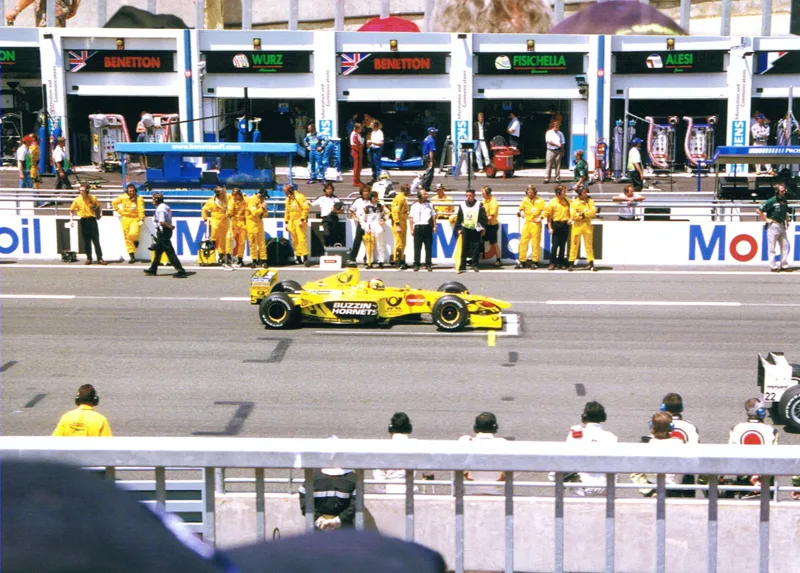
On lap 24 mechanic Federico Ugozzoni raised the signboard a second before the fuel hose had come out of the Ferrari, and Schumacher drove away from his box while the clogged hose was still being removed. His right-rear wheel struck Ferrari's chief mechanic Nigel Stepney, who was helping the refueller. Stepney was dragged and knocked over.
Stepney went to the circuit's medical centre for observation, and scans in Paris showed an open fracture of the shinbone and stretched leg tendons. He was ruled out of the next two Grands Prix, and Vacari took over his refuelling role. Schumacher apologised to Stepney after the race for injuring him.
Barrichello later said that Stepney's absence had made his second pit stop slower than usual.
How did Hakkinen seal the win?
Hakkinen won at an average speed of 196.324 km/h (121.990 mph), with Coulthard second, 16 seconds behind, and Barrichello third. It was Hakkinen's first win of the season and the 15th of his Formula One career, following his victory at the 1999 Japanese Grand Prix.
Schumacher's left-rear tyre had a slow puncture that cost him roughly 1.5 to 2 seconds a lap, and that loss let Coulthard close the gap. By lap 46 Coulthard was closing fast, and he tried the inside into the first corner. Schumacher blocked, nearly forcing both drivers off the track.
On lap 48 Coulthard passed on the outside at the Elf corner by braking later, and on the 50th lap Ralf Schumacher tried to pass his brother on the outside at La Caixa but was blocked. Barrichello then took advantage on the inside to pass both Schumacher brothers for third place.
What did the result change in the championship?
Hakkinen moved into second place in the drivers' table, 14 points behind Schumacher, and Coulthard dropped to third, two points behind his teammate. Barrichello climbed to fourth on 13 points, while Ralf Schumacher fell to fifth on 12 points.
In the constructors' table Ferrari kept the lead, but McLaren's one-two finish left it just seven points behind. Williams stayed third on nine points. Frentzen's sixth place lifted Jordan into fourth, one point ahead of Benetton, with twelve races still to run.
Race results at a glance
| Position | Driver | Team | Note |
|---|---|---|---|
| 1 | Mika Hakkinen | McLaren | First win of 2000 and 15th career win |
| 2 | David Coulthard | McLaren | 16 seconds behind, racing with three cracked ribs |
| 3 | Rubens Barrichello | Ferrari | Passed both Schumachers on the inside late on |
| 4 | Ralf Schumacher | Williams | Started in the spare car after an engine sensor fault |
| 5 | Michael Schumacher | Ferrari | Pole sitter, slowed by a slow puncture and a long stop |
| 6 | Heinz-Harald Frentzen | Jordan | Final points finisher |
How did the drivers and teams react afterwards?
Hakkinen said he was pleased to win and admitted he had waited for the pit stops before trying to pass. Coulthard called the outcome the best thing that could have happened for the team and himself, while Barrichello said the race had not been good for him until he passed the Schumachers.
Hakkinen added that McLaren still needed to improve the car, and he was eager for the next race. Ron Dennis was pleased with the team's strategy, which he found especially satisfying given the pressure of catching up and the events of the week involving Coulthard's accident.
The Schumacher brothers' dispute drew most of the attention. Michael blamed his brother for the move and did not understand why Ralf was upset, while Ralf made no comment and said he would watch a video of the incident before deciding what to say. Their father Rolf spoke to both drivers, and a week later Ralf said the tension between them had subsided.
Alesi and De la Rosa also clashed after their collision on lap two. Alesi blamed De la Rosa for the contact, arguing that he had not checked his mirrors, whereas De la Rosa insisted he had been attempting a pass through a tricky bend. Jean Todt admitted Ferrari was disappointed, but he noted that even a big advantage could quickly shrink.