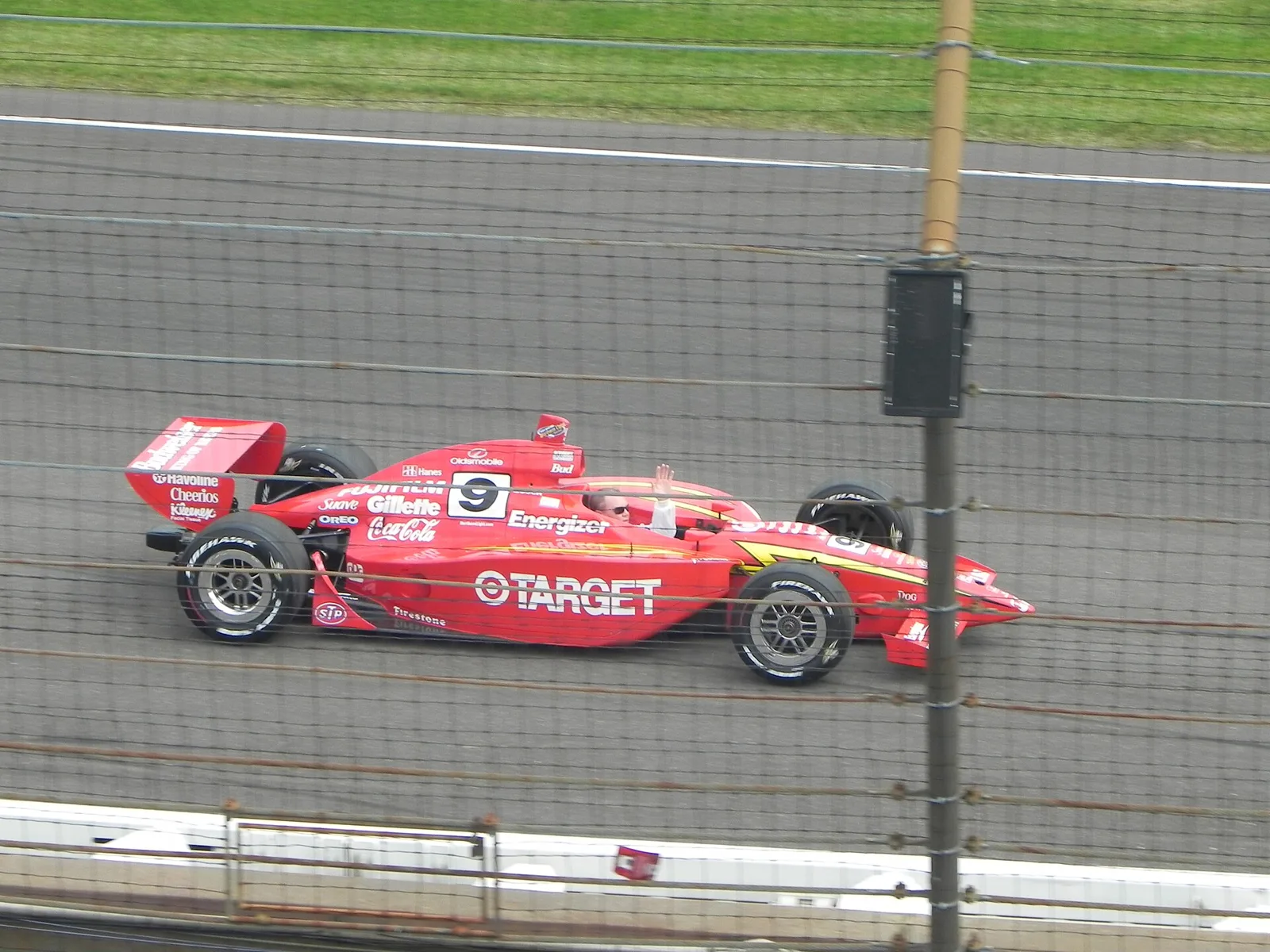
Juan Pablo Montoya led 167 laps and won by 7.1839 seconds in his first start, as Chip Ganassi Racing brought CART-based teams back to Indianapolis.
Greg Ray started from pole at 223.471 mph but finished last after a second crash. Montoya, who started second, led 167 laps and won by 7.1839 seconds after a rain delay of more than three hours.
The 84th Indianapolis 500 ended with a debut win for Juan Pablo Montoya, who led 167 laps and beat Buddy Lazier by 7.1839 seconds. The race was run under the Indy Racing League after four years of division in Indy car racing. It also brought Chip Ganassi Racing back as the first major CART-based team at the event since 1995.
Who won the 2000 Indianapolis 500?
Juan Pablo Montoya won the 2000 race in his first Indianapolis start, after starting second on the grid. The reigning CART champion led 167 laps, and his margin over Lazier, the 1996 winner, was 7.1839 seconds. He became the first rookie winner since Graham Hill in 1966.
Montoya had been one of the fastest drivers all week, leading one day of practice, and he was considered a front-row contender from the start. Jimmy Vasser ran the second Ganassi entry, and the team's pair were well received by fans and rivals alike.
Montoya became only the fourth winner to finish the race in under three hours. His average speed of 167.607 mph was the fastest Indy 500 since 1991.
A debut win from second on the grid, after a rain-delayed start and 167 laps in front.
How did the 2000 race unfold?
Greg Ray led at the start from pole, and Montoya sat second with Robby Gordon third. Montoya moved to the front on lap 27 when the leaders went four-wide through traffic, and he was in front for all but six laps of the race. His advantage grew from 11.9 seconds on lap 34 to more than 21 seconds on lap 55.
The race set a record pace. The average speed at lap 60, covering 150 miles, was an all-time record 207.101 mph, and Montoya held a 30-second lead over Vasser. The first 65 laps were run without a caution, which was a new Indy 500 record at the time.
On lap 66 Ray was caught by a gust of wind, and his car pushed into the outside wall exiting turn two. That brought the first caution of the day, a modern era record for laps run before the first yellow. Al Unser Jr. was hit by debris from Ray's crash, punctured his radiator and retired 22 laps later.
After the restart Lyn St. James crashed into the outside wall in turn one, and Sarah Fisher was collected in the incident. At the halfway point Montoya still led, with Vasser about five seconds behind. Vasser then began to drop down the top ten, and Buddy Lazier and Jeff Ward moved into the top three, all chasing Montoya.
Ray returned on lap 143 after lengthy repairs, but he hit the outside wall in turn two close to the place of his earlier crash and was out for good. Sam Hornish Jr. crashed on lap 158. On the restart on lap 162, Lazier tried to take the lead in turn one, but Montoya held him off.
Stan Wattles brought out the final yellow on lap 174 for a blown engine. Montoya and Lazier pitted, and Vasser briefly led. The green came out with 23 laps to go, and Montoya was past Vasser by lap 180. Lazier set the fastest lap of the race at 218.494 mph on lap 198, but Montoya was too far ahead.
Why did the start take so long?
Rain delayed the start by more than three hours. Showers began at 10:07 a.m. on race day, and after three brief periods of rain the weather cleared at about 12:40 p.m. The track was dried, and the green flag finally dropped at 2:10 p.m. EST.
The 2000 race was also the first to feature two female starters, Lyn St. James and Sarah Fisher. The rain returned seven minutes after the checkered flag and doused the victory lane celebration. The race was completed shortly after 5 p.m.
The 2:10 p.m. EST start was the latest in time of day for any Indianapolis 500 until 2024, when the race began at 4:44 p.m. EDT. Mari Hulman George gave the command to start engines at 2:01 p.m. EST, and the field pulled away once the track was ready.
What happened in qualifying?
Greg Ray took pole at 223.471 mph, and the front row of Ray, Montoya and Eliseo Salazar was separated by only 0.173 seconds, the closest such margin in Indy history. The reigning IRL champion and the reigning CART champion lined up first and second. A total of 23 cars qualified on pole day.
Pole qualifying began at 11 a.m. under cool, cloudy skies. Salazar took the top spot at 223.231 mph at 12:07 p.m. and held it for more than an hour. At 1:19 p.m. Montoya ran 223.372 mph to take the provisional pole, and Jimmy Vasser managed 221.976 mph, not enough to join his teammate on the front row.
Ray completed his run later in the afternoon, when conditions had improved. Lyn St. James wrecked on her first attempt, flipping the car onto its side in the south chute. Sarah Fisher qualified 19th at 220.237 mph, becoming the third female driver in Indy history.
How did bump day play out?
The field was filled to 33 cars by 5:30 p.m. on Sunday, May 21. Raul Boesel was the first car out and set the fastest time of the afternoon at 222.113 mph. Davy Jones, who had broken his neck in 1997, attempted a comeback but was bumped.
Billy Boat wrecked on his first attempt on Sunday and was forced into a backup Foyt car. That car had only one attempt left, and after stalling three times his four-lap average was 192.105 mph, by far the slowest in the field. He was the first car on the bubble.
Lyn St. James had reorganised after Saturday's crash and qualified comfortably, bumping Boat's #41 car with 25 minutes left in the day. With less than a minute to the 6 o'clock gun, Boat climbed into a Foyt backup, the #11 car, which had not been driven all week. He ran 218.872 mph and bumped his way into the field as time expired.
What did practice and Carb Day show?
Practice showed that the IRL regulars were not alone at the top. Greg Ray set the fastest lap of the week at 223.948 mph on Fast Friday, while Vasser and Montoya each led one day, and both Ganassi drivers were quickly up to speed in the IRL machines.
Time trials were scheduled over May 20 and 21, and different names topped the speed charts almost every day. Both Vasser and Montoya were considered contenders for the front row before pole day began, so their qualifying runs were watched closely.
The final practice took place on Thursday, May 25, and all 33 cars took laps. Montoya was fastest at 218.257 mph, and no major incidents were reported. Scott Sharp suffered mechanical problems that delayed his arrival on pit lane and managed only a few shake-down laps in the final five minutes.
Jimmy Kite drove the car of Jason Leffler, who was in Charlotte for the day. Robby Gordon stayed at Indianapolis for about an hour and twenty minutes before he too left for Charlotte, where he was preparing for the Indy 500 and Coca-Cola 600 double.
What was the Coors Pit Stop Challenge?
The 24th annual Coors Pit Stop Challenge was held on Thursday, May 25, with twelve teams in a single-elimination bracket. Nine teams earned places through the Coors Light Pit Performance Award at Indy Racing League events, and the rest came from a last-chance session and the highest race qualifier not already in the contest.
Al Unser Jr., driving for Galles, posted 9.42 seconds in the last-chance session, and Buddy Lazier of Hemelgarn posted 13.48 seconds. Juan Pablo Montoya, who had qualified in the middle of the front row, took the final berth. The bracket was set by a blind draw, and four teams received byes in the first round.
Montoya was disqualified in the quarterfinals for stalling his engine and not leaving the pits under power. In the finals, the crew of Scott Goodyear beat the team of Robby McGehee, and it was the second win in the event for Panther Racing. Billy Boat took part in the contest with his original entrant, Team Pelfrey, even though he had qualified in a Foyt backup car.
Why did the 2000 race matter for the split?
The 2000 race marked a turning point in the five-year split between the IRL and CART. Neither side was ready to concede, but sponsors wanted their teams at Indianapolis for the exposure, and Ganassi's arrival and its quick domination of the event encouraged other CART teams to follow.
Penske Racing considered an entry for 2000 but decided against it because of limited preparation time and Riley and Scott chassis that were judged uncompetitive. Roger Penske and Tim Cindric instead supported Jason Leffler's car at Treadway Racing. Additional teams, namely Penske and Team Green, returned the following year with competitive efforts.
Walker Racing also entered the race, with rookie Sarah Fisher at the wheel. By 2004 nearly all the major CART and Champ Car teams had either entered at Indianapolis or moved to the Indy Racing League. A formal unification did not take place until 2008.
What were the main race results?
Montoya won from the second starting position, the first driver to win from the middle of the front row since Mario Andretti in 1969. Second place went to Lazier, whose runner-up finish was his second at Indianapolis in three years. Ray, the pole-sitter, finished last after 67 laps.
| Result | Driver | Note |
|---|---|---|
| 1st | Juan Pablo Montoya | Led 167 laps; won by 7.1839 seconds |
| 2nd | Buddy Lazier | 1996 winner; fastest lap of the race at 218.494 mph |
| Last | Greg Ray | Pole-sitter; 67 laps, seven short of the last-place record |
| Pole | Greg Ray | 223.471 mph; front row separated by 0.173 seconds |
Montoya's win also broke a thirty-year losing streak by the second starting position. From 1911 to 1969 the second spot had produced ten winners, more than the pole, which had produced seven at that time. Greg Ray fell just seven laps short of Bill Homeier's record of 74 laps for the last-place finisher.
Where did Montoya go after Indianapolis?
After the 2000 CART season Montoya signed with the Williams Formula One team and did not defend his title in 2001. He later switched to the NASCAR Cup Series and did not return to the Indianapolis 500 until 2014. He won the 99th edition in 2015.
The race also marked the end of Goodyear's involvement in open wheel racing. Goodyear announced in October 1999 that it was leaving the sport, and the Goodyear Blimp, which had flown over most Indy 500s from 1925 to 1999, was absent in 2000.