A Scottish vet's tricycle tyre, Japanese tabi socks, a radial bet and a German rubber firm: how four names climbed, stumbled and swapped places.
Continental (1871), Dunlop (1889), Goodyear (1898) and Bridgestone (1931) reached the top of the tyre trade by different roads: bicycle tyres, racing, radials and takeovers such as Bridgestone's 1988 Firestone purchase. Since 2021 Bridgestone has ranked second and Goodyear third by revenue, while Dunlop's brand has been sold on.
In January 2025 Goodyear announced the Dunlop brand was going to Sumitomo Rubber Industries, in a deal worth $701 million. The name belongs to the Scottish vet who built the first practical air-filled tyre for his child's tricycle, and it changed hands like a piece of property. Bridgestone, Goodyear, Dunlop and Continental took very different roads to the top of the tyre trade, and not all of them are still travelling.
How did Dunlop start the pneumatic tyre business?
In 1888 John Boyd Dunlop, a vet from Scotland who lived in Ireland, worked out the principle of the air-filled tyre. A company to exploit it was formed in 1889 and launched by Harvey du Cros, who led the Irish Cyclists' Association. Dunlop himself saw no prosperous future in the idea and held only 20 per cent at the start.
Publicity came from the racetrack. Willie Hume won seven of eight cycle races on Dunlop's air-filled tyres, and demand for the new safety bicycles did the rest. Production began in Belfast in late 1890, but the same year brought a blow: Dunlop's patent was withdrawn when it emerged that Robert William Thomson had patented a pneumatic tyre in 1845.
The firm survived by buying other rights and patents, and by building overseas. Foreign patent rights held only if the company manufactured where it sold, so du Cros sent four of his six sons to set up divisions in Europe and North America. In 1893 the main factory left Belfast and Dublin for Coventry, hub of the British cycle trade, after Dublin Corporation took the firm to court over the smell of rubber and naphtha.
Money then swirled around the business. Dunlop resigned in 1895, and in 1896 financier Ernest Terah Hooley bought the company for 3 million pounds and sold it again, as the Dunlop Pneumatic Tyre Company, for 5 million. Dunlop Rubber took its name in 1901. The firm had made its first motor car tyre in 1900, and in 1910 it produced its first aeroplane tyre and a golf ball.
Competition arrived from the Continent. Between 1904 and 1909 the French subsidiary lost 200,000 pounds as Michelin and Continental overtook it in motor tyres, so Dunlop bought out its French arm in 1909 and its German arm in 1910 to enforce stronger quality control.
Goodyear was the only one of the five biggest American tyre firms of 1970 still independent in the 21st century.
How did Dunlop become a household name?
Dunlop began building its 400-acre Fort Dunlop site in 1916, and by 1917 it owned about 60,000 acres of rubber plantations in Ceylon and Malaya. By 1918 it was the fourteenth-largest manufacturer in Britain and its only large-scale tyre maker. A loss of 8 million pounds in August 1921 nearly sank it, and Sir Eric Geddes was brought in as chairman.
Geddes pushed the business into tennis balls, rackets, footwear, clothing and later latex foam. Tyres accounted for just 72 per cent of turnover in 1928, against 90 per cent in 1920. Overseas subsidiaries covered the US, Canada, France, Germany, South Africa, Australia, India and Japan, and by 1930 Dunlop matched its archrival Michelin for market share in France. A Dunlop bridge was built over the Le Mans circuit in 1932.
Engineering came too. A self-sealing tyre arrived in 1948 and, in the early 1950s, Maxaret, which was the first anti-lock braking system. By 1946 Dunlop employed 70,000 people, and by 1955 it held almost half of the British tyre market, until a government report found price-fixing arrangements between Dunlop, Goodyear, Avon, Firestone and Michelin and forced a change.
Why did Dunlop lose its place at the top?
Radial tyres wrong-footed it. Dunlop recognised by the mid-1960s that the more durable radials would sweep the market, yet it had chosen in the early 1960s to develop cheaper textile radials rather than the steel-belted type, and Michelin took market share. British productivity and quality were poor at the time, and its own salesmen favoured goods made at the continental plants.
A merger with Pirelli in 1971 produced the world's third-largest tyre company on paper, but it underperformed and was dissolved in 1981. In September 1983 the European tyre business went to its former subsidiary Sumitomo Rubber Industries of Japan. Burdened with debt, Dunlop was acquired by the conglomerate BTR in 1985, and Sumitomo primarily owns the trademark today.
How did Goodyear become a giant?
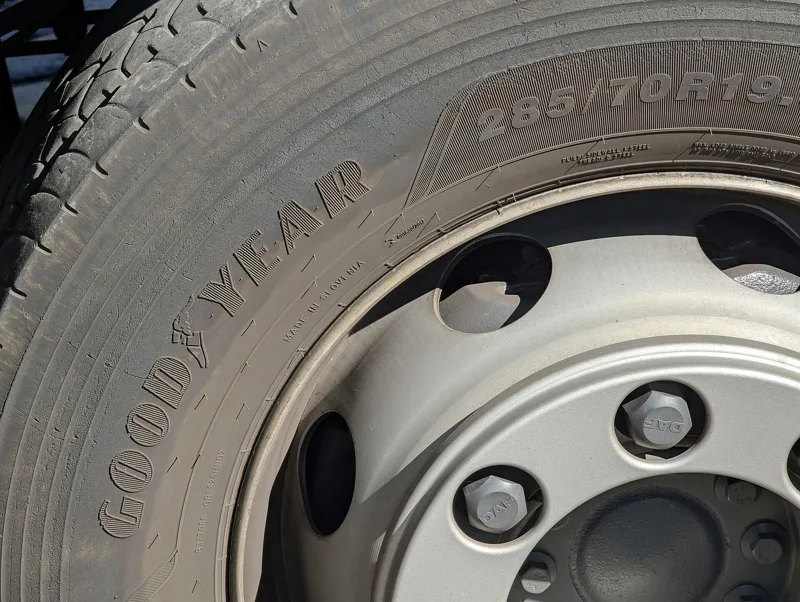
Frank Seiberling founded Goodyear in Akron, Ohio, in 1898 and named it after Charles Goodyear, the inventor of vulcanised rubber. The earliest products were bicycle and carriage tyres, rubber horseshoe pads and poker chips, with automobile tyres added in 1899. The first tyres proved popular because they were easy to detach and needed little maintenance.
The motor trade did the rest. Seiberling supplied racing tyres to Henry Ford in 1901, and Ford's Model T wore Goodyears in 1908. In 1903 Paul Litchfield won a patent for the first tubeless automobile tyre. A Goodyear-tyred car won the Indianapolis 500 in 1919, and by 1926 Goodyear was the world's largest rubber company, with sales of $230,161,356. It listed on the New York Stock Exchange the following year.
Airships made it famous. Goodyear had built airships and balloons since the early 1900s, and the first advertising blimp flew in 1925. A joint venture with Luftschiffbau Zeppelin, formed in 1924, lasted until the outbreak of the Second World War. In 1935 it bought rival Kelly-Springfield, and by 1974 sales had topped $5 billion in 34 countries.
What did radial tyres do to the industry?
Radials split the industry into survivors and casualties. Michelin developed the radial in 1946, and by 1968 Consumer Reports acknowledged its superiority, yet in 1970 the entire American industry still made the older bias-ply tyre. Retooling was estimated at $600 million to $900 million, a huge sum in a low-margin business.
Of the five biggest American tyre firms of 1970, only Goodyear stayed independent into the 21st century. When Charles Pilliod became chief executive in 1974 he invested heavily in new factories and tooling despite criticism, and Sam Gibara, who led the company from 1996 to 2003, has said that without that decision Goodyear would not be around today. Radials now hold a market share of nearly 100 per cent.
Bridgestone made the same bet from Japan. It sold its first radial, the RD10, in 1967, and then the Super Filler Radial in 1978 and the high-performance Potenza in 1979, whose name is the Italian word for power.
Bridgestone, Goodyear, Dunlop and Continental compared
| Company | Founded | Base | Position |
|---|---|---|---|
| Continental | 1871, Hanover | Germany | Fourth worldwide by tyre sales in 2025 |
| Dunlop | 1889, Dublin | Britain | Company wound down; trademark mainly owned by Sumitomo Rubber |
| Goodyear | 1898, Akron | United States | Third-largest by revenue since 2021 |
| Bridgestone | 1931, Kurume | Japan | Second-largest by revenue since 2021 |
What went wrong at Goodyear in the 1980s?
Chief executive Robert Mercer decided that tyres and cars were a slow-growing handicap and went looking for businesses with no link to either. In 1983 Goodyear bought the natural gas company Celeron for stock valued at over $740 million and built the 1,200-mile All American pipeline, which was estimated at $600 million and cost almost $1 billion.
In October 1986 financier James Goldsmith and the Hanson group bought 11.5 per cent of the company. Some saw greenmail, others activism, but Goldsmith wanted the oil interests sold. Goodyear bought his stake back at $49.50 a share, tendered for up to 40 million more shares at $50, and took a $224.6 million charge for restructuring. Goodyear Aerospace went to Loral for $588 million, the motor wheel business went to Lemmerz for $175 million, and money then flowed back into tyres.
The 1990s and 2000s were tougher. A 1991 restructuring under Stanley Gault laid off 12,000 employees, and a later move of production to low-wage countries closed plants across North America. Goodyear still reached beyond its home market: in 1994 it became the first foreign tyre maker to enter China, with a plant at Dalian.
How did Bridgestone rise from Kurume?
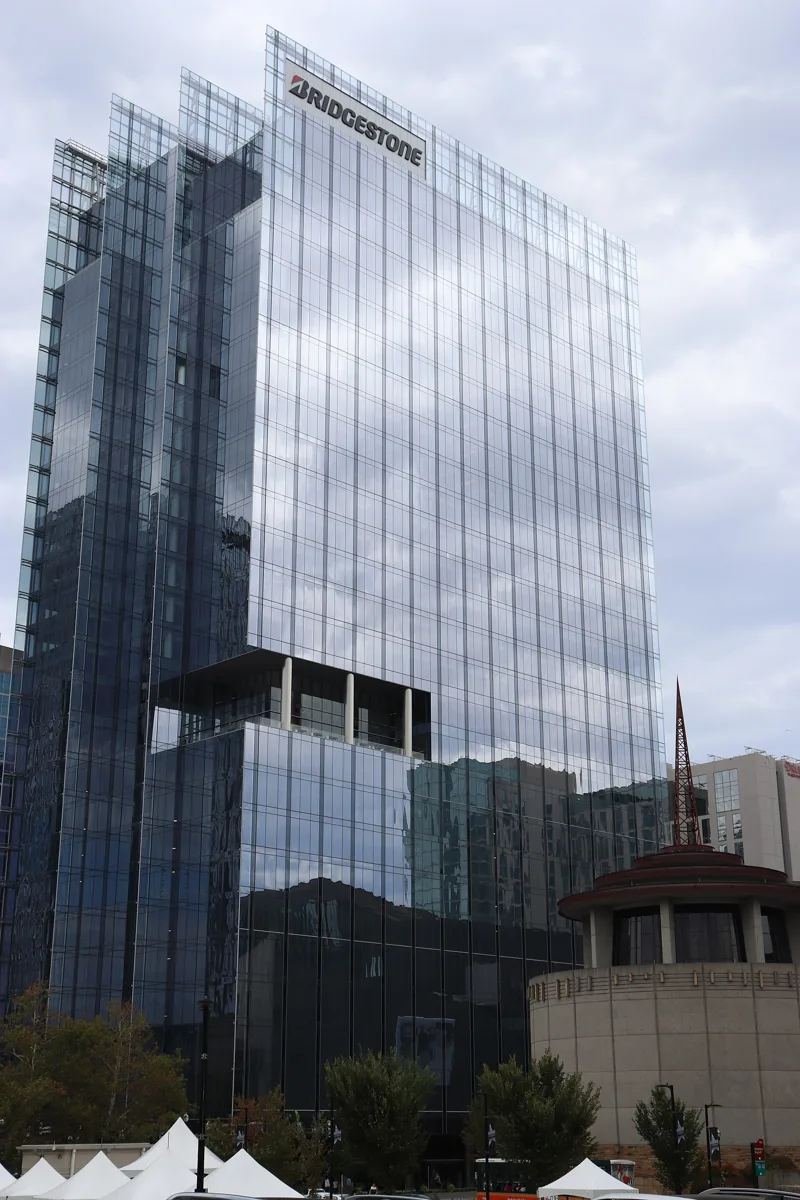
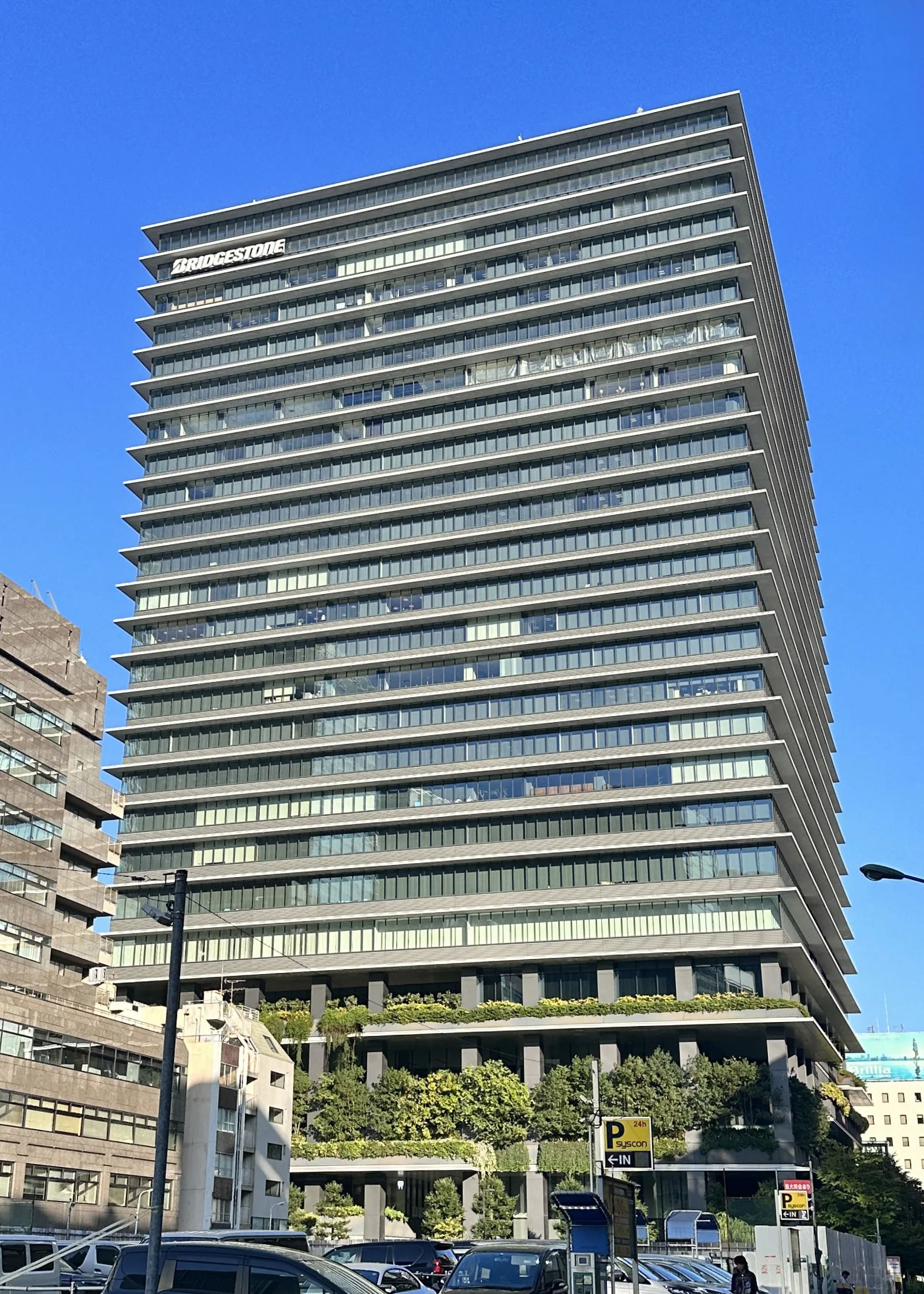
Shojiro Ishibashi founded the Bridgestone Tire Company in Kurume on 1 March 1931, a year after a tabi sock tyre division produced the first Bridgestone tyre. The name is his surname, which means stone bridge, reversed. He wanted tyres based on Japanese technology rather than European or American designs.
War nearly ended it. Wartime rules pushed almost all output to the military, the Tokyo headquarters was destroyed in an air raid and overseas assets were lost, though the Kurume and Yokohama plants escaped. Recovery came quickly. In 1951 Bridgestone became Japan's first seller of rayon cord tyres, and by 1953 sales had passed ten billion yen, putting it at the top of the Japanese industry.
The company listed in 1961, won the Deming Prize for quality in 1968, built its first postwar plant abroad in Singapore in 1965 and began producing in Thailand in 1969. It also made motorcycles from 1958, though most of its income came from selling tyres to Honda, Suzuki and Yamaha, and it later dropped motorcycle manufacturing. In 1981 it announced the ambition of joining the world's three biggest rubber makers.
The decisive move came in May 1988, when Bridgestone took over the Akron firm Firestone, then America's second-largest tyre manufacturer. The purchase brought a large number of Firestone factories in North and South America, Europe and New Zealand under Bridgestone's umbrella, and rebuilding paid off with annual surpluses in Europe in 1992 and the United States in 1993. By July 2018 the group had 181 production facilities in 24 countries.
The record includes setbacks. In 2011 the company faced charges of bribery and bid rigging in Latin America. Three years later the United States Department of Justice fined it $425 million over price fixing and rigged bidding. Bridgestone sold its Ulyanovsk plant and Moscow office in December 2023 as it left Russia.
Where does Continental fit?
Continental is the oldest of the four. It began in 1871 as a rubber manufacturer called Continental-Caoutchouc und Gutta-Percha Compagnie, and its headquarters are in Hanover. Pneumatic bicycle tyres, begun in 1892, were a major success, and in 1904 it was the world's first maker of grooved vehicle tyres. A detachable wheel tyre for touring cars followed in 1905.
The late 1920s merger of several rubber companies produced Continental Gummi-Werke, the largest in Germany. Its history in the 1930s and 1940s includes board members being obliged to join the Nazi Party, Jewish supervisory board members being forced to resign and the use of slave labour at its Hanover factories.
The 1950s brought track glory. Working closely with Daimler-Benz and Porsche, Continental tyres carried Juan Manuel Fangio, Stirling Moss and Karl Kling to victory in the 1952 Carrera Panamericana and in the French, British, Dutch and Italian Grands Prix. The Contidrom testing facility opened in 1967.
Growth outside Germany came by acquisition. Taking over Uniroyal's European tyre operations in 1979 widened its base, and buying General Tire from GenCorp in 1987 made Continental a global company. The 1998 purchase of ITT's brake and chassis business for $1.93 billion and the 2007 purchase of Siemens VDO for 11.4 billion euros then stretched it so far that it lost almost half its market value. In August 2008 it agreed to a takeover by the Schaeffler Group in a deal valuing it at about 12 billion euros.
Continental sells tyres under the Continental, Barum, General Tire, Matador, Semperit and Uniroyal names. Its largest European tyre factory, in Otrokovice in the Czech Republic, employed more than 5,400 people in 2025 and could make up to 19 million passenger-car tyres a year. In 2016 it bought Hoosier Racing Tire, and in November 2018 it paid A$350 million for Kmart Tyre and Auto Service in Australia.
Where this goes next
Continental's powertrain division became Vitesco Technologies in 2021, and its automotive group became Aumovio in 2025, valued at about 4.1 billion euros when it began trading. Christian Kotz took over as chief executive on 1 January 2026, and in July 2026 it agreed to sell its ContiTech division to a Lone Star Funds affiliate, a deal that still needs regulatory approval.
In January 2026 Bridgestone announced that Bekaert would buy its tyre reinforcement business in China and Thailand for 60 million euros, alongside a long-term tyre cord supply agreement. Goodyear completed its $2.5 billion Cooper Tire purchase in 2021, sold its off-the-road tyre business to Yokohama Rubber for $905 million in 2024 and was reported in May 2026 to be shutting its Fayetteville, North Carolina plant. Bridgestone's June 2022 Advanced Tire Production Center in Akron, the first new tyre plant there in more than 70 years, makes racing tyres for IndyCar.