A Korean maker from Seoul, a Finnish winter specialist that once built most of its car tyres in Russia, and an American brand now split between two owners.
Hankook is a South Korean maker based in Seoul that produces about 102 million tyres a year. Nokian is a Finnish company known for Hakkapeliitta winter tyres. Uniroyal is an American brand founded in 1892, owned by Michelin in North America, Colombia and Peru and by Continental elsewhere.
When Russia invaded Ukraine in 2022, a Finnish tyre company found that it had been making 80 percent of its car tyres in Russia. By October it had sold those factories to Tatneft for 400 million euros and committed 650 million euros to a new plant in Romania. Nokian is only one of three names with unusual stories behind an everyday product.
Hankook, Nokian and Uniroyal sell the kind of tyres most drivers actually buy: replacements for a family hatchback, a winter set for a ski trip, an affordable fit for a ten-year-old SUV. Each reached that position by a different route.
Hankook tyres: Korea's seventh-largest tyre company
Hankook is based in Seoul and ranks as the seventh-largest tyre company in the world. It belongs to Hankook and Company, and it was founded in 1941 as the Chosun Tire Company. In 1968 it became Hankook Tire Manufacturing. Chosun and Hankook both literally mean Korea.
Output runs to about 102 million tyres a year. Alongside rubber, the group also sells batteries, alloy wheels and brake pads, and it supplies tyres as original equipment to several carmakers. Factories sit in South Korea, China, Hungary, Indonesia and the United States, supported by technical centres in Daejon, Akron, Hannover, Osaka and China.
How Hankook went global
The company set out its growth target publicly in 2011, when it announced a $1.1 billion factory in West Java, Indonesia, aiming to lift itself to fifth place among the world's tyre makers. Ground was broken on 9 June 2011 on a 60-hectare site intended as a production hub for export to Asia, North America and the Middle East. In October 2013 it announced a plant at Clarksville, Tennessee, which opened in October 2017. A 2016 announcement relocated its North American headquarters from Wayne, New Jersey, to Nashville, with reports of up to 200 jobs in Davidson County and $5 million of investment.
Brands followed. Laufenn arrived in November 2014 as a second brand. In January 2025 Hankook added Optimo as a European sub-brand to complement its premium and associate lines for passenger cars. For scale, trade magazine Modern Tire Dealer reported that Hankook's new tyre sales reached $3.5 billion in 2007, up 20.7% from $2.9 billion a year earlier.
Hankook vs Michelin on the race calendar
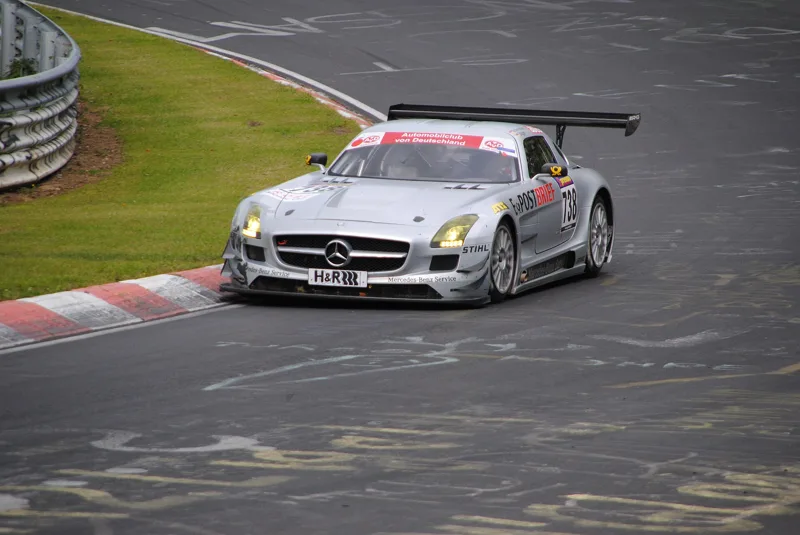
Motorsport is where Hankook has gone looking for the big names. From the 2022-23 season to 2025-26 it replaced Michelin as the official tyre supplier for the third generation of Formula E car. From 2025 it takes over from Pirelli as the World Rally Championship supplier on a three-year contract. Earlier, it was the tyre supplier of the Deutsche Tourenwagen Masters from 2011 to 2020, and in Japan it supplied the Super Taikyu series from 2021 until 2023. A fire at its Daejeon plant in 2023 forced it to give up that contract, and Bridgestone took over on 24 April 2023.
Further down the ladder, it fitted a Ferrari F430 GT run by FBR in the 2009 Le Mans Series season, and it supplies the Hankook KTR team in Super GT and the Asian Le Mans Series. The Formula Drift champion Chris Forsberg, who won three titles, had its backing until 2018. Football sponsorships include Real Madrid, Borussia Dortmund, AS Monaco, SSC Napoli and Carrick Rangers. It has backed the UEFA Europa League since 2012, and has been the official tyre of Major League Baseball since 2018.
Nokian had built 80 percent of its car tyres in Russia when the invasion of Ukraine arrived.
Nokian tyres: the winter specialist from Nokia
Nokian Tyres plc is headquartered in Nokia, Finland, and makes tyres for cars, trucks, buses and heavy equipment. It describes itself as unique among tyre makers in running a permanent winter test facility of its own. Its Hakkapeliitta name is recognised in Finland as a trademark. The word is a Finnish historical term for a light cavalryman who served King Gustavus Adolphus of Sweden in the Thirty Years' War.
From pulp mill to tyre maker
The company traces its roots to 1865, when the mining engineer Fredrik Idestam built a groundwood pulp mill beside the Tammerkoski rapids in Tampere. In 1868 he opened a second mill near the town of Nokia, where the Nokianvirta River offered better hydroelectric power, and in 1871 the business became the Nokia Company. Separately, Suomen Gummitehdas Oy (Finnish Rubber Works) was founded in 1898. It began making bicycle tyres in 1925 and car tyres in 1932, and the Hakkapeliitta name followed in 1936.
In 1967 the rubber works, a cable company and the Nokia forest and power business merged into Nokia Corporation. When the group chose to focus on mobile communications, the tyre division was split off in 1988 as Nokia Tyres Limited, a joint venture with Sumitomo Rubber Industries. It floated on the Helsinki exchange in 1995 and took the name Nokian, the genitive of Nokia, so that Nokian renkaat means tyres of Nokia. In 2003 Nokia sold its two million shares to Bridgestone Europe for US$73.2 million, giving Bridgestone an 18.9% stake that was later diluted to 16.8%. As of 12 December 2019 Bridgestone's direct holding had fallen to 3%.
Nokian winter tyres in numbers
Nokian designed its first winter tyres in 1934 and says it holds more winter tyre patents than any other manufacturer. The company reports that winter tyres make up over 80% of its passenger car and van sales, and 30% of retail sales fall in the ten days after the first snowfall, which makes production and delivery an exercise in timing. It has tried to smooth the seasons by developing summer and all-weather tyres, including a design with one tread pattern optimised for winter and another for all-season use on the same tyre. It was also the first manufacturer to remove high-aromatic oils, which contain a carcinogen, from its production process.
The firm does not sell to carmakers, concentrating instead on consumer replacement tyres and premium snow tyres, and its products are sold in over 60 countries. In 2008 the Finnish, Swedish and Norwegian markets supplied more than 40% of its net sales, while Russia was the largest single market at 34% of net sales, with a 26% share of the Russian winter tyre market. In the United States, a subsidiary in LaVergne, Tennessee sells only through independent dealers, and North America accounted for over 10% of net sales in 2009.
The commercial range includes truck and bus tyres under the Hakkapeliitta name, and Nokian Heavy Tyres makes special tyres for forestry, industrial machinery and farming. The firm describes itself as a world leader in forestry tyres. The Vianor chain of tyre stores, which also services cars, belongs to the group.
Nokian and Russia
The 2022 invasion hit hard because of that exposure. Nokian first said it wanted to keep control of its factories and prevent any military use, and promised to raise output in Finland and the United States. As summer went on it started pulling out, and in October it sold the Russian operations to Tatneft for 400 million euros and announced the 650 million euro investment for a new factory in Romania. Earlier, in 2008, it had been described as the most profitable tyre manufacturer in the world, with operating profit of up to 18% of sales against 14% at Bridgestone, 8% at Michelin and 9.6% at Continental.
Uniroyal tyres: an American brand with two owners
Uniroyal began as the United States Rubber Company, formed in Naugatuck, Connecticut, in 1892 when nine rubber manufacturers merged their operations. One of them, the Goodyear's India Rubber Glove Manufacturing Company, is the only firm in which Charles Goodyear, inventor of rubber vulcanisation, is known to have held stock. The company was one of the first 12 members of the Dow Jones Industrial Average, created on 26 May 1896, though it was dropped when the index grew to 30 stocks in 1928.
Footwear mattered first. After years of selling shoes under 30 brand names, it folded them into one label, Keds, in 1916, and marketed the rubber-soled, canvas-topped shoes as sneakers in 1917. On the tyre side, a 1931 purchase of a large part of the Gillette Safety Tire Company, and the rest in 1940, brought the Eau Claire plant in Wisconsin and big General Motors contracts. By 1951 Eau Claire had become the fifth largest tyre facility in the United States.
The Tiger Paw years
The corporate name became Uniroyal, Inc. in 1961, and by 1967 it covered every product and division. The long-running advertising line was "United States Tires are Good Tires". The best-known tyre was the Tiger Paw, introduced in the 1960s and fitted to muscle cars such as the Pontiac GTO, which was itself promoted as The Tiger in its early days. Uniroyal still uses the Tiger Paw name today.
Overseas the picture was patchwork. A partnership with the Belgian firm Englebert of Liege began in 1958, and in 1979 the European division, with four factories in Belgium, Germany, France and Scotland, was sold to Continental. In Canada the business traded for decades as the Dominion Rubber Company before taking the Uniroyal Ltd. name in 1966. In Australia the company had bought 25% of S. A. Rubber Mills in 1963, and the local operation later became Bridgestone Australia.
Buyout, Goodrich and Michelin
In 1985 management and the New York investment firm Clayton, Dubilier and Rice took Uniroyal private, to head off a hostile bid from the financier Carl Icahn. At that point it was the fifth-largest tyre company in the United States. To pay down nearly $1 billion of debt, it sold its chemical subsidiary to Avery Inc. for $760 million in May 1986, and merged its tyre business with BFGoodrich as Uniroyal Goodrich Tire Company, each side holding 50%. First-year sales in 1987 came to almost $2 billion, with profit of about $35 million. In June 1988 BFGoodrich sold its half for $225 million.
Michelin moved in. By May 1990 it had completed the purchase of Uniroyal Goodrich for about $1.5 billion, and BFGoodrich left the tyre trade. Cuts followed: the historic Eau Claire plant closed in January 1991 with the loss of 1,350 positions, and later that year plants in Ontario shut too. In 1991 the animated Uniroyal tiger returned to television after a ten-year gap. By 2010 the Uniroyal Goodrich unit was running with about 1,000 workers at plants in Woodburn, Indiana and Tuscaloosa, Alabama, after the Opelika, Alabama plant closed in 2009.
Three tyre brands side by side
| Brand | Home base | Roots | Who controls it | Strength |
|---|---|---|---|---|
| Hankook | Seoul, South Korea | Chosun Tire Company, 1941 | Part of Hankook and Company | About 102 million tyres a year; original equipment and motorsport supply |
| Nokian | Nokia, Finland | Car tyres since 1932 | Independent listed company; Bridgestone holds 3% directly as of 2019 | Winter tyres, sold in over 60 countries |
| Uniroyal | Naugatuck, Connecticut | United States Rubber Company, 1892 | Michelin in North America, Colombia and Peru; Continental elsewhere | Tiger Paw line; tyres for cars, trucks, minivans and SUVs |
What this means for buyers
The practical lesson sits in the ownership. A Uniroyal tyre bought in Canada or the United States comes from the Michelin group, while the same badge in Europe comes from Continental, so the two products are not necessarily the same tyre. Nokian builds its catalogue around winter conditions and puts winter models at the heart of its passenger car and van sales. Hankook sells under its own name, under a second brand, Laufenn, and in Europe under the Optimo sub-brand.
Dated commitments at the three brands
The dated commitments are few. Hankook's Formula E contract runs to the end of the 2025-26 season, and its World Rally Championship deal covers three years from 2025. Nokian's Romanian factory investment of 650 million euros was announced in October 2022, and the company has said it intends to boost output in Finland and the United States. Uniroyal stays split between Michelin and Continental, each running its own regions.