Tread separation, a lowered tyre pressure and a silence that lasted years: how the Firestone tire controversy unfolded on the Ford Explorer and what it did to the tyre maker.
In the 1990s, tread separation on Firestone ATX, ATX II and Wilderness AT tyres caused crashes involving Ford Explorers across America, with hundreds dead. Ford and Firestone blamed each other, Bridgestone's market value halved, and Congress passed the TREAD Act in October 2000.
Hundreds of people died because tread peeled off tyres on some of the best-selling light trucks and SUVs in America, and for years almost nobody who knew about it told the safety regulator. By one count, failures of Firestone tyres on Ford Explorers cost 238 American lives. The scandal halved the market value of Firestone's parent company, Bridgestone, and ended a partnership between two firms that had traded together for nearly 100 years.
Both companies blamed each other, and both had a case. The tyres were prone to come apart, and the Explorer was set up in a way that made a failure more dangerous. The story also goes further back, to a tyre maker that had been in trouble over tread separation once before.
What was the Ford Explorer and Firestone tyre controversy?
Failure rates ran unusually high through the 1990s for the Firestone tyres fitted to first and second generation Ford Explorers and similar vehicles. The US death toll came to 238, with around 500 injured and more deaths abroad. A congressional inquiry followed, and it produced the TREAD Act in October 2000.
The wider tally of known deaths from these tyres reaches 271, all but 13 of them after 1996. With more deaths abroad, the toll is best read as hundreds rather than as a single exact number.
Both companies blamed each other, and both had a case.
What is tread separation and why is it so dangerous?
Tread separation is exactly what it sounds like: the tread peels away from the body of the tyre. It has been a challenge for radial tyre designers since Michelin developed the radial in 1946, because a radial combines two materials of very different stiffness.
Picture a stiff leather strap stitched along the edge of a soft cotton sleeve. The seam is where the strain gathers, and where it eventually tears. In a steel-belted radial, that seam is the edge of the second belt, where an abrupt change from steel to rubber makes it the area of highest strain. The failures on these tyres began as belt-edge separation there.
Once started, the split can spread around the circumference or across the width, with cracks running between the belts. As it progresses it can open up into large crescent-shaped areas on one or both sides of the tyre. If they grow big enough, the tyre can let go catastrophically, and at high speed the spinning tyre's centrifugal force helps along the process.
A vehicle with a tread-separating tyre is hard to control, most of all when the failing tyre is at the rear and the speed is high. It pulls towards the side with the damaged tyre, and the longer the tread takes to come off, the harder it pulls.
Which tyres and vehicles were involved?
The tyres were the ATX and ATX II in P235/75R15 and the Wilderness AT in P235/75R15 and P255/70R16. Between 1991 and 2000 they were fitted as original equipment to the Ford Explorer, Mercury Mountaineer, Ford Bronco, Ranger and F-series pick-ups, and the Mazda B-series and Navajo.
The ATX had been developed in the late 1980s for Ford's light trucks and SUVs and first went onto Ford vehicles in 1991. The ATX II followed, intended to improve the ride and help the Explorer's thirst. Ford asked Firestone to take weight out of the tyre, and Firestone removed material to cut 10% from it, which also made the tyre more profitable for the company.
The Wilderness AT arrived in 1993 with better snow handling and a different tread. It was sold on Ford trucks from 1996 to 2000 and scored C for temperature and heat resistance, the lowest grade the federal tyre grading system permits. In May 1998 it was redesigned with a thicker belt wedge, though the name stayed the same.
Where a tyre was made counted. The ATX and ATX II failed at a significantly higher rate when built at Firestone's Decatur, Illinois factory than at the company's other two plants, in Joliette, Quebec, and Wilson, North Carolina. Wilderness AT tyres built before May 1998 failed more often wherever they came from, and NHTSA judged that they had a safety-related design defect.
Why was the Explorer part of the problem?
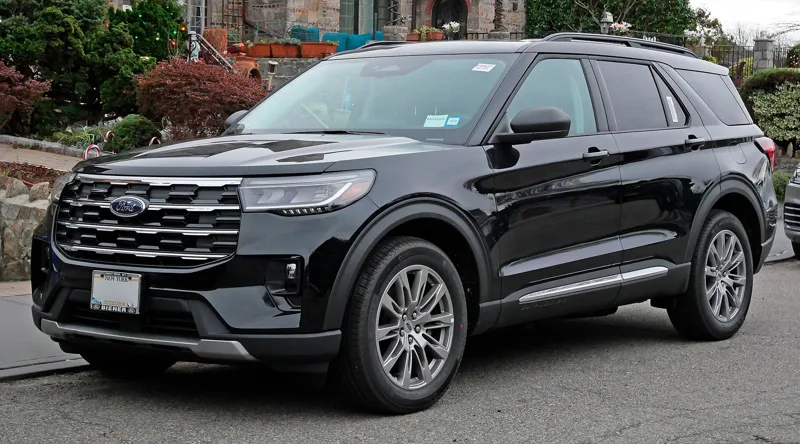
Ford designed the first Explorer by mounting an SUV cabin on the underpinnings of its Ranger pick-up. That saved money, since it could reuse existing facilities, parts and robots, but the weight of the taller cabin on a pick-up chassis raised the centre of gravity and made rollovers likelier. It also kept the Ranger's leaf spring suspension, which swayed in sharp turns. A tread separation was more dangerous in an SUV than in a pick-up.
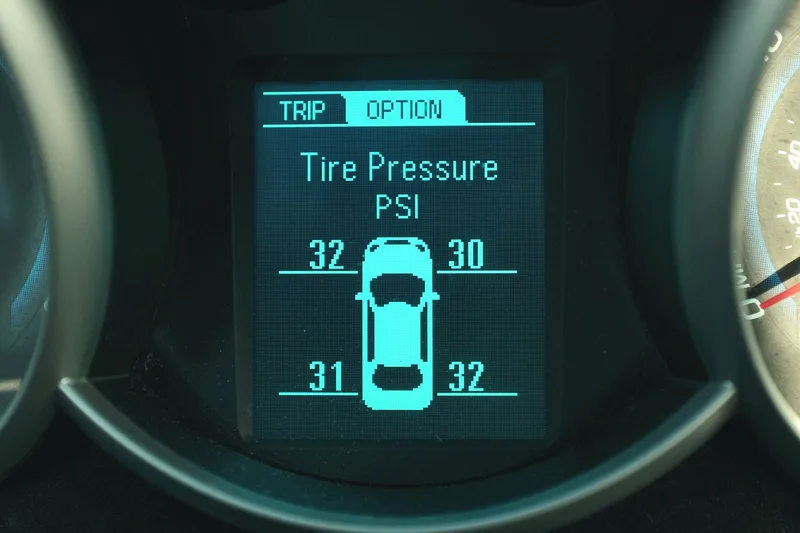
Ford weighed three fixes: shorter springs to lower the vehicle by half an inch at the front and one inch at the rear, lower tyre pressure for a more car-like ride, or a wheelbase wider by two inches. Ford lowered the suspension and let air out of the tyres, to 26 psi against 35 psi for the same tyres on the Ranger, after the Explorer rolled over in the company's own pre-production tests. It did not widen the wheelbase, since that would have meant a costly redesign.
Lower pressure has a price: tyres run hotter, and heat helps tread separation along. Firestone nonetheless warrantied the tyres at 26 psi for 11 years. The first Explorer, on sale from March 1990, was also among the thirstiest SUVs on sale in America, partly because of that pressure.
The second-generation Explorer, on sale in 1995, swapped the Twin I-Beam front suspension for a lighter design without lowering the engine, which raised the centre of gravity again. Ford also took material out of the roof, and the new roof proved so weak that it buckled under the Explorer's own weight when the car ended up upside down and the windshield had been smashed, as often happened in rollovers. For the 2002 model year the Explorer was redesigned: pressure rose to 30 psi, the body grew 2.5 inches wider, the suspension came down, and the car gained independent rear suspension plus electronic stability control.
Who blamed whom?
| Issue | Firestone's case | Ford's case |
|---|---|---|
| Tyre pressure | Ford's 26 psi should have been 30 psi | Tyre design ran hotter than similar Goodyear tyres |
| Tyre construction | Vehicle weight and tyre design contributed | Small wedge between the first and second belts, weaker than comparable Michelin tyres |
| Factory | Lower adhesion at the Decatur plant | Manufacturing problems at Decatur |
| The vehicle | Explorer abnormally prone to rollovers after a tyre failure | Explorer no more dangerous than any other SUV; far lower accident rate with Goodyear tyres |
Firestone's chief executive, John Lampe, put the position in one line: a driver whose tyre lets go should be able to pull over, not roll over. Some outside observers concluded that both sides were right, that the tyres were prone to separation and that the Explorer was unusually likely to roll when one failed at speed.
Firestone later pressed the point. After Ford recalled 13 million Firestone tyres on 21 May 2001, Firestone asked NHTSA to investigate the Explorer's handling after a tread separation, backed by a consulting engineer's report that the Explorer oversteered more than other SUVs in that situation. NHTSA refused. It accepted that a tyre failure can cause a driver to lose control, particularly when a rear tyre goes at high speed, but said oversteer alone did not make the vehicle defective and that its data did not show Explorers behaving worse than their peers.
Who knew, and when?
The warning signs go back years. By 1996 personal injury lawyers knew of accidents and deaths from tread separation. They chose not to approach NHTSA, because they distrusted the agency and worried that an inconclusive finding would damage their clients' lawsuits. That same year the Arizona government told Firestone that treads were separating in high temperatures. Firestone sent engineers, decided that ordinary passenger tyres were being worked too hard, on unpaved roads, off-road and with heavy loads, and swapped them for heavier-duty tyres. By 1997, internal Firestone papers showed injury claims climbing on all three of the ATX, ATX II and Wilderness AT.
In July 1998, Samuel Boyden, a State Farm Insurance researcher, was asked about tread separation by a claims handler. He found 21 crashes and passed them to NHTSA, then found 30 more in 1999. Meanwhile Ford began replacing Firestone tyres in Venezuela in 1998, where 46 deaths had occurred, according to documents turned up by researcher Sean Kane. A Ford dealer in Saudi Arabia, seeing high failure rates there and in Qatar and Kuwait from 1997, began changing tyres on unsold Explorers in July 1999 and offered customers a 75% discount on replacements.
Ford and Firestone began testing in late 1997 or 1998 and ran limited recalls in Thailand, Malaysia, Venezuela and the Middle East, in 1999 and then the spring of 2000. They did not notify NHTSA. Firestone held more data than Ford because of warranty claims, but it always blamed owners for poor maintenance or extreme use. NHTSA's hotline gave a poor picture because lawyers and their clients had almost stopped using it.
What broke the silence was television. On 7 February 2000, KHOU-TV in Houston ran a nine-minute report on high-speed Firestone tyre failures on Explorers linked to 30 deaths. The station was swamped with calls and began sending viewers to NHTSA. Clarence Ditlow of the Center for Auto Safety told a Senate committee later that year that both companies had known early and told the agency nothing.
How did the Firestone recall unfold?
NHTSA opened a preliminary inquiry on 6 March 2000 and made it a formal investigation on 2 May. On 9 August 2000 Firestone recalled every ATX and ATX II tyre and every Wilderness AT made at Decatur. On 31 August the agency upgraded its probe to an Engineering Analysis, to test whether the recall covered all the defective tyres. The TREAD Act arrived in October.
The fallout was heavy. Bridgestone lost half its market value, several Firestone executives were fired or resigned, and the Decatur factory closed. Ford also dismissed or accepted the resignation of executives. The blame traded in public ended a relationship that had lasted nearly a century.
Firestone company history, from Akron to Bridgestone
Harvey S. Firestone founded the company in Akron, Ohio, on 3 August 1900 with 12 employees, making solid rubber side-wire tyres for fire apparatus before moving on to pneumatic tyres for wagons and carriages. Harvey Firestone's friendship with Henry Ford made the company original equipment supplier to Ford, which chose Firestone tyres in 1906. For over 75 years Firestone and Goodyear were the two largest tyre suppliers in North America.
Growth followed. A Canadian arm opened in Hamilton, Ontario, in 1918. In 1926 Firestone started a rubber plantation in Liberia that covered over one million acres, and opened its first service centre the same year. Plants opened in South Gate, California in 1928 and Memphis, Tennessee in 1936, where the 100 millionth tyre came off the line on 1 July 1963. The company turned to artillery shells, barrage balloons and helmet liners in the Second World War, and won a contract in 1951 for the Corporal guided missile.
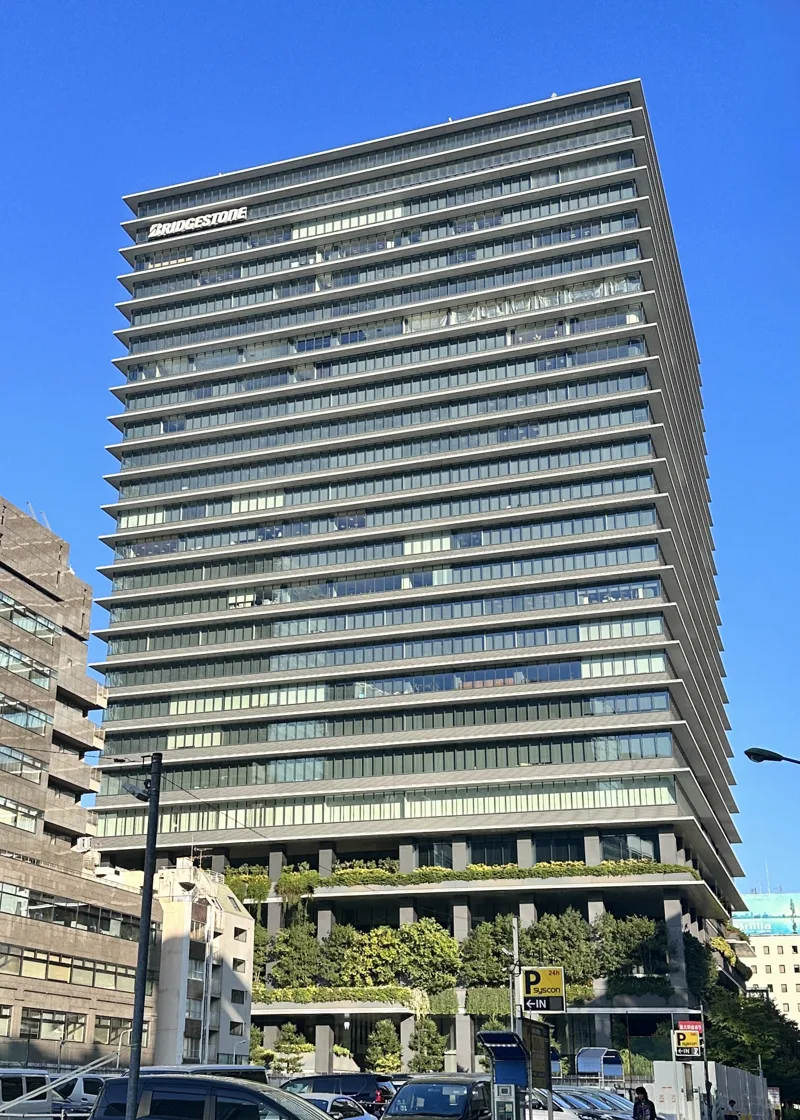
Decline came in the 1970s. By late 1979 Firestone owed over a billion dollars and was losing $250 million a year. John Nevin, brought in as president, closed nine of its seventeen plants, six in a single day, and moved headquarters from Akron to Chicago. In 1988, after talks with Pirelli, Nevin negotiated the sale of Firestone to Japan's Bridgestone, which paid much less than the company had been worth some 15 years earlier. Bridgestone Americas moved its corporate office to downtown Nashville in October 2017.
Had Firestone faced tread separation before?
It had. Firestone lacked a radial tyre when B.F. Goodrich and Michelin brought radials to America in the late 1960s, and its first, the Firestone 500, was built on equipment designed for bias-ply tyres. In the 1970s the 500 began to lose its tread at speed. The cause was never proved, though failed bonding cement that let in water, corroding the steel wire, was suspected.
An internal memo written by Thomas A. Robertson in 1973 admitted that the company was making an inferior radial prone to belt-edge separation. A recall of 400,000 tyres from the Decatur plant followed in 1977, with Firestone blaming underinflation and poor maintenance. NHTSA opened a formal investigation in March 1978 and concluded that the problem was most probably a design defect in every 500.
On 20 October 1978 Firestone recalled over 7 million 500s, the largest tyre recall to that date, and the tyre was found to have caused 250 deaths. In May 1980, after finding that the company knew the tyres were defective, NHTSA fined it $500,000, then the largest fine on any US corporation. Harvard Business School and the Wharton School later taught the case as an example of poor management decisions.
What does the Firestone story mean for drivers?
The story leaves a few facts worth carrying. Tyre pressure is a design decision as much as a maintenance task: Ford's choice of 26 psi helped the Explorer's ride and cost it heat, and the redesigned 2002 model used 30 psi. A failure at the rear at high speed is the hardest to control. And a tyre's heat rating matters; the Wilderness AT sat at the lowest grade the federal system allows.
Where this goes next
Firestone is still in racing. It has been the sole tyre supplier of the IndyCar Series since 2000 and is set to continue until the 2030 season. In June 2022 Bridgestone opened a $21 million production centre in Akron for its IndyCar tyres, the first new tyre plant there in more than 70 years, with a $6 million test track beside it that opened in autumn 2022. At the start of 2022 Bridgestone also announced that it would expand its services for hybrid and electric vehicles through the Complete Auto Care network, which counted over 2,300 locations in the United States.