A failed $2.5 billion takeover, a cable maker from Turin and a Japanese joint venture with BFGoodrich: the histories behind four tyre brands and the markets they serve.
Yokohama is a Japanese maker founded in 1917 and Cooper Tire is an American brand owned by Goodyear since 2021. Apollo Tyres and CEAT are Indian companies: Apollo earns most of its revenue in India and runs plants in Europe, while CEAT, founded in Turin in 1924, exports to Asia, America and Europe.
In June 2013 an Indian tyre maker agreed to buy Cooper Tire for $2.5 billion, a deal that would have left Goodyear as the only major tyre manufacturer in the United States. Six months later it walked away. Cooper had not disclosed how little control it held over its Chinese business, and the Chinese plant had gone on an indefinite strike against the takeover.
That near miss belongs to a wider story. Away from the best-known names, Yokohama, Cooper, Apollo and CEAT have built businesses on four continents, from patch kits in Ohio to truck tyres in Kerala, and their origins are stranger than their badges suggest.
Cooper Tire: from repair kits to a Goodyear brand
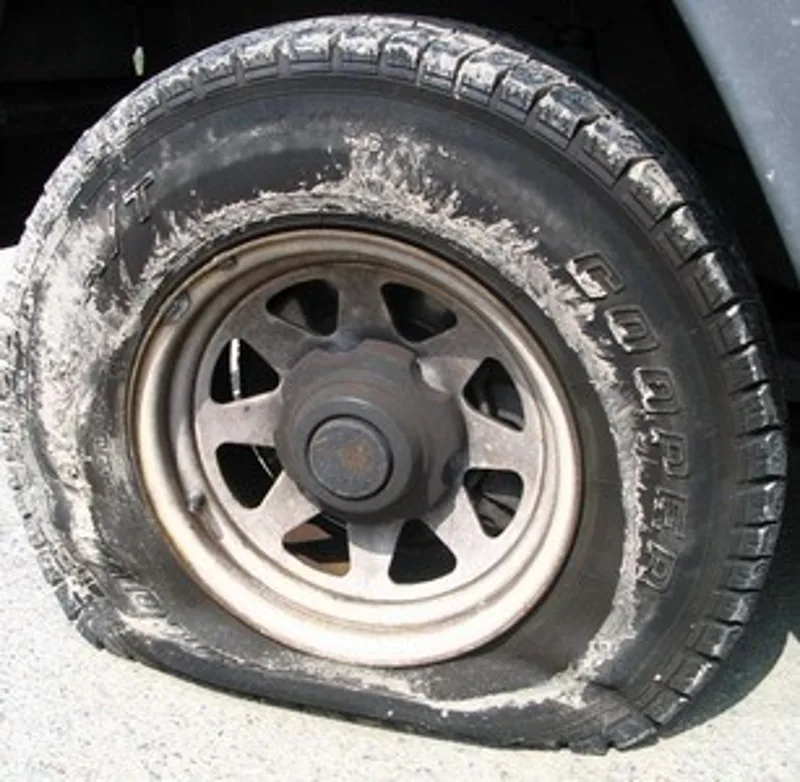
Two men related by marriage, John F. Schaefer and Claude E. Hart, started what became Cooper in Akron, Ohio, in 1914, as the M and M Manufacturing Company. It sold tyre patches, tyre cement and repair kits. In 1920 it bought a tyre-rebuilding firm, The Giant Tire and Rubber Company, and in 1922 it moved to Findlay, Ohio, where Cooper Tire still sits beside the old site.
The Cooper name arrived separately. In 1919 a Cincinnati auto-parts dealer, I. J. Cooper, set up the Cooper Corporation in Findlay to make new tyres. That firm, M and M and the Falls Rubber company merged in 1930 to become the Master Tire and Rubber Company, which took the name Cooper Tire and Rubber in 1946. Its oval trademark with a knight's helmet dates from 1941. During the Second World War the firm built pontoons, landing boats, life jackets and tank decoys as well as tyres, and received the Army-Navy E Award in 1945.
The Brewer years
From 1946 to 1982 a member of the Brewer family ran the company, first W. B. Brewer and then his sons Wayne and Edward. W. B. Brewer took it public, and on 11 July 1960 its shares began trading in New York as CTB, the B standing for Brewer. By 1983 Cooper had joined the Fortune 500.
Cooper tires abroad
Expansion came through purchases. In 1997 Cooper took over the tyre business of Avon Rubber, which wanted to concentrate on components and protective equipment, and the Avon plant in Melksham, England, became Cooper's European headquarters. Its biggest growth deal came in 1999 with Standard Products, a Michigan maker of seals and trim that added 10,000 employees. In the 2000s the company moved into Asia, with a joint venture alongside Kenda near Shanghai, an 11% stake in Kumho Tires of South Korea, and 51% of two Chinese tyre makers under the Cooper Chengshan name. China supplies 25% of its global sales, according to the company. In 2011 it bought a unit of the Serbian maker Trayal for $13 million.
The Cooper range is sold under the Cooper name, plus Dean, Hercules, Mastercraft, Mickey Thompson, Roadmaster and Starfire. It also builds tyres for dealer chains: Arizonian for Discount Tire and Futura for Pep Boys. The firm once built every tyre sold under the Guardsman label at Sears stores.
Goodyear takes over
After the Apollo deal collapsed in 2013, Goodyear stepped in. On 22 February 2021 it announced a purchase of Cooper for about $2.8 billion in cash and shares, completed in June 2021, with Cooper holders expected to own around 16% of the combined business. Changes followed. English manufacturing ended in December 2023, and in early 2024 Cooper sold its racing tyre equipment and sublicensed the Avon name to Nova Motorsport, a business run by former Avon executives that relocated manufacturing to Portugal. In May 2026 Cooper unveiled new branding, replacing its circle logo with the old knight's helmet combined with a wolf, and swapping blue for dark green as the main colour to point at off-roading.
In 2013 an Indian tyre maker agreed to buy Cooper, then walked away over a strike at a plant in China.
Apollo Tyres: from Kerala truck tyres to a European footprint
Apollo Tyres was incorporated on 28 September 1972, and its first plant opened at Perambra, near Thrissur in Kerala, in 1977. The founders included Raunaq Singh, Mathew T. Marattukalam and Jacob Thomas. Its focus in the early years was truck tyres, led by a product called the Rajdhani. A second plant followed in Limda, Gujarat, in 1991, a third came with the 1995 purchase of Premier Tyres in Kochi, and a fourth arrived in Chennai in 2008.
Going abroad began early, with the 1996 purchase of Dunlop's operations in Africa, which it sold on in 2013 to Sumitomo Rubber Industries of Japan. The bigger European move was the 2009 acquisition of the Dutch maker Vredestein Banden. A global research centre opened in Enschede in 2013, followed in 2015 by the purchase of the German tyre distributor Reifencom for 45.6 million euros, the shift of its European office to Amsterdam, and a second research centre in Chennai.
Apollo says its second European factory, in Gyongyoshalasz, Hungary, was inaugurated on 7 April 2017 by Prime Minister Viktor Orban. Today the company runs seven plants: five in India, then one each in the Netherlands and Hungary. In Europe it sells tyres under the Apollo and Vredestein names, the latter also appearing as Maloya.
Apollo tyres by market
The balance of the business is plain from its 2024 revenue: India supplied 87%, Europe 11% and the rest of the world 2%. Cricket is its biggest stage. A deal announced on 16 September 2025 makes Apollo sponsor of the Indian national team for three years, across 121 bilateral matches and 21 ICC fixtures, at a stated value of 579 crore rupees (US$60 million).
CEAT tyres: a Turin cable maker that became Indian
CEAT began as an electrical cable company. Virginio Bruni Tedeschi founded Cavi Elettrici e Affini Torino, or Electrical Cables and Allied Products of Turin, in 1924. On 10 March 1958 the company was incorporated in Mumbai as CEAT Tyres of India, at first in collaboration with the Tata Group. A research and development unit opened at Bhandup in 1972.
The Italian end ended badly. Virginio's son Alberto sold the parent to the investment firm SOFIT in 1980, jobs were cut, and the firm failed in Italy the following year. Pirelli bought the rights to the CEAT name and sold them to the RPG Group in 1983. RPG had already acquired the Indian company in 1982, and in 1990 it took the name CEAT. In 1993 it joined with Yokohama to make radial tyres at Nashik.
Today CEAT is owned by the RPG Group and makes more than 48 million tyres a year, with plant capacity of over 800 tonnes a day. Factories sit at Halol, Butibori, Bhandup, Nashik, Ambernath and Chennai, where a radial factory for passenger car and two-wheeler tyres was set up in 2020. It supplies cars, two-wheelers, trucks, buses, tractors, forklifts and auto-rickshaws, and exports across Asia, America and Europe. A Sri Lankan joint venture, CEAT Kelani, began in 1999 and opened a radial plant in Kalutara in 2006.
What CEAT sells and sponsors
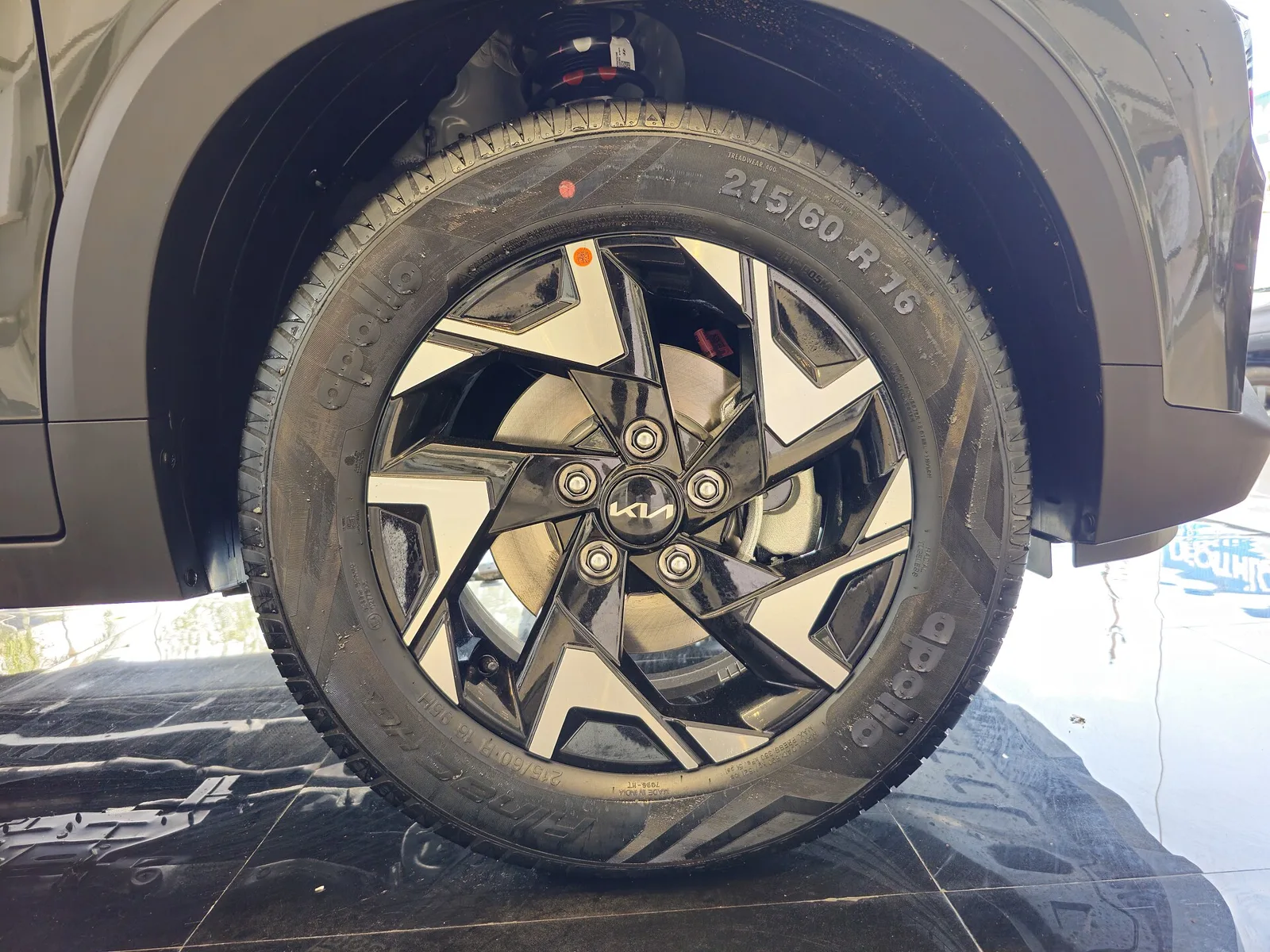
In India its performance range includes SportDrive and SportDrive SUV, while SecuraDrive suits premium hatchbacks and sedans and SecuraDrive SUV serves compact SUVs. CrossDrive, an all-terrain line for SUVs, was launched in 2022. Custom tyres were fitted to the six-tonne Bujji car in the film Kalki 2898AD. CEAT is the official tyre partner of the German club Bayer 04 Leverkusen for two seasons from 2024, until 2026, and title sponsor of the Indian Supercross Racing League. In 2023 it became the first tyre company to be awarded the Deming Prize.
A shared penalty in India
Apollo and CEAT appear together in one chapter they would rather forget. Competition Commission of India investigators raided the headquarters of both companies in April 2022, together with MRF and Continental. In February that year the authority had announced fines on the tyre makers totalling 1,788 crore rupees, for sharing price-sensitive information to manage tyre prices for supplies to the Haryana state public transport corporation. Apollo's share was 425.53 crore rupees and CEAT's 252.16 crore rupees. A complaint from the All India Tyre Dealers Federation to the Ministry of Corporate Affairs had started the process, and the ministry passed the case to the commission.
Yokohama tyres: BFGoodrich roots in Japan
The Yokohama Rubber Company was founded on 13 October 1917 by Yokohama Electric Cable Manufacturing (now Furukawa Electric) in partnership with BFGoodrich. In 1920 it built a factory at Hiranuma, and its tyres were sold in Japan under the Goodrich name until 1937, when the brand changed to Yokohama. Later it spread to Singapore in 1942, listed in Tokyo and Osaka in 1950, took its present company name in 1963 and set up Yokohama Tire Corporation in the United States in 1969. BFGoodrich sold all its shares in 1981.
Based in Hiratsuka, Japan, Yokohama makes tyres, rims and golf equipment sold under the PRGR brand. Its United States plant is in West Point, Mississippi; a plant in Salem, Virginia, closed in March 2026. The Yokohama Wheel brand began in 1974 and now covers Advan Racing wheels, AVS and the luxury Kreutzer line.
ADVAN, GEOLANDAR and AVID
The tyre range sorts into families. ADVAN is the performance line, with summer and all-season tyres for sports cars, luxury saloons and high-performance vehicles, built for handling precision and high-speed stability. GEOLANDAR is for SUVs, pickups and crossovers, with all-terrain, mud-terrain and highway-terrain versions. AVID is the all-season touring family for sedans, compact cars and crossovers, aimed at tread life, comfort and wet and dry grip. There are also commercial and industrial tyres for trucks, buses and heavy equipment.
Yokohama in motorsport
Yokohama has been the official Super Formula tyre supplier since 2016 and fits the Bandoh GT500 team and a number of GT300 teams in Japan's Super GT. Drift tyres for the D1 Grand Prix and Formula Drift Japan go to drivers such as Daigo Saito. Yokohama was also the Macau Grand Prix Formula 3 supplier from 1983 to 2019, apart from 2016, when Pirelli was chosen. Between 2006 and 2019 it equipped both the World Touring Car Championship and its successor cup, and today supplies teams in the 24 Hours of Nurburgring, including BMW and Ford factory-supported entries. In America it has worked with Subaru Motorsports USA, Pikes Peak entries and desert racing series. It also has a football link: it was the main sponsor of Chelsea from 2015 to 2020.
Business moves have been large. In 2016 Yokohama paid $1.18 billion for the farm tyre maker Alliance Tire Group. On 25 March 2022 it announced the purchase of Trelleborg Wheel Systems for 2.1 billion euros ($2.31 billion), its largest acquisition.
Four tyre brands compared
| Brand | Based in | Founded | Owner | Factories and markets |
|---|---|---|---|---|
| Yokohama | Hiratsuka, Japan | 1917 | Listed company | United States plant in West Point, Mississippi; India operation since 2007 |
| Cooper Tire | Findlay, Ohio | 1914 lineage | Goodyear since June 2021 | 60 facilities worldwide; Avon plant in England closed December 2023 |
| Apollo Tyres | Gurugram, India | 1972 | Listed company | Five plants in India, one in the Netherlands, one in Hungary |
| CEAT | Mumbai, India | 1924 | RPG Group | Plants in six Indian locations; exports to Asia, America and Europe |
What this means when you buy
For a driver choosing between tyre brands, the practical differences lie in the product families. Yokohama organises its range by use, so a hot hatch or a sports saloon points to ADVAN, a pickup to GEOLANDAR and a family car to AVID. Cooper sells under its own name and a string of associated labels, and sits inside Goodyear. Apollo is the one with the strongest European manufacturing base of the Indian pair, with Vredestein as its European name. CEAT's passenger tyres are concentrated in Indian ranges such as SecuraDrive and SportDrive.
Ownership also shapes availability. A Cooper tyre sold today comes from a Goodyear-owned company, not an independent one, and manufacture of Avon racing tyres has moved to Portugal.
What is coming next for Apollo, Yokohama, CEAT and Cooper?
Apollo's 2018 plan for a factory at Chinnapanduru village near Sri City in Andhra Pradesh described a 200-acre site making passenger car radials, with an initial capacity of 5.5 million tyres a year, plus truck and bus radials for domestic and export markets. Yokohama said in September 2025 that it would supply the FIA Extreme H World Cup, using a prototype tyre based on the Geolandar X-AT. CEAT's Leverkusen partnership runs until 2026, and Cooper's May 2026 rebrand points the brand towards off-road use.