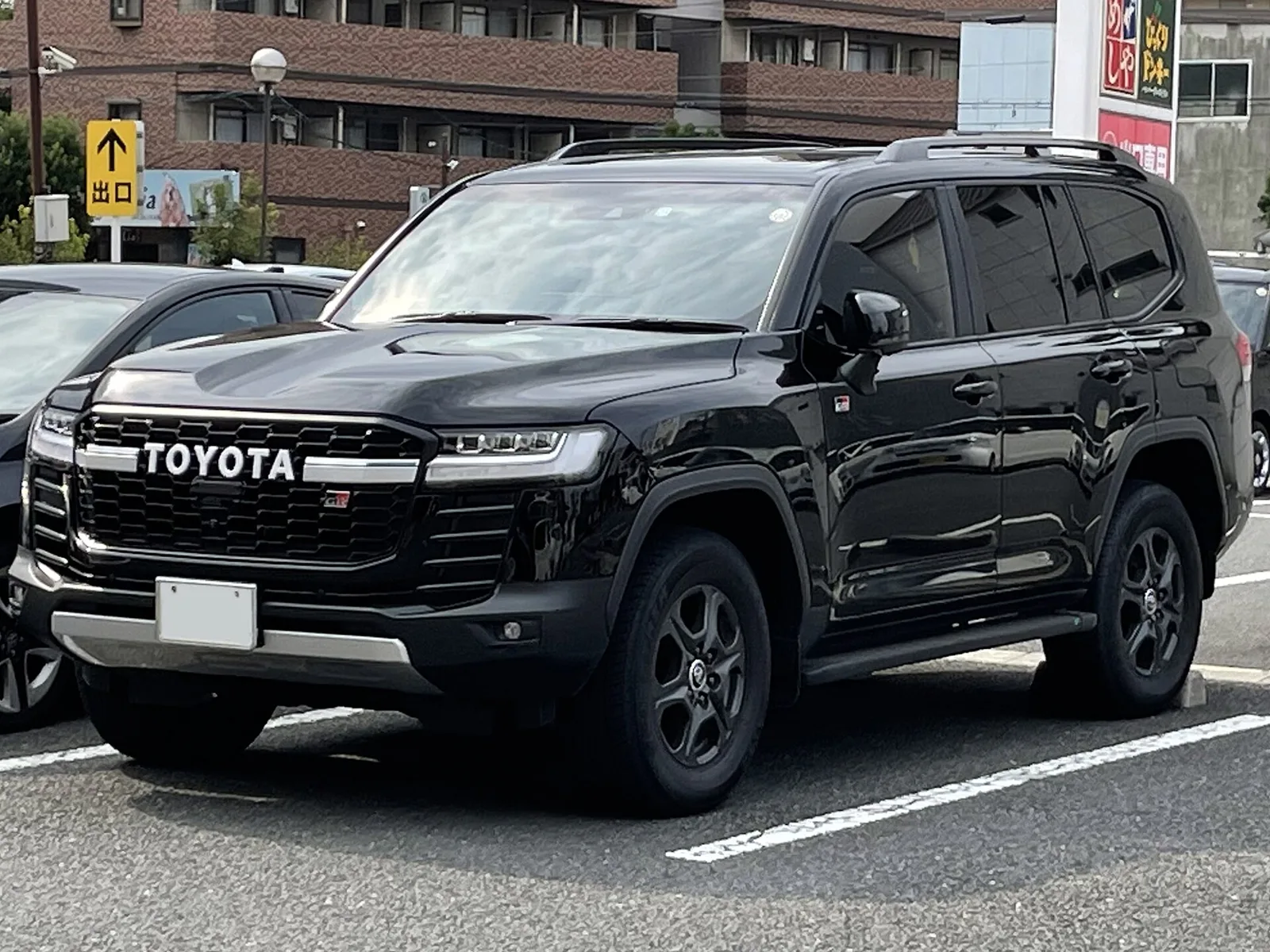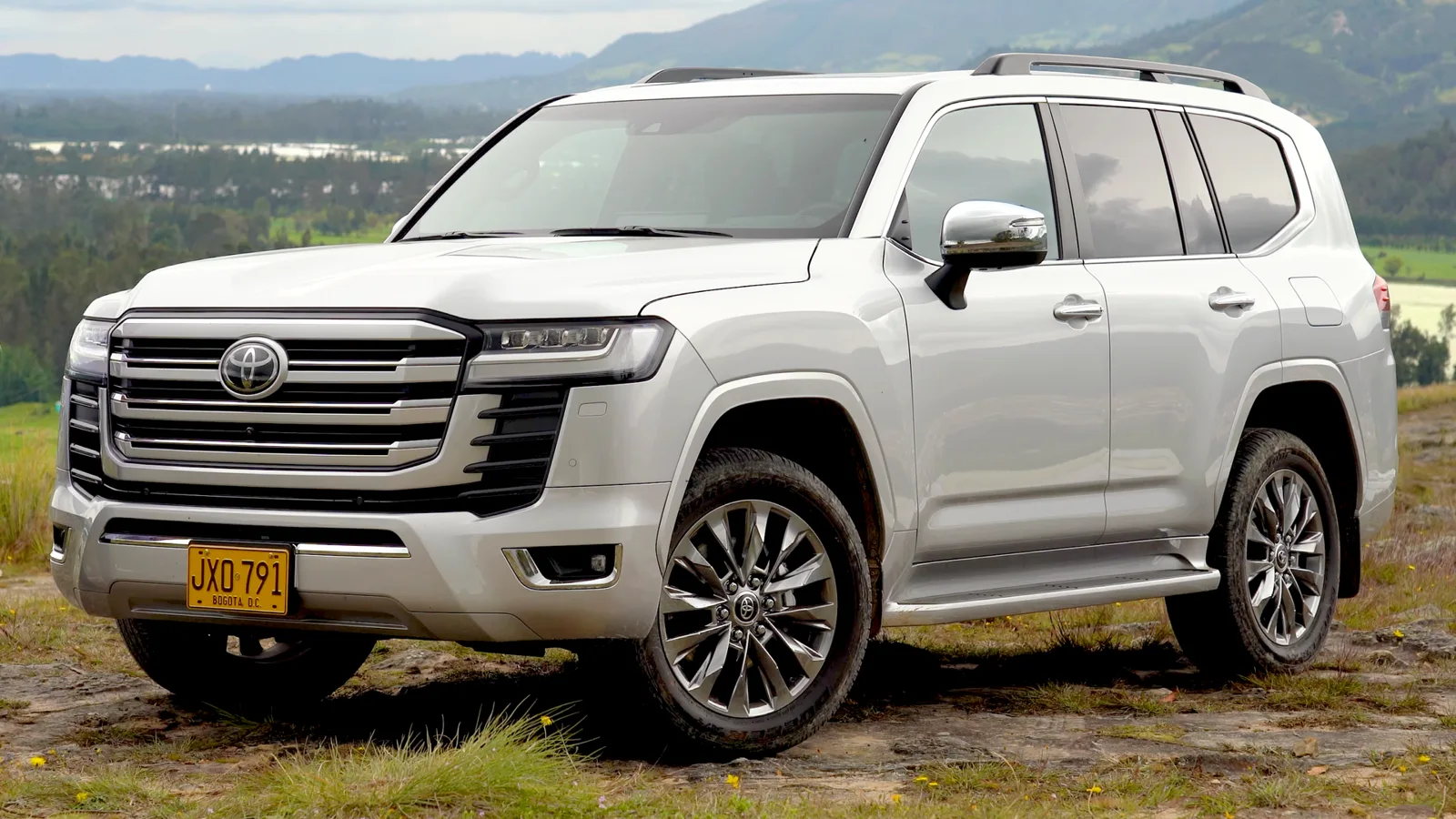
How a wartime request for a Jeep-like truck became Toyota's longest running series, and what separates its heavy-duty, wagon and light-duty branches.
The Land Cruiser began in 1951 as a Toyota answer to the Jeep, was named in 1954 and became Toyota's longest running model series. Today it is split into heavy-duty, station wagon and light-duty branches, with the Prado as the light-duty line and a smaller FJ added in 2026.
By August 2019 more than 10 million Land Cruisers had been sold, to farmers, builders, aid agencies, the United Nations, national armies and the irregular fighters who bolt machine guns into the back. It all started with a wartime order for a truck like the Jeep.
Where did the Land Cruiser come from?
From wartime Japan. In 1941 the Japanese government asked Toyota for a light military truck, and after Japan occupied the Philippines a Bantam GP (also called the Willys MB) was captured and shipped to Japan for assessment. The military then asked Toyota for a similar vehicle with a different outward appearance, and the prototype Model AK was the first answer.
That led to the Type 4 compact cargo truck, a half-ton machine with an upright grille, flat wheel arches that angled down and back, headlamps above the arches and a folding windshield. The production AK10 borrowed the 2,259 cc four-cylinder Type C from the Model AE sedan, with a three-speed manual gearbox and a two-speed transfer unit behind it. It saw far less service than the American Jeep.
The Land Cruiser proper is a postwar story. The Toyota Jeep BJ shares no mechanical parts with the AK10, although the lessons learned on the earlier truck fed into it. The Korean War had created demand in 1950 for a military utility vehicle, and the United States government ordered 100 vehicles to the then-new Willys specification and asked Toyota to build them. The BJ prototype followed in January 1951.
Land Cruiser sales passed 10 million units in August 2019.
How did the BJ become the Land Cruiser?
It proved itself on a mountain and then got a better name. In July 1951 Toyota test driver Ichiro Taira drove a development BJ up Mount Fuji as far as the sixth stage, a height no vehicle had reached before. The National Police Agency oversaw the test, was impressed and ordered 289 of them as its official patrol car.
Power came from the Type B, a 3.4-litre six-cylinder overhead-valve petrol engine making 63 kW (84 hp; 85 PS) at 3,600 rpm and 215 N.m (159 lb.ft) at 1,600 rpm. Like the Jeep it had part-time four-wheel drive, but unlike the Jeep it had no low-range transfer case. For two years it was built to order in small volumes, and regular production began in 1953 at the Toyota Honsya plant, with bodies built and painted by Arakawa Bankin Kogyo, later known as ARACO. Variants included the BJ-T Touring, BJ-R Radio and BJ-J, a cowl-chassis for fire engines.
The Land Cruiser name arrived in June 1954, coined by technical director Hanji Umehara. The Studebaker Land Cruiser had used the name from 1934 to 1954. A 3.9-litre Type F petrol engine with 92 kW (123 hp; 125 PS) joined the range at the same time, first in the fire-engine chassis only.
What changed with the 20 Series and the J30?
The 20 Series of 1955 was the first Land Cruiser designed to appeal beyond the military and police. It was built with export customers in mind, with more stylish bodywork and longer four-plate leaf springs adapted from the Toyota Light Truck for a better ride. The 3.9-litre six now made 99 kW (135 PS; 133 hp), and moving the engine 120 mm (4.7 in) forward improved comfort inside.
The gearbox stayed at three speeds, with synchromesh added on third and fourth, and there was still no low range. Another milestone came in 1958, when FJ25 production began in Brazil, the first Toyota built outside Japan. From January 1962 these were sold as the Bandeirante, a word meaning flag carrier in Portuguese, with a Mercedes-Benz diesel engine replacing the Toyota petrol unit. Output was modest: 961 vehicles in 1965.
The J30 was the short-lived oddity. Made for only nine months, from February to October 1960, it put a four-door wagon body from Gifu Auto Body on a 20 Series chassis. It rode a 2,650 mm (104.3 in) wheelbase and sat five. A J40-based wagon, the FJ45-V, used the same body, and it is thought only 60 were built.
Why did the 40 Series last so long?
Because it fixed what the earlier cars lacked. The 40 Series of 1960 was built with new steel presses and finally gave the Land Cruiser low-range gearing, through a two-speed transfer case that eased slow work on steep ground. Its 3.9-litre F engine made 93 kW (126 PS; 125 hp), though the main gearbox stayed at three speeds.
It was a traditional body-on-frame design, mostly built as a two-door and slightly larger than the Jeep CJ. Short wheelbases of 2,285 mm (90.0 in), medium ones of 2,430 mm (95.7 in) and long ones of 2,650 mm (104.3 in) were offered, and a 2,950 mm (116.1 in) version followed in 1963. Two jump seats folded away behind the front seats to free cargo space, which beat the full-width folding bench of the Jeep CJ, and the first optional winches were driven by a power take-off before electric ones took over.
Sales followed. Global production passed 50,000 in 1965, when no other Toyota sold better than the Land Cruiser in the United States. The 100,000th was sold in 1968, the 200,000th in 1972 and the 300,000th in 1973. The first diesel for export arrived that year with the six-cylinder H engine. In 1974 a four-cylinder 3.0-litre B diesel put the Land Cruiser into a lower-tax compact freight-car category in Japan and lifted sales there.
Refinements kept coming: a 4.2-litre 2F petrol engine in 1975, front disc brakes for the FJ55 that year and for the American FJ40 in 1976, and power steering and air conditioning as options in 1979. In 1977 the Irish Army began taking delivery of 77 FJ45s, which were quick, dependable and good off-road but rusted badly in the wet climate. The F engines were six-cylinder petrols, the B a four-cylinder diesel and the H a six-cylinder diesel, and the diesels were never sold to the American public.
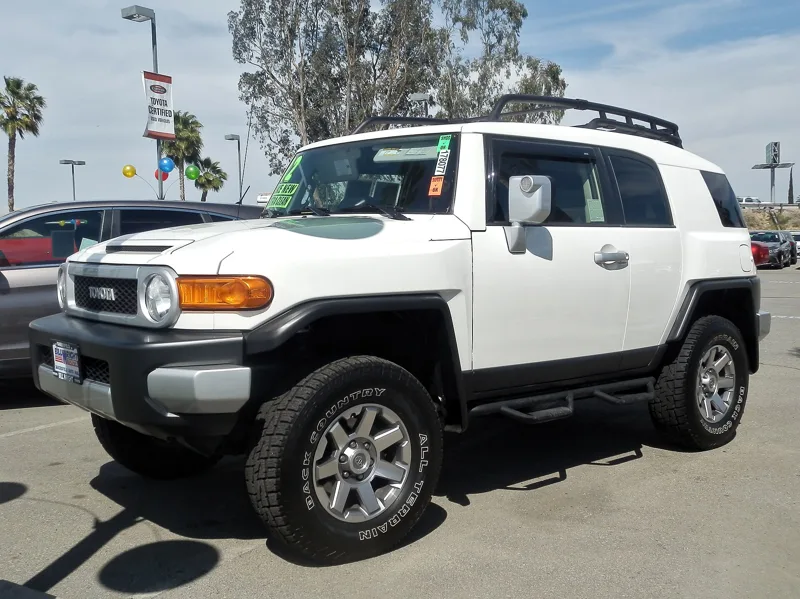
Production of the J40 line ran from 1960 to 2001 once Brazil is counted, with most markets switching to the 70 series in 1984. Toyota still offers many replacement parts through its parts departments worldwide, and in 2006 it launched the FJ Cruiser, an SUV with styling that pays homage to the 40.
Why is the Land Cruiser so popular in Australia?
Reliability and longevity are the reasons given for its huge popularity there. No other body-on-frame four-wheel drive sells in greater numbers in Australia, and Toyota tests it extensively in the outback, which is regarded as one of the toughest environments for both temperature and terrain.
The link goes back to 1959, when B&D Motors imported the FJ25 and FJ28 as cab chassis and fitted bodies made locally. It was the first Japanese vehicle to be exported to Australia on a regular basis, and a few early examples worked on the Snowy Mountains Scheme for the contractor Thiess Constructions. Elsewhere the Land Cruiser has a huge following in the Middle East, Russia, India, Bangladesh, Pakistan, New Caledonia and Africa.
What are the Land Cruiser series, and how do they differ?
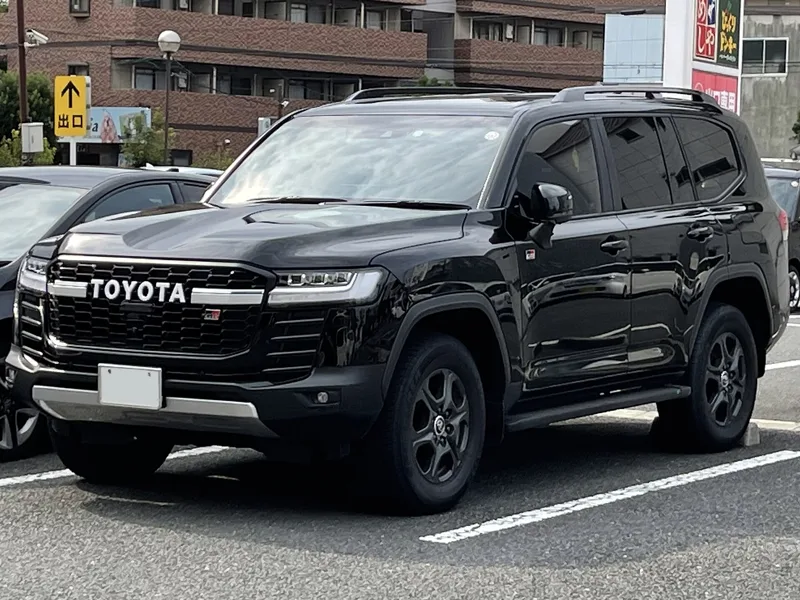
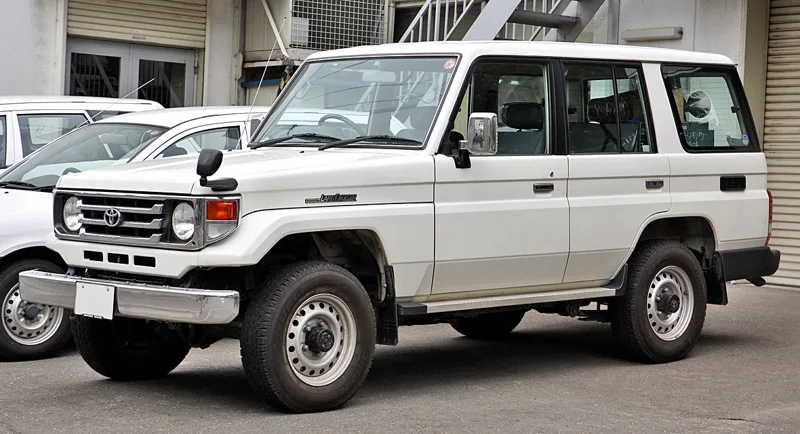
Toyota divides the family into four series: heavy-duty, station wagon, light-duty and the new FJ. The heavy-duty cars put function, durability and off-road ability ahead of comfort or technology, with flatter steel panels and an almost upright glasshouse. The station wagon cars emphasise comfort and interior space. The light-duty cars sit between the two, and the FJ sits below the Prado.
| Series | Models | Character |
|---|---|---|
| Heavy-duty | BJ, FJ, 20, 40 and 70 | Durability and off-road ability over comfort |
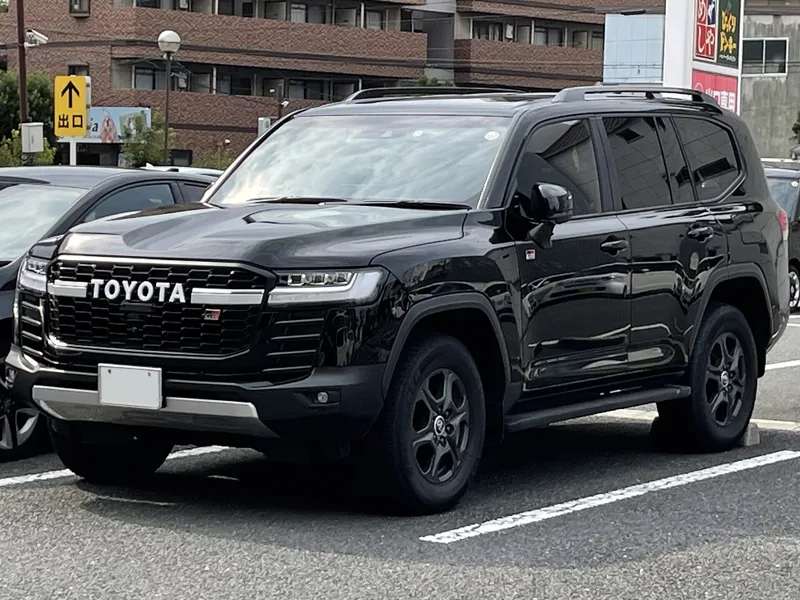
| Station wagon | 55, 60, 80, 100, 200 and 300 | Comfort and interior space |
| Light-duty | 70 wagon, 90, 120, 150 and 250 | Coil springs, smaller and cheaper than the wagons |
| FJ | Land Cruiser FJ | Slots below the Prado |
The station wagon branch began with the 55 series of 1967, conceived as a recreational four-wheel drive with room for a whole family. That format caught on with customers in the United States and later became known as the sport utility vehicle. The light-duty branch arrived with the 70 series, tuned mainly for Europe, with coil spring suspension to make it more comfortable than the heavy-duty cars while staying more affordable than the wagons.
Land Cruiser vs Prado: what separates them?
The Prado is the light-duty Land Cruiser, a name added to the family in 1990 with the 90 series. Toyota describes it as a lighter-duty version with a different design from the full-size model. Until 2023 it was the only comfort-oriented Land Cruiser with a short-wheelbase three-door body. The word is Spanish and Portuguese for a meadow or a field.
Underneath sit a ladder frame, two-speed transfer boxes and a beam axle at the rear. Only the J70 platform has a beam axle at the front too; the J90, J120, J150 and J250 all have independent front suspension. It is also known as the LC70, LC90, LC120, LC150 or LC250, depending on the platform.
The story begins with the J70 light-duty model of November 1984, called the Land Cruiser II or the Bundera in different markets. It came as a short two-door on a 2,310 mm (90.9 in) wheelbase with coil springs and lighter axles like those of the 4Runner and Hilux, built with Hino. The first true Prado followed in April 1990, still largely J70-based, with a new grille, wings and bonnet. Japanese cars carried the 2.4-litre turbo diesel 2L-TE with 71 kW (97 PS; 95 hp), and a 3.0-litre 1KZ-TE took over in 1993.
The second generation, the J90, was released on 8 May 1996 and was an independent series. Toyota itself treats this change as the moment the Prado turned towards passenger use. It came as a three-door five-seater or a five-door eight-seater, and swapped part-time four-wheel drive for a full-time system, on suspension shared with the Hilux Surf that used front double wishbones. At launch it offered a 3.4-litre 5VZ-FE V6 with 136 kW (185 PS; 182 hp) and an intercooled 3.0-litre 1KZ-TE with 103 kW (140 PS; 138 hp), and in July 2000 a 3.0-litre common-rail D-4D diesel took over with 125 kW (170 PS; 168 hp) and 352 N.m (260 lb.ft).
Special versions showed the platform's range. The Land Cruiser Prado Crawler, announced on 22 October 1999, replaced all four wheels with triangular rubber-belted crawler units for snowbound areas, which lifted the car from 230 mm (9.1 in) to 330 mm (13.0 in) of ground clearance and added weight, 1,980 kg (4,365 lb) becoming 2,420 kg (5,335 lb).
The J120 followed in 2002 with revised front suspension, development having begun in 1997. It offered 2.7-litre and 3.4-litre petrol engines and a 3.0-litre turbo diesel, with a 4.0-litre V6 arriving in 2004. In November 2006 a 1KD-FTV D-4D diesel with 127 kW (173 PS; 170 hp) and 410 N.m (302 lbf.ft) met Euro IV emission standards, and the car won three awards in Australia and the US for the best SUV-type performance. The fourth generation, the J150, went on sale in some markets in October 2009.
Which markets get which Land Cruiser?
It varies widely. The full-size Land Cruiser is not sold in the United States (since 2021), Canada (since 1996), Malaysia, where the Lexus LX is offered instead, Hong Kong, Macau, South Korea, Brazil or most of Europe, where only Gibraltar, Moldova, Russia, Belarus and Ukraine officially get it.
North America's Prado story is also tangled. Before 2023 the Prado was not part of the range there, and a rebadged Lexus GX, such as the GX 470 with a 4.7-litre V8 or the GX 460, took its place in luxury trim. The Prado reached North America in 2023 and is sold simply as the Land Cruiser, the 250 series. In the UK the first Prado of 1996 was called the Land Cruiser Colorado, to separate it from the larger Land Cruiser Amazon, until the Colorado name was dropped in 2003.
Where does the Land Cruiser go next?
Toyota unveiled the Land Cruiser FJ in October 2025, and it went on sale in 2026. It is a smaller, even more compact model slotted below the Prado, which uses the IMV platform that it shares with the Hilux.
The Prado itself is sold in most markets served by Toyota as of 2025, but not in Mexico, India, South Korea or some Southeast Asian and South American countries, where the cheaper Hilux-based Fortuner or SW4 is sold instead.