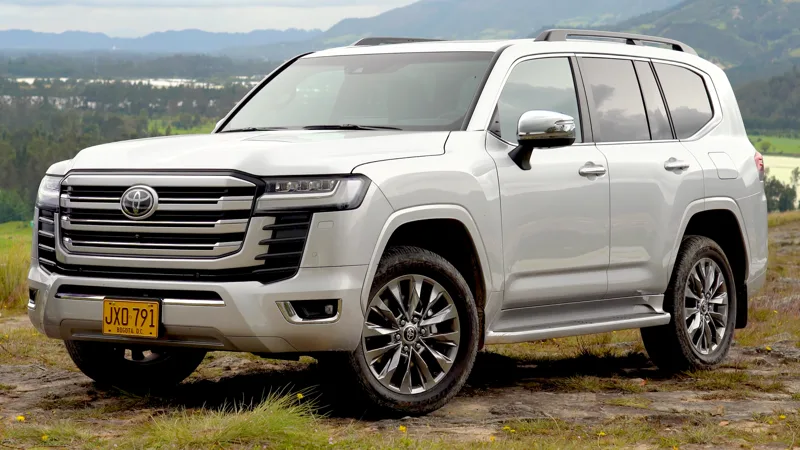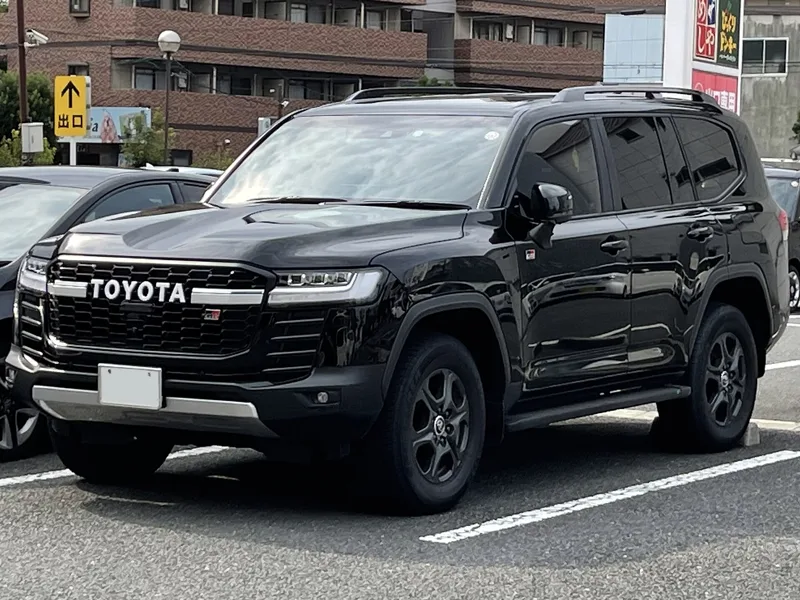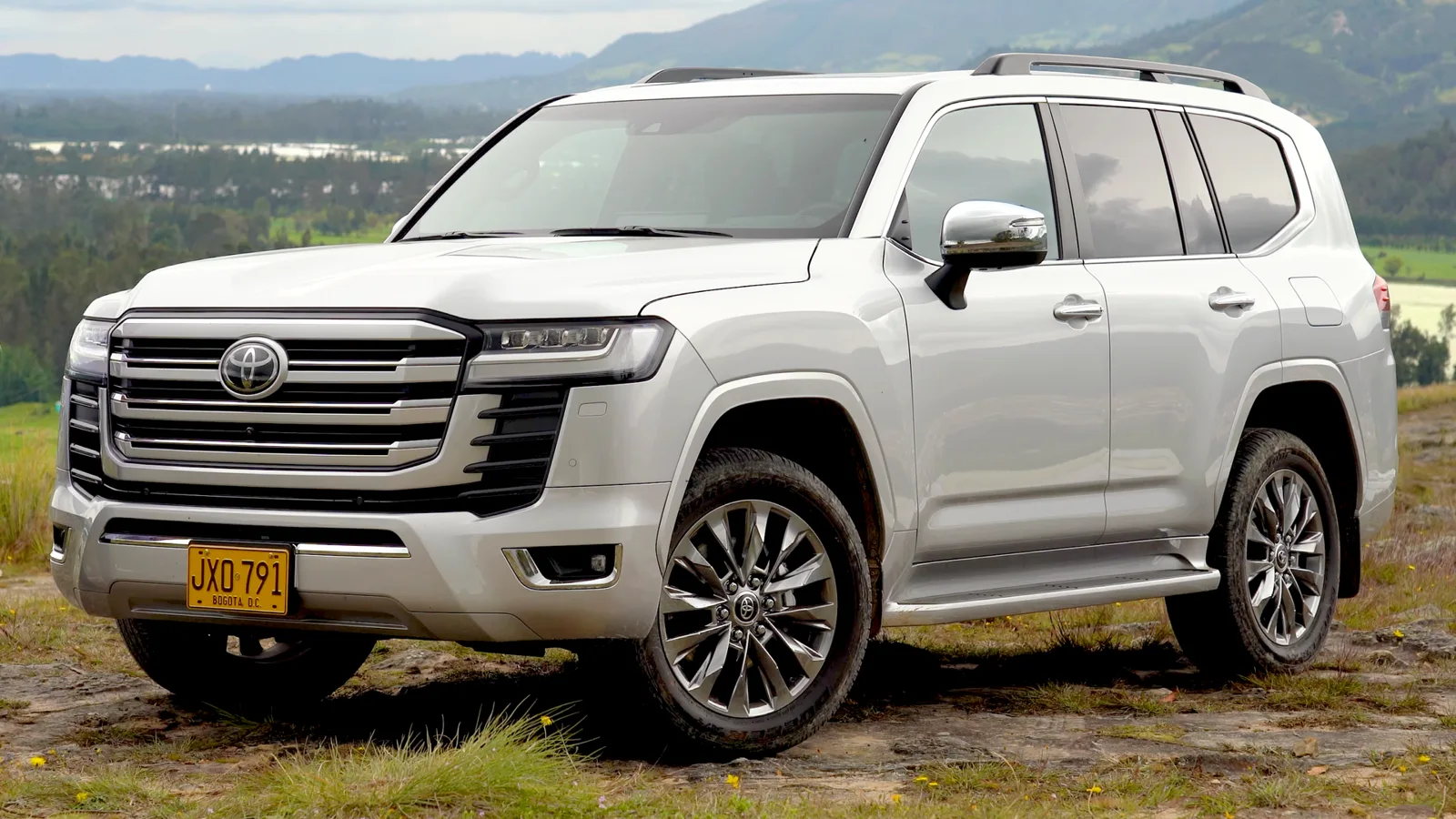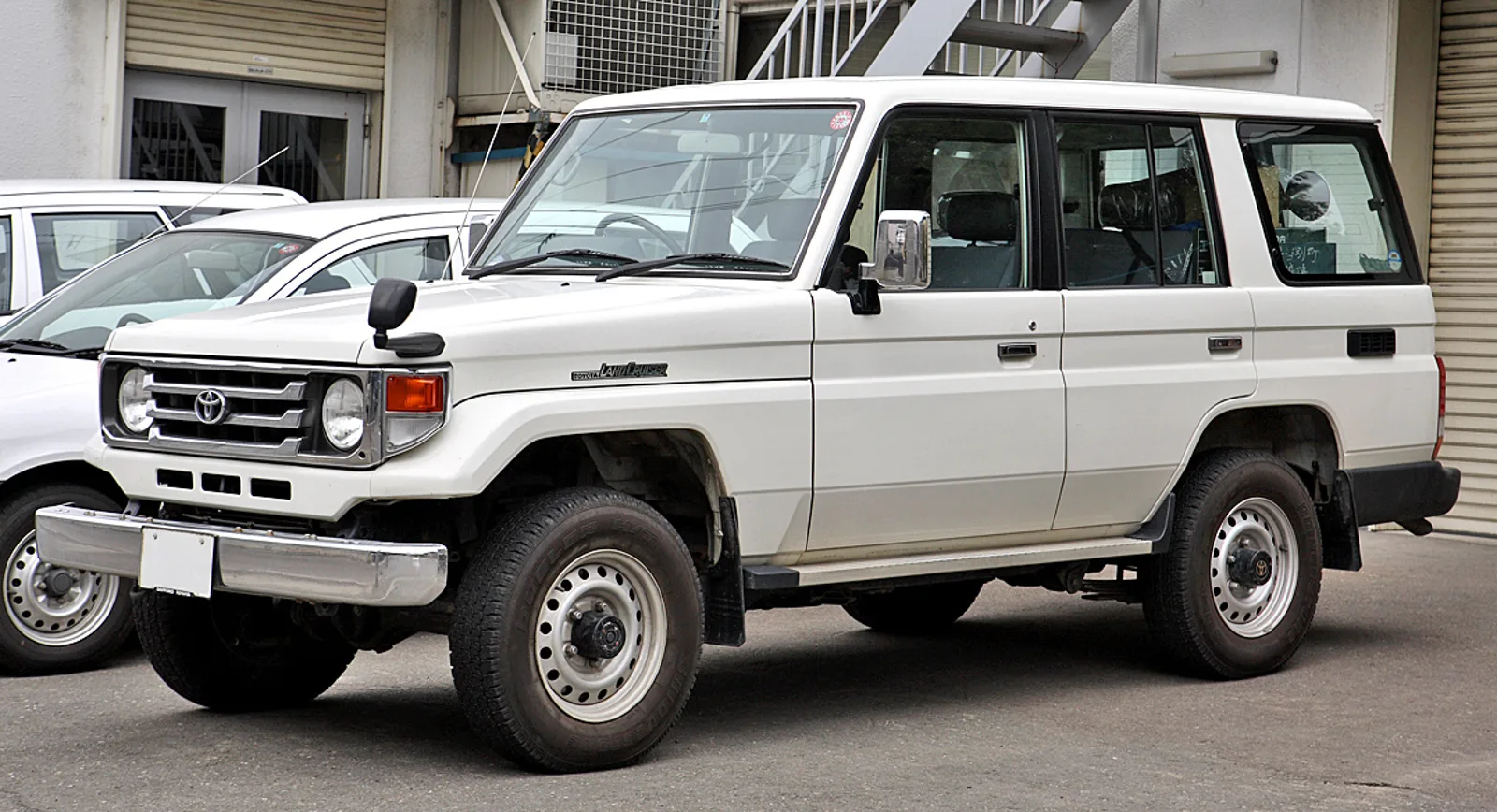
A 1984 workhorse with solid axles and a V8 diesel that Australia got first, still passing emissions and airbag rules in 2022 and 2023.
The Toyota LandCruiser 70 Series has been built since 1984 as the heavy-duty successor to the 40 Series. Australia received its 4.5L V8 turbo-diesel first in 2007, and the 2022 model added Euro 5 and airbags. In 2023 a 2.8-litre diesel arrived with an automatic only.
In 2007 Toyota fitted a 4.5L V8 turbo-diesel to the LandCruiser 70 Series, and for a time the only market where that engine went into the truck was Australia. It was the sole engine on offer there. The rest of the world kept straight-six petrol and diesel units.
LandCruiser 70 Series: the truck that replaced a 25-year-old classic
The 70 Series has been produced since 1984. It stepped in for the 40 Series, by then 25 years old, as the Land Cruiser line's rugged off-road model. Over the years there have been major changes in styling and numerous technology updates, but the brief stayed the same: keep the off-road ability and durability that made the 40 Series famous.
Toyota sorts the whole Land Cruiser clan into four series. The "heavy-duty" series puts function, durability and off-road ability ahead of comfort, and it is easy to spot by its flatter steel body panels and near-vertical glasshouse. The BJ, FJ, 20, 40 and 70 Series all belong to it. The "station wagon" series, which started with the 55 Series in 1967, favours comfort and interior space, and the "light-duty" series, tuned primarily for Europe, uses coil springs and is smaller and cheaper. The Prado name joined that line in 1990. The 70 Series is the direct descendant of the oldest branch of the family tree.
Australia got a V8 diesel in the 70 Series in 2007 that no other market received at first.
Where the Land Cruiser started
The story begins with the Korean War. In 1950 the United States government ordered 100 vehicles to Willys specification and asked Toyota to build them. A prototype, the Toyota "Jeep" BJ, appeared in January 1951. It was bigger than the American original, and its 3.4-litre six-cylinder petrol engine made 63 kW (84 hp) and 215 Nm (159 lb ft). It was part-time four-wheel drive, but unlike the Jeep it had no low range.
Publicity came from a mountain. In July 1951 the Toyota test driver Ichiro Taira drove the following prototype up Mount Fuji as far as its sixth stage, higher than any vehicle had gone, while the National Police Agency looked on. The police promptly ordered 289 of them. Regular production began in 1953.
The name followed in June 1954, after the company that built the original Jeep claimed trademark violation. Technical director Hanji Umehara chose "Land Cruiser", reasoning that Toyota needed a title that would not sound less dignified than Land Rover's. Studebaker had used the same words on a car built from 1934 to 1954. The 20 Series of 1955 aimed at civilian buyers abroad, and the 40 Series of 1960 added the low-range gearing that the earlier models lacked.
How the Land Cruiser reached Australia
B&D Motors first imported the Land Cruiser in 1959 as the FJ25/28 cab chassis, with bodies made in Australia. It was the first Japanese vehicle to be exported to Australia on a regular basis. A small number worked on the Snowy Mountains Scheme for the contractor Thiess Constructions.
Reputation followed. No other body-on-frame four-wheel drive sells better in Australia, and Toyota tests it in the Australian outback, an environment considered among the hardest in the world for both temperature and terrain. Worldwide, cumulative sales of the Land Cruiser family passed 10 million units in August 2019.
LandCruiser 79 Series, 78 and 76: decoding the numbers
The numbering looks like a code because it is one. Originally, numbers 70 to 74 meant two-door short- and medium-wheelbase models, the successors of the 40 Series. The 75, 78 and 79 were long-wheelbase pick-ups and troop carriers. The 76 and 77 were four-door wagons of semi-long length, sold in only a few markets.
Toyota tidied things up in 1999. The long-wheelbase models became the 78, the troop carrier, and the 79, the pick-up, and most short-wheelbase versions were phased out. In 2007 the 76 four-door wagon joined them, and the new dual-cab models took the 79 designation as well, since they use essentially the same chassis. A 2012 double-cab HZJ79 combined the 3180 mm wheelbase of the earlier two-door pick-up with four doors and the wagon's single 130-litre fuel tank.
The letters in front of the number say what is under the bonnet. Over four decades the engine list has changed more than the silhouette.
| Engine | Type | Where it appears |
|---|---|---|
| 1HZ | Straight-six diesel | The last straight-six, kept for markets such as Africa and Bolivia |
| 1FZ | Petrol | Replaced in 2009 by the 4.0L 1GR-FE in markets such as Bolivia, Colombia and the Middle East |
| 1VD-FTV | 4.5L V8 turbo-diesel | 2007, Euro-4 compliant; initially the only engine in Australia |
| 1GR-FE | V6 petrol | Introduced in 2009 |
| 1GD-FTV | 2.8-litre inline-four diesel | 2023, available only with an automatic |
What makes a LandCruiser 70 Series so tough
Strip away the badge and the layout is simple. Every 70 Series has a solid rear axle on leaf springs. A solid axle is a single rigid beam joining the two wheels, a bit like a barbell, so a bump at one end pushes on the other, but it is hard to break. Until 1998 the front axle was leaf-sprung too. Then Toyota switched the front to coil springs located by leading arms, with a marginally lighter axle. From 1999 the rear leaf springs were lengthened to allow more wheel travel and improve comfort.
Most 70 Series trucks, petrol and diesel alike, use inline six-cylinder engines. Whatever the engine, a five-speed manual gearbox feeds a transfer case that engages four-wheel drive only when the driver chooses, with a high and a low range to pick from. The front axles are solid and full-floating, with manual hubs the driver locks by hand, and some markets can order front and rear differential locks from the factory.
Comfort is deliberately basic. Air-conditioning and a radio are available, but the truck lacks the refinements of the more expensive passenger Land Cruisers. Four-speed automatics were offered on select versions, such as the FJ73 from 1985 to 1992, though manuals were the norm. The doors are steel with roll-up windows, the rear doors swing out like barn doors, and buyers can choose a hard or soft roof.
The short-wheelbase versions share the suspension and layout of the long ones but are far more nimble off-road. They found buyers across the globe in the 1980s and early 1990s and remain very popular in Japan, though they are not quite as common in Australia. Toyota Auto Body still builds them at the Yoshiwara Plant in Toyota City.
The Prado split
Not every 70 Series stayed rugged. Toyota also built lighter-duty versions under the 70 designation between 1985 and 1996, marketed around the world at first under names such as Bundera and Land Cruiser II, then finally Prado. Only Prado survived, and every revision moved it further from the 70 Series. By 1997 it carried the 90 Series label and was a passenger four-wheel drive unrelated to its 70 Series origins.
Some engines took stranger routes. From 1987 the BJ73 hardtop was sold in Portugal, Italy and Spain with a VM five-cylinder 2.5-litre turbo-diesel, and Salvador Caetano built those Land Cruisers in Portugal. The B in its code stayed because the rest of the truck matched a BJ70.
The 2007 facelift and the V8
The facelifted 70 Series went into production in January 2007 for release in late February or early March. It lost the flat fenders that every commercial Land Cruiser since the 40 Series had worn, because the new Euro-4 V8 needed a wider front axle, a wider track and a wider chassis. That engine, the 1VD-FTV, was for Australia only at first.
The 76 wagon arrived in the same update to fill a gap left by the removal of lower-specification models from the 100 and 200 Series ranges. A higher GXL level also appeared for the cab-chassis and wagon, adding comfort and safety features never before seen on a commercial Land Cruiser.
LandCruiser 70 Series 2026 and the regulation squeeze
Laws have shaped the truck more than fashion. Japanese sales ended in June 2004 because the truck could not satisfy the country's rules on NOx and particulates. A limited 30th Anniversary edition returned to Japan in 2014 as a 4-door wagon or double-cab pick-up with the 1GR-FE V6 and a five-speed manual, only to be withdrawn in June 2015, once every new vehicle there had to carry Vehicle Skid Control, a system the 70 Series lacks.
Europe is out of reach too. Portuguese-built trucks have been made by Salvador Caetano in Ovar since mid-2015, with a 231 PS (170 kW) engine and five-speed manual for the African market, Morocco in particular. They will not be sold in Europe because the engines are not emissions-certified there, even though the 1VD-FTV is offered in a twin-turbo version of the Land Cruiser 200.
Australia is a different story. The 2022 model satisfied Euro 5 emissions rules and gained front and side airbags, no small job given how rigid a ladder frame is, along with extra frame strengthening for side impacts. The 76 wagon had come back earlier on the strength of those safety gains, and by early 2021 it made up over half of Australian private sales of the range.
The 2023 update added an optional 2.8-litre 1GD-FTV diesel available exclusively with an automatic gearbox, alongside the existing engines with manual transmissions. LED headlights replaced incandescent units, and the combination meter took on a 40 Series-inspired look with an extra 4.2-inch colour multi-information display. Ashtrays went, along with the cigarette lighter.
A workhorse beyond the farm gate
The Land Cruiser's customers read like a roll call of hard places: farmers, the construction industry, humanitarian organisations, the United Nations and national armies. In Venezuela the 70 Series carries the transport community, the police and the National Guard. In Canada, as of 2022, it was available only to the mining industry, and it has never been sold in the United States.
Military engineers like it for plain reasons. In 2000 the British firm Jankel designed a Long Range Patrol Vehicle on the Land Cruiser 79 chassis because the chassis is common in most countries, does not lean heavily on electronic management, and uses basic mechanical parts that can be repaired in the field with standard automotive components. It also carries a high chassis weight. A year earlier Jankel had started a venture with a Jordanian design bureau, and in 2000 it won a United Nations contract to supply protected versions of the Land Cruiser 79.