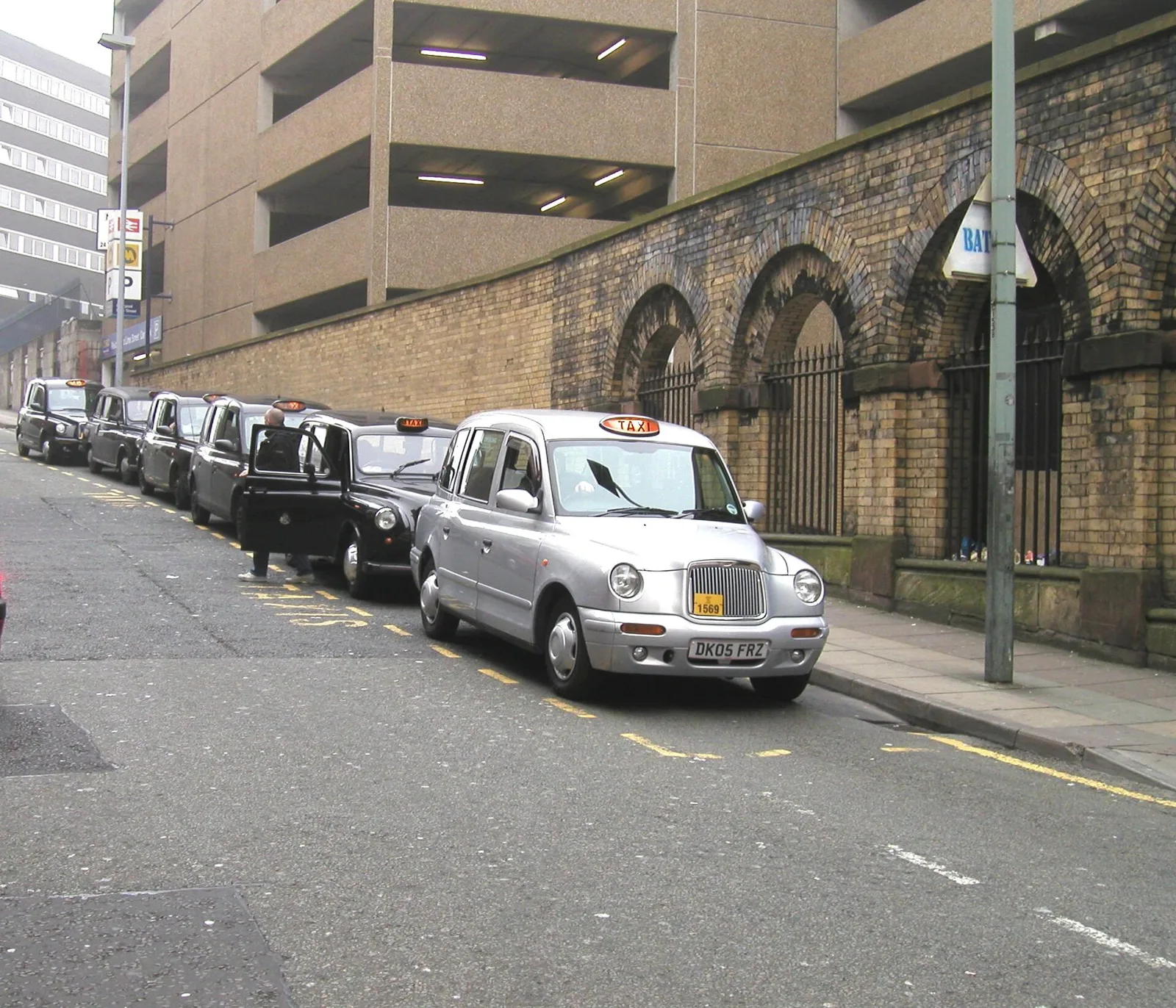
London's black cab is not required to be black, a St Augustine medallion costs $50 while San Francisco once eyed $250,000 each, and the cars behind both trace a century of rules.
London's hackney carriages are licensed taxis driven by people who pass the Knowledge, while US cities such as New York, Boston and Chicago license cabs with medallions. London cabs have progressed from horse-drawn coaches licensed in 1662 to the Austin FX4 and the electric-capable LEVC TX.
London's black cab is not required by law to be black. The colour became standard when postwar cabs were sold in black, and the label stuck after the 1970s. That small fact captures how taxis work: rules, more than design, shape what the cab looks like, who may drive it and where it can pick you up.
Comparing cabs in the United Kingdom and the United States shows two systems built on opposite ideas. London tests every driver on the streets and puts no cap on their number. Many American cities instead cap the number of permits, called medallions, and the price of those permits has climbed.
Where did the hackney carriage come from?
The origin of the word hackney is uncertain. It may come from the London borough of Hackney, whose name probably meant Haka's Island in Old English, or from the French haquenee, a medium-sized horse that was easy to ride and often hired. The earliest hackney coaches were worn second-hand coaches from the nobility, which is also where the word hackneyed, meaning worn out, comes from.
Private coaches became common among English aristocrats in the 1580s, and within fifty years hackney coaches were a regular sight in London. The first documented ones appeared in the early 1600s. By the 1620s they had multiplied so far that they were thought to endanger pedestrians in the narrow streets, and in 1635 an Order in Council capped their number. Two years later a licensing system for hackney coachmen was set up.
Parliament passed an ordinance in 1654 to deal with the irregularity of coaches and drivers, and a 1662 Act of Parliament created the first hackney-carriage licences, capped at 400. A 1694 act raised the cap to 700 and set up the Hackney Coach Commissioners. The limit rose to 800 in 1715, 1,000 in 1770 and 1,100 in 1802, and was abolished in 1832. Oversight passed to the Stamp Office in 1831 and to the Metropolitan Police in 1869.
The vehicles evolved. A true hackney coach rode on four wheels behind two horses and carried six people: four inside and two on outside seats, one of them the driver, popularly called the Jarvey. From 1814 up to 200 lighter hackney chariots were licensed, and soon after came the one-horse, two-wheel cabriolets, or cabs. In 1834 Joseph Hansom patented the hansom cab, which became the standard two-wheeler. The enclosed four-wheel Clarence of 1836, known as the growler for the noise it made on cobbles, stayed in use until motor cabs replaced it.
The British took hackney rules around the world. Singapore passed a Hackney Carriage Act in 1867, Sydney regulated hackney carriages in 1847, Boston founded a Hackney Carriage Unit in 1854 and British India passed its own act in 1879.
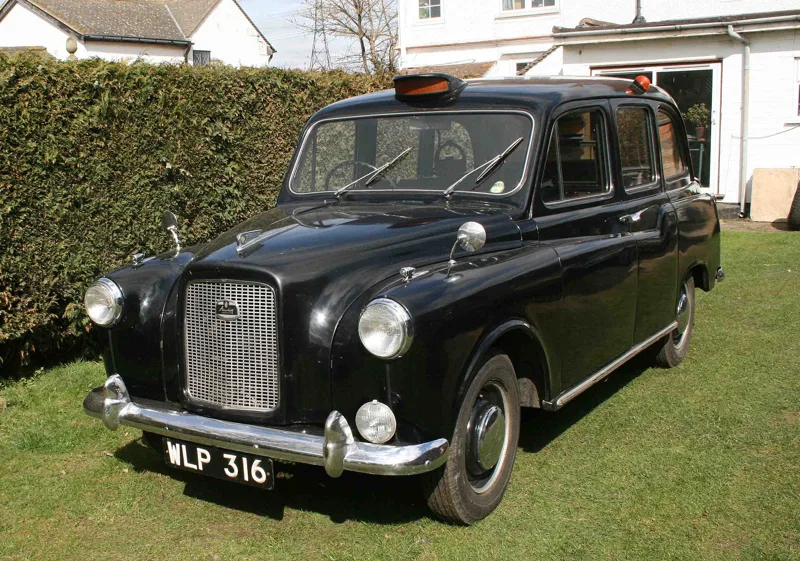
Though no law ever required London's taxis to be black, a postwar habit of selling them in black gave the cab its name.
How did cabs switch from horses to motors?
Electric cabs came first. The London Electrical Cab Company put 25 on the road in August 1897, known informally as Berseys after their designer Walter Bersey and as Hummingbirds for their sound, and had 50 more by 1898. By 1910 London had more motor cabs than horse-drawn ones for the first time, and when the First World War began the ratio stood at seven to one. The last horse-drawn hackney in London stopped work in 1947.
Fuel cells had a brief turn in 1999, when the Millennium Cab built by ZeTek appeared on television as the actor Judd Hirsch drove it into a New York hotel ballroom. ZeTek built three cabs and stopped in 2001. Horse-drawn hackneys still run in Cockington, Torquay, and in Bath, and Windsor's licence has passed from driver to driver since the 1830s under the same law that dates to 1662.
What makes a London black cab different?
Only a licensed hackney carriage may take passengers from the street without a booking. London cabs are built to the Conditions of Fitness. The Public Carriage Office, then part of the Metropolitan Police, issued the first edition in May 1906, and Transport for London publishes them today. The rules made the taximeter compulsory in 1907 and banned advertising on cabs until the early 1980s.
Drivers must pass The Knowledge, a test of London's streets and important buildings, and the number of London taxi drivers is not capped, unlike in many other cities. The cab seats three on the back seat and two more on rear-facing jump seats, has plenty of headroom and a ramp for disabled passengers, and is allowed a turning circle of no more than 8.535 m (28 ft). The Savoy Hotel is usually cited for that rule, because its small entrance roundabout needed a tight turn. A fleet that was first accessible in 1987 has been fully accessible since 1 January 2000.
The colour story is looser than the name suggests. Before the Second World War London cabs came in many colours, and after it they were sold in standard black, which led the minicab trade in the 1970s to coin the term black cab. Fifty golden cabs were built for the Queen's Golden Jubilee in 2002, and in October 2015 Londoners voted the black cab their favourite transport design icon.
Which cars have served as London taxis?
In Edwardian times London cabs came from Renault, Unic, Charron and Darracq, and Fiat's importer ran a fleet of 400. In the 1920s Beardmore cabs became the most popular for a while, nicknamed the Rolls-Royce of cabs for their comfort and robustness, while Citroen cabs were cheaper but cruder.
In 1930 the dealers Mann and Overton agreed with Austin to adapt the Austin 12/4 for taxi work, which kept Austin in front through the 1970s and Mann and Overton in the business until 2012.
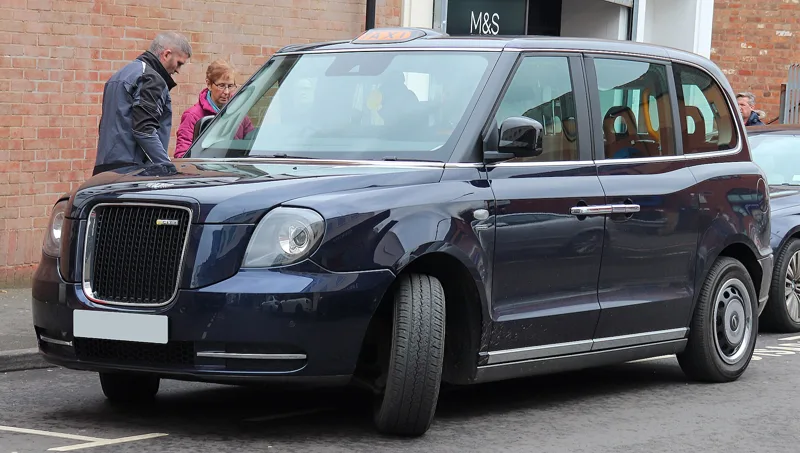
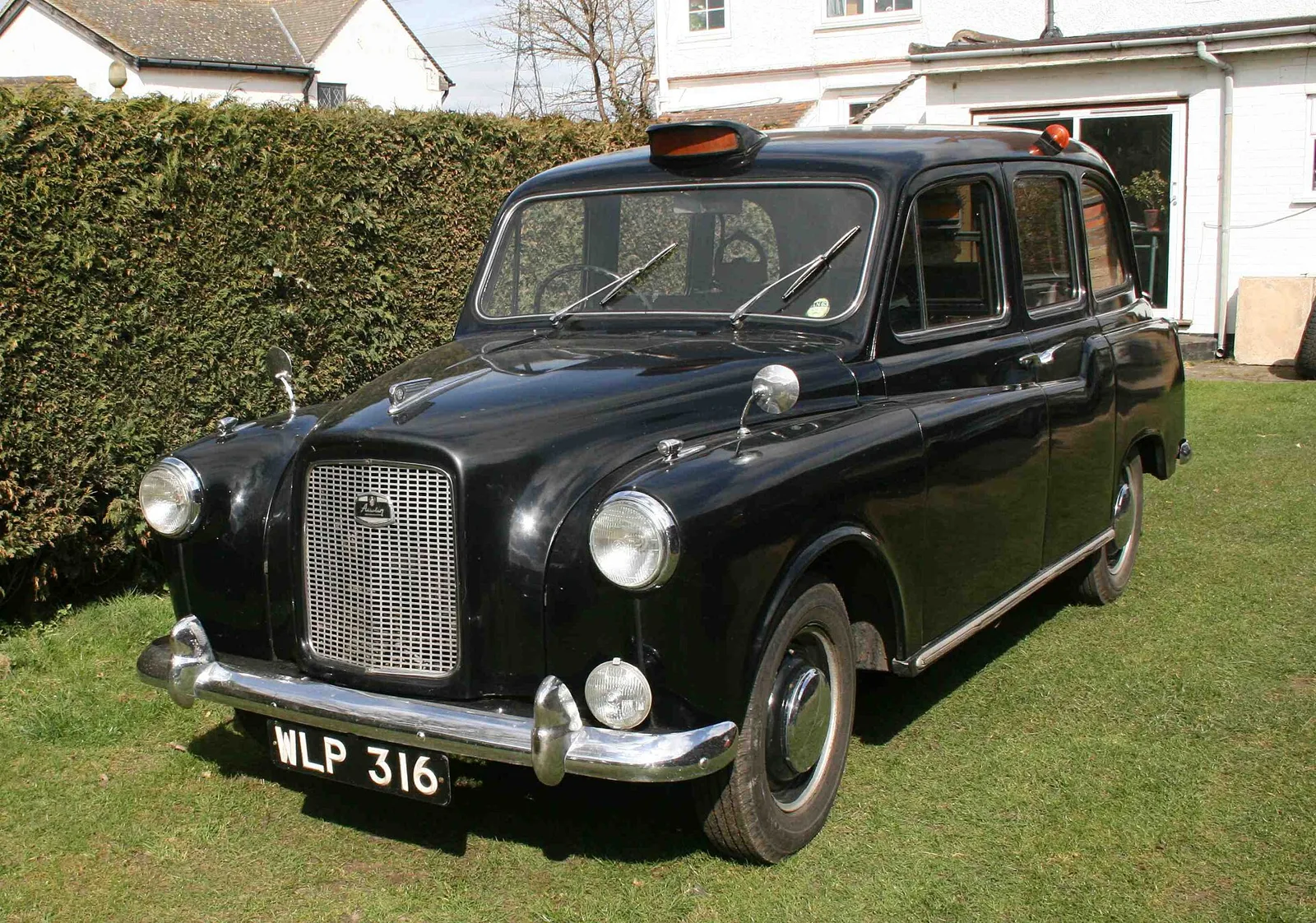
The Austin FX4, launched in 1958 and built until 1997 under successive owners, is perhaps the best known of all hackney carriages and set the styling pattern for its successors. A few Morris cabs also appeared, and after the war Wolseley built the Oxford. From about 2008 specially adapted people carriers joined the fleet, and in 2017 the LEVC TX arrived, a purpose-built plug-in hybrid with a range-extender. By April 2022 more than 5,000 TXs had been sold in London, about a third of the city's taxi fleet.
Air quality has become a rule of the trade. In December 2010 the then mayor Boris Johnson released a strategy to phase out the oldest cabs, with a fund of 1 million pounds to help owners upgrade. All taxis newly registered in London since 2018 have had to be zero emission, and by December 2023 over half of a fleet of 14,700 could run emission-free.
How do taxis, minicabs and chauffeur cars differ in the UK?
Hackney carriages, the taxis, can be flagged down in the street or hired from a rank. Private hire vehicles, called minicabs, cannot be hailed and must be booked in advance through a registered office. A minicab is a saloon, hatchback or estate carrying up to four passengers, or an MPV licensed for five to eight. Chauffeur cars are a premium sub-set of private hire, usually a Mercedes-Benz or Jaguar.
Minicabs began in the 1960s when someone noticed a gap in the law, and since 2001 London minicabs have been licensed by Transport for London. Their drivers need not pass the Knowledge, only a small topographical test, and their cars must carry a private hire licence and pass an MOT twice a year.
Outside London, councils license taxis. Hackney carriages come under the Town Police Clauses Act 1847 and private hire vehicles under the Local Government (Miscellaneous Provisions) Act 1976. A hackney can take fares from the street only in its own licensing area, though both types can collect pre-booked fares anywhere in the UK if the driver, vehicle and operator are licensed in the same borough. Luton reportedly has the most taxis per head of population in the UK.
Recent laws added safeguards. A Safeguarding and Road Safety Act of 2022 for taxis and private hire vehicles requires local authorities to use a national database so drivers who lose a licence in one area cannot apply in another, a database three quarters of authorities had already used voluntarily. A second 2022 act obliges drivers to carry disabled passengers and their wheelchairs without extra charge, with a fine of 1,000 pounds for non-compliance.
What colour is a taxi outside London?
Many councils require a livery, because a distinctive colour helps identification, passenger safety and local identity. Brighton uses white with aquamarine, Windsor white and royal purple, the purple on the bonnet and tailgate, Basildon white with orange, Leeds white with black, and Cardiff black with white. West Suffolk and Middlesbrough use black with yellow, Bradford white with a green diagonal stripe, and St Albans white with a yellow stripe. Among single colours, Bristol picks blue, Guildford teal and Portsmouth silver.
Hartlepool and Derby taxis are yellow, and both authorities considered changes in 2019 to cut costs. Hartlepool proposed retaining yellow on the bonnet and boot alone, but dropped the plan after a consultation, while Derby plans black cars with a yellow diagonal stripe.
How do taxi medallions work in New York and other US cities?
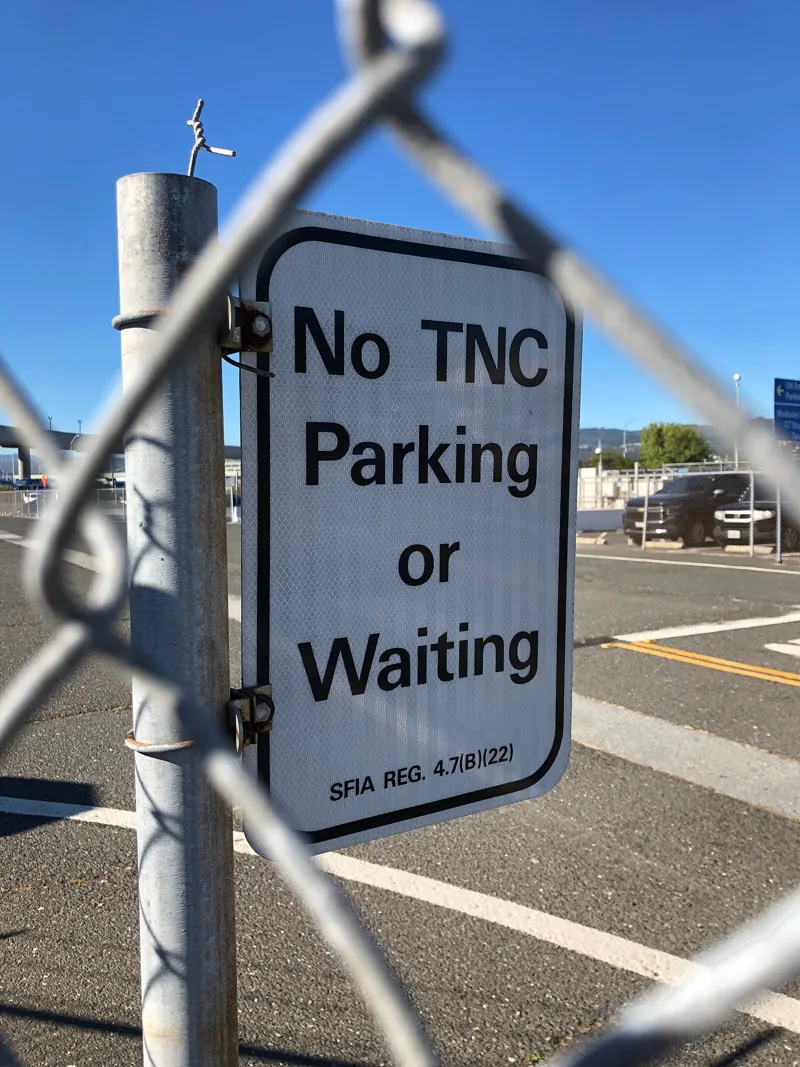
A medallion is a permit to pick up passengers who flag a cab on the street. New York City and some other cities require one. Because cities restrict the supply, and have usually added medallions far more slowly than demand grew, medallions were long considered a great investment. The Washington Post once called them the best investment in America, but competition from ride-hailing apps has been pushing their price down.
The rules vary widely. In St Augustine, Florida, a medallion costs just $50 and the city requires an annual car inspection. Boston and Chicago also sell medallions, known there as certificates of public necessity and convenience. San Francisco banned sales in 1978 under Proposition K to stop speculators pricing drivers out, then tried in 2010 to allow sales at around $250,000 each to balance the city budget.
How is the taxi business run in the United States?
Taxis vary by jurisdiction. Some companies are one-car businesses and others run fleets of 100 or more. Drivers are rarely employees and usually lease their cab by the shift. As of 2024 the United States had 393,400 taxi drivers, shuttle drivers and chauffeurs.
Other cabs belong to small companies of their own that pay for dispatch services, and then the door carries the dispatch association's logo. The owner-driver pays a monthly fee, buys and maintains the car and can lease shifts to others. Pay averaged $36,660 a year, or $17.62 an hour.
Taxi work is risky. In 2008 it ranked among the top 10 most dangerous jobs in the country, with a fatality rate of 19.3 per 100,000 workers. In New York, refusing to pick up a passenger, known as snubbing, is against the rules.
Taxi fares in Boston, New York, Chicago and Dallas
| City | Estimated fare for five miles with five minutes of waiting (Chicago Dispatcher study, April 2011) |
|---|---|
| Boston | $18.53 (about $18.60 on current local rates) |
| Los Angeles | $18.48 |
| Philadelphia | $14.57 |
| New York | $14.10 (between $15 and $16 with time-of-day surcharges and state tax) |
| Chicago | $12.72 |
New York's fares stay lower partly because of volume. The city has more than 12 million residents and 8.25 million visitors, so cabs seldom sit empty for long, and most trips are under three miles, where a $3.50 flag drop at busy hours makes drivers the most money. Boston's smaller population means higher fares, and its transit shuts at 1:00am, with bars closing at 2:00am. Boston licenses 1,825 medallion taxis through the police department, which also licenses roughly 7,000 drivers. Applicants need proof of eligibility to work in the United States, a Massachusetts driving licence held for at least a year, and clean criminal and registry checks.
How strict are the rules in Chicago and Dallas?
Chicago has about seven thousand licensed cabs, each carrying a medallion with a numeric code on the top right of the hood. Supply is tightly controlled, so medallions trade at high prices.
Cabs may be any colour and drivers need no uniform, but drivers must take the first passenger they see and cannot refuse a fare. The meter starts at $3.25, then adds $.20 for each ninth of a mile and $.20 for each 36 seconds of waiting. The first extra passenger pays $1.00 and each further one $.50, unless under 12 or over 65. Rides from O'Hare or Midway airports carry a $4.00 charge. Cards add $0.50, and a 10% tip is encouraged.
Typical fares from State and Madison downtown are $38 to $45 to O'Hare, $27 to $32 to Midway and $10 to $12 to the United Center.
Dallas has about 1,500 taxis from eight companies. Dallas Yellow Cab is the largest, with around 1,000 cars in a uniform yellow, while rivals paint theirs blue, black and silver, grey and white or burgundy. City officials set the meter rate, the size of the lettering and the colour, and inspect each taxi twice a year. A 2000 ordinance bars any vehicle from working as a taxi once it is five years past its manufacture date. Drivers must be at least 23, hold no felony conviction and have no more than five moving violations or accidents in the previous 36 months. The meter starts at $2.25 and adds 20 cents per ninth of a mile, with an extra $2 for each additional passenger or pet.
New Orleans offers a glimpse of how fares move: rates rose $1 in 2008, and in June 2015 the council voted without dissent to lift them, the first rise in six years.
What does this mean for riders?
In London, flag down a black cab or use a rank, and book a minicab ahead of time; the two licences are not interchangeable. In the United States, check the medallion and the meter. Chicago cabs must accept cards unless they are independently owned and operated.
Where this goes next
London's fleet is moving to zero emissions, with every newly registered taxi required to be zero emission since 2018. Derby plans to change its livery, and the national licensing database now binds all local authorities. In the United States the pressure on medallion values from app-based services continues.