A postwar saloon that passed a million, a sliding-door city car that lost money on every sale, a double-bubble coupe and a pickup built in China.
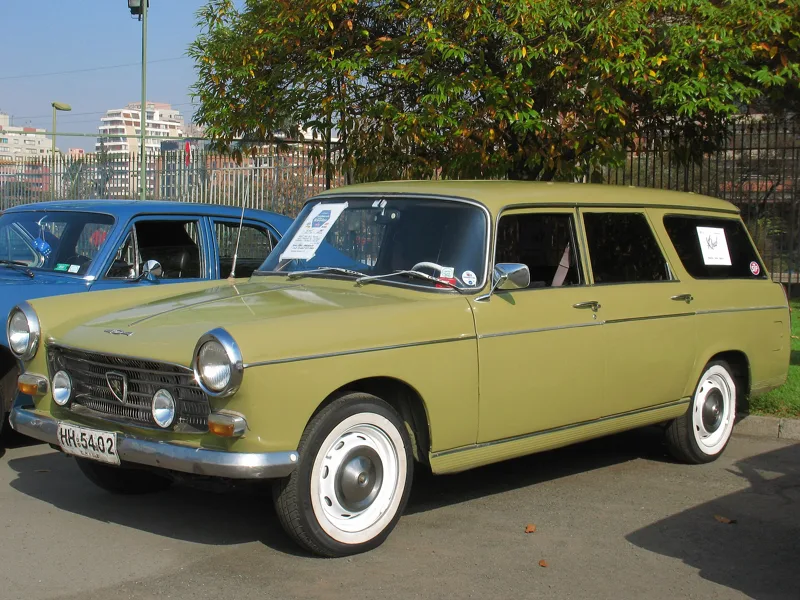
The Peugeot 403 was a postwar saloon that passed one million sales. The 1007 was a sliding-door city car, the RCZ a 2+2 coupe built in Austria, and the Landtrek a Chinese-built pickup also sold as Fiat Titano.
Peugeot lost an estimated 15,380 euros on every 1007 it built. The tiny, tall city car with two power sliding doors was meant to reinvent the small hatchback, and it was admired by the public when it appeared as a concept. In production it became one of the company's biggest sales failures.
What was the Peugeot 1007?
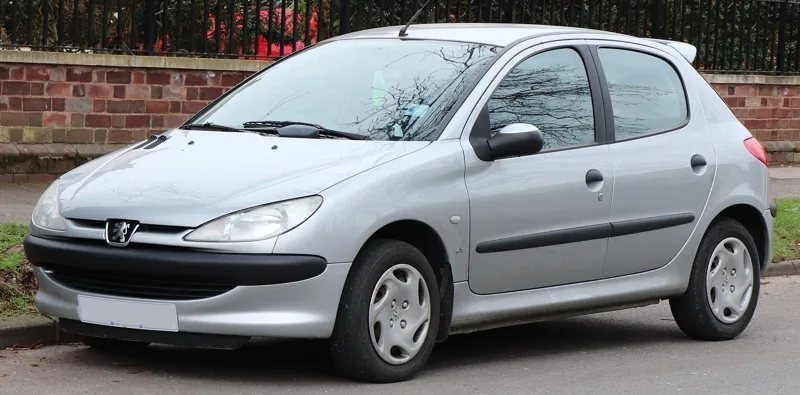
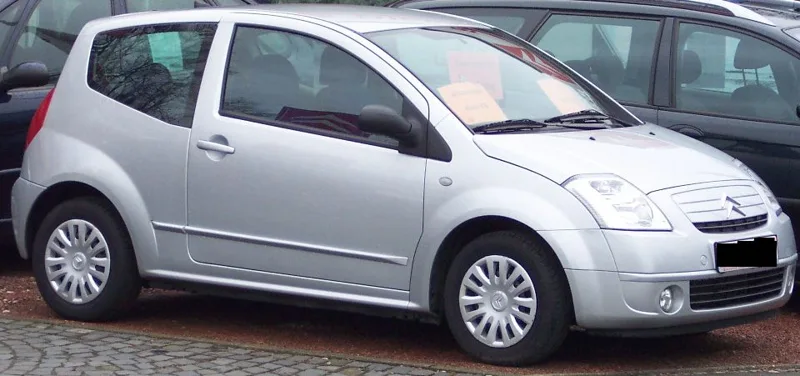
The Peugeot 1007 was a small three-door car built from 2004 to 2009, noted for interior trim pieces that owners could swap and for a four-pillar body with two power sliding doors. It shared its platform with the Peugeot 206 and the Citroen C2 and C3. Sales began in April 2005 in Europe.
It was the production version of the Sesame concept shown at the 2002 Paris Motor Show. Mechanically it drew on the 206, with 1.4 and 1.6 L petrol engines and 1.4 and 1.6 L diesels, and it offered an optional 2-Tronic automated manual gearbox, which Citroen sold as Sensodrive on the C2, C3 and C3 Pluriel.
It was expensive for its size, at around 14,000 euros (10,000 pounds). Euro NCAP awarded it its second best rating ever for adult occupant safety. Classifying the car was hard: it was called a supermini, an urban hatchback, a city car and a small car, and in France a petit monospace, minispace or microspace. Pininfarina, the studio that designed it, called it an MPV, while Peugeot's own term was berline monocorps, a one-box car.
Its name was a puzzle too. As the first mainstream Peugeot with a double zero, it was launched in English-speaking markets as one double oh seven, with James Bond style promotion. Under pressure from the owners of the Bond franchise, Peugeot changed its approach to ten oh seven. In France it was the mille sept. Peugeot dropped it from the British range in 2008, and production ended in mainland Europe at the close of 2009.
The 1007 sold badly and lost money on every car, while a 1960 403 convertible became a television icon.
What was the Peugeot 403?
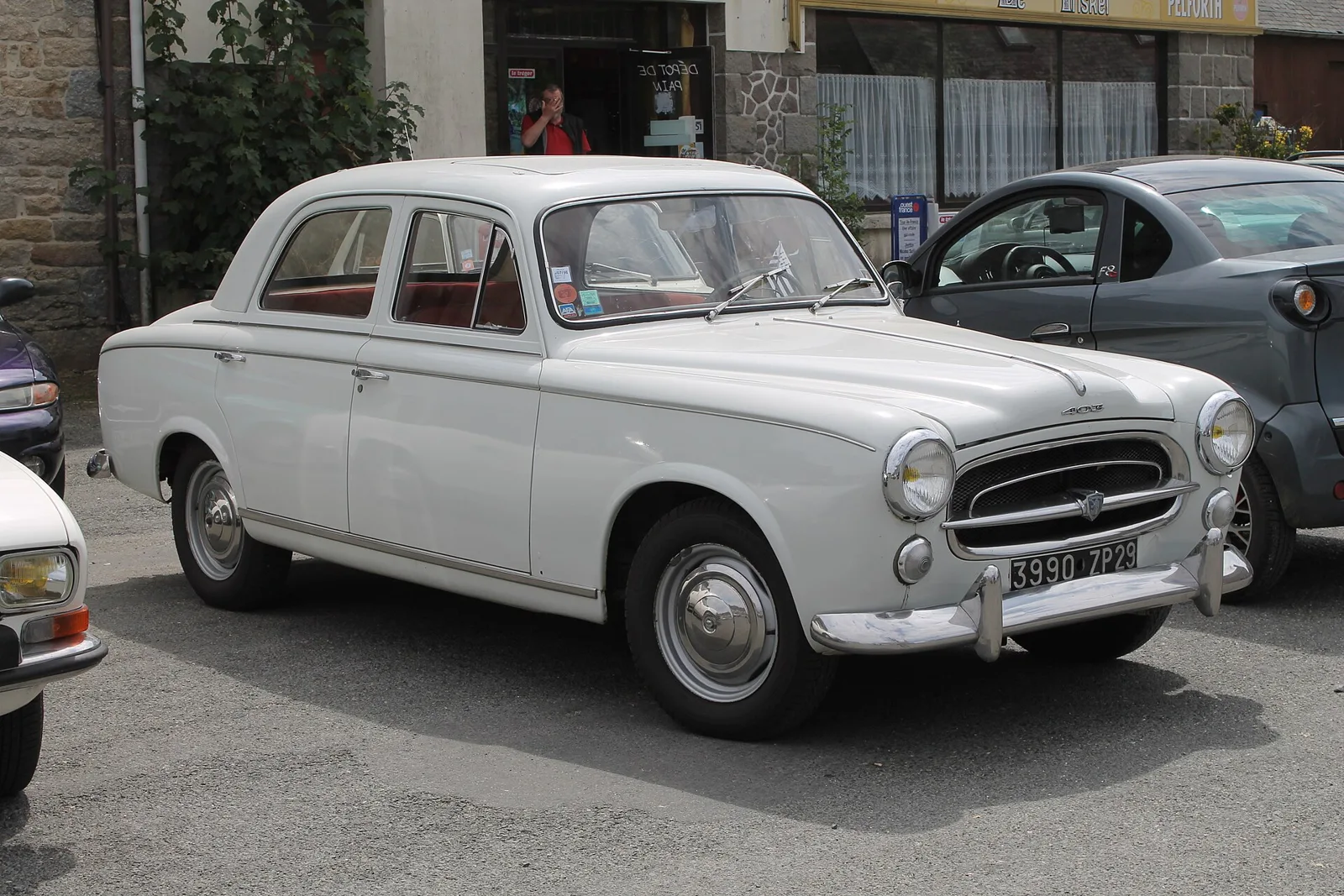
The Peugeot 403 was a mid-size car built from May 1955 to October 1966. Some 1,214,121 were produced including commercial models, making it the first Peugeot to pass one million.
It debuted as a saloon on 20 April 1955 at the Trocadero Palace in Paris. In the months before, numerous 403s with their badges removed ran about the roads near Peugeot's Sochaux factory, and became so familiar that locals stopped noticing them, though they drew the Paris motoring press to a town it usually ignored. Its TN3 engine put it in the 8 CV tax class in France, a step below the Citroen Traction and a step above rivals' small cars.
How was the Peugeot 403 designed and built?
Pinin Farina styled the 403 with ponton, three-box lines and, except on basic models, a metal sunroof. The collaboration began a partnership under which the Italian designer produced mainstream Peugeot designs for more than fifty years. Persistent rumours claimed the shape had been intended for a Fiat 1900 replacement, which Fiat then postponed for four years. Unusually for Europe, the rear doors opened 90 degrees, and the rear windows wound down fully despite the wheel arch intruding into the door.
The engine was an enlarged version of the 203's 1290 cc four, now 1468 cc, with pushrod valves, hemispherical combustion chambers and a crossflow head. It made 43 kW (58 hp) at about 4,900 rpm and 101 N m (74 lb ft) at 2,500 rpm, rising to 48 kW (65 hp) in 1958. A thermostatically controlled fan stopped at 75 degrees Celsius and restarted at 84, which Peugeot said saved 5% to 10% on fuel and avoided fan noise. A diesel estate came in autumn 1958, followed a year later by a diesel saloon. After the 203 ended in 1960, a 40 kW (54 hp) 1290 cc version was offered in a reduced-specification 403, first the 403 Sept and soon the Berline Luxe, to fall into the 7 CV tax class.
The gearbox was a four-speed with synchromesh on all gears, driving the rear wheels. At the October 1957 Paris show, Peugeot offered an electro-magnetic Jaeger automatic clutch at extra cost. The front seats reclined to make a couchette with the rear cushion.
Over the years, changes were mostly minor. Until after 1958, a forward-leaning chrome lion ornament stood on the nose, but it was removed for 1959 over safety concerns and the logo moved into a shield-shaped grille emblem. Semaphore trafficators gave way to flashing indicators, and in 1957 parallel wipers replaced the original cross-hands pattern.
What body styles did the 403 come in?
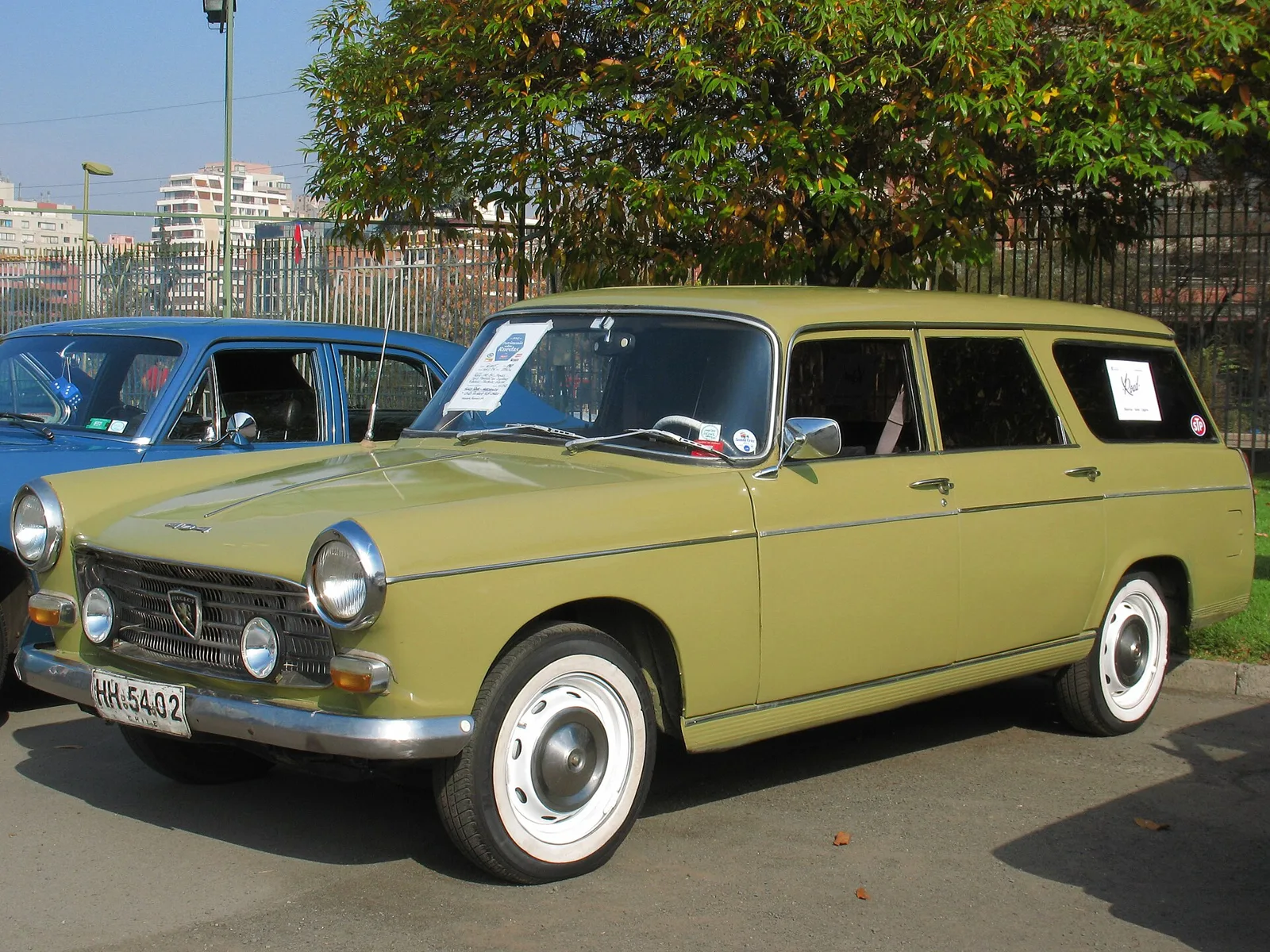
Besides the saloon, a five-door estate rode on a wheelbase 240 mm (9.4 in) longer. The Familiale had a third row and was called a 7/8 seater, and the Commerciale had a more conventional layout. Both had a solid rear axle, a sunroof and steel-belted radial tyres.
A two-door cabriolet had a luxurious leather interior, but in 1958 it cost 80% more than the entry-level saloon, and it sold in very small numbers. Production stopped in spring 1961 ahead of the 404 Cabriolet. A 1960 cabriolet became famous as the car of the television detective Columbo, a grey and derelict example that was later sold to a private owner in Florida and offered for sale in 2022. Pickup and three-door van versions were built too.
The 404 largely superseded the 403 in 1960, though it stayed as a budget alternative. The saloon left production at the end of October 1966, leaving only the pickup, which the 404 pickup replaced in March 1967. Volkswagen's local assembler in New Zealand put together 1,033 in just under four years from March 1960, and Argentina's version reached 90% local parts.
What was the Peugeot RCZ?
The Peugeot RCZ was a 2+2 sports coupe with front-wheel drive, assembled in Austria by Magna Steyr from 2009 until 2015. Peugeot presented it at the 2009 Frankfurt Motor Show. It collected awards, including five Best Sports Car titles from Diesel Car magazine and the Top Gear 2010 coupe award.
It began as the 308 RCZ concept at the 2007 Frankfurt show. After considerable acclaim, Peugeot put it into production and kept much of the concept, including a double-bubble roof inspired by Zagato. It was developed under the code name T75, used petrol engines from the Prince family and HDi diesels, and was on sale in almost 80 countries by 2013. The 30,000th RCZ was built in June 2011, and the 50,000th, a red one, on 14 February 2013. The last was assembled at Magna Steyr in Graz in September 2015.
Options included heated, adjustable seats with driver's memory, leather trim, hill assist, 19-inch alloy wheels and a JBL sound system, and Elan and Sportif kits that changed the colour of the roof, mirrors and grille. The rear seats were too small for adults to sit in comfortably.
How fast was the Peugeot RCZ R?
Peugeot announced a more powerful RCZ in November 2012 and released the first official pictures in July 2013. The RCZ R used a turbocharged 1.6L engine making 198 kW (270 PS; 266 bhp) at 6000 rpm and 330 N m (243 lbf ft) from 1900 to 5500 rpm. That worked out at 166 bhp per litre, the most powerful engine of its displacement in any production car at the time.
It reached 100 km/h (62 mph) in 5.9 seconds, with top speed limited to 249 km/h (155 mph). The car also had 380mm Alcon brakes, uprated suspension, a notably lower kerb weight and a Torsen front differential like that on the Mk2 Ford Focus RS, to reduce torque steer. It went on sale in January 2014 at 31,995 pounds. A total of 3,054 were built, 305 of them brought to Britain.
Special editions included the Allure, with the 1.6 THP156 engine, Tiptronic transmission and 18-inch wheels, and the 500-unit Asphalt, with black and silver wheels. The Brownstone was German-only and finished in metallic brown. The Magnetic was a UK-only edition of 170 cars, while 55 Raidillon cars went to Belgium and Luxembourg in a colour called Guaranja Brown. A Hybrid4 concept was also announced, combining a 2.0 L HDi diesel of 120 kW (163 PS; 161 hp) with a 27 kW (37 PS; 36 hp) electric motor, and a predicted 3.7 litres per 100 km and 95 g/km of CO2.
Awards followed the car throughout its life. Top Gear named it 2010 Coupe of the Year, Auto Express chose it as Best Coupe of the Year three years in a row, and it won a Red Dot Best of the Best prize for design. Autocar's Matt Saunders compared the RCZ R with its rivals and called the Audi TT dull to drive, and the Mini Coupe JCW nowhere near as finessed.
On track, the RCZ Peugeot Sport, with output raised from 200 to 250 bhp, stronger brakes, an adjustable rear spoiler, weight reduction and a roll cage, raced in the RCZ Racing Cup Italy one-make series. Racing RCZs also won classes at the 24 Hours of Nurburgring, with diesel versions in 2010 and 2011 and the Peugeot Sport car in 2012.
What is the Peugeot Landtrek?
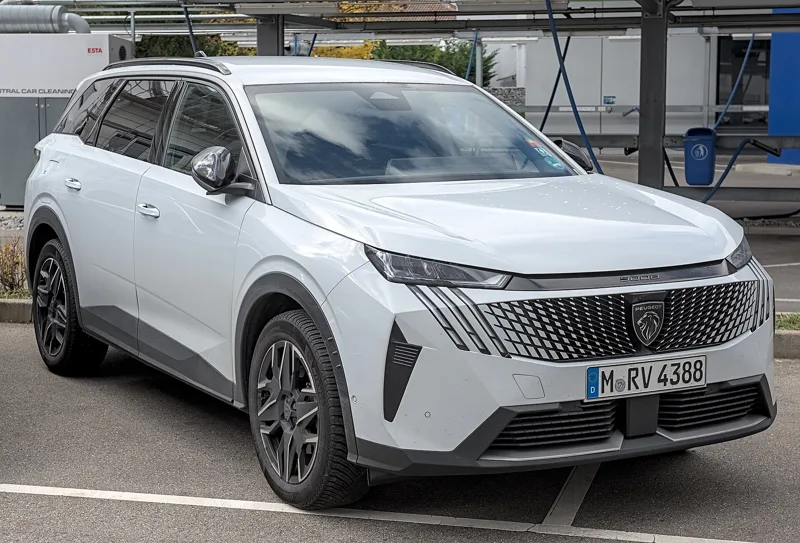
The Peugeot Landtrek is a mid-size pickup truck from Peugeot, part of Stellantis since 2020. It was developed jointly with Changan Automobile and is built in Shenzhen by Shenzhen Baoneng Motor, sharing its platform and most of its bodywork with the Changan F70. It is sold mainly in Latin America, Sub-Saharan Africa, New Caledonia, Malaysia, Laos and Ukraine, and not across Western Europe.
Peugeot announced it in February 2020 as the replacement for the Dongfeng-based Peugeot Pick Up, aimed at emerging markets. It comes as a chassis cab, single cab or double cab, with petrol or diesel engines. Peugeot says it covered more than two million kilometres of testing in all weather and terrain.
Maximum ground clearance is 235 mm (9.3 in) and wading depth 600 mm (24 in), with approach and departure angles of 29/30 and 27/26 degrees depending on version. Towing capacity is 3.5 tonnes (7,716 lb), and payload exceeds 1 tonne (2,205 lb), reaching 1.2 tonnes (2,600 lb) in some versions. A single cab can be sold without a rear bumper, giving access over a 180-degree tailgate. Basic models are rear-drive, with optional 4x4 that has 4H and 4L modes, and seating can reach six in a 3+3 layout.
Which engines does the Landtrek use?
At launch there were two- and four-wheel-drive models. A 1.9-litre VGT diesel built by Kunming Yunnei in China gave 110 kW (150 PS; 148 hp) and 350 N m (258 lb ft), with a six-speed Getrag manual or a six-speed automatic. A 2.4-litre turbo petrol engine from Shenyang Mitsubishi made 154 kW (210 PS; 207 hp) and 320 N m (236 lb ft).
The Uruguayan-built Landtrek, available from mid-2023, added a 2.2-litre HDi DW12 turbo-diesel making 132 kW (180 PS; 178 hp) plus 400 N m (295 lb ft), an engine shared with the Fiat Ducato. The Brazilian Fiat Titano used it from March 2024. In December 2024 Stellantis announced a 2.2 Multijet Evo of 2,184 cc built by Fiat, delivering 147 kW (200 PS; 197 hp) together with 450 N m (332 lb ft).
Where is the Landtrek sold?
Mexico was the first Latin American market, from November 2020 for the 2021 model year, with the 2.4 petrol and 1.9 diesel, and it was gone by March 2024. Uruguay followed in late June 2021 with imports from China and local assembly from mid-2023. Peugeot's first plan listed Mexico, Uruguay, Ecuador, Paraguay, Panama, Peru, the Dominican Republic, Guatemala, Haiti and Chile, and Argentina, Brazil and Colombia in a second phase.
South Africa, in November 2021, was the first right-hand-drive market, with only a double cab in Allure and 4Action grades with the 1.9 diesel. Semi knock-down assembly began in Ghana in the first half of 2022 at the Silver Star Auto plant in Tema. Ukraine received it in March 2023, Laos in May 2023 and Malaysia in March 2023, through distributor Bermaz Auto, with an SE grade added in May 2024.
After Stellantis was formed, Brazil took the pickup under the Fiat badge. Announced as the Fiat Titano in May 2023, it went on sale in March 2024 as an import from Uruguay. Algeria's Titano launched in December 2023 in Endurance and Volcano trims. Full production of the Titano and the Ram Dakota began at Stellantis Cordoba in Argentina in May 2025, with the 200 PS 2.2 Multijet II and an eight-speed automatic.
How do the four Peugeots compare?
| Model | Years | Type | Notable fact |
|---|---|---|---|
| Peugeot 403 | 1955-1966 | Mid-size saloon, estate, cabriolet, pickup | First Peugeot to exceed one million built |
| Peugeot 1007 | 2004-2009 | Small three-door with sliding doors | Estimated loss of 15,380 euros per car |
| Peugeot RCZ | 2009-2015 | 2+2 sports coupe | RCZ R made 198 kW (270 PS) from 1.6 litres |
| Peugeot Landtrek | 2020 onwards | Mid-size pickup | Also sold as Fiat Titano and Ram 1200 |