A rocket-car stunt on the AVUS, a hidden-headlamp coupe that came back as a Saturn, a crossover that changed platforms and a van that spent two generations on the Corsa.
Opel-RAK was a 1928-29 rocket vehicle programme led by Fritz von Opel. The Opel GT was a 1968-73 sports car, revived in 2007. The Grandland is a compact SUV and the Combo a long-running van.
In May 1928 the heir to the Opel car company sat in a car pushed by 24 solid-fuel rockets and drove it at 238 km/h along the AVUS track outside Berlin, watched by 3000 spectators. Fritz von Opel's stunt belonged to the first large-scale rocket programme in the world. The company behind it would later build a hidden-headlamp coupe, a family SUV and a long line of vans.
What was Opel-RAK?
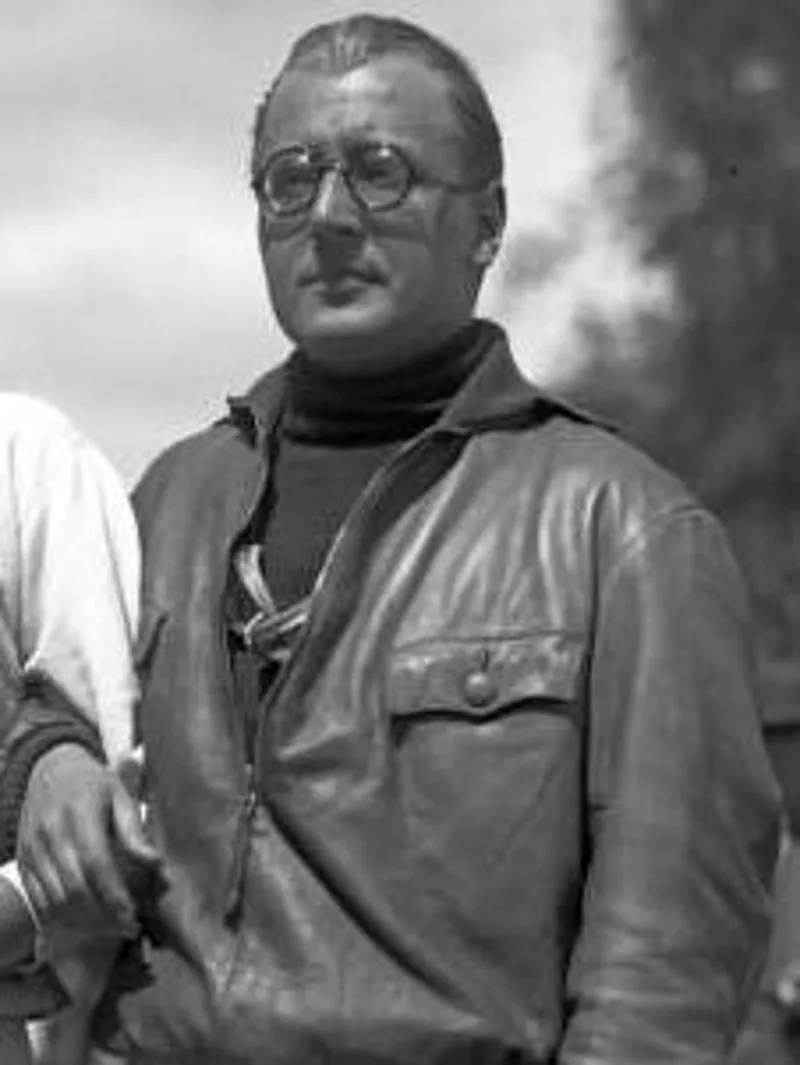
Opel-RAK was a series of rocket vehicles built by Fritz von Opel with Max Valier, Julius Hatry and Friedrich Wilhelm Sander. It is generally considered the world's first large-scale rocket programme, and it was highly successful as publicity for the Opel company as well as for rocketry itself.
The idea came from Valier, who had grown fascinated by rockets after the First World War and in 1927 helped found the German Spaceflight Society. He cared more about promoting rocketry than selling Opels, but he reasoned that a successful rocket car would serve both ends. Von Opel agreed. Valier approached Sander, a pyrotechnics engineer who had bought the Bremerhaven firm H.G. Cordes in 1923, a maker of black-powder rockets for harpoons and signals. Together they supplied the money, theory and hardware. From the start the three said the cars were a prelude to rocket aircraft and spaceflight.
In 1928 an Opel rocket car reached 238 km/h on the AVUS, watched by 3000 spectators.
How did the first rocket cars run?
Opel put its factory and test track at Russelsheim at their disposal. Von Opel wanted to drive but was talked out of it, since an accident would have ended company support. A regular Opel test driver, Kurt C. Volkhart, took the seat.
RAK 1 was a racing car stripped of engine and radiator. Small wing-like stubs, set at a negative angle behind the front wheels, kept the wheels planted, and twelve black-powder rockets in four rows of three were fired electrically. It managed 75 km/h in March 1928, then reached 100 km/h in just eight seconds that April, in front of the press on 11 April at Russelsheim.
The group was pleased, especially with the publicity, but made clear there were no plans to sell rocket cars. RAK 2 was designed from scratch by Volkhart and was far bigger and more streamlined. Its 24 rockets carried 264 pounds of explosives. On 23 May 1928, after speeches about the future of rocket flight, police cleared the AVUS and von Opel drove it himself to 238 km/h, despite the problem of too little downforce from the wings at that speed. The rockets burned for roughly three minutes. The audience included the director Fritz Lang and the boxing champion Max Schmeling.
A rail version, RAK 3, set a world record for rail vehicles on 23 June 1928, reaching 256 km/h over a straight 5 km stretch near Hanover in front of some 20,000 people. It beat the existing record for railcars by nearly 40 km/h. On a second run it jumped the track and was destroyed. RAK 4 was lost when one solid rocket exploded and set off the others, and the railway authorities banned further runs. Replicas of RAK 2 sit in the Opel museum in Russelsheim and the Deutsches Museum in Munich.
Did Opel build rocket planes?
Yes, two. The first was the Lippisch Ente, which means duck, the first rocket-powered glider. Fritz Stamer flew it at the Wasserkuppe, and Opel bought it. The Ente had a canoe-like fuselage, canard surfaces and a wingspan just under 40 feet, with two rockets of 44 pounds of thrust each. It flew a 1,500 metre (4,900 ft) circuit on its first flight. On the second, both rockets were fired together, one exploded, and the aircraft caught fire. Stamer brought it down from around 20 metres (65 ft) before jumping clear.
Von Opel promptly commissioned Julius Hatry for a purpose-built rocket aircraft. It had a 36 foot wingspan and a pod under the wing holding the pilot and sixteen of Sander's rockets, each of 50 pounds thrust. On 30 September 1929, near Frankfurt, von Opel flew almost 3.5 km in 75 seconds at an estimated 150 km/h. The landing was hard, yet the flight set off what became known as a global rocket rumble. A replica is at the Technoseum in Mannheim.
The team was also working on liquid fuel. Von Opel said that in 1928 he and engineer Josef Schaberger built a liquid rocket using benzol as fuel and nitrogen tetroxide as the oxidiser, with a thrust of 70 kg (154 lb). By May 1929 it made 200 kg (440 lb) for over fifteen minutes. In July, according to Valier, it ran for over thirty minutes at 300 kg (660 lb). Von Opel declared he hoped to be the first to fly across the English Channel this way. Valier also reported that Sander launched two small experimental liquid rockets on 10 and 12 April 1929, and one of them vanished along with a 2000 m length of rope.
The Great Depression ended the experiments shortly after the September 1929 flight, and Opel refocused its engineering on cars. Valier's account says the Channel aircraft was destroyed during a night-time transport on a truck at the factory, as Wilhelm von Opel, disturbed by the engine noise, wanted to stop his son's dangerous madness.
What was the first-generation Opel GT?
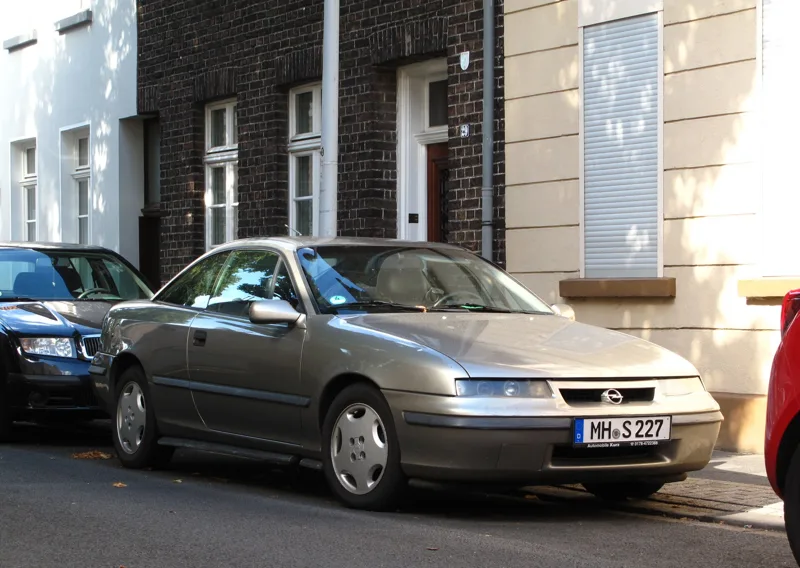
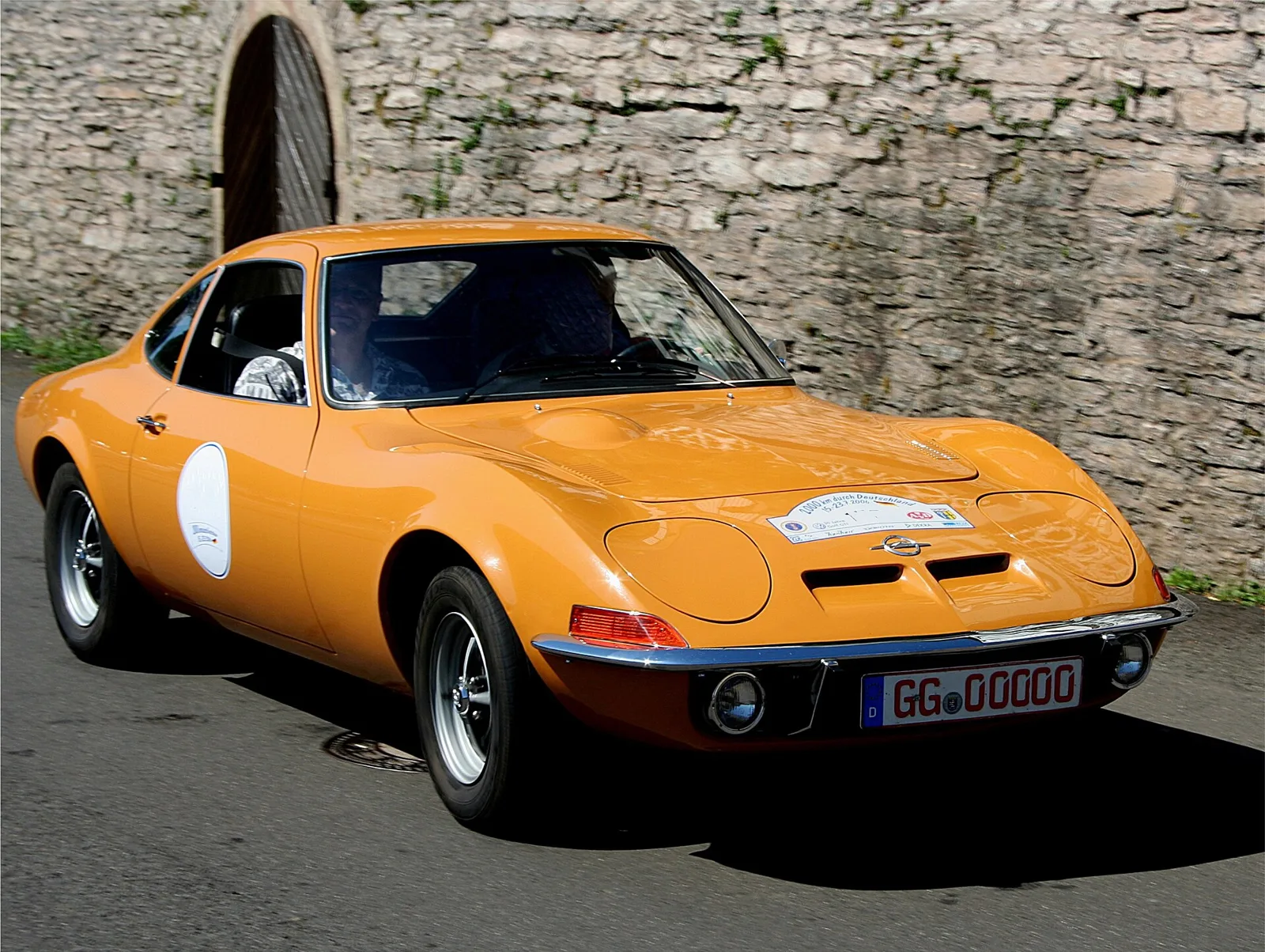
The Opel GT was a front-engined, rear-drive two-seat sports car, sold in two generations 34 years apart. The first ran from 1968 to 1973, after debuting as a styling exercise at the 1965 Paris and Frankfurt motor shows. It used mechanical parts from the Kadett B and a two-door coupe body made by the French contractor Brissonneau & Lotz. Its styling was often compared with the 1968 Chevrolet Corvette.
The base engine was a 1.1 L overhead-valve four making 67 hp (SAE) at 6,000 rpm, but most buyers chose the optional 1.9 L cam-in-head engine, with 102 hp (SAE). In 1971, emissions rules cut the American-market 1.9 to 83 hp. Opel also sold a cheaper GT/J in Europe with nearly no chrome. A four-speed manual came standard, and a three-speed automatic was available with the 1.9.
The design was unusual. Erhard Schnell's fastback had neither an outside boot lid nor a hatchback; a parcel shelf behind the seats could only be reached through the doors, with a spare tyre and jack under a fold-up panel. The engine sat far back in a steel unibody, and the hidden headlamps were turned by hand with a large lever beside the gear lever, both rotating the same way. Front suspension used upper A-arms and a transverse leaf spring, the rear a live axle on coils. Brakes were power-assisted discs at the front and drums at the rear, and steering was unassisted.
Opel sold 103,463 between 1968 and 1973, among them 3,573 cars with the 1.1 L engine in 1968 to 1970 and 10,760 GT/J models. In North America dealers were Buick showrooms, and unusually there was no Vauxhall version for Britain. Production ended because the car needed a redesign to stay competitive with rivals such as the Datsun 240Z, and because the Brissonneau and Lotz contract was terminated. Italian coachbuilder Sergio Coggiola used a GT to build the angular Sylvia GT of 1973.
Road & Track tested one in June 1969 and recorded 0 to 96 km/h in 10.8 seconds and a top speed of 182 km/h. It also found strong understeer, blaming the small 165x13 tyres, although the ride was comfortable.
Why did the Opel GT come back and disappear again?
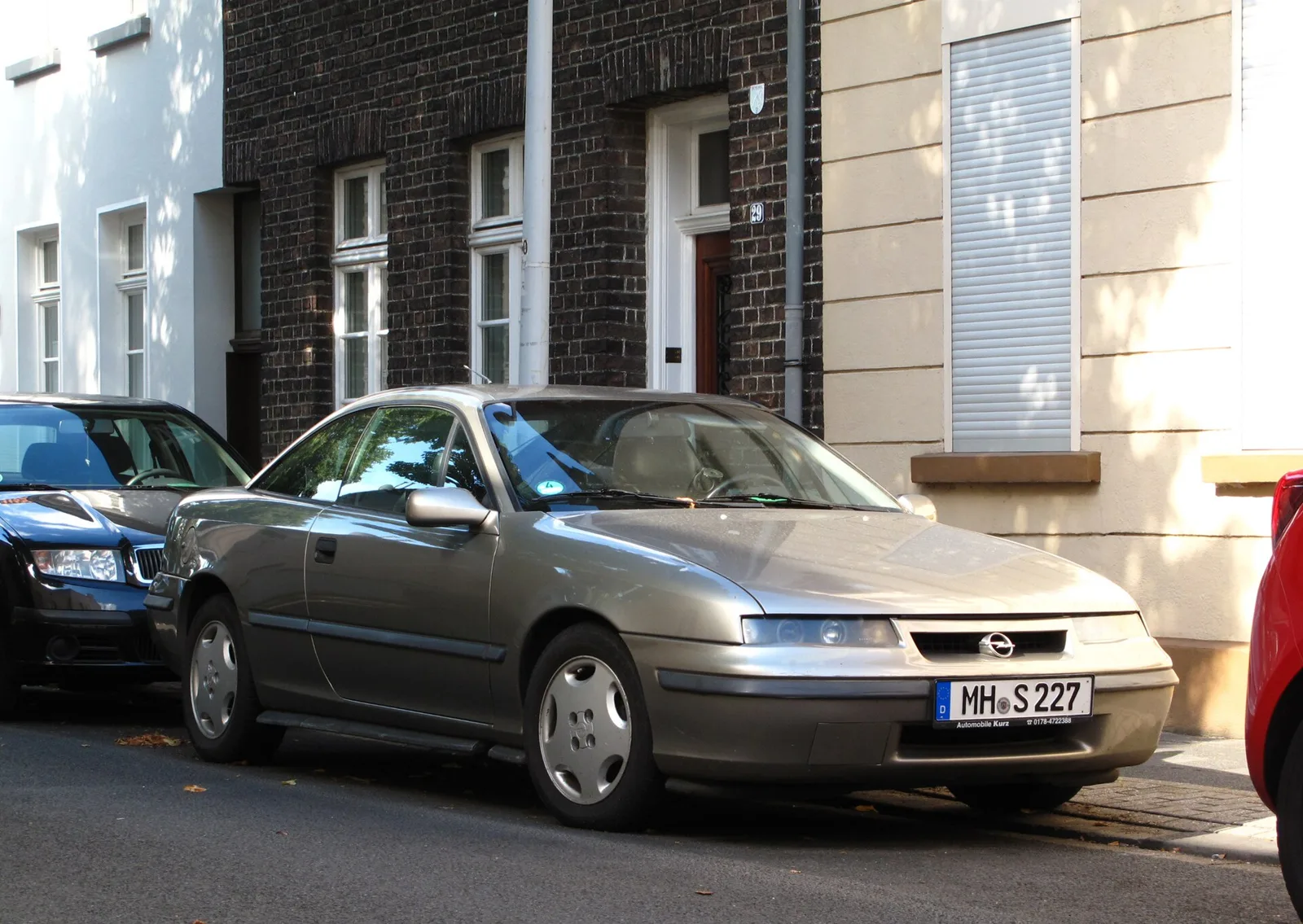
The second-generation GT ran from 2007 to 2009 and was a badge-engineered Saturn Sky, itself based on the Pontiac Solstice, built in Wilmington, Delaware. Its only engine was a 2.0 L direct-injection turbocharged Ecotec four making 194 kW (264 PS; 260 hp), and it had 18-inch alloy wheels. It replaced the Opel Speedster in Europe but was not sold as a Vauxhall, because the Wilmington plant lacked right-hand-drive tooling. Differences from the Sky were slight: a cigarette lighter, door ashtrays, and different tail lights and mirrors to meet 2009 EU rules.
After the 2008 General Motors bailout and restructuring, Saturn and Pontiac disappeared and the GT with them. Two 2010 model year cars were built, in 2009.
A concept followed. The 2016 Opel GT Concept debuted on 27 January 2016 and appeared at the Geneva Motor Show on 1 March. It was a lightweight rear-drive two-seater on an all-new compact platform with a stripped interior, a 1.0-litre three-cylinder turbo of 145 hp and a six-speed semi-automatic gearbox. Twin tailpipes with a GT wordmark recalled the 1965 prototype. A production car was talked about for 2018, the 50th anniversary of the original GT, but it was cancelled because of a shrinking sports car market and the brand's purchase by Groupe PSA.
What is the Opel Grandland?
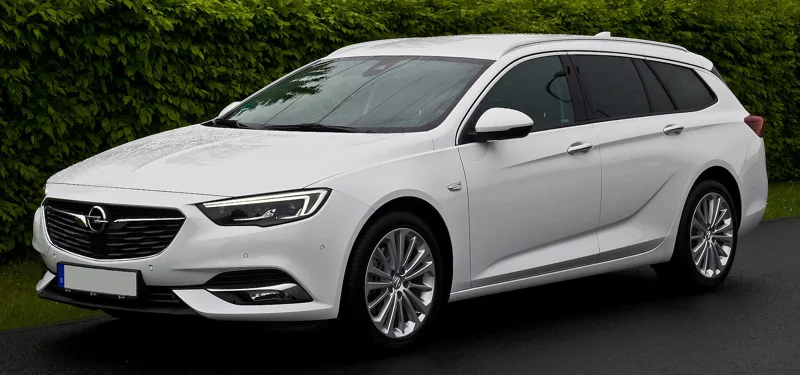
The Opel Grandland, sold as the Vauxhall Grandland in Britain, is a compact crossover SUV. It began as the Grandland X, replaced the Opel Antara, and took over from the Zafira in 2019. A second generation arrived in April 2024 on the Stellantis STLA Medium platform.
Plans were known as early as May 2012, and Opel revealed the Grandland X on 18 April 2017 as its flagship crossover, premiering it at the Frankfurt Motor Show. Orders opened in June 2017, and there were more than 100,000 by September 2018. The car rode on the PSA EMP2 platform shared with the Peugeot 3008 II and 5008 II, the DS 7 Crossback and the Citroen C5 Aircross, though General Motors registered its design rights because it was developed under GM ownership.
In June 2021 a facelift renamed it Grandland, dropping the X. It adopted Opel's Vizor front end from the Mokka, matrix LED lighting, a dual touchscreen layout, a new gear selector for the automatic and extra safety features.
What is new on the second-generation Grandland?
The second generation was revealed on 22 April 2024 as the third car on STLA Medium, with petrol versions and an all-electric one. Its front carries a lit 3D Visor, with Intelli-Lux Pixel HD lighting, a two-tone paint option and, a first for an Opel or Vauxhall, illuminated brand lettering across full-width taillights. Fabrics and upholstery are 100% recyclable.
Inside is a 16-inch touchscreen, a small digital instrument cluster, an Intelli-HUD head-up display, Intelli-Seat front seats certified by a German back-health group, and a Pure Mode that strips the three displays down to avoid distraction. Storage space tops 35 L (1.2 cu ft), with a Pixel Box lit through translucent glass hiding a wireless phone charger.
On 13 June 2025 Opel announced an all-wheel-drive electric Grandland with 239 kW (325 PS; 321 hp) and 509 N m (375 lb ft), the most powerful model in its range at that date. The second-generation car shares Euro NCAP results with the Peugeot 3008 and 5008.
What is the Opel Combo?
The Opel Combo is a panel van and leisure activity vehicle that first appeared in 1993. The name had earlier been a suffix on a three-door panel van version of the Opel Kadett E, built from 1986 until 1993. Opel and Vauxhall joined Groupe PSA in March 2017, so the fourth-generation Combo, launched in March 2018, shares its platform and body with the Peugeot Rifter and Partner and the Citroen Berlingo.
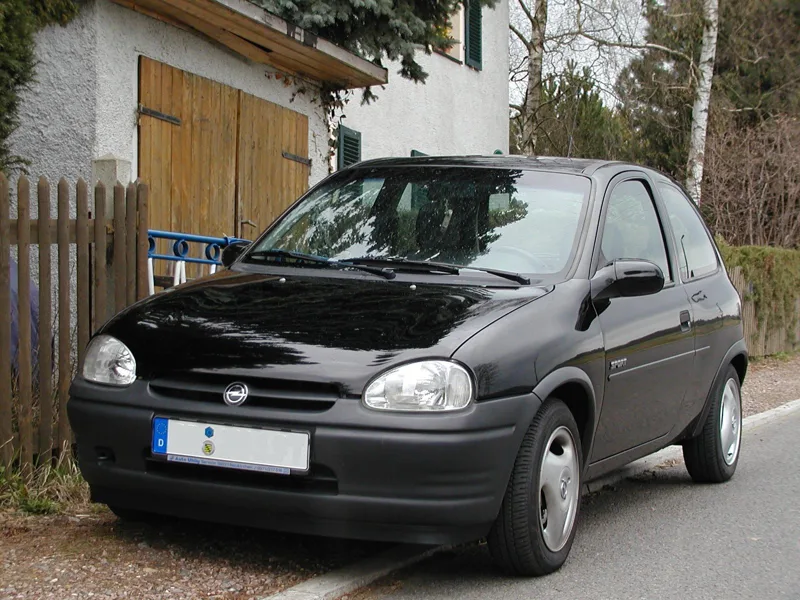
The Combo B and C were built on the same platforms as contemporary Opel Corsas, as was typical for such vans. Opel calls the generations B and C, while Holden in Australia used the codes SB and XC to match the Holden Barina equivalents.
| Generation | Years | Based on | Built |
|---|---|---|---|
| Kadett Combo (A) | 1986-1993 | Opel Kadett E | Ellesmere Port, then Azambuja, Portugal |
| Combo B | 1993-2001 | Opel Corsa B | Azambuja, Portugal |
| Combo C | 2001-2011 | Opel Corsa, Gamma platform | Azambuja, then Zaragoza, Spain |
| Combo D | 2012-2018 | Fiat Doblo | Tofas, Turkey |
| Combo E | 2018 onwards | Shared with Peugeot Rifter and Citroen Berlingo | Mangualde, Portugal and Vigo, Spain |
How did the Combo change from generation to generation?
The Kadett Combo, introduced in January 1986, was built by Vauxhall at Ellesmere Port until a facelift in January 1989, when production moved to Azambuja, Portugal. German buyers could choose a 1.3 litre petrol or a diesel of 1.6, later 1.7 litres, and some countries had a 90 PS (66 kW; 89 hp) 1.6 petrol. In Britain it was a Bedford or Vauxhall Astravan, and the high-roof van was the Bedford Astramax, relabelled as a Vauxhall on 1 June 1990, because Bedford was better known for heavier trucks. Payloads were 365 or 560 kg.
The Combo B, launched in October 1993, was based heavily on the Corsa B introduced six months earlier. Everything up to the B-pillar was practically a Corsa, but the platform was stretched to allow a tall, boxy cargo area able to carry a Euro-pallet. It had twin rear doors hinged at the sides rather than a tailgate. In summer 1995 Opel added a five-seat Combo Tour with side windows and a three-person folding bench. Holden launched the SB Combo in Australia in February 1996, and in China SAIC built a version from 2002 to 2005.
The Combo C was unveiled at the Frankfurt Motor Show in September 2001 and went on sale in January 2002. While rivals cut their ties with small cars, Opel again based its van on the Corsa, now only back to the A-pillar. That gave it a flush look, and it gained sliding rear side doors. The Combo Tour Tramp, or Arizona in some markets, added tuned suspension, more ground clearance and chassis protection for an outdoor image. Production moved from Azambuja, which closed in December 2006, to Zaragoza in Spain in 2007. Holden launched the XC in September 2002, and in August 2013 CarAdvice reported that the Holden Combo had been quietly discontinued.
Next came the Combo D, built on the Fiat Doblo by Tofas in Turkey, with sales starting in January 2012. Production ran from January 2012 to December 2018. The fourth generation, the Combo E, was unveiled at the 2018 Geneva Motor Show and is built at Stellantis plants in Mangualde, Portugal and Vigo, Spain.