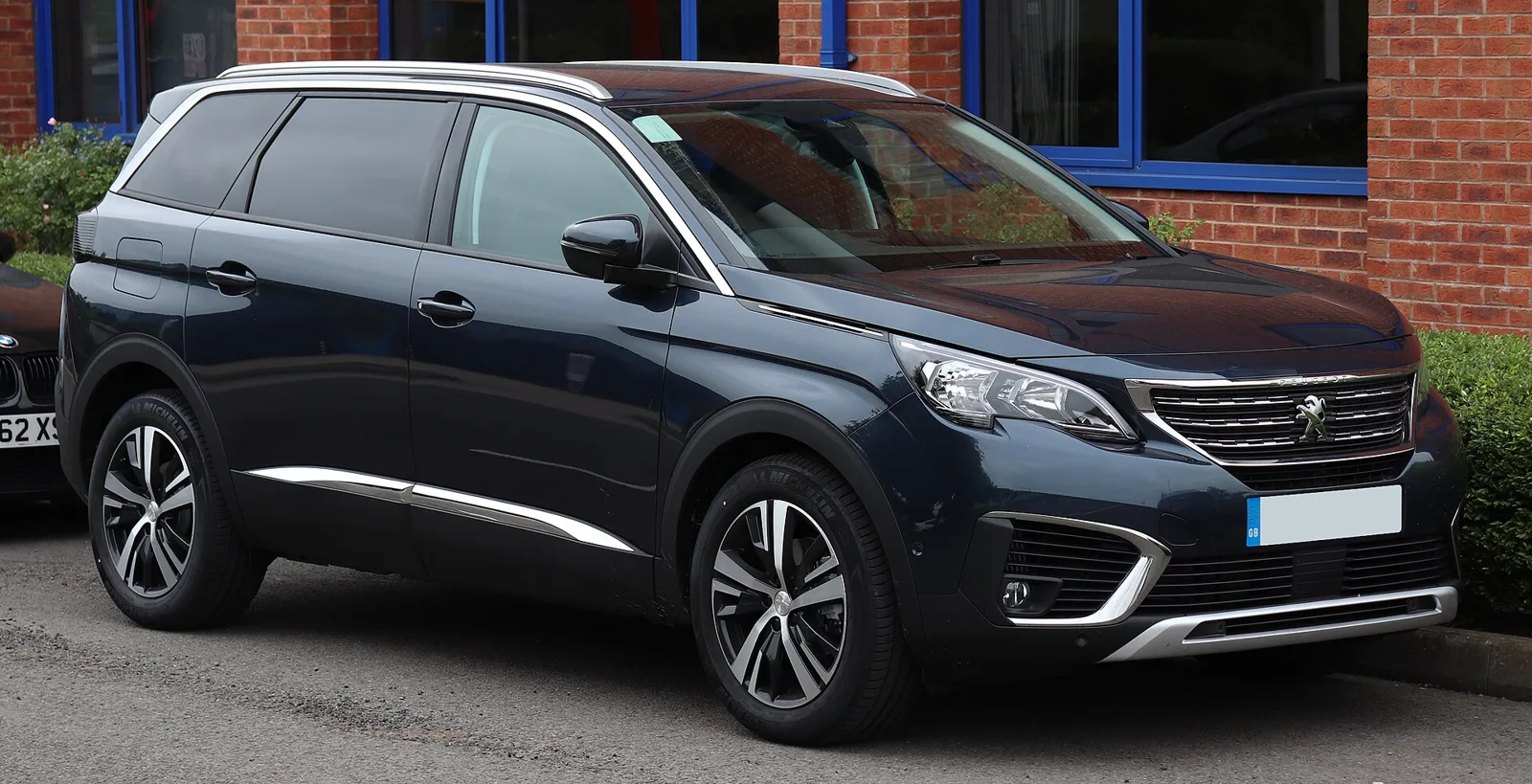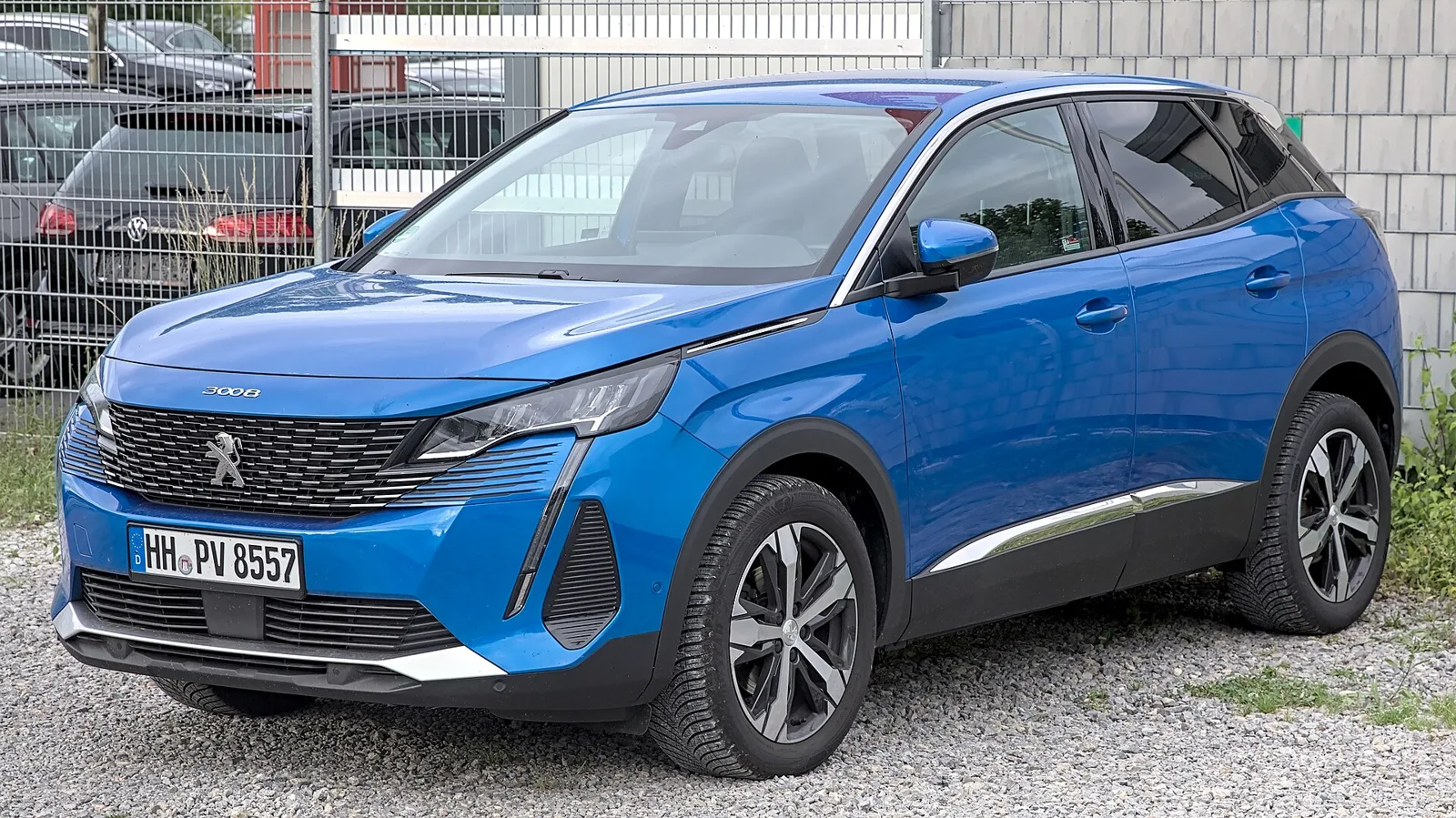
A second-generation Peugeot compact SUV with hybrid versions, a five-star Euro NCAP rating and a rally sibling that won the 2017 Dakar.
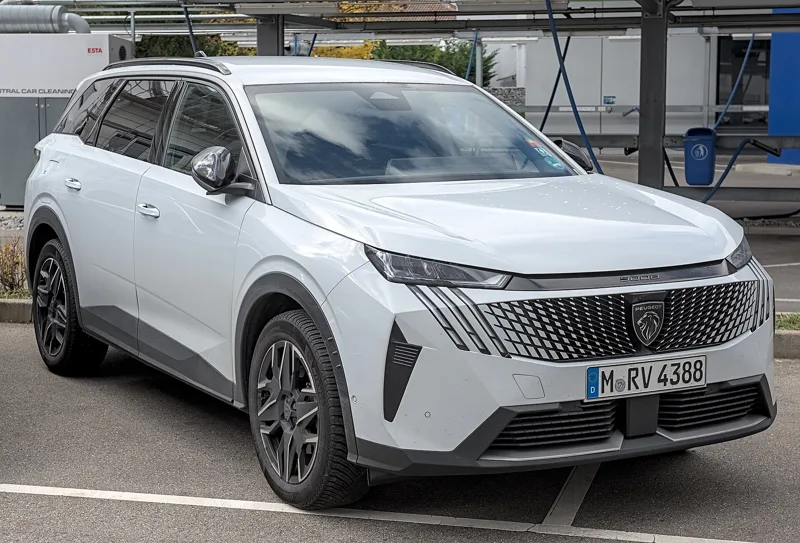
Launched in October 2016, the second-generation 3008 came in petrol, diesel and hybrid versions and was built in two phases. It won the 2017 European Car of the Year title, and its successor, the 3008 III, arrived in February 2024.
The Peugeot 3008 II is a compact SUV that went on sale on 14 October 2016 to replace a first generation that was still France's best-selling compact SUV in 2015. It was built in phases I and II. The Peugeot 3008 III succeeded it on 24 February 2024, and its build run ended in early June 2024.
The car's story runs from a heavy investment in its dashboard and a partnership with General Motors to a rally car that won the 2017 Dakar Rally. Along the way it also collected the European Car of the Year title, three years after the second-generation 308 had taken the same prize.
Where did the Peugeot 3008 II come from?
The 3008 II was built to sell more than its predecessor, in a compact SUV market that was very dynamic. Peugeot first presented it to the press on 23 May 2016 at Le Bourget, and its first public appearance came at the 2016 Paris Motor Show.
Peugeot put large sums into the car, notably into its dashboard, and the car was to be sold in all of the brand's markets.
The car also came out of a partnership with General Motors. The Opel Grandland X, unveiled in 2017, is a compact SUV very close to the 3008 II and is built at the same Sochaux plant. It does not share the Peugeot dashboard or bodywork, but the two SUVs share their technical base.
The 3008 platform also underpins the DS 7 Crossback and the Citroen C5 Aircross, showing how far the car's technical base reached.
A jury of 58 European journalists elected the 3008 II European Car of the Year in March 2017.
What did the second generation change in design?
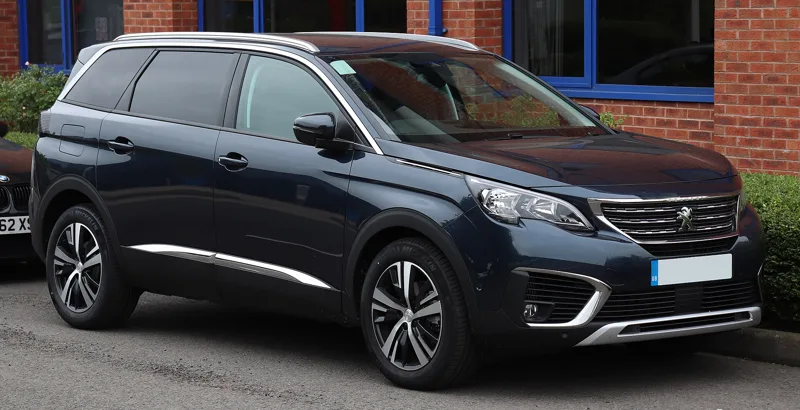
The second 3008 turned from a crossover, part SUV and part compact people carrier, into a full SUV that adopts all of the category's styling cues. Its overall look was inspired by the Quartz concept, which also provided the low grille with the logo in the middle.
The 3008 and 4008 carry a long, horizontal bonnet, a vertical front, large wheels, raised ground clearance and body protection. The front end is sculpted, with a sharp gaze, wide air intakes and a ribbed bonnet, and the grille is wide, low and vertical with the lion at its centre.
The lion sits among facets, which run vertically on versions with halogen headlamps and horizontally on those with full LED headlamps. The body creases are pulled taut to accentuate that dynamism, and the rear introduces the lacquered black band that runs across the whole Peugeot range.
That black band links the LED lights at the back. Peugeot showed the restyled version on 1 September 2020, and the model adopted a new logo at that point.
How roomy and practical is the cabin?
The cabin uses a new version of Peugeot's i-Cockpit, with a 12.3-inch digital instrument screen in place of conventional dials, and an 8-inch touchscreen in the centre of the dashboard. Rear legroom improved on the previous car, and the boot grows to 1,670 litres with the rear bench folded.
The interior was designed by Bertrand Rapatel, Peugeot's director of interior design, and his team. The i-Cockpit is shared with the larger 5008.
Rear passengers benefit from a wheelbase lengthened by 6 cm, which gives 2.4 cm more space for the knees. An electric panoramic sunroof was offered as an option, and it was essential for the Chinese market.
Practical features include a front passenger seat that folds to carry objects 2.60 m long. The two-part tailgate of the first car gave way to a sliding floor, with a drawer that can take up to 100 kg to keep the main advantage of the old layout.
Buyers could also order a Focal Hi-Fi system and massaging electric seats, both as options.
What changed in the phase 2 facelift?
Phase 2 arrived with a new front end, in which the grille extends under the optics and LED bars run through the bumper. A 3008 monogram sits on the bonnet, and the restyled car was presented on 1 September 2020.
Driving modes (Eco, Normal and Sport) came with the facelift, and some equipment moved to standard fitting, including hands-free starting and emergency braking. The only change to the engine line-up was the removal of the 180 PS BlueHDi diesel from the catalogue.
Component shortages caught Peugeot out in 2022, when it ran short of rear lights for its 3008s. From August the brand returned to phase 1 rear lights on the Allure, Active and Active Pack trims.
The phase 2 trim list also changed. The entry-level Access trim was removed, Pack versions of Active, Allure and GT were added, and the GT Line became GT while the GT became GT Pack.
Which engines did the 3008 II offer?
The second generation used the new PSA BlueHDi and PureTech engines, together with a 1.6 THP unit. The GT trim was available only with the 2.0 BlueHDi 180 EAT6, and diesel engines accounted for a little under 64% of European orders by the end of March 2017.
In Belgium, for tax reasons, the 1.6 BlueHDi 120 PS was detuned to 115 PS (85 kW; 113 hp), and a 2.0 BlueHDi 136 PS (100 kW; 134 hp) completed the range there.
By the end of March 2017 the 1.6 BlueHDi 120 PS had taken almost 45% of European orders, followed by the 1.2 PureTech 130 PS on 29%. The 1.2 PureTech 130 PS therefore came second, well behind the 1.6 BlueHDi 120 PS.
Specifications at a glance
| Version | Power | Battery | Detail |
|---|---|---|---|
| 1.6 BlueHDi 120 | 120 PS (88 kW; 118 hp) | - | Most ordered engine by March 2017 |
| 1.2 PureTech 130 | 130 PS (96 kW; 128 hp) | - | 29% of European orders by March 2017 |
| 2.0 BlueHDi 180 EAT6 | 180 PS (132 kW; 178 hp) | - | Only engine offered in the GT |
| Hybrid | 225 PS (165 kW; 222 hp) combined | 11.8 kWh | Front-wheel drive, electric range about 40 km |
| Hybrid4 | 300 PS (221 kW; 296 hp) combined | 13.2 kWh | Two electric motors, four-wheel drive |
| Hybrid 48V MHEV | 28 PS (21 kW; 28 hp) electric motor | - | Non-plug-in, sold from the second half of 2023 |
How did the plug-in hybrids work?
The Hybrid and Hybrid4 paired a 1.6 PureTech petrol engine with electric motors and a lithium-ion battery. The Hybrid combined 225 PS (165 kW; 222 hp) and drove the front wheels, while the Hybrid4 reached 300 PS (221 kW; 296 hp) with motors on both axles and four-wheel drive.
Full recharging takes 8 hours from a standard socket, or under 2 hours with a wallbox. In electric mode the Hybrid manages about 40 km and the Hybrid4 around fifty kilometres, with a top speed of 135 km/h on electric power.
A non-plug-in hybrid followed. It was presented on 16 February 2023 and uses a 48V mild hybrid system with a 28 PS motor. According to Peugeot it would let the car run in electric mode for more than 50% of urban driving and save about 1 L/100 km against a petrol engine.
The launch of that version ended the 130 PS petrol engine with automatic gearbox, which had been part of the range until then.
Did the 3008 II earn five stars in Euro NCAP?
Yes. The 3008 achieved five stars in the Euro NCAP crash test. It scored 86% for adult protection, 85% for child protection, 67% for pedestrian protection and 58% for its safety assist systems, and the car carries a broad set of driver aids.
Peugeot fitted the 3008 and 4008 with a long list of driver aids, including emergency braking assistance under the name Active Safety Brake. Its adaptive cruise control with a stop function worked on the automatic gearbox only.
Advanced Grip Control, which optimises traction in difficult conditions, and Hill Assist Descent Control, which regulates speed on steep descents, were among the systems offered on the car.
The safety assist systems scored lowest of the four categories, at 58%, while pedestrian protection reached 67%. Adult occupant protection, at 86%, was the strongest of the four scores.
How well did the 3008 II sell?
Orders were strong from the start. Peugeot recorded 1,360 orders during the Paris Motor Show, and by 7 October 2016 it had more than 2,500, although the model was not yet on sale. In October alone it logged 24,000 orders, 15,000 of them in France.
By early March 2017 the total had passed 100,000 orders across Europe, and half of those buyers did not previously own a Peugeot. Delivery times lengthened as a result, and management had to consider raising the production rate.
The millionth 3008 left the Sochaux plant in November 2021. Production of the second generation ended in early June 2024 after 1,388,163 units, excluding the Chinese version, which continued to be built.
What awards did the 3008 II win?
The 3008 II won several car-of-the-year titles. Carbuyer named it Car of the Year on 30 November 2016, and L'Argus gave it the double title of car and SUV of the year on 7 December 2016. Its biggest prize came in March 2017, when a jury of 58 European journalists chose it as European Car of the Year.
At the 2016 Paris Motor Show, readers of Auto Plus and listeners of RTL chose it as the production car of the show. It came second in the most beautiful car of 2016, behind the Alfa Romeo Giulia, but took the prize for the best interior of the year.
The European trophy put it ahead of the Alfa Romeo Giulia and the Mercedes-Benz E-Class, and it succeeded the Opel Astra on the trophy's honours list. In the United Kingdom, Carbuyer gave the car 5/5, while Top Gear and What Car? each gave it 4/5.
Trim levels and special editions
At launch the 3008 was offered in five trim levels, starting at 25,900 euros for petrol and 27,400 euros for diesel. The Allure was the most popular, with almost 45% of European orders by March 2017, followed by GT Line on 30%, Active on 17% and GT on 9%. The Access trim drew less than 1% of customers.
Phase 2 brought six trim levels: Active, Active Pack, Allure, Allure Pack, GT and GT Pack. The plug-in hybrid later became available from the Active Pack trim, for the 225 PS version.
Special editions included the Crossway, offered as an alternative to the GT Line, whose delivery times reached 4 months in May 2017. The Roadtrip went on sale from January 2021.
Did the 3008 DKR win the Dakar?
Yes. The 3008 DKR replaced the 2008 DKR at the Rally of Morocco in October 2016. Team Peugeot Sport then won nine stages out of ten and the first three places at the 2017 Dakar Rally, a strong result for the car.
The rally car used a 3-litre twin-turbo V6 HDi engine producing 340 PS (250 kW; 335 hp). Stephane Peterhansel finished ahead of his teammates Sebastien Loeb and Cyril Despres, who took second and third.
The 2018 edition was won by the 3008 DKR Maxi, with the Spaniard Carlos Sainz at the wheel.