A grandson of Adam Opel who set racing and boat records, then put crewed rockets on the road and in the air in 1928 and 1929.
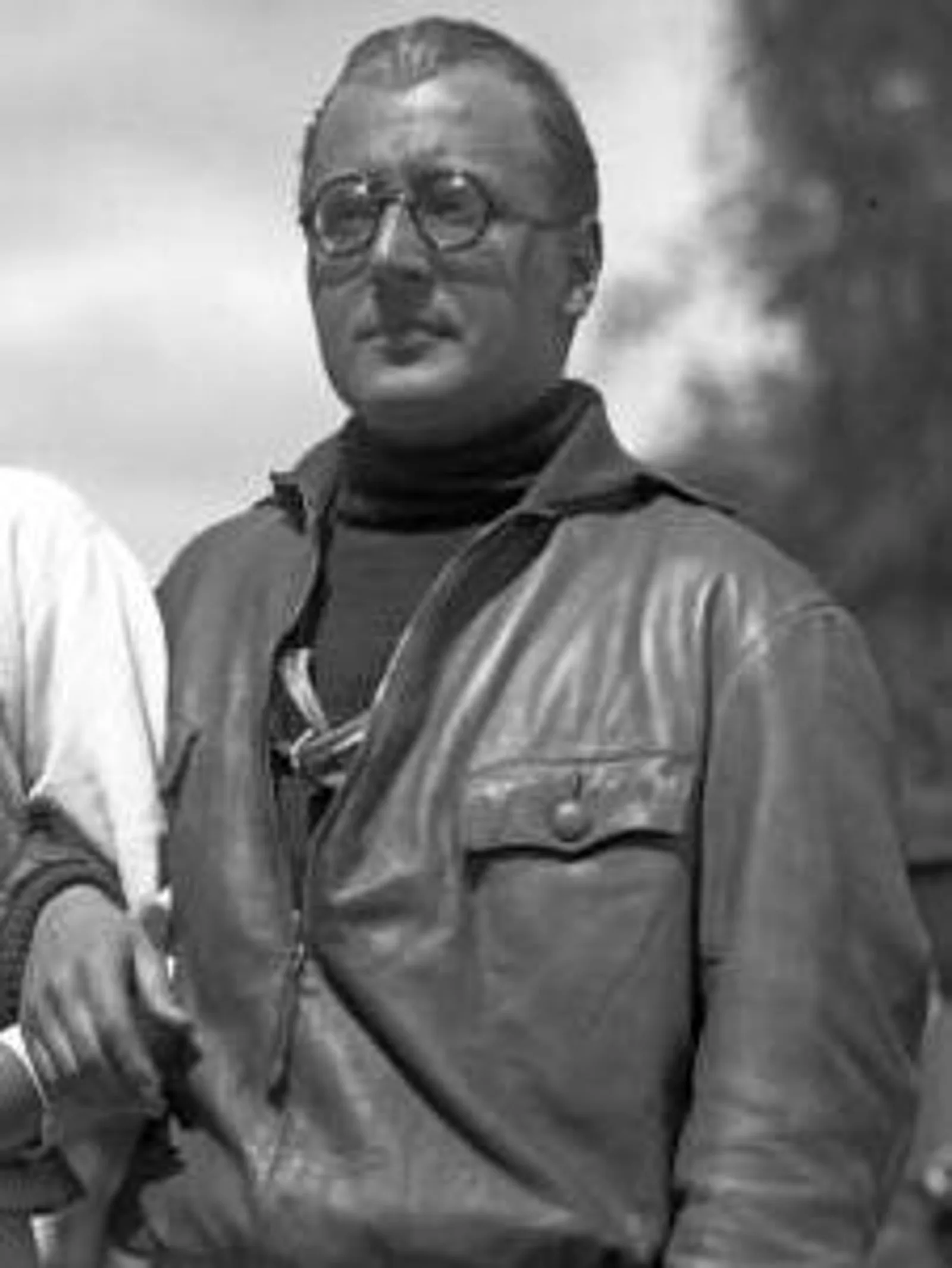
Fritz von Opel, a grandson of Opel's founder, was a motorsport winner who commissioned the 1928 and 1929 Opel RAK rocket cars and planes. His RAK.2 reached 238 km/h at AVUS, and the RAK.1 plane made a public flight at Frankfurt-am-Main in September 1929.
Adam Opel's grandson, Fritz Adam Hermann von Opel, is remembered mainly for the Opel RAK rocket cars and planes of 1928 and 1929. Those demonstrations earned him the nickname Rocket Fritz, and they also worked well as publicity for the family's automotive business.
Who was Fritz von Opel and how did he start?
Von Opel was born on 4 May 1899 in Ruesselsheim, the only son of Wilhelm von Opel. He studied at the Technische Universitaet Darmstadt and took a doctorate there, and after graduation he became director of testing for Opel and was put in charge of publicity.
His father was ennobled in 1917, and the family's name changed as a result. Until 1928 Fritz was a partner in Adam Opel, which was then a family limited partnership.
His business life was closely tied to his family's firm, where he was responsible for testing and publicity.
A grandson of Adam Opel who put crewed rockets on the road and in the air in 1928 and 1929.
What did the General Motors deal mean for the Opel family?
The family turned down a bigger combination of German carmakers that had been proposed in 1927 and 1928. In October 1928 a purchase option with General Motors was negotiated, and Adam Opel AG was registered on 3 December 1928 with a share capital of 60 million Reichsmarks.
In March 1929 GM took over 80% of the shares, and while the heirs collected 120 million Reichsmarks. The rest of the shares, 20%, passed to GM in October 1931, completing American ownership.
Von Opel had invested part of his fortune in the United States, where it was confiscated during the war.
How successful was von Opel in motorsport?
Von Opel was highly successful across several kinds of motorsport. That early success came well before the rocket work. On 24 September 1921 he took the opening race at Berlin's AVUS track in an Opel 8/25 hp racing car powered by a 2.3 litre four-cylinder unit, at an average of 128.84 km/h.
In the same weekend he set the lap record at 8 min 14 s. Two years on, he took the 24 June 1923 race staged by the DMV at AVUS, riding a 346 cc Opel motorbike and averaging 87 km/h.
He was also active in motorboat racing. In the July 1927 series on the Seine in Paris, his Opel II, fitted with two Maybach Mb IVa engines of 260 hp each, dominated the events, collecting the Coupe de France, the French Naval Minister's Prize, plus the Trophee de Paris.
That year he continued his winning run in Germany with the Blue Band of the Rhine and the ADAC regatta on Lake Starnberg, and he took the German title at the ADAC Motorboat Championship held on Templiner See.
What were the Opel RAK rocket projects?
Opel-RAK covered rocket-powered cars and planes that von Opel commissioned. He worked in association with Max Valier, a co-founder of the Verein fuer Raumschiffahrt, and with Friedrich Wilhelm Sander. Their combined effort was the basis of the rocket stunts that followed.
The publicity stunts were instrumental in starting the Raketenrummel, a rocket craze that gripped the public. Experiments with rockets in the 1920s produced speed records for automobiles and rail vehicles, and von Opel's cars were at the centre of that attention. Their work fitted the wider rocket enthusiasm of the period.
The Opel RAK.1 car, driven by Max Valier on 15 March 1928, was the first rocket-powered car. Von Opel also built and test-ran a rocket motorcycle called the Monster in 1928.
Another rocket railway car, the RAK.3, was also part of the programme.
How fast did the Opel RAK cars go?
In 1928 Opel tested the RAK.1 car and reached 75 km/h (47 mph) in it, which proved that rocket propulsion could work on the road. Later that year the RAK.2, driven by von Opel himself at AVUS on 23 May 1928, set a 238 km/h mark.
About 3000 spectators watched that AVUS run, along with the world media and celebrities including Fritz Lang and the boxer Max Schmeling.
The RAK.3 rail vehicle set a record of 256 km/h. Another mishap later claimed the RAK.3 after it had reached 254 km/h (157 mph).
The speeds were modest by later standards, but in 1928 they were a dramatic demonstration of what a rocket could do on land.
Was the RAK.1 plane the first rocket plane?
The Opel team first struck a deal with the Rhoen-Rositten Gesellschaft, a local glider society, which supplied a sailplane called the Lippisch Ente. Test pilot Fritz Stamer flew it on 11 June 1928 with rocket motors attached, but one rocket exploded on the second test flight and wrecked the plane.
A second plane, again named RAK.1, came from the drawing board of Julius Hatry. By 17 September 1929 the prototype and its launch catapult were in place. Hatry flew the plane about 500 meters, at 20 meters of altitude and 100 km/h.
The plane was propelled by three solid fuel rockets producing 350 kilopond of thrust, with four seconds of burn time. Von Opel arranged a public flight at Frankfurt-am-Main on 30 September 1929, and he proclaimed it the world's first rocket plane.
Winter and Boyne, two space historians, later named the RAK.1 the first dedicated rocket plane. Von Opel's claim had overlooked the earlier unpublicised trials of Stamer and Hatry.
Why do the Opel RAK experiments matter to space history?
The Opel RAK experiments influenced later pioneers, and their impact was both immediate and long lasting. Wernher von Braun, as a teenager, was so inspired by one of the public Opel RAK demonstrations that he built a toy rocket car of his own.
Max Valier, who continued the rocket work after the RAK collaboration ended, died while testing rockets. Many count him as the first fatality of the space age.
The Lippisch Ente experience led toward the Messerschmitt Me-163, which became an operational rocket fighter. The German military also funded rockets as a replacement for artillery, which led to applications including the V-2, the world's first ballistic missile.
The jet-assisted takeoff idea also grew out of the same program. The German Reich first tested it in August 1929, when solid rocket propellants helped a Junkers Ju-33 seaplane get airborne.
What happened to von Opel after the 1920s?
Von Opel left Germany before 1930, first for the United States and later for France and Switzerland. He was in attendance at the Secret Meeting held on 20 February 1933, where industrialists agreed to back Adolf Hitler, but he did not contribute personally to the donations.
In 1935 his sister Elinor left Germany under pressure, taking her sons with her, and her holdings in Germany were frozen and seized by the state.
On 25 April 1940 British authorities took him off the Italian liner Conte di Savoia at Gibraltar. He was detained there for 16 days before being allowed to proceed to the United States.
The FBI detained him in February 1942, describing him as a potentially dangerous alien before releasing him. He died at Samedan in Switzerland on 8 April 1971.
What did the 1937 film show about the RAK work?
The 1937 German film Weltraumschiff I was a short movie by Anton Kutter about a fictional launch of a space rocket. It used clips of various RAK vehicles, including the RAK.2 car driven by von Opel at AVUS on 23 May 1928.
What were the key Opel RAK milestones?
| Date | Vehicle | Event |
|---|---|---|
| 15 March 1928 | RAK.1 car | First rocket-powered car, driven by Max Valier |
| 23 May 1928 | RAK.2 car | Driven by von Opel at AVUS, reaching 238 km/h |
| 11 June 1928 | Lippisch Ente | Rocket glider flown by test pilot Fritz Stamer |
| 17 September 1929 | RAK.1 plane | Designed by Julius Hatry, piloted by Hatry |
| 30 September 1929 | RAK.1 plane | Public flight at Frankfurt-am-Main, piloted by Hatry |