The aircraft maker behind the Bf 109 and the Me 262 jet fighter, from its 1916 founding through wartime production, a bubble-car detour and a merger into Airbus.
Messerschmitt was a German aircraft maker founded in 1916 as Bayerische Flugzeugwerke, renamed Messerschmitt AG in 1938 after chief designer Willy Messerschmitt. Known for the Bf 109 and Me 262, it was taken over by DASA in 1989 and is now part of Airbus.
Messerschmitt was a German aircraft manufacturer, named after its chief designer Willy Messerschmitt from 11 July 1938. It is best remembered for its Second World War fighters, particularly the Bf 109 and the Me 262 jet. After the war the business changed hands and names several times before it was bought by DASA in 1989, which is now part of Airbus.
How did the company begin in 1916?
In February 1916 the engineering company MAN AG and several banks bought the unprofitable aircraft builder Otto-Flugzeugwerke. The new firm was called Bayerische Flugzeugwerke AG, abbreviated B.F.W., and it was recorded with an equity capital of RM 1,000,000 in March 1916. Its first chairman of the Board of Management was Peter Eberwein, who had worked at Albatros.
There was no time for development work while the war continued, so BFW built aircraft under licence from Albatros. Its shareholders were a Berlin bank, MAN and a Berlin investor, and the bank held the largest stake. Within a month of its formation it was supplying the war ministries of Prussia and Bavaria. The first machines had serious defects, which air crews complained about. Its predecessor, under Gustav Otto, had faced the same kind of complaints.
Organisational changes and closer supervision of the assembly line solved those problems by the end of 1916. BFW then turned out over 200 aircraft a month, with a workforce of 3,000, and it became one of the largest aircraft manufacturers in Bavaria.
A bubble car on the way back to the sky, then a merger that took the name into Airbus.
What happened to BFW after the First World War?
The end of the war hit BFW hard, because military demand for aircraft collapsed. The company had to find new products. Its joinery plant was the very latest available, and it turned that equipment and stocks of material to furniture and fitted kitchens. From 1921 it also built motorcycles of its own design, sold as Flink and Helios.
By then the wartime market had gone, and in the autumn of 1921 the Austrian financier Camillo Castiglioni first expressed interest in buying BFW. Most shareholders accepted his offer, but MAN initially kept its holding, and Castiglioni wanted every share. The BMW managing director, Franz Josef Popp, supported him, and he described BFW in a letter as a dead factory of dilapidated wooden sheds.
In the spring of 1922 Castiglioni and Popp persuaded MAN to give up its shares, leaving BFW wholly in Castiglioni's hands. That May he acquired BMW's engine business from Knorr-Bremse, which cleared the way for a merger between the aircraft company and the engine builders.
Who was Willy Messerschmitt?
Willy Messerschmitt was the chief designer who gave the company its name and its character. He joined Bayerische Flugzeugwerke, which had been reformed in 1926 in Augsburg from Udet Flugzeugbau GmbH, in 1927. He built a design team and produced a series of aircraft that defined the firm's reputation.
One of his first designs was the M20, which was a near-disaster for the designer and the company. Many prototypes crashed, and one of the crashes killed Hans Hackmack, a close friend of Erhard Milch, the head of Deutsche Luft Hansa. Milch cancelled the contracts, and he forced BFW into bankruptcy in 1931.
Messerschmitt's friendship with Hugo Junkers helped keep his career and the firm alive, and operations restarted in 1933. Milch still blocked a takeover until 1938, which is why early Messerschmitt designs carried the Bf designation.
Why did the Bf 109 matter?
What was the Bf 108 Taifun?
The Bf 108 Taifun was a sports and touring monoplane in the BFW line, and it was the first real proof of Messerschmitt's light weight construction. Its record-setting performance helped earn the company its invitation to the 1935 fighter contest.
The same construction methods then went into the Bf 109, which links the two designs directly. The Taifun showed that the approach worked before it was asked to carry a fighter.
Messerschmitt promoted a concept he called light weight construction, in which many separate load-bearing parts were merged into one reinforced firewall. This saved weight and improved performance, and it was first proven in the Bf 108 Taifun sports aircraft, which soon set records of its own.
On the strength of that performance, the company was invited to submit a design for the Luftwaffe's 1935 fighter contest. It won with the Bf 109, which used the same construction methods. The aircraft went on to form the backbone of the German fighter force, and it was still central to that force in the early war years.
The factory was in southern Germany, away from the cluster of aviation firms on the northern coast. Its location, together with its designs, made Messerschmitt a favourite of the Nazi party.
Why was the company renamed in 1938?
On 11 July 1938 the firm became Messerschmitt AG, and Willy Messerschmitt took the posts of chairman and managing director. As a result, newer designs accepted by the RLM after the takeover carried the Me prefix instead of Bf.
Existing types such as the Bf 109 and 110 kept their earlier designations in official documents, although subcontractors such as Erla Maschinenwerk of Leipzig sometimes used the newer ones. In practice, aircraft from the Bf 108 four-seat touring monoplane to the Bf 163 light observation aircraft kept the Bf prefix, and all later types used Me.
The Bf 163 had competed unsuccessfully for a government contract that went to the rival Fieseler Fi 156, a reminder that the company did not win every competition it entered.
What did Messerschmitt build during the war?
During the war Messerschmitt became a major design supplier. The Bf 109 and Bf 110 formed the vast majority of fighter strength in the first half of the war, and other designs such as the enormous Me 321 Gigant transport glider and its six-engined follow-on, the Me 323, were ordered as well.
In the second half of the war the company turned almost entirely to jet-powered designs. Its Me 262 Schwalbe, or Swallow, became the world's first operational jet fighter. Rocket power followed with the DFS-designed Me 163 Komet, which was the first such design to enter service.
Not every project succeeded. The Me 210, intended as the successor to the 110, proved to be an aerodynamic failure, and its troubles came close to ending the firm. Its problems were addressed in the Me 410 Hornisse, but only small numbers were built before attention moved to the 262.
Messerschmitt also worked on a heavy bomber, the Me 264, in competition with the Junkers Ju 390 and the Heinkel He 277. Three prototype airframes were built, and the first flew in December 1942, but the aircraft was too late to see combat.
What was the human cost of wartime production?
Aircraft parts were assembled in a tunnel system at Sankt Georgen an der Gusen in Austria, using forced labour from the Gusen camps and from nearby Mauthausen. An estimated 40,000 inmates died during that production, and company officials kept barracks at the camp.
The inmates came from Spain, Italy, Poland, Slovenia, France, Russia, Hungary and twenty other nationalities, and Hungarian Jews were among them. Company officials worked alongside that camp system, and the record of it forms part of the firm's history.
The company's executives, Willy Messerschmitt among them, also occupied the Villa Tugendhat in Brno, Czech Republic, which had been designed in the 1920s by Mies van der Rohe and Lilly Reich. During the war the villa housed the Messerschmitt aircraft factory office and the Gestapo.
What did the company do after the war?
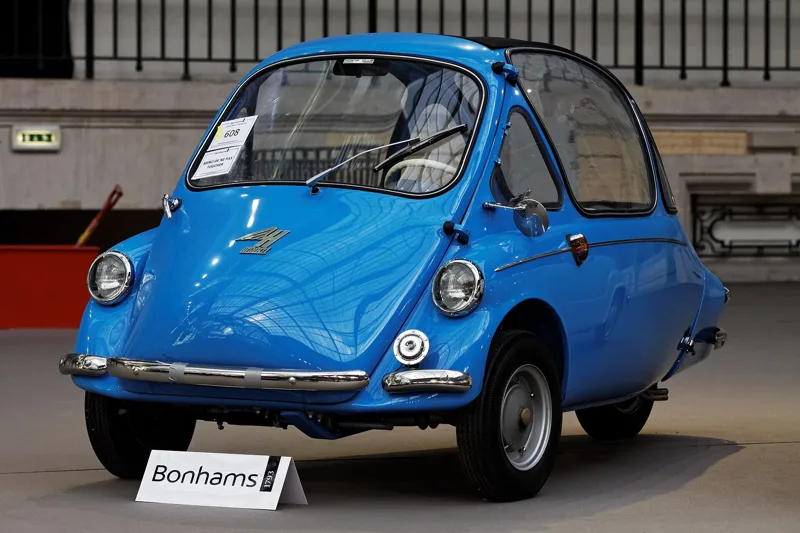
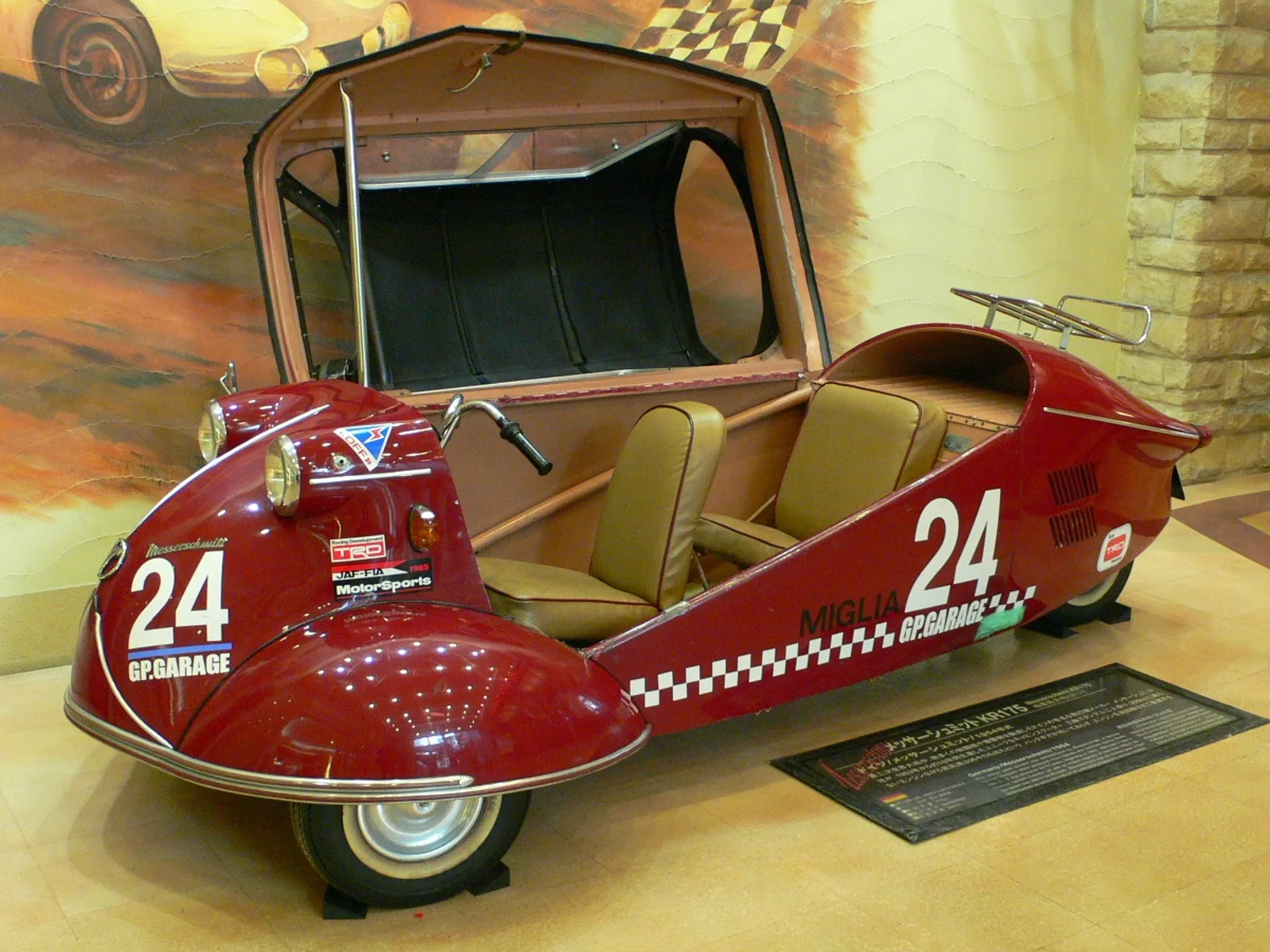
For ten years after the Second World War the company was not allowed to produce aircraft. One alternative it found was a three-wheeled motorcycle, a bubble car known as the Kabinenroller, which was designed by the aircraft engineer Fritz Fend. For an aircraft business barred from its main trade, it was a stopgap.
The KR175 and KR200 were made by Fend's own company in the Messerschmitt works at Regensburg. Willy Messerschmitt had little to do with the vehicles, although he agreed they could carry his name. Production of the KR200 ceased in 1964.
The factory also produced prefabricated houses, sold as self-building kits on an alloy framework. These were a small part of the business compared with aviation, and the bubble car is the most prominent post-war product in the history.
How did Messerschmitt become part of Airbus?
On 6 June 1968 Messerschmitt AG combined with Bolkow, a modest firm working in civil engineering and civil aviation, to create Messerschmitt-Bolkow. The following May it took over Hamburger Flugzeugbau (HFB), and the group was renamed Messerschmitt-Bolkow-Blohm, or MBB.
In 1989 MBB was taken over by DASA, which later operated as EADS Germany before the group became part of Airbus. The Messerschmitt name therefore ended in the group that became Airbus, and it is now a historical marque rather than a working brand.
Which Messerschmitt aircraft matter most?
| Aircraft | Role or significance |
|---|---|
| Bf 108 Taifun | Sports aircraft that tested light weight construction and set records |
| Bf 109 | Won the Luftwaffe's 1935 fighter contest; formed the backbone of the fighter force |
| Bf 110 | Formed much of the fighter strength in the first half of the war |
| Me 262 Schwalbe | The world's first operational jet fighter |
| Me 163 Komet | The first rocket-powered design to enter service |
| Me 210 | Aerodynamic failure that nearly led to the company's dissolution |
| Me 264 | Heavy bomber; three prototypes, first flight December 1942 |
| KR200 | Bubble car made by Fend at Regensburg; production ended in 1964 |
Who were the key people behind Messerschmitt?
Peter Eberwein led BFW as its first chairman, and Camillo Castiglioni later took full ownership. Willy Messerschmitt designed the aircraft that carried the name, while Erhard Milch and Hugo Junkers shaped his career through their opposing influence.
Fritz Fend designed the post-war bubble cars, and Hans Hackmack was killed in the crash of an M20 prototype. Franz Josef Popp of BMW helped drive the 1922 takeover and kept close ties with Castiglioni throughout.