A beach race in 1936 where only 10 of 27 cars finished, a hotel meeting in 1947 and a February 1948 founding: how bootleggers' pride turned into America's biggest stock car series.
NASCAR grew from Prohibition-era moonshine runners who modified cars to outrun police and later raced each other for pride. Bill France Sr. founded the sanctioning body on 21 February 1948 in Daytona Beach. Its top level is the Cup Series, and the Daytona 500, run since 1959, is its most prestigious race.
When a stock car race was run on Daytona Beach in 1936, 27 cars started and only 10 survived, with the lightest Fords filling the first six places while the heavier machines sank into the sand. Officials stopped the event 10 miles short of its scheduled 250 miles. A dozen years later, a promoter who had finished fifth that day founded NASCAR.
How NASCAR started: the moonshine runners
Stock car racing in America began with bootleggers. During Prohibition, drivers hauled illegal whiskey, made mainly in the Appalachian region, from the stills to the customers. Small, quick cars gave them the best chance of outrunning the police, so many drivers reworked their machines for speed, handling and extra cargo space.
Repeal in 1933 took away some of the trade, but the South had developed a thirst for moonshine, so plenty of drivers carried on "runnin' shine", only now their pursuers were revenue agents, the "revenuers", who wanted to tax what they made. The cars kept improving. By the late 1940s these drivers were racing each other for pride and for money, and the contests became popular entertainment across the rural South. They are most closely linked with Wilkes County in North Carolina. Most of the races used modified cars: ordinary street vehicles that had been lightened and reinforced.
Stock car racing has its origins in bootlegging during Prohibition, when drivers ran whiskey made primarily in the Appalachian region.
Why Daytona Beach? Bill France Sr. and the 1936 race
Daytona was already famous for speed. In the 1920s and 1930s it replaced France and Belgium as the favoured place to set land speed records, and 15 were set on the beach between 1905 and 1935. The 1936 race ran on a 4.1-mile (6.6 km) course that used a stretch of sand, 1.5 to 2.0 miles (2.4 to 3.2 km) long, as one straight and the blacktop of State Road A1A as the other. Two tight turns joined them, deeply rutted and covered in sand.
In 1935 a mechanic named Bill France Sr. left Washington, D.C. for Daytona Beach, fleeing the Great Depression. He entered the 1936 event, finished fifth, took over running the course in 1938, and promoted several races before the Second World War. He was sure crowds would enjoy seeing stock cars compete. Drivers, meanwhile, were often cheated by unscrupulous promoters who left with the gate money before anyone was paid.
Milt Marion was declared the winner of that 8 March 1936 event. Entrants arrived in a mixed bag of coupes, hardtops, convertibles and sports cars, all there to discover the quickest machine and the best driver, and the lightweight Fords proved best at working through the ruts.
How NASCAR was founded in 1948
By early 1947 France could see the case for a unified series. He announced the National Championship Stock Car Circuit and approached the American Automobile Association for financial backing. The AAA declined, so France set out his own rules and awards. The champion would take home $1,000 and a trophy. The season began at Daytona Beach in January 1947 and finished at Jacksonville that December, with nearly 40 events and crowds that often overflowed the venues. Fonty Flock was champion after winning 7 of the 24 events he entered, and France handed over the 4-foot-high trophy together with the prize money. The competitors were paid as promised.
Talks with influential racers and promoters began on 14 December 1947 at the Ebony Bar of the Streamline Hotel in Daytona Beach. France called 35 men to order at 1:00 pm on the top floor, the first of four seminars outlining his idea of an organised group of drivers. The name first chosen, National Stock Car Racing Association, turned out to belong to a rival sanctioning body, so the mechanic Red Vogt suggested National Association for Stock Car Auto Racing. NASCAR came into being on 21 February 1948.
The original blueprint had three divisions, called modified, roadster and strictly stock. Roadsters were dropped almost at once, the modified class lives on as the NASCAR Whelen Modified Tour, and strictly stock had to wait because American manufacturers could not build family sedans fast enough to satisfy post-war demand. The 1948 schedule therefore consisted of 52 modified dirt-track races.
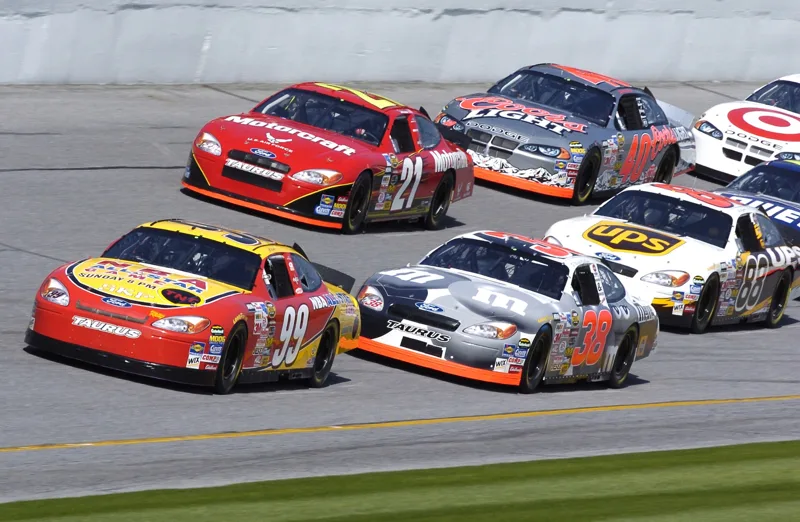
NASCAR's first event took place at Daytona Beach on 15 February 1948, when Red Byron defeated Marshall Teague in the modified-class race, and Byron went on to win the 1948 national championship. The strictly stock division made its debut as a 20-mile (32 km) exhibition near Miami in February 1949. The first Strictly Stock race proper was at Charlotte Speedway on 19 June 1949, and Jim Roper was the winner because Glenn Dunaway was disqualified after officials found his rear springs had been altered. The cars raced with almost no modifications to the factory models at first. The series was renamed Grand National in 1950, and by the mid-1960s the cars were purpose-built racers wearing a stock-looking body.
The early cast was colourful. The first Commissioner of NASCAR, Erwin "Cannonball" Baker, had raced stock cars, motorcycles and open-wheel cars, competed in the Indianapolis 500 and set more than one hundred land speed records. The famous Cannonball Run was named in his honour. Wendell Scott became the first African-American to win a Grand National race, and was posthumously admitted to the sport's Hall of Fame, in Charlotte, North Carolina, on 30 January 2015. The first NASCAR race outside the United States took place at Stamford Park, Ontario, on 1 July 1952, where Buddy Shuman won 200 laps on a half-mile (800 m) dirt track.
How is NASCAR structured today?
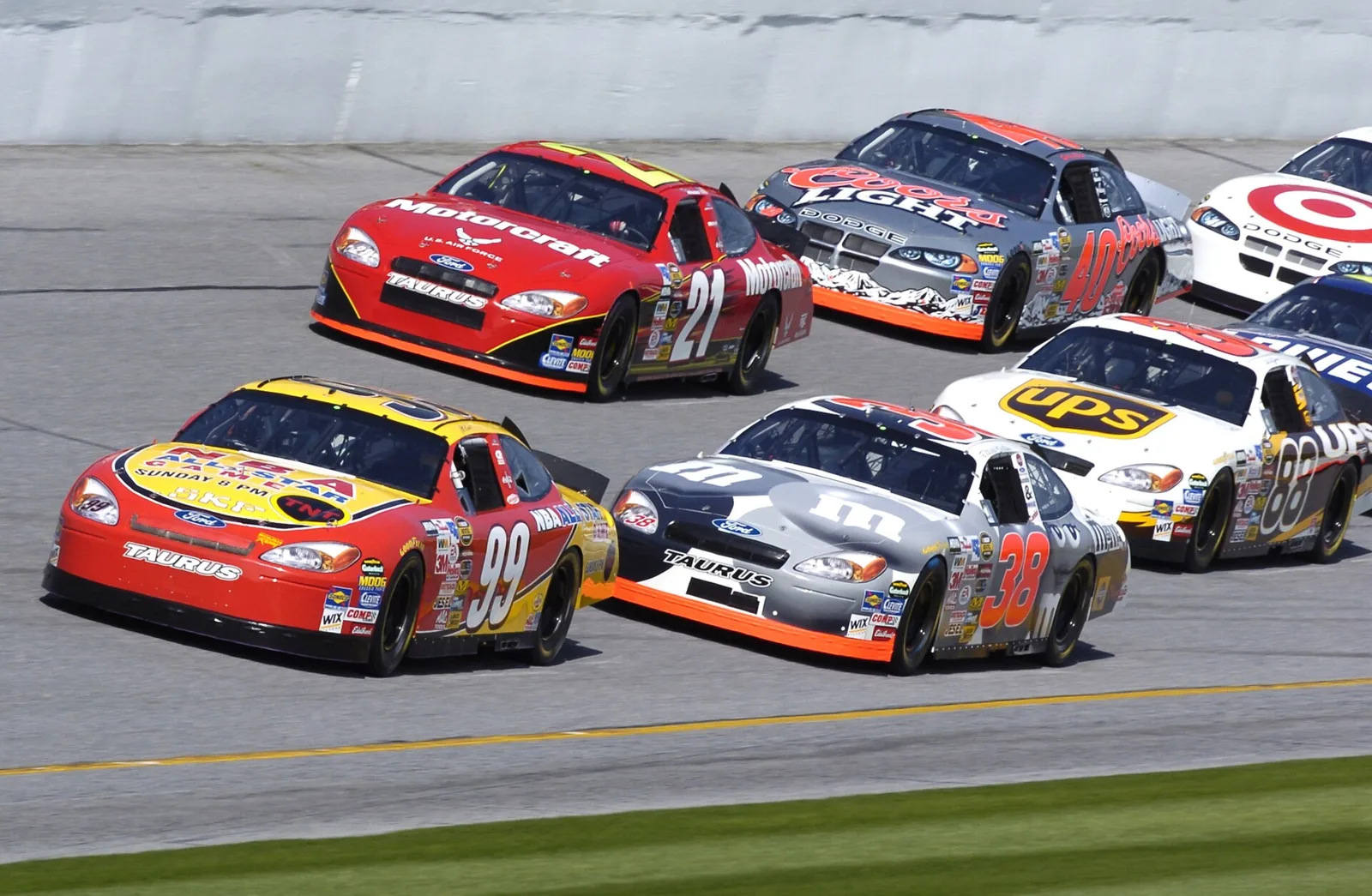
NASCAR is a privately owned company headquartered in Daytona Beach. More than 1,500 races a year, at upwards of 100 tracks, fall under its sanction: in 48 US states, plus Canada, Mexico, Brazil and Europe. The early divisions evolved into a ladder. Cup is the top rung, the O'Reilly Auto Parts Series sits second, Trucks come third, and smaller championships fill the levels beneath. Three manufacturers, Chevrolet, Ford and Toyota, enter every national series, with RAM as an extra name among the trucks.
The vast majority of drivers are American, although Canada, Mexico, Europe and Australasia have supplied competitors. A Cup season consists of 36 points-paying races plus the pre-season Clash and the mid-season All-Star race, and Cup races take place only in the United States and Mexico. Most are on ovals, from superspeedways to short tracks, but road courses and street circuits are also used.
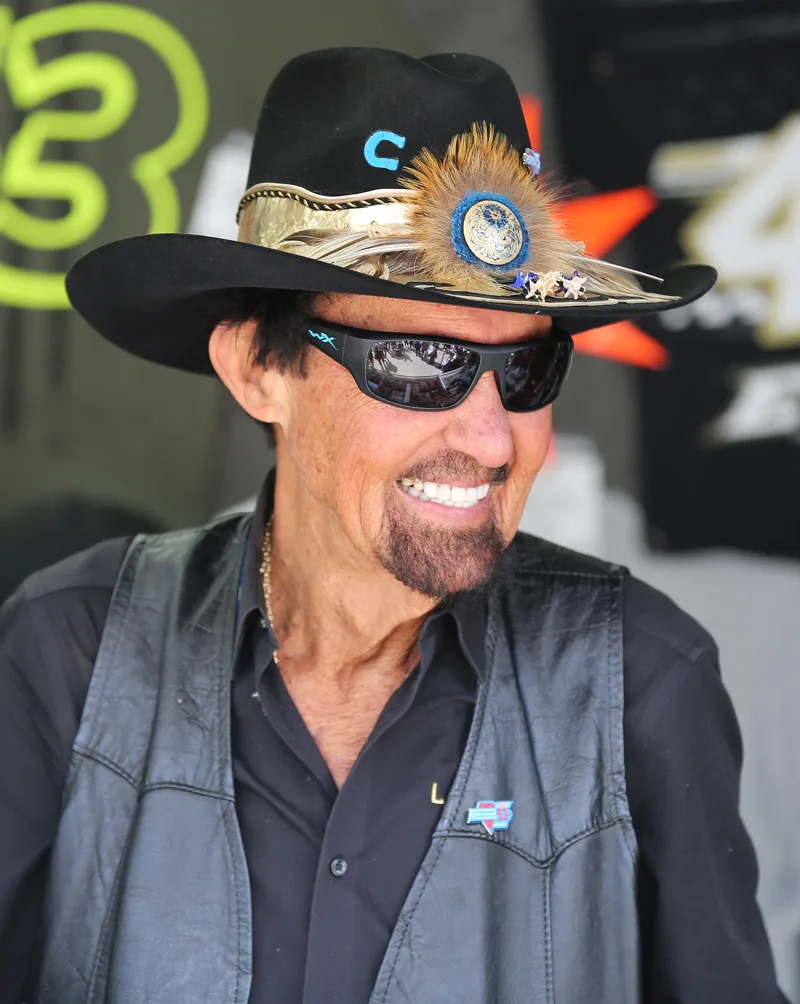
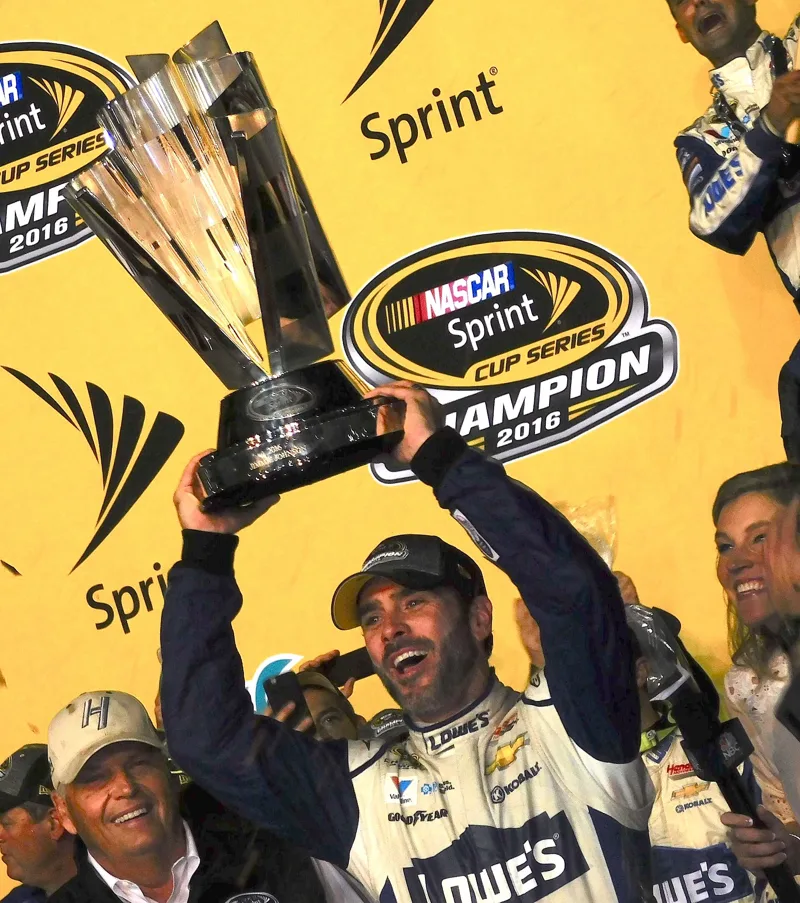
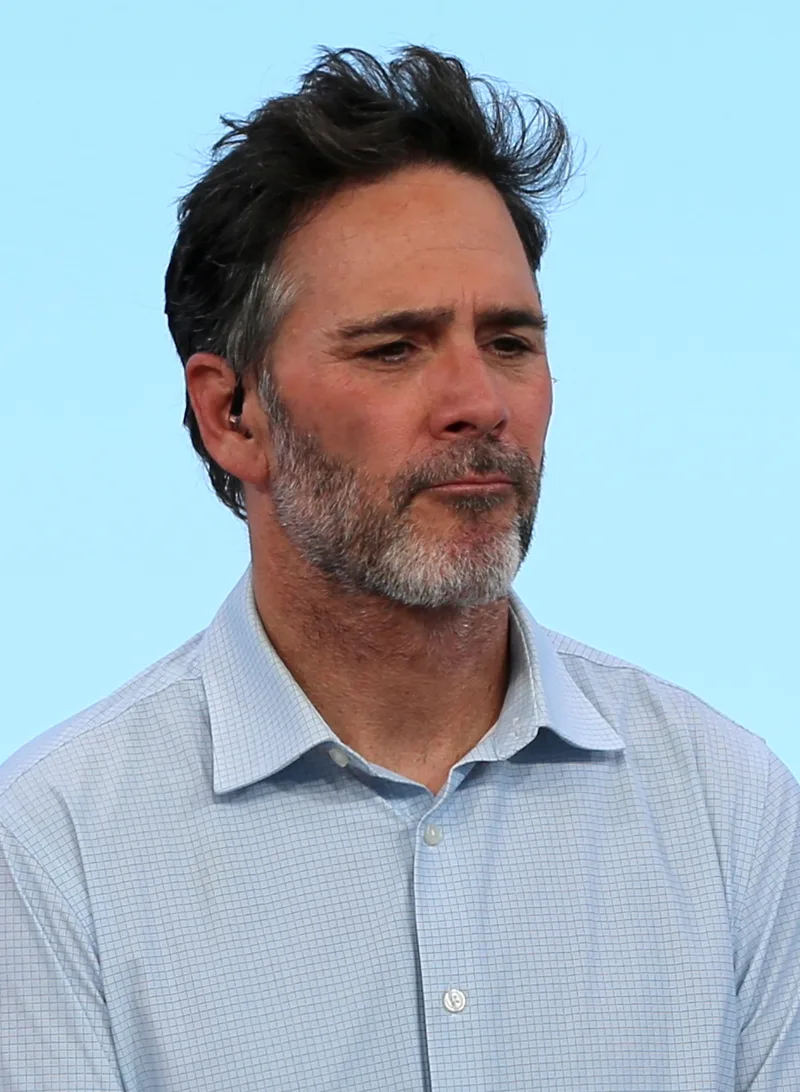
Richard Petty holds the Cup wins record with 200. He shares the record of seven championships with Dale Earnhardt and Jimmie Johnson, and Johnson alone has five in a row, between 2006 and 2010. Before that the longest streak was Cale Yarborough's three in a row in the late 1970s. Kyle Larson goes into the 2026 season as reigning Cup champion.
| Period | Name of the top series |
|---|---|
| 1949 | Strictly Stock Series |
| 1950 | Grand National Series |
| 1971 to 1972 | Winston Cup Series, after R. J. Reynolds became title sponsor |
| 2004 | Nextel Cup Series |
| 2008 | Sprint Cup Series, after the Nextel and Sprint merger |
| Today | NASCAR Cup Series |
The Winston name arrived when R. J. Reynolds, banned from television advertising, found NASCAR fans a suitable audience. In 1972 the season was shortened from 48 races, two of them on dirt, to 31. That year is often counted as the start of NASCAR's modern era.
The championship format has changed more than once. In 2004 the Chase for the Nextel Cup reset the standings with ten races to go, and to be eligible for the title a driver had to be in the top ten or no more than 400 points behind the leader. In 2007 the Chase grew from ten to twelve drivers. In 2011 the winner of a race received 43 points, with one point less for each place down the order, plus 3 bonus points.
Why does the Daytona 500 matter?
The Daytona 500 is a 500-mile (805 km) Cup race run every year at Daytona International Speedway, a 2.5-mile (4 km) track where the distance takes 200 laps. It ranks as the sport's most prestigious race, with by far the biggest purse, yet it pays the same championship points as every other Cup race. Its position is also unusual: it has opened the season since 1982, whereas most sports save their biggest event for the end. It is nicknamed "The Great American Race" and the "Super Bowl of Stock Car Racing".
The race is the direct successor to shorter events on the Daytona Beach Road Course. The first 500-mile stock car race at the new speedway was held in 1959, when Lee Petty won on 22 February after beating Johnny Beauchamp. By 1961 it was being called the Daytona 500. Since 1997 the winner has received the Harley J. Earl Trophy, and the winning car is shown for a year at a museum next to the speedway.
From 1995 to 2020 the Daytona 500 drew the highest US television ratings of any auto race of the year, ahead of the Indianapolis 500, although the Indianapolis 500 passed it in 2021 and draws more people through the gate and from abroad. The 2006 race had the sixth largest average live global television audience of any sporting event that year, at 20 million viewers. Capacity is 102,000.
The race has rarely gone to plan. The distance was cut by rain in 1965, 1966, 2003 and 2009, and in 1974 it was shortened to 180 laps (450 miles) in response to the energy crisis. In the other direction, extra laps added by the green-white-checkered finish rule mean it has run past 500 miles repeatedly, and the longest running, in 2023, took 212 laps (530 miles). Tyler Reddick holds the title as defending winner.
Daytona 500 history: the races that defined it
In 1960 Junior Johnson used the draft, then barely understood, to win in a year-old car that was slower than its rivals, in a 68-car field that remains the largest. Richard Petty became the first two-time winner in 1966, the first three-time winner in 1971 and the first seven-time winner in 1981, and no one else has won it in three separate decades.
1976 gave the race one of its great finishes. Petty led on the last lap until David Pearson passed him on the backstretch. Petty tried to dive underneath coming off the final corner, the cars touched and spun into the infield grass just short of the line, and only Pearson's car kept running, letting him limp to the win.
The 1979 race changed the sport. It was the first Daytona 500 broadcast live from start to finish on national television, on CBS, with an audience swollen by a blizzard across the eastern and midwestern states. It introduced in-car cameras and low trackside cameras now standard in motorsport broadcasting. On the last lap Donnie Allison led with Cale Yarborough drafting him. When Allison moved to block a slingshot pass, Yarborough's left-side tyres dropped into wet infield grass, the cars made contact several times and crashed into the wall in turn three, and a fight broke out in the infield that included Allison's brother Bobby. Petty, over half a lap behind, won, and few viewers noticed. The story reached the front of the sports section of The New York Times.
Speeds kept climbing. Buddy Baker won in 1980 at 177.602 mph (285.809 km/h), the fastest Daytona 500 before mandatory stage cautions arrived in 2017. In 1984 Cale Yarborough lapped at 201.848 mph (324.843 km/h), officially breaking the 200 mph barrier at Daytona, and in 1987 Bill Elliott took pole at 210.364 mph (338.532 km/h). Restrictor plates were mandated in 1988 to rein in dangerously high speeds. That race saw Petty roll about eight times in the tri-oval, after contact from behind, and walk away, while Bobby Allison took the win with his son Davey right behind in second, which made Bobby the oldest man to win the race.
Upsets were common. In 1990 Dale Earnhardt dominated, leading 155 of 200 laps, but on the final lap he ran over a bell housing from another car's blown engine and cut a tyre, which let the relatively unknown Derrike Cope pass him for a first career win. The team hung the flat tyre on the shop wall as a reminder.
Who was Dale Earnhardt, and what happened at Daytona in 2001?
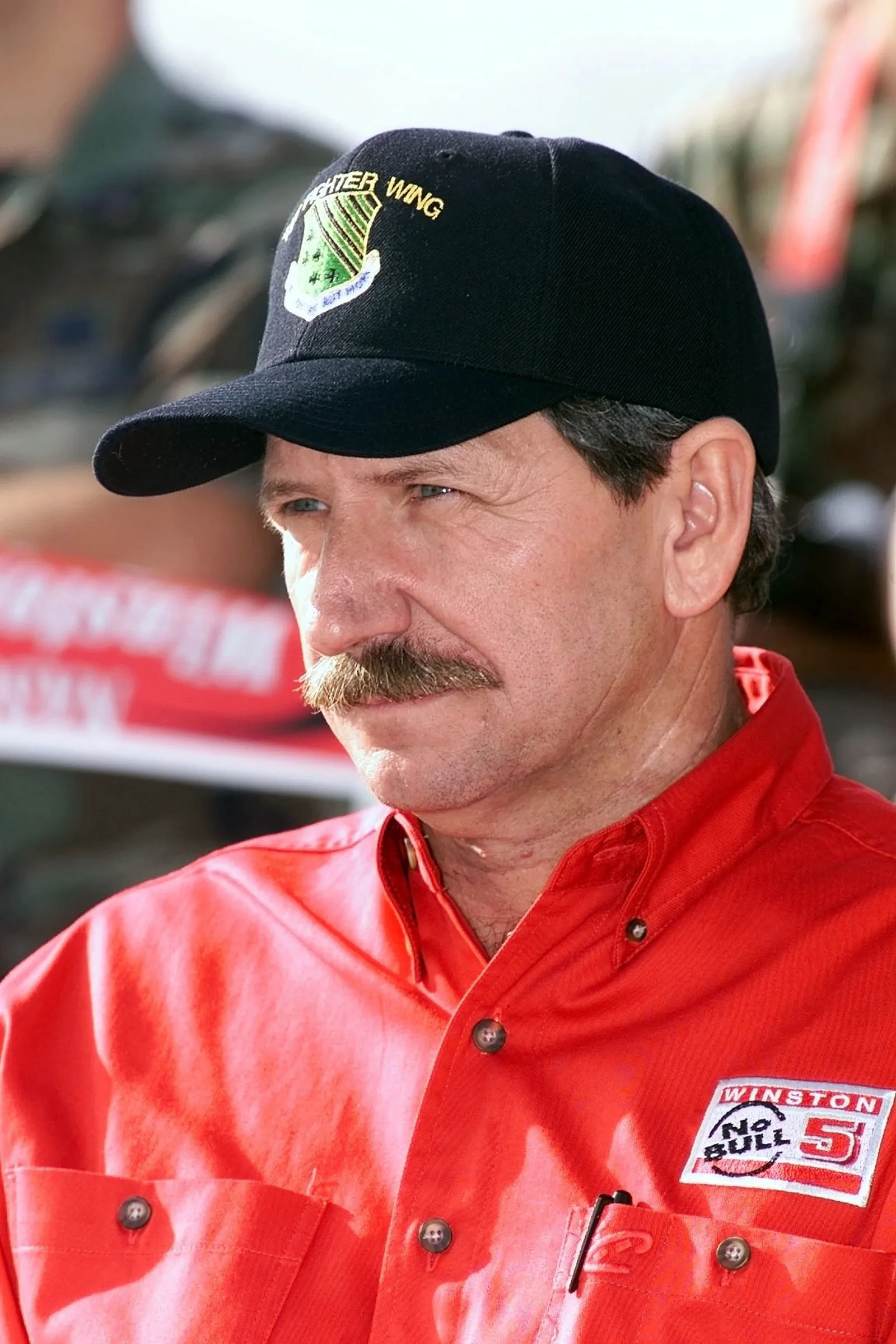
Ralph Dale Earnhardt was born in Kannapolis, North Carolina, on 29 April 1951, the son of a top short-track driver, Ralph Earnhardt. His father did not want him to race, but Dale left school to chase the dream. He made his Winston Cup debut in the 1975 World 600 and spent most of his career at the wheel of Richard Childress Racing's No. 3 Chevrolet. His hard-driving style earned him three nicknames: Ironhead, the Man in Black and the Intimidator.
He won 76 Winston Cup races in 26 years, plus 24 non-points events, making 100 overall, and one of only four drivers to reach that mark. His seven championships equal the record held by Petty and Johnson. He won the 1980 title the season after being Rookie of the Year, the only driver ever to do the two back to back. His nickname stuck after the 1987 All-Star race, when he was forced onto the infield grass but kept control and returned to the track without losing the lead. People call it the "Pass in the Grass", although nobody was actually overtaken while he was on the grass.
In 1988 he changed the colour of his car from blue and yellow to the black it kept for the rest of his life. In 1989 he lost the title to Rusty Wallace by twelve points. He won titles in 1986 and 1987, then a fourth in 1990, a fifth in 1991 and a sixth in 1993. Daytona took longer. In 1993 it was the fourth time he had been leading the Daytona 500 with fewer than ten laps left and failed to win. He finally won the race in 1998. A young girl named Wessa Miller, whose wish was granted through the Make-A-Wish Foundation, gave him a penny for luck; he glued it to the dashboard.
On 18 February 2001, Earnhardt died of a basilar skull fracture suffered in an abrupt last-lap crash at the Daytona 500. He was 49. His death was regarded within the racing industry as a crucial moment in improving safety across racing, especially in NASCAR. His own Hall of Fame place came in the first class, in 2010.