A Kangoo in a three-pointed-star suit that ends production in 2026, and a boxy Spanish cabover that was also built in South Korea and China.
The Citan is a compact Mercedes-Benz panel van and passenger van, badge-engineered from the Renault Kangoo and sold from 2012 to 2026. The MB100 was an earlier, boxy cabover van built in Spain from 1981 to 1996, later made under licence in South Korea and China.
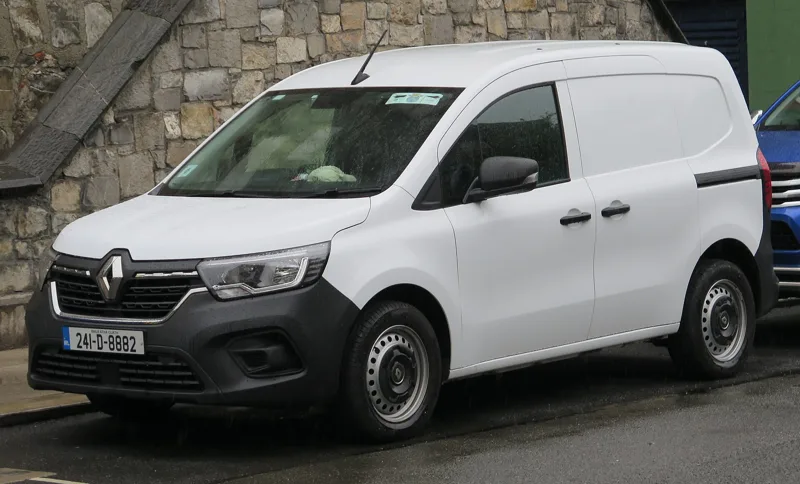
The Mercedes-Benz Citan is a Renault Kangoo wearing a three-pointed star, and in April 2025 Mercedes-Benz executives announced that it would be discontinued in 2026, along with the T-Class, eCitan and EQT that share its bones. Before the Citan there was the MB100, a boxy Spanish-built cabover that ended up being made in South Korea and China too.
What is the Mercedes-Benz Citan?
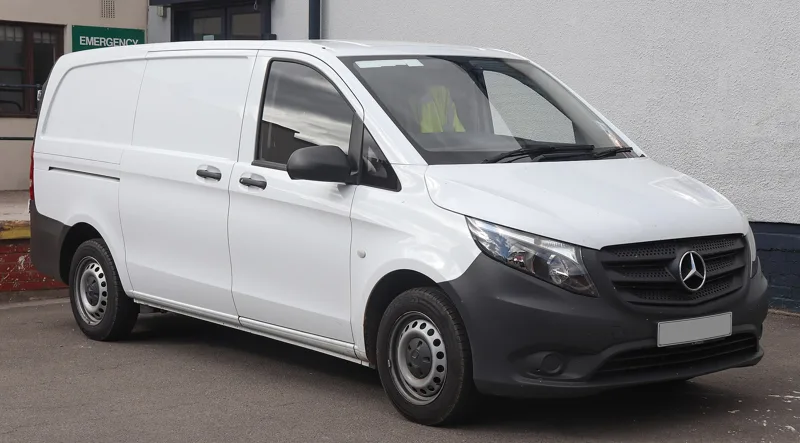
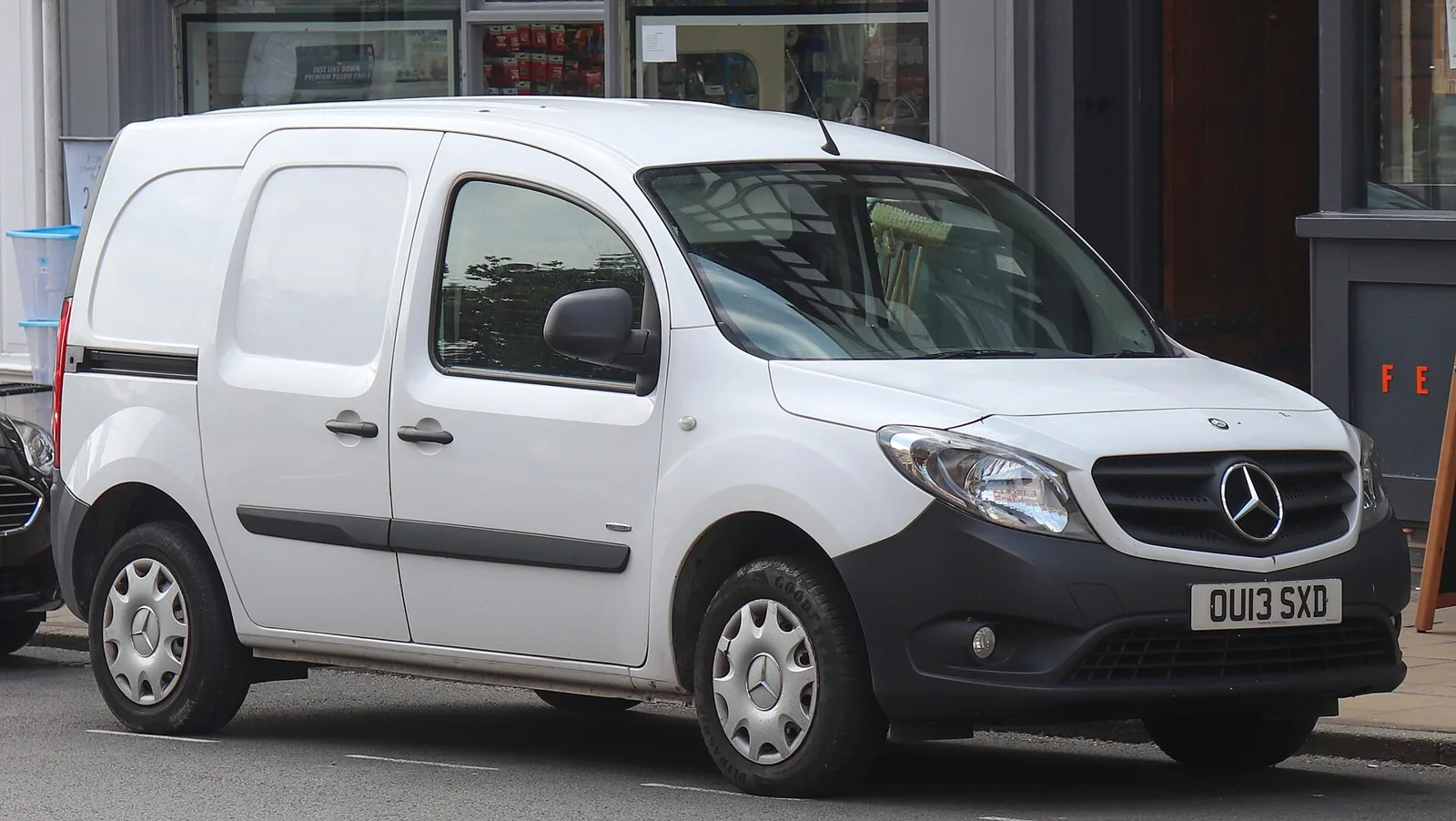
Launched in 2012 as a badge-engineered take on the Renault Kangoo, the Citan works as both a panel van and a leisure activity vehicle. Mercedes-Benz pitched it as the successor to the Vaneo compact people carrier. Within the company's van family it is the smallest, sitting below the mid-size Vito and the large Sprinter.
Its internal code is W415. The van grew out of Daimler's tie-up with the Renault-Nissan-Mitsubishi Alliance, and MCA, a Renault subsidiary, assembles it at Maubeuge in France's north, right beside the Kangoo it was cloned from. That is the whole secret of the Citan: a Renault product, built in a Renault factory, sold through Mercedes showrooms.
The target was passenger-car buyers and light commercial customers at once. For Mercedes it was also the first new entry in the commercial market since the Vito of 1995. Daimler argued that leisure activity vehicles were the quickest-growing corner of the European market, with 700,000 sales a year, which helps explain why it wanted a small van that could be either a workhorse or a family wagon.
One van was a Renault with a star on the nose. The other was a Spanish cabover that was licensed to Korea and China.
How long is a Citan and what body styles are there?
The first-generation Citan was sold in three lengths: compact at 3.94m, long at 4.32m and extra-long at 4.71m. Buyers chose between three bodystyles called Panel Van, Dualiner and Traveliner. The Panel Van seated two at most, while the Dualiner and Traveliner could seat as many as five.
That mix is the key to reading a Citan listing. The Panel Van is the load carrier with seats for up to two, while the Dualiner and Traveliner carry up to five.
Did the Citan have early safety problems?
In Euro NCAP crash testing the Traveliner scored four stars for passenger protection. The Kombi, tested first in April 2013, managed only three. Mercedes-Benz responded by saying it would improve the van, and Euro NCAP reassessed it once the revised cars were in production.
The promised fixes touched how the side airbag fires and how child seats are fitted. Mercedes also agreed to add a belt warning for the front passenger seat and to set up the speed limiter in a way that satisfied Euro NCAP's rules. Where the changes had no effect on a particular result, the original figure was kept, and several tests were run again.
The second generation fared better. March 2024 brought the Citan van a Platinum rating from Euro NCAP, credited to its extensive active safety systems.
Why was MacGyver in a Citan advert?
For its 2012 campaign, Mercedes-Benz hired Richard Dean Anderson to play MacGyver again, the television character he made famous. The result was a set of short films under the title MacGyver and the New Citan, which went up on the official Citan website from 18 September. They were filmed in Johannesburg, South Africa, during July 2012.
What changed in the second-generation Citan?
August 2021 saw the arrival of the second-generation Citan, code W420, as a Panel Van and a Tourer. Underneath it is the third-generation Renault Kangoo, on the CMF-CD platform. Mercedes developed that same platform into the T-Class people carrier, which took over from the Citan Traveliner and Tourer.
The T-Class appeared in April 2022. Initially it came only in the regular wheelbase, with five seats, and a long-wheelbase version with three rows and seven seats was in the plan. Its headlights come from the third-generation B-Class as it stood before its facelift.
What are the eCitan and the EQT?
The eCitan is the battery-electric edition of the Citan, announced in October 2021 alongside the regular van, with sales starting in the second half of 2022. The EQT is the electric T-Class, which first appeared as a concept at IAA 2021 and was unveiled in production form in December 2022.
The eCitan is driven by an electric motor on the front wheels. Its battery is built from eight lithium-ion modules slung under the floor ahead of the rear axle. The standard onboard charger takes 11 kW of AC. Buyers who tick the option box get a 22 kW AC and 75 kW DC charger instead, which brings a CCS Combo 2 socket.
The EQT shares its running gear with the Kangoo E-Tech of the same period, and it was first made available only on the short wheelbase.
How do the eCitan and EQT compare?
| Spec | eCitan | EQT |
|---|---|---|
| Motor output | 90 kW (120 hp) | 90 kW (122 PS; 121 hp) |
| Torque | 245 N.m (181 lbf.ft) | 245 N.m (181 lbf.ft) |
| Battery | 44 kW-hr usable | 45 kW h |
| Estimated range | 285 km (177 mi), WLTP combined | 282 km (175 mi) |
When does the Citan end?
Executives at Mercedes-Benz said in April 2025 that the Citan, T-Class, eCitan and EQT would all be dropped during 2026. That closes the chapter of small Renault-derived vans in the Mercedes range, which opened with the 2012 Citan.
What was the Mercedes-Benz MB100?
The MB100, model type 631, was a light commercial cabover van built by Mercedes-Benz Espana S.A. between 1981 and 1996. Production took place at the company's factory in Vitoria-Gasteiz, in the north of Spain. SsangYong in South Korea built the third generation, and Maxus, part of SAIC Motor, made a rebadged variant in China from 2009 to 2014.
A cabover is a van where the driver sits above or ahead of the front axle, which makes a short, boxy shape with a lot of load space for its length. The MB100 is a clear example, and the second-generation van in particular looks very square in pictures.
Where did the MB100 come from?
The Vitoria plant was not Mercedes-Benz's own to begin with. Mercedes-Benz Espana took it over from Industrias del Motor S.A., known as IMOSA, whose product there was the DKW F1000 L. Under the skin that van descended from the DKW Schnellaster, except that a Mercedes-Benz diesel replaced the original DKW two-stroke petrol unit.
That van was developed into the Mercedes-Benz N1300, which became the first MB100 range after another facelift. You could still spot Fissore's trapezoidal shape, drawn originally for Auto Union, in details such as the outline of the front door glass. Buyers could have a cargo van, a passenger van or a pickup, and the whole thing was redesigned in 1986.
How did the first-generation MB100 work?
The first generation went on sale in September 1980 with the lighter MB100 and a heavier-duty MB130 as the two weight ratings. The production span quoted for the model begins in 1981, the year the Spanish company took the Mercedes-Benz name in April, but the van itself was on sale from the autumn before.
The numbers in the names mean something. Each one reflected payload in tens of kilograms, so the range stretched from MB90 to MB180. The MB100, and the MB90 that arrived in 1985, used the 2.0-litre OM615 four-cylinder diesel, an engine made in Barcelona, which produced 58 PS (43 kW). Heavier models in the MB130, 140, 150 and 180 line took the bigger 2.4-litre OM616, rated at 72 PS (53 kW). Few of these early vans were sent abroad.
Ownership shifted during these years. A company called MEVOSA built the early vans, and Mercedes-Benz owned 52.77 percent of it as of November 1980. INI, the Spanish government's industrial holding company, owned around forty percent, a stake that fell to just over 25 percent in 1983.
What changed with the second-generation MB100?
Mallorca hosted the January 1987 launch of the new, very square MB100, model type W631. That was the moment the Spanish-built vans reached northern Europe, Germany included. At home, the Spanish range used payload-based numbers again: MB100, 120, 140 and 180.
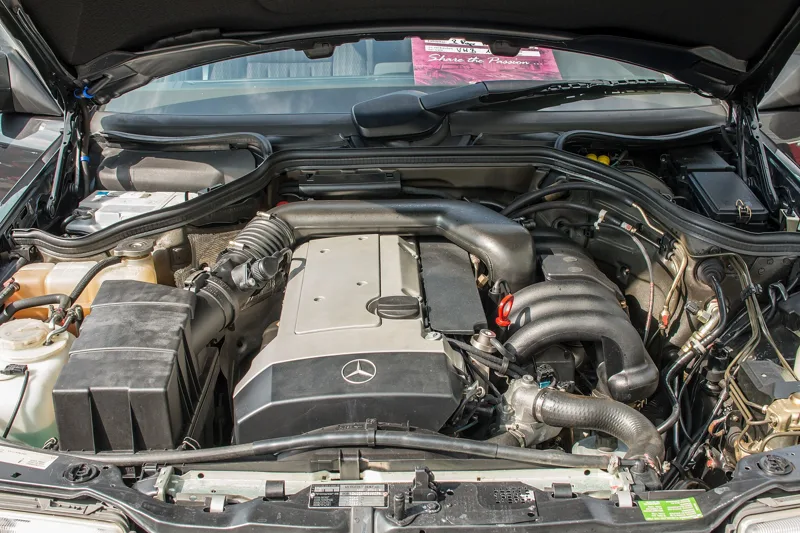
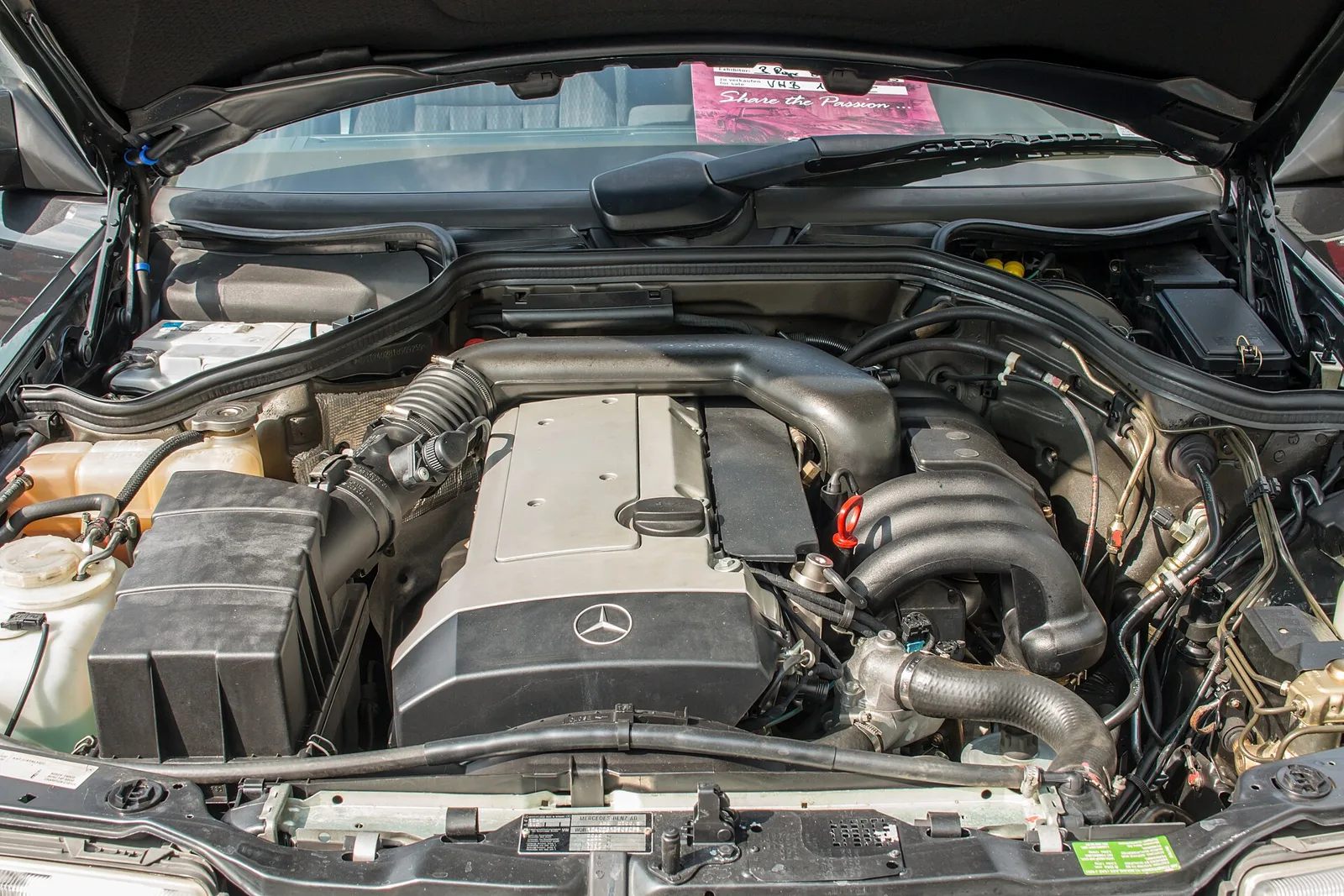
The usual engine was the 2.4-litre OM616 diesel four, rated at about 72 PS (53 kW) and shared with the Mercedes-Benz 207D. Mercedes later raised its output to 75 PS (55 kW). A 2.9-litre inline-five diesel joined the list later still, and after 1996 there were petrol four-cylinder options.
AMG tuned two versions: a turbocharged 2.4-litre OM616 four-cylinder with 95 hp, and a turbocharged 3.0-litre OM617 inline-five with 120 to 127 hp. A visual kit marked them out, with different headlights, grille, bumpers, side skirts and alcantara seats.
Germany sold the MB100 from 1987 to 1996 as a branch of the Daimler-Benz commercial range. A change in 1992 gave it a slanted radiator and a longer nose, partly to make a collision easier to survive. The heavier versions went by the names MB140 and MB180.
What happened to the MB100 in Germany and Turkey?
In 1996 the Vito took over from the MB100 in Europe. Brazil, Argentina and other export markets could still buy it until 1997, when the Sprinter went into production in Argentina. German buyers came to think of the MB100 as rust-prone, slow and flimsy underneath.
In Turkey, BMC assembles the MB100 for the home market. It then re-used the body for its Levend range of trucks, vans and minibuses, mounting it on a rear-wheel-drive chassis with a Nissan 3-litre BD30 direct-injection diesel.
What was the Australian MB100?
DaimlerChrysler Australia/Pacific began selling the MB100 in 1999, together with the MB140, a bigger relative with model type 661, in Australia and the Pacific. SsangYong Motor Company built them under licence and also sold its own rebadged version, the SsangYong Istana.
The diesel MB100D and MB140D of the Pacific market used a licensed copy of Mercedes-Benz's naturally aspirated 2.9L OM602 five-cylinder, with a five-speed manual box. The petrol MB100 and MB140 used a licensed 2.3L M111, again with five speeds.
Vans and minibuses were both built. The bus version had windows that slid open, air conditioning hidden in the rear ceiling and lights for passengers. In some places, Singapore among them, an electric step slid out whenever the sliding door opened. Right-hand and left-hand drive were available according to market, and depending on the seat layout a minibus could take as many as 15 people.
Late in 2004, Shanghai Huizhong Automotive Manufacturing Co., Ltd. acquired a major holding in SsangYong's car division and began producing a redesigned form of the Pacific MB140.
What was the SsangYong Istana?
The Istana was a licensed, rebadged form of the MB100 bus, sold as a minivan or minibus seating 2, 9, 12 or 15 and carrying most of the same options. Its name means palace in Malay and Indonesian, the word used for the presidential residences in Singapore and Indonesia.
What should you know before searching for an MB100 for sale?
The generations matter more than the badge. The first-generation van, built from 1981, used the 2.0-litre or 2.4-litre diesel and was not sent abroad in any numbers. The second-generation van, from 1987, is the one with the square body and AMG variants, and it carried a poor reputation for rust in Germany.
The model number gives the payload: an MB140 is a heavier-duty van than an MB100. In Australia and the Pacific, vans sold from 1999 were built by SsangYong, with either the OM602 diesel or the M111 petrol, and the minibus versions could hold up to 15 people.