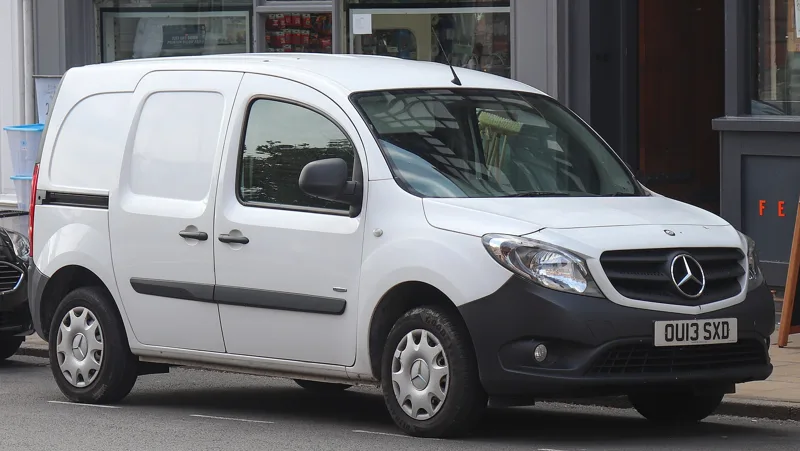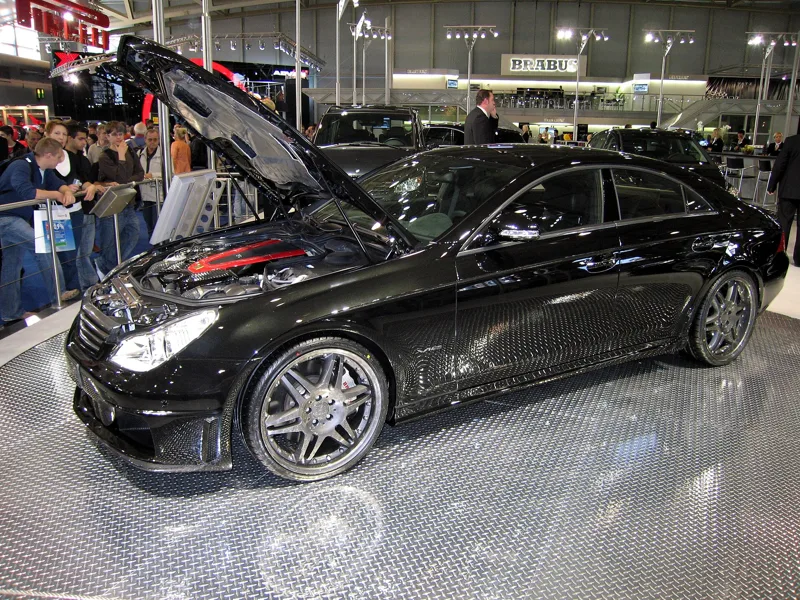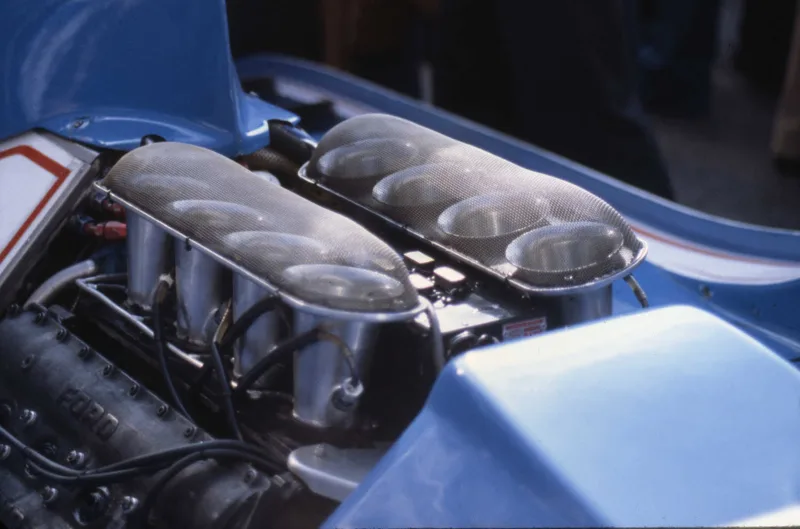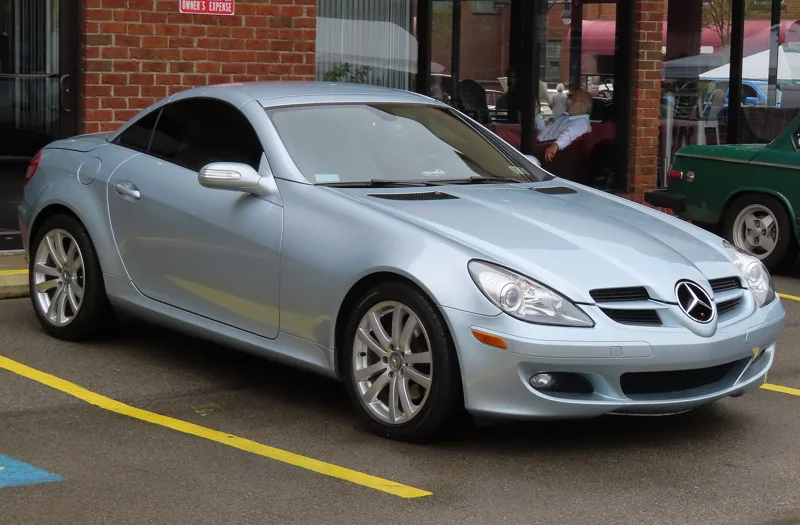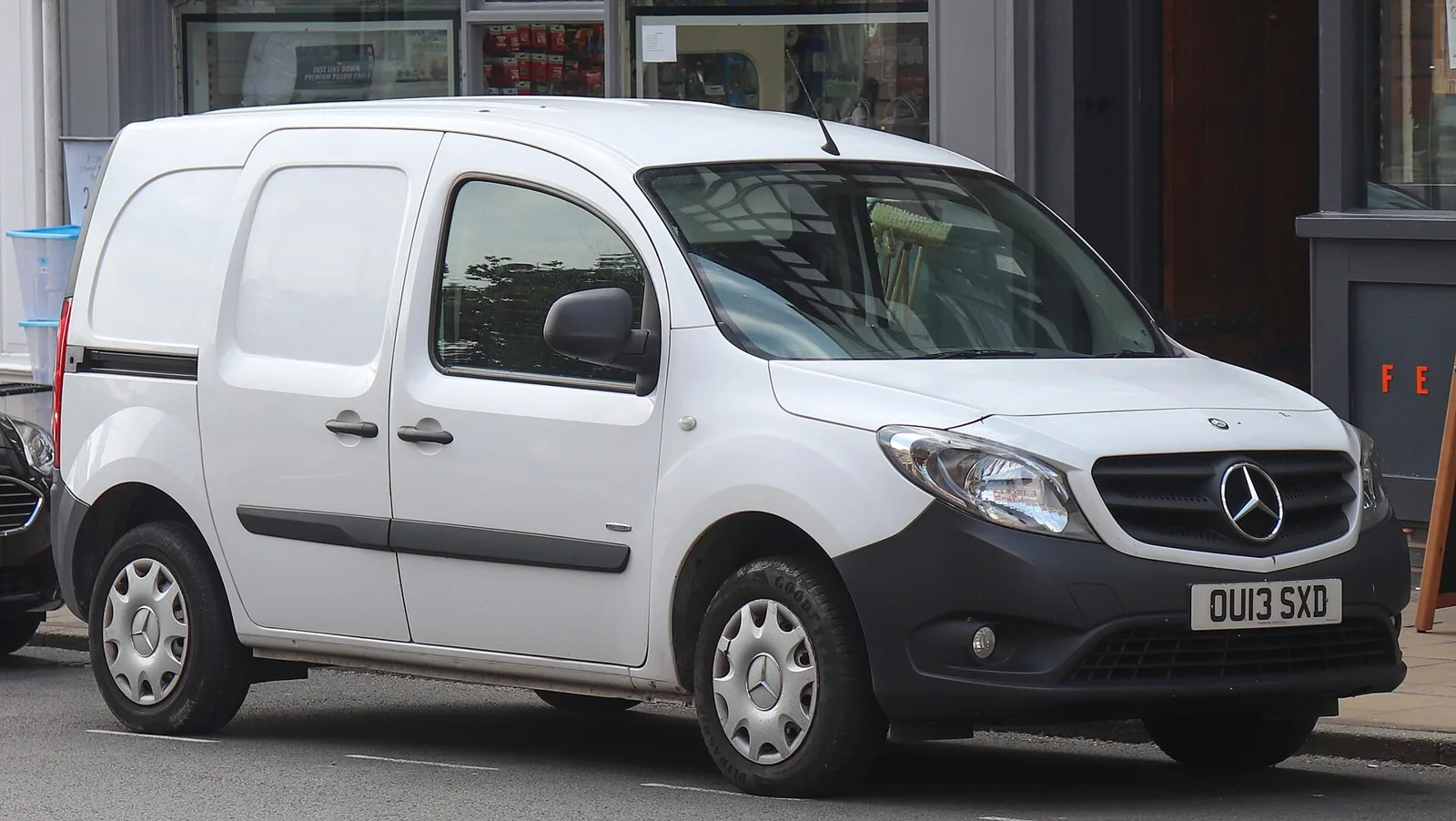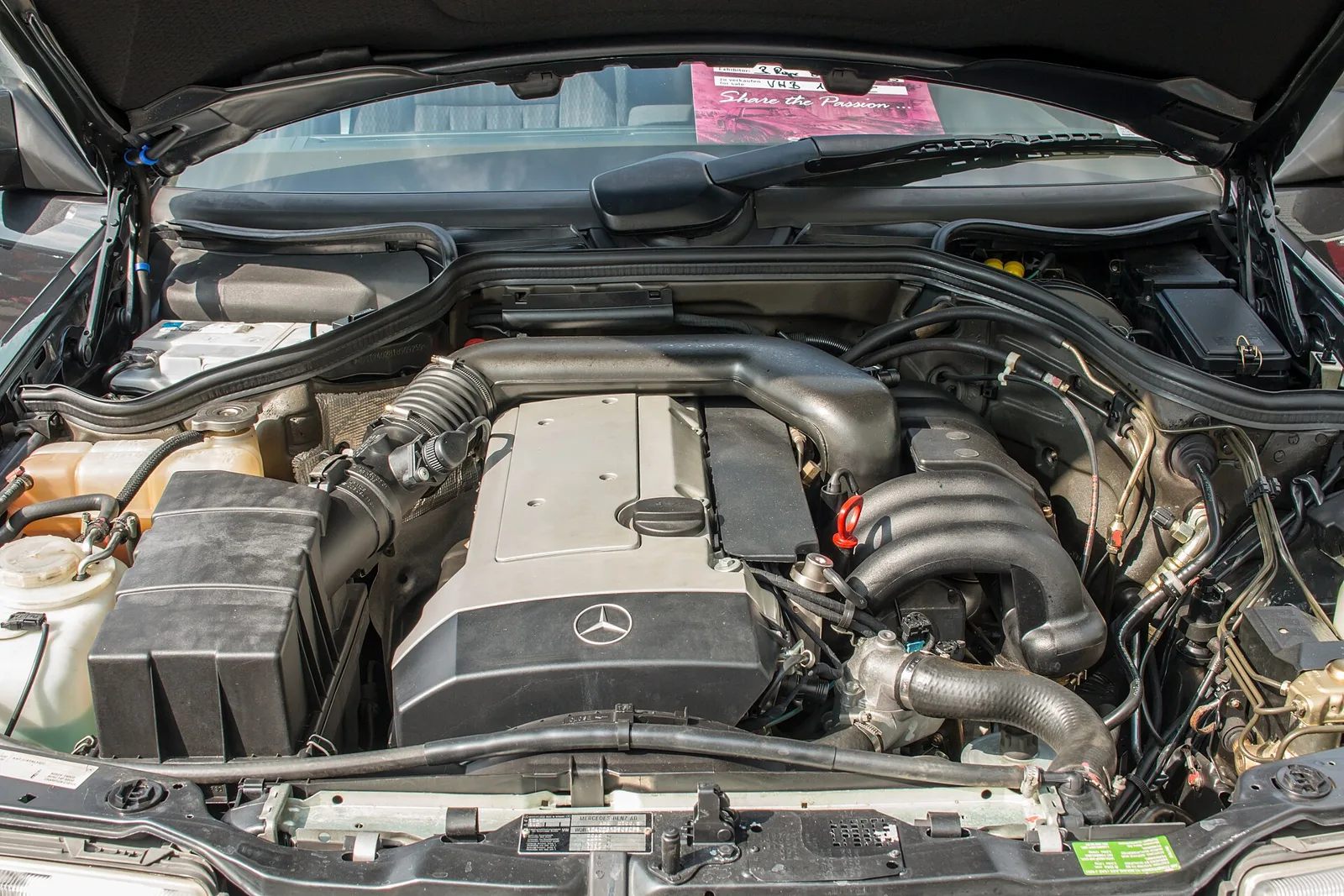
A 24-valve straight-six that began in the 300 E-24 and an all-purpose four that moved from the E 200 to the supercharged SLK.
The Mercedes M104 is a straight-six built from 1989 to 1998, from the 3.0-litre 300 E-24 to the 3.2-litre E 320. The M111 is a straight-four built from 1992 to 2003, used in the E 200, C-Class and SLK, and supercharged from 1996.
Two Mercedes-Benz engines can carry the same M104 label and have nothing in common. One is the straight-six that powered the 300 SL-24 and the E 320. The other is Volkswagen's compact VR6, which Mercedes bought semi-completed for its Vito van and designated M104.900. The genuine M104 and its four-cylinder cousin, the M111, powered many 1990s Mercedes-Benz models, from the W124 and W140 to the C-Class, the SLK and the Sprinter.
What is the Mercedes-Benz M104 engine?
The Mercedes-Benz M104 is a straight-six petrol engine produced from 1989 through 1998. It has double overhead camshafts, four valves per cylinder and a crossflow cylinder head. It replaced the M103 and gave way to the M112 V6 from 1997. All M104 engines share the M103's 97 mm bore pitch, the spacing between cylinder centres.
The first and most exciting version was the 3.0-litre M104 E 30 of 1989, a 24-valve engine of 2,962 cc. Mercedes introduced it as a sports car and top model to sit above the twelve-valve M103 engines. It brought KE-Jetronic fuel injection, ignition timing set for each cylinder, variable valve timing and cooling jets under the pistons. The bore was 88.5 mm, the stroke 80.25 mm and the compression ratio 10:1.
Quoted outputs without a catalytic converter run from 217 to 228 hp (162 to 170 kW; 220 to 231 PS), reached at 6400 rpm, or 6300 in the 300 SL-24. For the SL the figure is 170 kW (231 PS; 228 hp), accompanied by 272 N.m (201 lb.ft) of torque. Peak torque arrives at 4600 rpm: 265 or 272 N.m (195 or 201 lb.ft), depending on whether a catalytic converter is fitted.
It went into the 1989 to 1992 W124 300 E-24, the S124 300 TE-24 estate and the C124 300 CE-24 coupe. The convertible A124 300 CE-24 followed in 1992 to 1993, and the R129 300 SL-24 ran from 1989 to 1993. The German sports car maker Isdera also used it in its Spyder 036i.
One engine code, two unrelated engines: the M104.900 in the Vito is Volkswagen's VR6.
What is the M104.900 VR6 engine?
The M104.900 is the 2.8-litre VR6 from Volkswagen, fitted to the Mercedes Vito. Mercedes needed a compact six-cylinder for the van, and agreed with Volkswagen to buy the engines semi-completed. It is unrelated to every other M104.
Only the engine cover and the air cleaner housing come from Mercedes-Benz. The rest of the engine is Volkswagen's, so it shares nothing with the straight-six family.
How did the M104 grow from 2.8 to 3.2 litres?
In 1992 Mercedes added two new capacities. The 2.8-litre M104 E 28 (2,799 cc) replaced the old single-cam M103 engines, and the 3.2-litre M104 E 32 (3,199 cc) replaced the 3.0-litre twin-cam engine so that the car could run at lower engine speed.
The 2.8-litre M104 E 28
Its cylinders are 89.9 mm across with a short 73.5 mm stroke, and a duplex roller chain drives the camshafts. It makes 142 kW (193 PS; 190 hp) at 5500 rpm in most cars, or 145 to 148 kW (197 to 201 PS; 194 to 198 hp) in SsangYong models, with 270 N.m (199 lb.ft) of torque at 3750 rpm. The W124 280 E of 1992 to 1993 is rated at 145 kW (197 PS; 194 hp). Oil capacity is 7.0 litres and coolant capacity 9.0 litres.
Cars included the 1992 to 1995 280 E (W124), the 1992 to 1998 W140 S 280, the 1993 to 1997 C 280 (W202), the 1993 to 1998 SL 280 (R129) and the 1995 to 1997 E 280 (W210), plus the SsangYong Chairman H CM500S from 1997 to 2004 and the Rexton I from 2003 to 2006.
The 3.2-litre M104 E 32 and the E 320
The 3.2-litre pairs an 89.9 mm bore with an 84 mm stroke, and its valves measure 35 mm (intake) and 31 mm (exhaust). Power is 162 or 170 kW (220 or 231 PS; 217 or 228 hp) at 5500 rpm, with 310 or 315 N.m (229 or 232 lb.ft) at 3750 rpm. The pre-facelift W140 300 SE and SEL, the facelift S 320 and S 320 L and the SL 320 used the stronger 170 kW (231 PS; 228 hp) version. Compression is 10.0:1 on the W210, R129 and W140, but ranged from 9.2:1 to 10.0:1 on the W124 (M104.992).
This is the engine in the E 320. The 1992 to 1995 W124 saloon, the 320 TE wagon, the 320 CE coupe and the A124 convertible carried it, as did the 1995 to 1997 W210 E 320, the 1993 to 1998 SL 320 and the 1994 to 1997 G 320. It also powered the 1991 to 1998 W140 300 SE and S 320 models.
Other makers used it as well. Roewe built the W5 from 2011 to 2017 and the R95 in 2008 and 2009, while SsangYong fitted it to the Chairman (1997 to 2017), Korando, Kyron, Musso, Rexton and Rodius. The French coachbuilder Heuliez used it in the 1996 Intruder, and Status and Class in the 1999 OPAC Contender XG.
What did AMG and the tuners do with the M104?
AMG built 3.3-litre and 3.6-litre M104s, and several tuners added turbochargers.
The 3.3-litre (marketed as 3.4) was a conversion of the 3.0-litre M104.980 from the early days of AMG's cooperation with Daimler-Benz. It powered the 300 E AMG 3.4, the AMG 3.4 CE and the 300 TE 3.4 AMG in the W124 range, built between 1990 and 1992, and a few SL 3.4 AMG cars. Peak power of 200 kW (272 PS; 268 hp) came at 6500 rpm, with the 330 N.m (243 lb.ft) torque peak at 4500 rpm, from a 91.5 mm bore and an 84 mm stroke.
The 3.6-litre M104 E 36 AMG (3,606 cc) went into the C 36 AMG (W202), the E 36 AMG (W124 and W210) and the G 36 AMG (W463). It was rated at 276 hp (206 kW; 280 PS) at 5,750 rpm with 385 N.m (284 lb.ft) at 4,000 rpm, on the HFM engine management system. The cylinders were bored to 91 mm, the stroke was 92.4 mm and compression was 10.5:1. Because the engines were modified by hand, AMG admitted that output could vary between 276 and 287 hp (206 and 214 kW; 280 and 291 PS).
The extra capacity came from boring the 2.8-litre block by 2.1 mm (0.083 in) and using a heavily modified crankshaft from the 3.5-litre OM 603 diesel to lengthen the throw by 18.9 mm (0.744 in). That demanded forged pistons of a new design with shorter skirts. A larger intake crossover pipe, a free-flowing exhaust, a unique intake camshaft, small cylinder head changes and modifications to the HFM computer added the power. Brabus and others also did 3.6-litre conversions.
SsangYong built its own 3.6-litre version, based on the 2.8, with 248 or 276 hp (185 or 206 kW; 251 or 280 PS) in the Chairman luxury saloon, and the Chinese Roewe R95L uses a 3.6-litre M104 too. Isdera's Spyder 036i, in its last versions after 1990, used a 3.6-litre AMG variant with 268 or 282 hp (200 or 210 kW; 272 or 286 PS).
Turbocharger kits for the M103 and M104 came from Turbo Technics, Mosselman, Lotec, MAD Modify, Turbobandit and other tuners. Depending on the boost target, conversions typically lifted output into a range of 300 to 800 PS (221 to 588 kW; 296 to 789 hp). In the 1990s UK customers could buy a new Mercedes with a Turbo Technics conversion directly from the dealer Hughes of Beaconsfield, in a limited run of 75 cars.
What is the Mercedes-Benz M111 engine?
The M111 is a straight-four Mercedes-Benz engine produced from 1992 to 2003. It uses the cylinder block of the single-overhead-cam M102 but has double overhead camshafts with four valves per cylinder, a layout pioneered by Cosworth, along with variable valve timing and modern engine management in place of mechanical KE-Jetronic.
Mercedes introduced it in summer 1992 for the W124, and it became the main engine of the 1990s and the early 2000s. It started naturally aspirated and added a supercharger, the Kompressor, in 1996. As well as Mercedes passenger cars and commercial vehicles, it went into several Volkswagen and SsangYong models.
The M111 belongs to a modular family that includes the M104 six and the OM604, OM605 and OM606 diesels, with large interchangeability of parts between them. The same refinements, in other words, ran across the petrol sixes and the diesel fours, fives and sixes.
Which M111 sizes did Mercedes build?
The M111 came in four main sizes, from 1,799 cc up to 2,295 cc, with supercharged versions of the 2.0-litre and 2.3-litre engines.
- E18: the 1,799 cc size, with an 85.3 mm bore and 78.7 mm stroke. It gave 90 kW (122 PS; 121 hp) at the 5500 rpm peak, and 170 N.m (125 lb.ft) arrived by 4200 rpm. It powered the 1993 to 2000 C 180 (W202). From 1996 one variant swapped the manifold pressure sensor for a mass air flow sensor.
- E20: 1,998 cc with 9.6:1 compression, an 89.9 mm bore and a 78.7 mm stroke. The M111.940 delivered 100 kW (136 PS; 134 hp) and torque of 190 N.m (140 lb.ft). It began in the 1992 to 1997 E 200 (W124), followed by the C 200, CLK 200, SLK 200 and a later E 200 (W210).
- E22: a 2,199 cc version (89.9 mm bore, 86.6 mm stroke) running 10:1 compression. Output was 110 kW (150 PS; 148 hp) and the torque rating 210 N.m (155 lb.ft). It fitted the E 220 (1992 to 1997) and C 220 (1993 to 1996).
- E23: the largest size, at 2,295 cc, with a 90.9 mm bore, an 88.4 mm stroke and 10.4:1 compression. Depending on the version it produced 110 kW (150 PS; 148 hp) or 90 kW (122 PS; 120 hp). It went into the E 230 (W210), C 230 (W202), V 230/Vito 114, ML 230 (W163) and MB100 2.3, along with SsangYong's Actyon, Chairman, Istana, Korando, Kyron, Musso and Rexton.
Commercial versions sat below those figures. The M111.979 in the Sprinter 214, 314 and 414 (1995 to 2006) had an 8.8:1 compression ratio, 105 kW (143 PS) at 5000 rpm and 210 N.m (155 lb.ft) at 4000 rpm. A related M111.984 also appeared in the Volkswagen LT 2.3 from 1996 to 2001 and the SsangYong Musso 2.3.
How the M111.940 managed fuel and spark
Unlike the M102, the M103 and early M104 engines, the M111.940 did not use mechanical fuel injection. It used the Siemens PEC/PMS (Pressure Engine Control) system, which handles fuel and spark together. It is a speed-density design: the mixture depends on engine speed, throttle angle and manifold pressure. Injectors work in pairs at idle and part load, and all together at full load.
There are two ignition coils and no distributor. Cylinders fire in pairs, 1 with 4 and 2 with 3. The crankshaft position sensor reads two radially opposed plates on the flywheel, one magnetised and the other not, so the electronics always know which pair of cylinders to ignite and which injectors to open.
What are the supercharged Kompressor M111 engines?
The Kompressor M111 versions use a supercharger. The 2.0-litre M111.943, M111.944 and M111.947 are rated at 141 kW (192 PS; 189 hp) with 270 N.m (199 lb.ft), while the 2.3-litre supercharged engine gives 142 kW (193 PS; 190 hp) plus 280 N.m (207 lb.ft).
The 2.0-litre Kompressor existed for tax reasons. It was built especially for export to Italy, the Netherlands, Portugal and Greece, where the tax limit for executive cars was based on an engine capacity above 2000 cc. By combining the M111.940 with the supercharger of the 2.3-litre M111.973, Mercedes could offer high performance from a small displacement. An early 1995 version produced only 132 kW (179 PS; 177 hp). It appeared in the SLK 200 Kompressor (1996 to 2000), the C 200 Kompressor, the CLK 200 Kompressor and the E 200 Kompressor.
The 2.3-litre Kompressor went into the SLK 230 Kompressor (1996 to 2000), the C 230 Kompressor and the CLK 230 Kompressor. Its EVO update produced 145 kW (197 PS; 194 hp) in the C 230 Kompressor SportCoupe, the CLK 230 Kompressor and the SLK 230 Kompressor, the last of which ran to 2004.
The EVO engines
The naturally aspirated M111 E 20 EVO (M111.951 and M111.952) has a 10.6:1 compression ratio and is rated at 95 kW (129 PS; 127 hp), reached at 5300 rpm, with 190 N.m (140 lb.ft) coming in at 4000 rpm. The improvements included a reinforced cylinder block, a new cylinder head, individual coil-on-plug ignition with iridium-tipped spark plugs rated for 100,000 km (62,000 mi) between changes, new connecting rods and pistons for the higher compression, Siemens SIM4 fuel injection, Euro IV emissions compliance and dual oxygen sensors.
It went into the C 180 (W203) and C 180 SportCoupe from 2000 to 2002 and the V 200 and Vito 113 from 2000 to 2003. The M111.952 variant served the final model year of the S202 estate, replacing the older 1.8-litre 122 hp engine for 2001, and 2295 were built between June 2000 and January 2001.
The supercharged EVO (E 20 ML EVO) replaced the Eaton M62 supercharger with the smaller Eaton M45 and delivered 120 kW (163 PS; 161 hp) alongside 230 N.m (170 lb.ft) from 2500 rpm. It was intended for markets including Italy, the Netherlands, Portugal, Turkey and Greece, and was fitted to the C 200 Kompressor, CLK 200 Kompressor, E 200 Kompressor and SLK 200 Kompressor between 2000 and 2004.
What are the Mercedes M111 problems?
The M111 is described as an engine of excellent reliability. The one problem noted is the original Victor Reinz head gasket, which eventually tore with age and let coolant escape on the side of the top of the engine. Some model years also had poor insulation on the engine wiring, and the wiring had to be replaced.
Differences between versions matter when diagnosing one. The M111.946 SLK engine never had PMS. Early cars from 1995 to 1997 used HFM-motronic with a hot-film air meter, and those from 1997 to 2002 used ME2.1 motronic, which adds a magnet on the intake camshaft so the control unit can help the engine make more torque at low revs. The early motor had no camshaft position sensor, so its wiring is quite different.
How do the M104 and M111 compare?
| Detail | Mercedes-Benz M104 | Mercedes-Benz M111 |
|---|---|---|
| Layout | Straight-six | Straight-four |
| Production | 1989 to 1998 | 1992 to 2003 |
| Valve gear | DOHC, four valves per cylinder, crossflow head | DOHC, four valves per cylinder, block shared with the SOHC M102 |
| Main sizes | 2.8, 3.0 and 3.2 litres, plus AMG 3.3 and 3.6 litres | 1,799 cc to 2,295 cc |
| Forced induction | Aftermarket turbo kits only | Kompressor supercharger from 1996 |
| Typical output | 142 to 170 kW | 90 to 145 kW |
| Famous cars | 300 E-24, 300 SL-24, E 320, S 320 | C 180, E 200, SLK 200, Vito, Sprinter |
Where did the M104 and M111 lines end?
The M104 was replaced by the M112 V6 starting in 1997, and Mercedes ended production in 1998. The M111 ran to 2003 in Mercedes vehicles, though SsangYong and Roewe carried on with their versions of these engines for years afterwards.
SsangYong used the M104 in the Chairman until 2017 and the Kyron to 2014, while Roewe built the W5 with it until 2017. The M111 four-cylinder stayed in SsangYong's Actyon to 2013 and Chairman to 2014.