A fourth-generation light van built on a Mercedes-Benz-linked platform, with an aerodynamic body, diesel and electric versions and a Nissan twin.
The Renault Master IV is a light van sold from 2024 that replaces the Master III. Its aerodynamic body earned the Aerovan nickname, and it comes with 2.0 Blue dCi diesels and two electric versions, with ranges of 180 km and 460 km.
The Renault Master IV is a light commercial vehicle that Renault put on sale from 7 May 2024. It replaced the Master III, which had been on sale since 10 April 2010. The new van is built around an aerodynamic body, and it comes with diesel and electric powertrains that share a common platform with a Mercedes-Benz commercial vehicle.
The design work behind the Master IV started with a project codenamed XDD in the early 2020s. The carmaker gave the design the nickname Aerovan, and the van's drag coefficient is 20% better than its predecessor's.
Why did Renault replace the Master III?
The Master III had received a major front-end restyle on 2 September 2019, when phase 3 launched. Even so, its technical base was judged outdated, since the first phase of the Master III had gone on sale on 10 April 2010.
Renault Trucks announced the sale of the new van on 22 November 2023 under the name Master Red Edition. Nissan followed with its own clone in February 2024.
An aerodynamic light van that owes its look to wind tunnels, sold in diesel and electric form.
How did Renault share the Master IV with Mercedes-Benz?
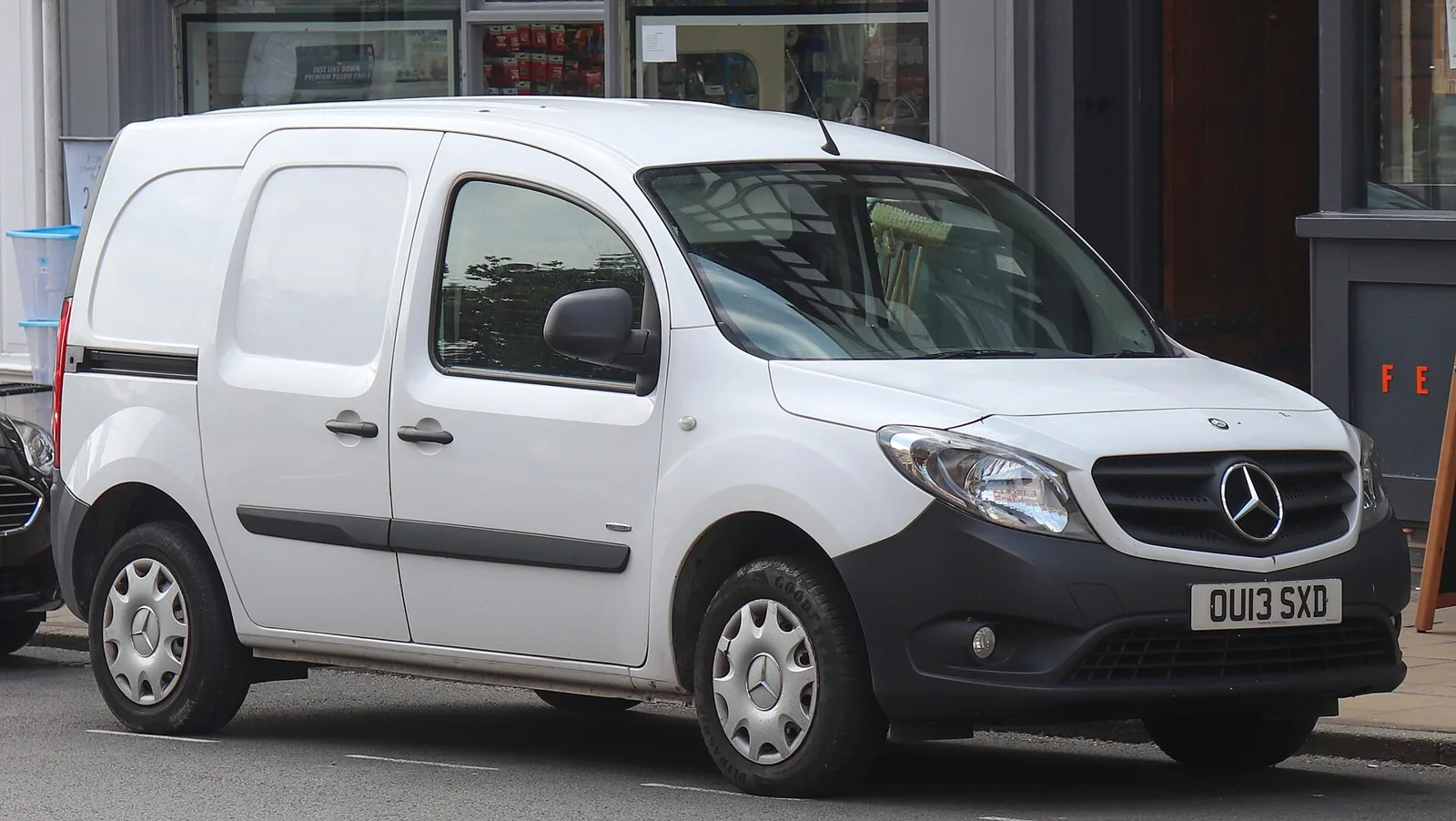
The common platform was developed in partnership with the German maker Mercedes-Benz. Renault Group and Daimler signed the partnership on commercial vehicles on 10 April 2010, and it had already produced the Renault Kangoo III and the Mercedes-Benz Citan (Type 420) at the Maubeuge plant from 2021.
Much of the Master IV's engineering is common with the Mercedes-Benz Sprinter III, while each brand keeps its own styling.
Why is the Master IV called Aerovan?
Aerodynamics was one of the most important items in the XDD brief. To cut drag as far as possible, several parts changed shape, including a shorter bonnet, a forward and sloping windscreen, new mirror shapes and air-flow guides in the bumper. The rear section was narrowed, and the roof slope changed too.
These changes aimed at lower consumption, especially for the electric version, and also at better acoustic comfort inside the cabin. The development used several test sites. The vehicle was too large for the usual wind tunnel at Saint-Cyr-l'Ecole, so early studies used scale models at 83%. The full-size versions were then validated in a Netherlands facility that normally tests aircraft.
Compared with the previous Master, the drag coefficient improved by 20%. Winter tests were run in Scandinavia, and the disguised prototype was then tried in Spain to check how it coped with extreme temperatures. Photographers caught the prototype during those runs, which gave the first hints of the new look.
When and how was the Master IV revealed?
On 7 November 2023, Renault released a first image of the left side of the silhouette. It was shown in the shadows on purpose, to build curiosity three weeks before the official presentation at the Solutrans show, held from 21 to 25 November 2023.
The Master IV then made its world premiere at the 17th Solutrans show, a road and urban transport event held every two years at Eurexpo near Lyon. Renault held a press conference at 10 a.m. and showed three versions: the chassis-cab, a three-seat van and a passenger transport variant.
Production began at the end of 2023 at the Batilly plant. In that opening stretch, 164 diesel units and 52 E-Tech units were built.
What engines and batteries does the Master IV use?
At launch the Master IV was offered in four diesel versions and two electric versions. All four diesel outputs came from the 2.0 Blue dCi engine, starting with a 105 PS (77 kW; 104 hp) tune and rising to 170 PS (125 kW; 168 hp). The 105 PS option was limited to the L2H2 body.
Master IV engine and battery figures
| Version | Power | Battery | Range |
|---|---|---|---|
| 2.0 Blue dCi | 105 PS (77 kW; 104 hp) | - | - |
| 2.0 Blue dCi | 130 PS (96 kW; 128 hp) | - | - |
| 2.0 Blue dCi | 150 PS (110 kW; 148 hp) | - | - |
| 2.0 Blue dCi | 170 PS (125 kW; 168 hp) | - | - |
| Urban Range | 96 kW (131 PS; 129 hp) | 40 kWh | 180 km (112 mi) |
| Long Range | 105 kW (143 PS; 141 hp) | 87 kWh | 460 km (286 mi) |
The electric versions both deliver 300 N m (221 lb ft) of maximum torque. Renault's tests showed that outside temperature affected range far more than the carried load did. The electric version's system keeps its temperature at 25 degrees Celsius, and the battery can also power electric tools on a building site.
On the diesel side, the new generation emits 39 g/km less on average and uses 1.5 L/100 km less than the previous generation. Gearbox choice ran between a 6-speed manual and the new EAG9 nine-speed automatic with a torque converter.
Which body sizes does the Master IV come in?
The Master IV is sold with three wheelbases, numbered L2, L3 and L4, and with two roof heights, H2 and H3. Renault did not sell a short L1 version or a version without a roof raise, which is H1 in its numbering.
What is the Master IV's body and chassis made of?
The monocoque structure relies heavily on HLE steel (high elastic limit) and UHLE steel (ultra-high elastic limit). Both grades beat conventional steel on elastic limit, so the structure can carry heavy loads with less material and resists deformation in an impact.
Using these grades lets the chassis gain both lightness and stiffness.
How did braking change on the Master IV?
The braking system is improved over the previous generation. The mechanism adapts to the load on the vehicle, so the brake pedal gives the same feel whether the van is empty or full.
The system also activates automatic emergency braking more quickly, halving the reaction time, and it recovers more kinetic energy on the electric versions, which helps to extend their range.
How does the Master IV's front end look?
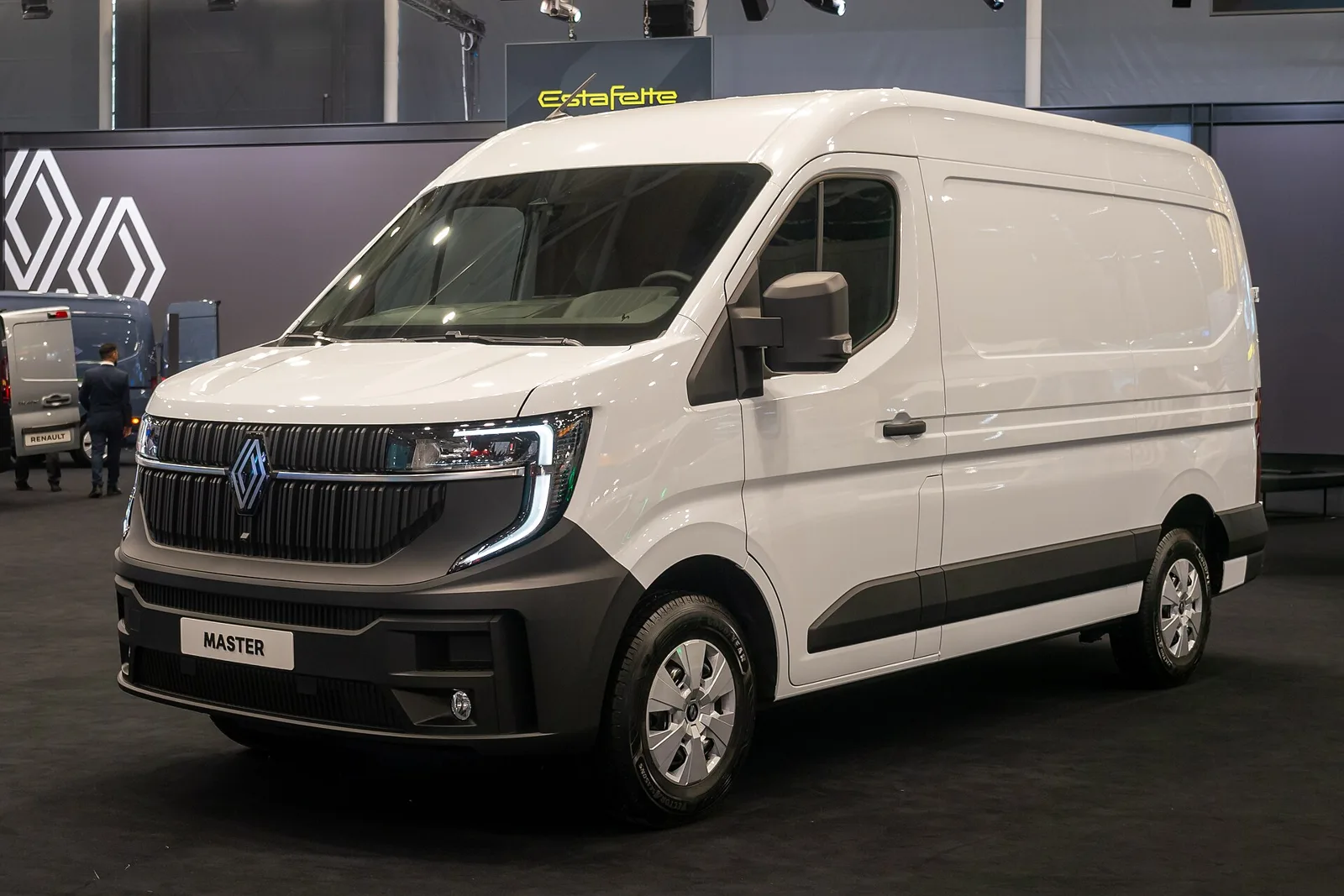
The clearest changes between the third and fourth generations are at the front. The emphasis is on solidity and robustness, with a broad, imposing grille at the centre of which sits the brand's new logo, introduced in 2021. The front face is vertical and the bonnet is more horizontal.
The daytime running lights sit at the ends of the front to widen the silhouette, and they take the C shape that is characteristic of Renault. The bumper is relatively simple and flat. At the rear, the window cut is asymmetric and slopes down to the right, a shape carried over from the Master II.
What is the Master IV's cabin like?
The interior was developed to resemble the cabins of the brand's passenger cars. The dashboard has an S-shaped design oriented towards the driver, which helps optimise space in the cabin.
Every version gets a 10-inch touchscreen as standard. Where the automatic transmission is fitted, the gearbox controls now sit on the steering wheel.
What trims and equipment does the Master IV offer?
The Master IV comes in two trim levels, the Advance and the Extra. Advance includes a 3.5-inch TFT digital instrument cluster, 16-inch steel wheels with a central cover, a 6-way adjustable driver's seat and manual air conditioning. The rear steel doors open to 180 degrees.
Extra is the top trim and adds grey cloth upholstery with blue stitching, a reversing camera, automatic air conditioning, a mobile office bench and integrated navigation with Google services. It also has an induction smartphone charger and LED lighting in the cabin and loading area.
The Red Edition launch series came shortly after the presentation, distinguished by a red grille trim and available with combustion or electric power. Body colours are priced as options, with Urban Grey, Agave Blue and Fire Red at 300 euros and Star Grey, Grey Blue and Pearl Black at 600 euros.
How did Nissan's Interstar III differ from the Master IV?
On 7 February 2024 Nissan unveiled the Interstar III, a clone of the Master IV. The Interstar line followed the same pattern, with the second model derived from the Master III and the first based on the Master II.
To set the Nissan apart, the third-generation Interstar has a specific grille with four horizontal chrome strips under the headlamps, broad Interstar lettering between the lights and a Nissan logo at the centre.
Where was the Master IV built and how did it do?
Like the Master I, Master II and Master III before it, the Master IV is produced entirely at the Batilly plant. Renault also backed the car with a campaign called Le vent a tourne, first broadcast on 17 September 2024, which highlighted the aerodynamic capabilities of the van.
The IAA Transportation 2024 show brought the Master IV the International Van of the Year 2025 title.