A car that merely warns you, a car that nudges you back, and a car that steers down the middle: what lane centering adds, who offers it and the camera chips underneath.
Lane centering is a driver-assistance system that steers a vehicle along the middle of its lane. Lane departure warning only alerts the driver, and lane keeping assist helps avoid crossing a line. Mobileye's camera-based EyeQ chips underpin many such systems, including Nissan ProPilot and, early on, Tesla Autopilot.
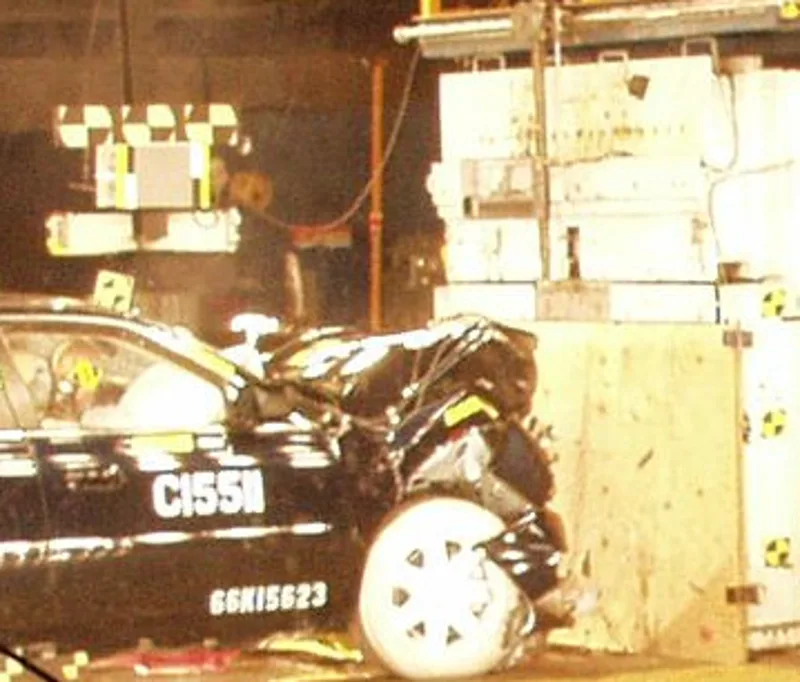
In a 2018 test by the Insurance Institute for Highway Safety, only one car, the Tesla Model 3, stayed within its lane on all 18 trials. The institute added that none of the vehicles could drive safely on its own.
Lane centering is a driver-assistance system that steers a car along the middle of its lane, instead of simply warning the driver or nudging the car back from a line. The cameras and software that make it possible come, in many cases, from one company, Mobileye.
What is lane centering?
Its other names include autosteer, auto steer, lane assist and lane centering assist. Whatever the label, it is a driver-assistance feature that holds a road vehicle in the middle of its lane and takes the job of steering off the driver. Combined with adaptive cruise control, it may allow unassisted driving for a time.
It is also a building block of automated lane keeping systems. Since 2019, semi-trailer trucks have been fitted with the technology too. A separate idea, machine autosteer, performs automated steering and positioning of farm machinery in a landscape.
Lane keeping stops you leaving the lane. Lane centering steers you down the middle of it.
What is the difference between lane centering and lane keeping?
Lane keeping helps a vehicle avoid crossing a line, while lane centering holds it in the middle of the lane. Lane departure warning does neither; it only sounds an alert once the car has crossed a line.
Three lane systems compared
| System | What it does |
|---|---|
| Lane departure warning | Alerts the driver after the car crosses a line |
| Lane keeping assist | Helps the vehicle avoid crossing a line; standardised in ISO 11270:2014 |
| Lane centering | Keeps the vehicle centred in the lane and almost always adds steering assist for gentle turns at highway speeds |
Regulators draw the same line. Territories that follow UNECE regulation 79, including Japan, the United Kingdom, the European Union, Russia, Turkey and Egypt, sort automatically commanded steering into categories. Category A helps with parking manoeuvres at no more than 10 km/h. Category B1 helps the driver keep the vehicle within the chosen lane, and lane keeping assist sits closest to it. Category B2 keeps the vehicle in its lane for extended periods without further driver command, and that is the nearest match to lane centering. Categories C, D and E cover specific manoeuvres such as lane changes.
In the United States, lane centering fell outside every federal vehicle safety standard as of 2018, according to the national safety regulator, NHTSA.
How does a car see the lane?
Through a camera and image processing. Cameras mounted on the car feed real-time pictures to software that detects the lane lines, using techniques such as the Hough transform, the Canny edge detector, the Gabor filter and deep learning.
Everything depends on what the camera can see. Today's systems depend on markings being visible, and they usually fail on faded, absent, wrong or overlapping paint. Snow over the paint, or obsolete markings that remain visible, can also affect accuracy. Beyond that, systems differ in how well they handle turns, what speed limits apply and whether they resume from a stop.
Which cars offer lane centering?
Many mainstream makes do, usually together with adaptive cruise control, and the pair meets the SAE standard for Level 2 automation. It is often reserved for pricier trims: on the Hyundai Kona EV, for example, adaptive cruise control is available only on the Ultimate edition.
Nissan ProPilot
ProPilot is based on Mobileye technology and helps with acceleration, steering and braking on single-lane highways. It keeps the car centred, follows curves and draws on a forward camera, a forward radar and other sensors. Below 31 mph it deactivates if it is not tracking a vehicle ahead, and its cruise control copes with stop-and-go traffic provided any halt lasts under 4 seconds. A traffic sign recognition system shows the latest speed limit detected by a windscreen camera behind the rear-view mirror.
Reviews are mixed. ExtremeTech found it worked well over 1,000 miles of testing, needing driver intervention only on some twisty sections. In the Euro NCAP tests of 2018 ProPilot failed some tests, as every other system tested did. Consumer Reports rates it especially helpful in stop-and-go traffic. Nissan's hands-off ProPilot 2.0 uses Mobileye's EyeQ4 chip.
Honda Sensing and AcuraWatch
Honda's Lane Keeping Assist System applies mild steering torque when the car drifts from the middle of a detected lane without the turn signal on. It does not work below 72 km/h (45 mph). Certain cars with Traffic Jam Assist hand the job to that system below 72 km/h (45 mph), all the way down to a stop, and switch back to lane keeping above that speed.
The packages also bring adaptive cruise control with a low-speed follow mode, sign recognition, automatic high beams and a blind spot information system.
GM Super Cruise
Super Cruise works only on freeways that have been mapped in advance. It combines those maps with a precise satellite position from Trimble's RTX correction service to decide whether it can be switched on. Most cars require hands on the wheel, but Super Cruise watches the driver's eyes instead, which is what allows hands-free driving.
Tesla Autopilot
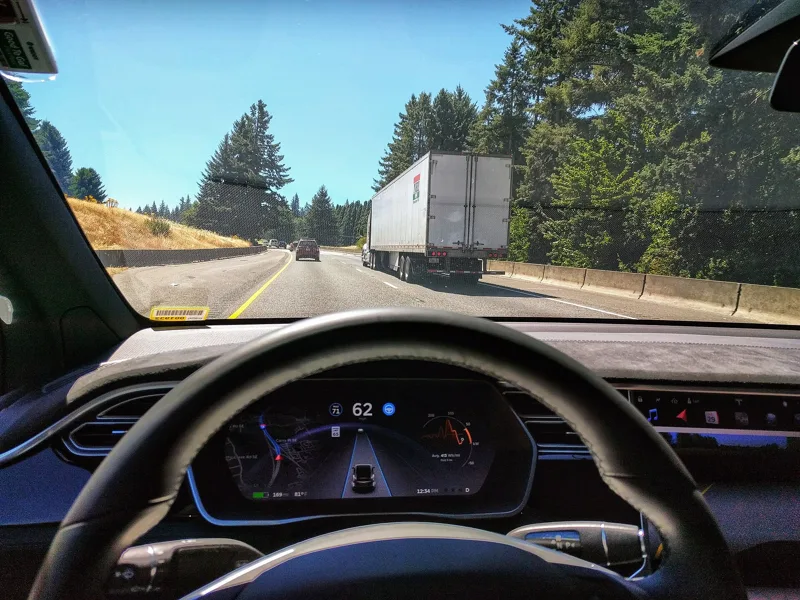
Autopilot began on an off-the-shelf Mobileye system, and Tesla moved to its own design after Mobileye ended their partnership. Crash rates on the Model S and Model X fell by almost 40% while Autopilot with the Mobileye system was in use, though that fall cannot be attributed directly to lane centering.
Are lane centering systems safe?
The evidence is still developing. In 2018 the Insurance Institute for Highway Safety said it was too early to name the safest Level 2 implementation, and that none of the cars it assessed could drive safely on its own.
The institute found the evidence for safety benefits was not as strong as for adaptive cruise control, yet it noted that stopping crashes caused by leaving the lane could save nearly 8,000 lives annually. That helps explain why regulation concentrates on keeping the driver engaged. International rules require systems to check that the driver's hands stay on the wheel, with escalating warnings and eventual disengagement. In North America some makers have hands-off systems that monitor whether the driver is watching the road.
Who is Mobileye and how does its vision technology work?
Mobileye is an autonomous-driving company based in Israel and domiciled in the United States, and it makes the camera-based chips and software behind many driver-assistance features. Its EyeQ system-on-chip uses a single camera sensor to deliver emergency braking, adaptive cruise control, lane keeping, traffic jam assist and forward collision warning.
Professor Amnon Shashua of the Hebrew University founded the company on 13 May 1999, developing his academic work into software that spots vehicles through a camera. Its commercial idea was to add intelligence to inexpensive cameras. A first research centre followed in 2004, and the EyeQ1 processor launched in 2008 with driver assistance including automatic emergency braking. The fifth-generation BMW 7 Series was one of the first cars to use it. New chip versions came in 2010, 2014 and 2018.
The business grew fast. Mobileye floated on the New York Stock Exchange in 2014, raising $890 million in the largest Israeli IPO in United States history, and by the end of that year its technology was in 160 car models from 18 manufacturers. Intel announced in March 2017 that it would acquire the firm for $15.3 billion, and the company went public again in 2022. In October 2022 Intel offered 5% to 6% of the shares, raising $861 million on 41 million shares, which valued Mobileye at around $17 billion.
How many carmakers use EyeQ?
More than 27 manufacturers use EyeQ for their assisted-driving technologies, and its fifth generation supports fully autonomous vehicles. In 2018 Mobileye said 11 automakers would adopt the EyeQ4 chip to enable Level 2+ and Level 3 systems, which would together represent more than 50% of the auto industry. The average selling price of the chip to automakers that year was about $450.
Level 2 is known as hands off, with the system controlling acceleration, braking and steering. Level 3 is known as eyes off, where the driver can safely turn attention away from the road.
Which systems does Mobileye sell?
| System | What it is |
|---|---|
| Surround ADAS | Hands-off highway assist and intelligent parking, using surround-view cameras and radars |
| SuperVision | Hands-off system built on EyeQ5 and 11 cameras, with no other sensor type; Geely's Zeekr electric car began road trials with it in 2021 |
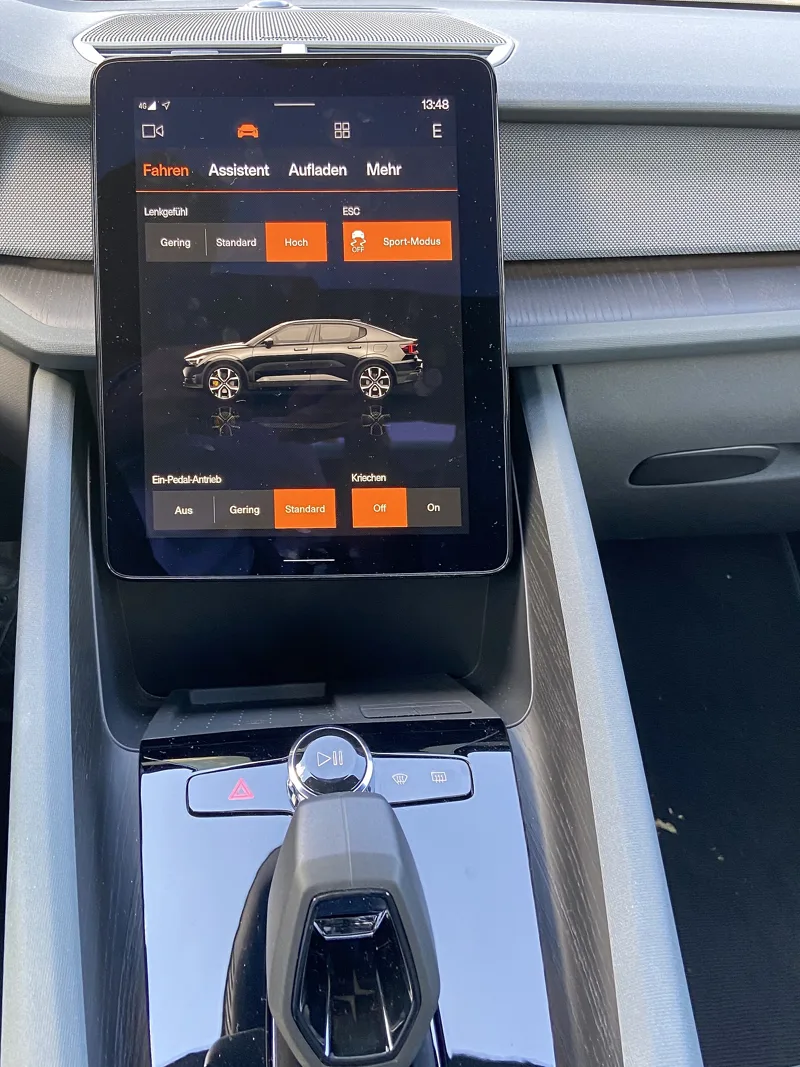
| Chauffeur | Hands-off, eyes-off highway driving; as of August 2023, planned for initial release on the Polestar 4 |
| Drive | Level 4 self-driving with 13 cameras, 6 radars and nine LiDAR units (3 long-range and 6 short-range); first fitted to ride-hailing vehicles in 2021 |
Two further pieces of technology sit behind the cameras. Road Experience Management uses real-time data from equipped vehicles to maintain 3D maps, at about 10 kilobytes per kilometre, and Mobileye says it had mapped more than 7.5 billion kilometres of roads by January 2021. Responsibility-Sensitive Safety, first proposed in 2017, is a mathematical model that digitises the implicit rules of safe driving so self-driving vehicles do not cause accidents.
The firm also sells aftermarket vision systems built on the same core technology as its production units, offering speed limit indication, intelligent headlamp control, headway monitoring, and forward collision and lane departure warnings.
What happened between Mobileye and Tesla?
In August 2015 Tesla Motors announced it would use Mobileye's technology in the Model S. Mobileye ended the partnership in June 2016, after news emerged of the first fatal crash of a Model S using Autopilot. The two companies disagreed over the cause. Amnon Shashua said Autopilot was a driver assistance system, not a driverless one, and Mobileye said its systems did not recognise a lateral turn across path.
Other partnerships continued. Mobileye announced a deal in July 2020 to supply EyeQ gear across Ford's global line, Toyota chose Mobileye and ZF for driver-assistance systems in 2021, and in May 2023 Porsche and Mobileye launched a collaboration to bring SuperVision to future Porsche production models. Bosch, Delphi, ZF and Mobileye all supply sensors, control units or algorithms, and car makers then integrate and refine them.
Where this goes next
As of August 2023, Mobileye planned to release its Chauffeur system first on the Polestar 4. In May 2020 it started robotaxi trials in Israel using Nio electric vehicles, and it unveiled its robotaxi at the IAA Mobility show in Munich in 2021. In December 2025 it announced about 200 lay-offs, between 4% and 5% of its workforce, as part of a plan to regroup after falling demand and revenue.