A modified piston engine, no CO2 from the fuel and a Toyota GR Yaris in the headlines.
A hydrogen combustion engine is a modified petrol-style piston engine that burns hydrogen instead of fuel. It makes no CO2 from the fuel but can emit nitrogen oxides, so it is not zero emission. A fuel cell, by contrast, makes electricity for a motor. No hydrogen combustion cars are on sale.
The first internal combustion engine ever designed, in 1806, ran on hydrogen. Two centuries later the same fuel is back in the pit lane, burned in pistons that look a great deal like the ones in your petrol hatchback, and in August 2026 a car built by JCB with two hydrogen piston engines took the hydrogen land speed record to 653.9 km/h (406.3 mph).
Can an ordinary piston engine run on hydrogen?
It can, and that is the whole attraction. A hydrogen internal combustion engine vehicle uses a modified version of a conventional petrol engine. Pistons still compress a mixture, a spark still lights it, and the burn still pushes the piston down. Only the fuel and the hardware around it change.
Think of it as swapping the diet of an athlete rather than building a different athlete. The skeleton, the lungs and the muscles stay; the food is different and so the kitchen has to be rebuilt.
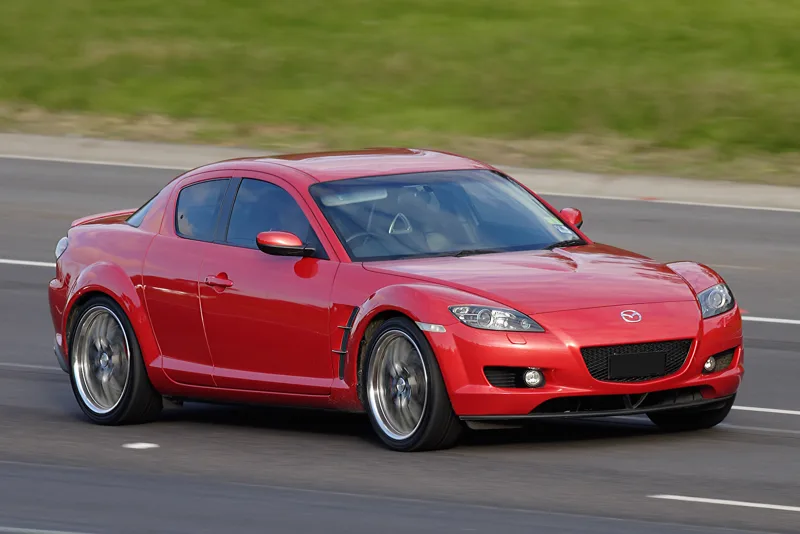
Because the engine is so familiar, retooling a factory costs far less than starting a fuel cell line from scratch. Mazda has built rotary Wankel engines that burn hydrogen, and existing engine designs can still serve in places where fuel cells are not yet a practical answer, cold-weather work being one example.
Paul Dieges patented a modified petrol engine for hydrogen in 1970, and Tokyo City University has been developing hydrogen engines since the same year, with a bus and a truck among its recent projects.
The hydrogen engine is not zero emission, only zero CO2, and the difference is the NOx.
Hydrogen combustion engine vs fuel cell
Both are called hydrogen cars, and that is where the confusion starts. They share a fuel and almost nothing else.
| Question | Hydrogen combustion engine | Hydrogen fuel cell |
|---|---|---|
| What happens to the hydrogen | Burned in a modified piston or Wankel engine | Reacted with oxygen across an electrolyte to make electricity |
| What turns the wheels | The engine, through a conventional gearbox | An electric motor |
| Tailpipe | Water vapour, plus NOx; trace oil by-products | Water; usually classed as zero-emission |
| CO2 from the fuel | None | None |
| Where efficiency peaks | High load | Low load, falling at high load |
| Factory retooling | Much lower | A new kind of powertrain |
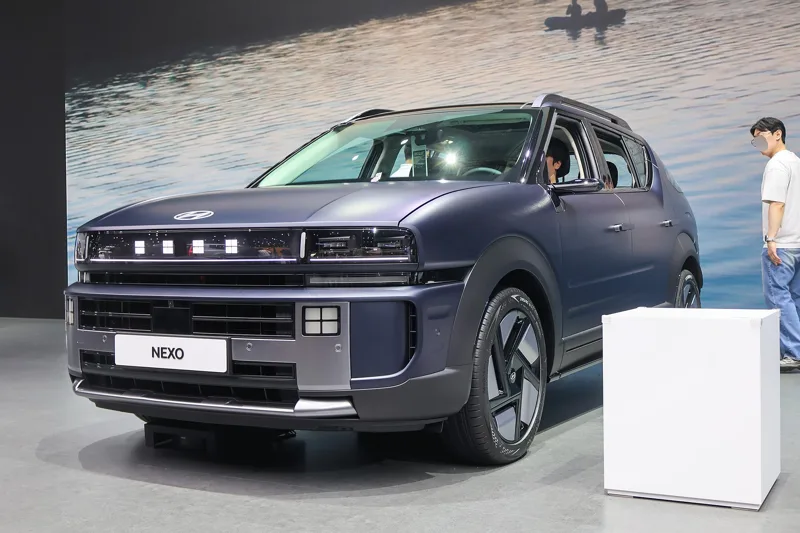
| On sale to the public | No hydrogen combustion cars | Toyota Mirai, Hyundai Nexo, Honda CR-V e:FCEV (lease only) |
A fuel cell is built from an electrolyte, an anode and a cathode, and behaves like a battery that you refill with hydrogen rather than recharge. The combustion engine skips all of that and simply sets fire to the gas.
What has to change inside the engine?
Hydrogen is not petrol, and an engine fed with it needs a long list of upgrades. The valves and valve seats are hardened, the connecting rods are made stronger, and the head gasket material is tougher. The spark plugs are not tipped with platinum, the ignition coil delivers a higher voltage, and the crankshaft damper is larger. The injectors must be designed for a gas rather than a liquid, and the oil has to cope with high temperatures. Many designs add a positive pressure supercharger and a reworked intake manifold.
Taken together, these changes are described as adding up to about one and a half times the cost of a petrol engine.
Why direct injection matters for power
Here is the catch with a gas. Hydrogen needs a lot of space. At the chemically ideal air-to-fuel ratio of 34:1, the gas displaces 29% of the combustion chamber and leaves only 71% for air, so there is less oxygen to burn than in a petrol engine.
How the fuel is metered decides the outcome. Carburettors and port injection mix fuel and air before the intake valve closes, which caps the theoretical output at roughly 85% of a petrol engine. Direct injection adds the hydrogen after the valve has closed, so the chamber starts full of air and output can be about 15% higher than petrol. Depending on the method, then, a hydrogen engine can be 15% stronger or 15% weaker than its petrol equivalent.
In practice, engineers rarely run the ideal mixture, because a mixture that perfect burns very hot and forms a large amount of nitrogen oxides. Most designs use about twice as much air as the chemistry strictly needs.
Is a hydrogen engine really clean?
It depends on what you count. Pure hydrogen contains no carbon, so burning it produces no carbon dioxide, no carbon monoxide and no unburned hydrocarbons from the fuel itself. The main exhaust product is water vapour.
But air is mostly nitrogen, and a hot flame forces nitrogen and oxygen to combine. That makes NOx, the same family of pollutants emitted by petrol, diesel and natural gas engines. That is why a hydrogen combustion engine cannot be called zero emission, only zero CO2.
Hydrogen's wide flammability range, from 3% to 70% hydrogen in air, helps. An engine can run lean, with less fuel than the chemically ideal amount, which improves economy, completes the burn and lowers the combustion temperature, so less NOx forms. Exhaust gas recirculation, now common on modern engines, gives a further route to cutting NOx. A trace of lubricating oil also reaches the chamber and burns, leaving tiny amounts of CO, CO2, SO2, hydrocarbons and particulates, several orders of magnitude below a petrol or diesel engine.
Where the hydrogen comes from
The tailpipe is only half the story. Almost 96% of the world's hydrogen at the end of 2021 came from natural gas (47%), coal (27%) and oil (22%), with only about 4% from electrolysis. A separate figure puts steam methane reforming at 98% of production in 2019. Either way, most hydrogen today is made from fossil fuel, and producing it currently causes more emissions than burning the fossil fuel it is made from.
Leaks are a separate worry. Hydrogen is invisible and highly flammable, and the global warming potential of leaked gas is put at 11.6 times that of CO2.
How efficient is a hydrogen engine?
The textbook model of a petrol-style engine, the ideal Otto cycle, improves from 47% to 56% thermal efficiency as the compression ratio rises from 8 to 15. Real engines get 50% to 75% of that figure, and about 60% is suggested as the limit if cost were no object. One presentation from Oak Ridge National Laboratory goes further and claims the theoretical limit is 100%, because the engine is an open cycle and so not bound by the usual Carnot ceiling. By comparison, the best a fuel cell can manage is 94.5%, calculated from hydrogen's lower heating value.
The shape of the efficiency curve is more interesting than the peak. A fuel cell is at its best at low load and loses efficiency as demand rises. A hydrogen engine does the opposite, peaking at high load where it can match a fuel cell. From this it follows that combustion engines are a fair match for fuel cells in heavy-duty work.
Small engines are a different story. A 67 ml four-stroke converted to hydrogen managed 21% efficiency on a dynamometer at its best point, producing 520 W. A similar 107 ml Honda GX110, whose best petrol efficiency is 26%, was fitted to a lightweight vehicle and returned only 3.5% to 5.9% average efficiency, with a 7.5% peak.
Who is racing a hydrogen engine?
Motor sport has become the proving ground, with Toyota the loudest voice. The record, though, goes back further.
- In 2000 a converted Shelby Cobra, led by James W. Heffel of the University of California, Riverside, reached 108.16 mph, missing the hydrogen land speed record by 0.1 mph.
- Between 2005 and 2007 BMW tested the Hydrogen 7, a luxury car with a hydrogen engine that hit 301 km/h (187 mph). At least two were built.
- An Aston Martin Rapide S fitted with a dual petrol and hydrogen system from Alset GmbH became the first car using hydrogen technology to finish the 24 Hours Nurburgring.
- In May 2021 a hydrogen-powered Toyota Corolla Sport completed the Super Taikyu series 24-hour race at Fuji.
- In November 2021 Kawasaki, Subaru, Toyota, Mazda and Yamaha announced together at Okayama that the enemy was not the combustion engine, and that carbon neutrality would need many solutions. Yamaha showed a 5.0-litre V8 hydrogen engine based on the Lexus 2UR.
- In May 2023 a Corolla Sport running on liquid hydrogen finished the same Fuji 24-hour race, the first time a car on liquid hydrogen had entered a race anywhere in the world.
Toyota said in June 2022 that its race car had improved cruising range by about 20%, power by about 20% and torque by about 30%. In June 2023 it unveiled the GR H2 Racing Concept, a hydrogen race car built for the 24 Hours of Le Mans.
The Toyota GR Yaris hydrogen car
The Toyota hydrogen GR Yaris is the most relatable of these experiments, because the road car it starts from is on sale. Toyota ran the GR Yaris H2 in a demonstration at the World Rally Championship event in Ypres in August 2022. The GR Yaris Hydrogen is listed as a concept model that takes the standard G16E-GTS engine and modifies it to burn hydrogen.
That donor engine is a 1.6-litre turbocharged three-cylinder with both direct and port injection. In ordinary form it produces between 192 kW and 200 kW (257 to 268 hp) depending on the market, rising to 224 kW (300 hp; 305 PS) in the Japanese-market facelift of 2024. The car was created to meet World Rally Championship homologation rules, made its debut at the Tokyo Auto Salon in 2020, and uses a permanent four-wheel drive system that Toyota calls GR-Four. It also became the basis of the GR Yaris Rally1 car that debuted in the 2022 season.
Motorcycle makers are in the game too. Kawasaki showed a hydrogen engine in September 2022 that used the same injector as the hydrogen Corolla, and in May 2023 Yamaha, Honda, Kawasaki and Suzuki won approval from Japan's trade ministry to form the HySE research association for small mobility engines.
Why fuel cell cars struggled, and why that keeps the engine alive
The numbers explain why people are still looking at pistons. Sales of fuel cell electric vehicles worldwide reached 70,200 by the end of 2022, set against 26 million plug-in electric vehicles. In the United States in 2023, 3,143 hydrogen cars found buyers, compared with 380,000 battery electric cars. Toyota's global fuel cell sales fell to 1,702 in 2024, counted through November.
Infrastructure is the sore point. A large share of public hydrogen stations in California cannot dispense the fuel, and in 2024 owners of the Toyota Mirai brought a class action lawsuit over the lack of availability. In October 2024 Hyundai recalled all 1,600 Nexo vehicles it had sold in the United States over a risk of fuel leaks and fire traced to a faulty pressure relief part. Daimler had stepped back from hydrogen car development by 2017, and by 2020 all but three car makers had dropped plans to make them.
The Mirai itself is not a bad car on paper. It has a range of 502 km (312 mi) and takes about five minutes to refill. Toyota also offered 5,680 patents free of charge in 2015 to encourage the market. Yet the market did not materialise as hoped.
Hydrogen combustion engine pros and cons for drivers
Set against that background, the case for the engine looks like this.
- In its favour: no CO2 from the fuel, familiar mechanics, lower retooling cost than a fuel cell line, and an efficiency peak at high load that suits heavy work.
- Against it: NOx has to be managed, engines of small size lose efficiency, hydrogen displaces air and trims power unless direct injection is used, and the engine needs hardened parts that add cost.
- Shared problems: the gas is hard to store and move because the molecule is so small, carries little energy per unit of volume at ambient conditions, and today mostly comes from fossil fuel.
For a private buyer, the plain fact is that hydrogen combustion cars are not commercially available. The nearest thing to a hydrogen car you can lease is the fuel cell Honda CR-V e:FCEV, in very limited numbers.
Where this goes next
The industry's own statements point to heavy vehicles first. In July 2022 a group of Japanese companies, Isuzu, Denso, Toyota and Hino Motors among them, together with the Commercial Japan Partnership Technologies Corporation, said they had begun early planning and research into hydrogen engines for heavy commercial vehicles, one option on the road to carbon neutrality. Interest has been growing for trucks partly because the engines are seen as a bridge towards future climate goals while remaining compatible with existing manufacturing knowledge.
The International Energy Agency's 2022 net-zero scenario sees hydrogen meeting about 30% of heavy truck energy demand in 2050, mostly long-distance freight, while battery electric power would cover around 60%. That is a forecast, not a promise.
One commentator, John Max of Hydrogen Fuel News, believes hydrogen could keep classic cars on the road, either burned directly or used as a raw material for synthetic fuel. Toyota says it plans to apply the safety know-how from its fuel cell work to its racing engines. For now, hydrogen combustion cars remain unavailable to buy.