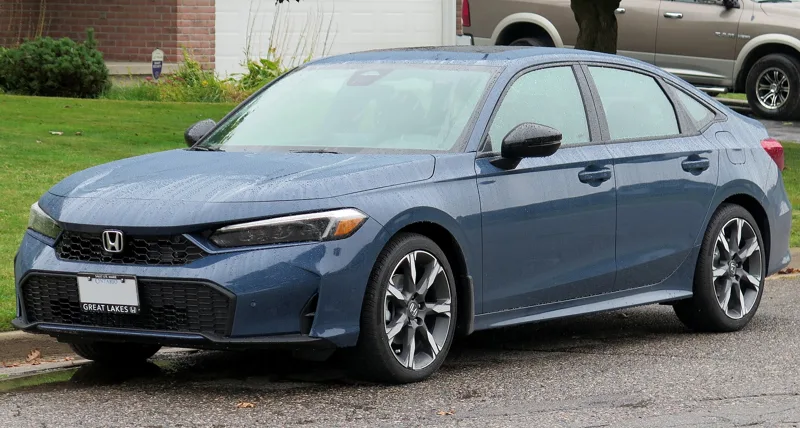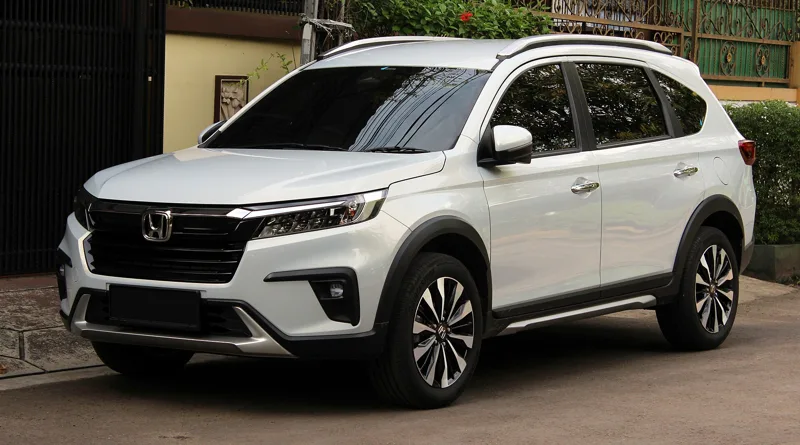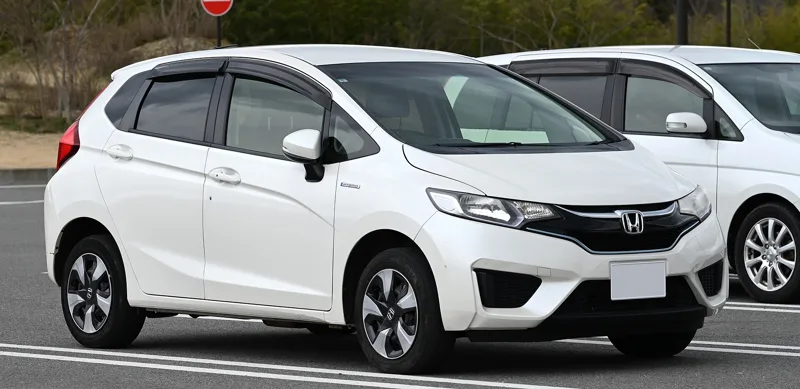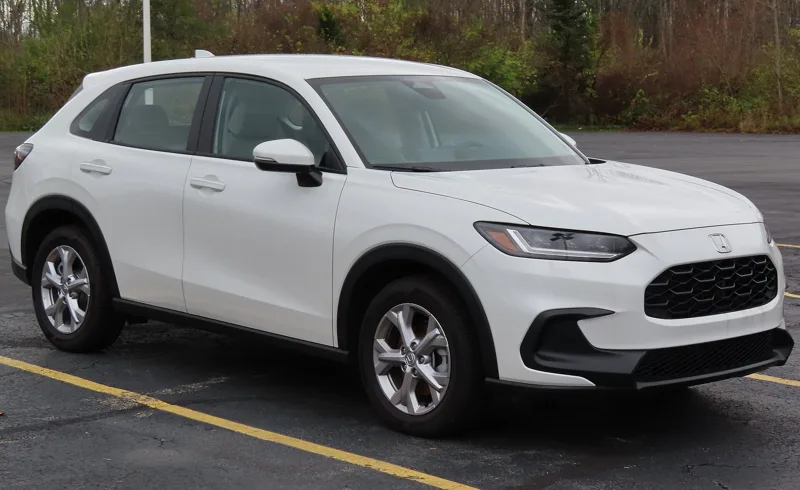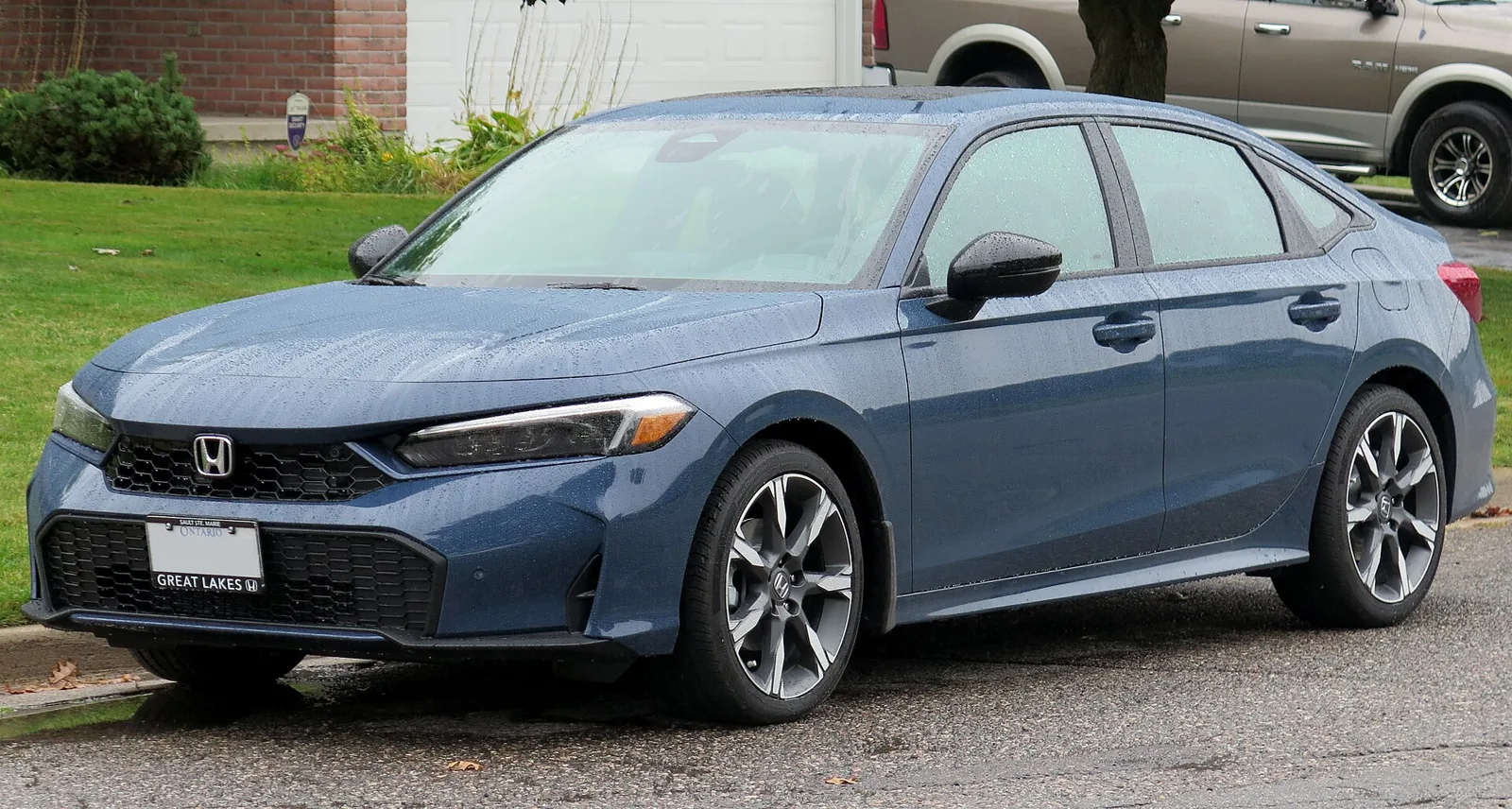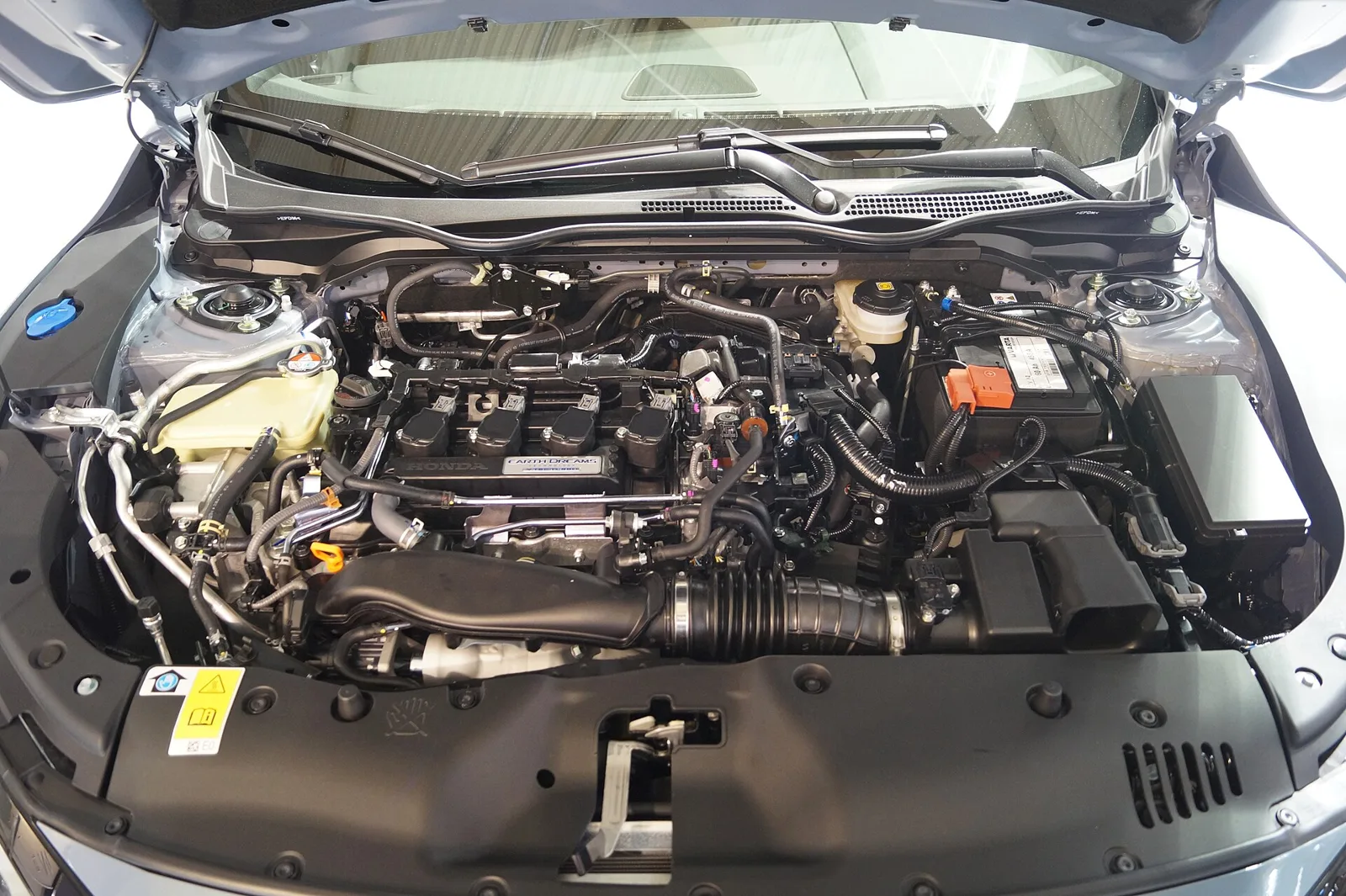
From a V6 with titanium connecting rods to a racing-bred Prelude four and the small i-DSI and i-VTEC engines in a Fit or Civic.
Honda's C, H, L and R are engine families. The C is its first production V6 (1985 to 2005), the H a 1990s high-performance four from the Prelude, the L a small four introduced with the 2001 Fit, and the R a Civic four launched in 2006.
Honda built an engine with titanium connecting rods, a feat no mass-production car had managed before, and then fitted it to just one model, the NSX. That engine, the C30A, belongs to the C series, the V6 family that began as Honda's first and ran for more than 20 years. Four Honda engine families, the C, H, L and R, cover everything from that exotic V6 to the high-revving Prelude four and the small engines that power a Fit or a Civic.
Each one reflects a different Honda: the engineer's showpiece, the racing special, the economical everyday four and the family workhorse.
What is the Honda C series V6?
The Honda C series was the company's first production V6, built in sizes from 2.0 to 3.5 litres between 1985 and 2005. It was first used in the KA series Legend and in the Legend's British sister car, the Rover 800 series, and it was the second mass-produced Japanese V6, two years after the Nissan VG.
Every C engine shares a 90-degree angle between the cylinder banks, the same spacing between bores and four valves per cylinder. All are made of aluminium, with single or dual overhead camshafts driven by a timing belt that also drives the water pump. They are interference designs, which means a broken belt lets open valves strike the pistons and causes severe damage.
The family divides into three groups, and parts do not generally swap between them. The transversely mounted C20A, C20AT, C25A and C27A fit the Legend and its relatives. The C30A and C32B are transversely mounted at the rear, behind the seats of the NSX. The longitudinally mounted C32A, C35A and C35B fit the larger Legends and one concept car.
The C30A was the second Honda engine with VTEC and the first mass-production engine with titanium connecting rods.
Which cars used the Honda C engines?
The C engines went into the Legend and its Acura, Rover and Sterling cousins, into the Accord and Inspire, and, in tuned form, into the NSX. The sizes ran from 1,996 cc in the C20A up to 3,473 cc in the C35A.
- C20A: a 1,996 cc SOHC V6 with 145 PS (107 kW; 143 hp) at 6,500 rpm, sold only in Japan in the 1985 to 1988 Legend. Its variable-length intake used six small runners below 3,500 rpm and six larger ones above.
- C20AT: the turbocharged Wing Turbo of 1989, in Japan only, with 188 bhp (140 kW; 191 PS) and 241 N.m. It used a variable-geometry turbo with an intercooler, controlled by an 8-bit ECU, and was extremely rare because it cost far more than the 2.7-litre (2,675 cc) naturally aspirated Legend.
- C25A: 2.5 litres with 24 valves, 165 PS (121 kW; 163 hp) in Japan and 151 bhp (113 kW; 153 PS) in North America, fitted to the 1985 to 1987 Legend, the Acura Legend, the Rover 825 and the Sterling 825i.
- C27A: a 2.7-litre engine with a variable-length intake, rated at up to 132 kW (179 PS; 177 bhp), used in the Legend, Rover 827, Acura Legend and, from 1995 to 1997, the Accord.
- C32A: 3,206 cc, 200 hp (203 PS; 149 kW) or in Type-II form 230 hp (233 PS; 172 kW) at 6200 rpm, in the Acura Legend, Honda Inspire and Saber, Acura 3.2TL and Daewoo Arcadia.
- C35A: 3,473 cc and the largest of the family. The Legend version made 212 bhp (215 PS; 158 kW), and the 2002 to 2004 Acura 3.5RL made 225 bhp (228 PS; 168 kW) with 314 N.m.
- C35B: a DOHC VTEC V6 for longitudinal use, built only for the 1991 Honda FS-X concept, rated at 280 hp (284 PS; 209 kW).
Honda chose a 90-degree V in place of the taller, more common 60-degree layout. The crankshaft had crankpins offset by 30 degrees so that the engine sits low and fires smoothly. The C25A also used equal-length exhaust pipes and an external water-cooled oil cooler.
Why was the Honda C30A in the NSX special?
The C30A was a DOHC VTEC V6 of 2,977 cc. Peak power of 270 bhp (274 PS; 201 kW) arrived at 7,300 rpm, and peak torque of 284 N.m at 6,500 rpm. It was the second Honda engine to use VTEC after the B16A, and its titanium connecting rods were a first in a mass-production vehicle.
Its bore of 90 mm and stroke of 78 mm make it highly oversquare, which pushes power towards high revs. A 90-degree V6 would normally fire unevenly, so Honda offset the crankpins to obtain an even 120-degree firing interval. VTEC changes cam lift according to revs and throttle, giving high peak power without losing a flat torque curve, and a secondary intake plenum that opens at 4800 rpm helps the engine breathe at the top end.
The block is an open-deck aluminium alloy casting with ductile iron cylinder sleeves, and the head carries 24 valves with the VTEC mechanism worked by oil pressure. Individual ignition coils sit directly over each spark plug. Complexity, cost and exotic materials meant the engine was used only in the NSX, where the four-speed automatic cars got a gentler 252 bhp (188 kW; 255 PS) version. The C30A powered the NSX from 1991, including the 1994 to 1996 NSX Le Mans, and the 2004 NSX-GT.
That 2004 racing car ran in the JGTC series with Team Honda Racing. Mugen extensively modified a C30A into a turbocharged engine, the first turbocharged Honda engine used in the series, though exact figures were kept secret and rumours put it above 500 bhp (373 kW). Earlier GT-spec NSXs had used a naturally aspirated C32B.
The C32B
The C32B is an update of the C30A rather than a relative of the C32A. From 3,179 cc it produces 290 bhp (294 PS; 216 kW), peaking at 7,100 rpm, and 304 N.m, peaking at 5,500 rpm, with 93 mm pistons in place of 90 mm and the same 78 mm stroke. To fit the larger pistons Honda used Fiber Reinforced Metal, an alumina and carbon fibre material cast into the aluminium alloy, allowing thinner cylinder walls. The C32B also had 36 mm intake valves, 1 mm larger than the C30A's. It went into the 1997 to 2005 NSX with a six-speed manual and into Super GT cars.
What is the Honda H engine?
Honda's H engine was its larger high-performance four-cylinder family in the 1990s and early 2000s. It grew largely out of the F engine, formed the basis of Honda's touring car racing engines for years and even turned up in lightweight CR-X drag cars.
There were two sizes, the 2.2-litre H22 (2,157 cc) and the 2.3-litre H23 (2,259 cc). They shared a single block, with different crankshafts and connecting rods creating the difference in capacity.
The H22 and its racing life
The H22 debuted in the United States in 1993 as the H22A1 in the Prelude VTEC, and versions of it were the Prelude's signature performance engine worldwide until production ended in 2001. It had bore and stroke of 87 mm by 90.7 mm, dual overhead cams, 16 valves, VTEC and an aluminium block and head. VTEC engaged at 5200 rpm, and the rev limiter cut in between 8700 and 9100 rpm depending on the car. The 1992 to 1996 blocks were closed-deck and the 1997 to 2001 blocks open-deck, and all H22s used FRM cylinder liners.
In 1994 Honda of Europe took the H22A head and block and destroked it from 2.2 litres to 2.0 for the European Formula 3 series. Mugen later ran the same layout as the F20B (MF204B) from 1997 to 2001. The F3-based engine also powered the Accord in the British Touring Car Championship from 1995 to 1997, after Neil Brown Engineering of England converted it. Honda of Japan used it in the Japan Touring Car Championship Accord and won the title in both 1996 and 1997. The F20B is a cast-iron sleeved version of the H22A built to allow Honda to enter the 2-litre class of international racing.
H22 outputs by market
The Japanese Prelude Si VTEC and SiR were rated at 200 PS (147 kW; 197 hp), with the peak at 6,800 rpm, and 219 N.m of torque at 5,500 rpm. The Type-S and SiR S-Spec got more aggressive cams and mild intake porting, which lifted output to 220 PS (162 kW; 217 hp) and brought a red valve cover. American, Canadian and Australian 4th generation Preludes had the H22A1 with 190 PS (140 kW; 187 hp), and the European Prelude 2.2i VTEC had the H22A2 with 185 PS (136 kW; 182 hp). The European Accord Type-R's H22A7 produced 212 PS (156 kW; 209 hp), peaking at 7,200 rpm, with 222 N.m available at 6,700 rpm. The Type S Prelude has a rev cut of 9100 rpm.
The H23
The H23 was a longer-stroke version of the H22 without VTEC, with an 87 mm by 95 mm bore and stroke. It had a 9.8:1 compression ratio, made 160 hp (119 kW) and 156 lb.ft (212 N.m), and redlined at 6500 rpm. It went into the Prelude Si, the European Accord 2.3i SR and the Rover 623. In 1998 Honda of Japan built a rare DOHC VTEC H23A for Japan only: an H22A head on the H23A block with an internal oil passage for the VTEC solenoid. It had the same power as the H22A but a lower redline of 7200 rpm, a 10.6:1 compression ratio, and the largest displacement of any H-series engine.
What is the Honda R engine?
Launched in 2006 for the non-Si Civic, the R engine is an inline-four. It has a fuel-injected aluminium-alloy block and head, a single overhead cam and 16 valves with Honda's i-VTEC system, and a compression ratio of 10.5:1. As of September 2019 the R engines were only offered outside Japan.
The design aims at fuel economy and low friction. A drive-by-wire throttle is computer controlled to cut pumping losses, piston rings get an ion plating, plastic and aluminium parts save weight, and variable-length intake manifolds keep the airflow going across a wide rev range. Piston cooling jets, previously a high-performance feature, are fitted. On the ninth-generation 1.8-litre Civic (2012 to 2015) the pistons carry a molybdenum disulfide coating applied in a polka-dot pattern. The automatic model is rated ULEV-2 by the California Air Resources Board, with 25 mpg-US (9.4 L/100 km; 30 mpg-imp) in the city and 36 mpg-US (6.5 L/100 km; 43 mpg-imp) on the highway.
R16, R18 and R20
The R16 has a bore and stroke of 81 mm by 77.4 mm for 1,595 cc. The R16A, fitted to the 2006 and 2012 Civic in Singapore, Egypt and Turkey, is rated at 125 PS (92 kW; 123 bhp) at 6,500 rpm. Its sibling, the R16B, in the 2016 Civic produces 153 N.m and has a 10.7:1 compression ratio.
The 1.8-litre R18 (81 mm by 87.3 mm, 1,799 cc) is the best known. The R18A1 in the 2006 to 2011 Civic, the City, the Stream and the FR-V makes 141 PS (104 kW; 139 bhp) in Japanese specification, while an Indian version at 132 PS (97 kW; 130 bhp) is tuned for lower octane fuel. The R18Z1 in the 2012 to 2020 Civic is rated at 145 PS (107 kW; 143 hp), reached at 6,500 rpm, with 175 N.m of torque, and its i-VTEC uses an economy cam profile between 1000 and 3500 rpm under light load. The R18Z9 in the HR-V makes 143 PS (105 kW; 141 hp).
The 2.0-litre R20 (81 mm by 96.9 mm, 1,997 cc) powered the CR-V from 2007 and the Acura ILX at 152 PS (112 kW; 150 bhp) at 6,200 rpm. The R20A3, in the Accord and the Proton Perdana, is rated at 157 PS (115 kW; 155 bhp).
The hybrid LF
The LF is an R20-based hybrid engine of 1,993 cc with a 81 mm bore and 96.7 mm stroke. In its common i-MMD form the petrol engine contributes 145 PS (107 kW; 143 hp) at 6,200 rpm along with 175 N.m, the electric motor adds 184 PS (135 kW; 181 hp) and 315 N.m, and the combined output is 215 PS (158 kW; 212 hp). It appeared in the Odyssey and Stepwgn in Japan, the Accord Hybrid in North America from 2014 to 2022 and the CR-V Hybrid in 2020 to 2022. A later LFC-H4 version makes 141 PS (104 kW; 139 hp) and 182 N.m and sits in the Civic e:HEV, ZR-V e:HEV, CR-V e:HEV and Prelude e:HEV.
What is the Honda L series engine?
The Honda L series is a compact inline-four introduced in 2001 with the Honda Fit. It comes in 1.2-litre (1,198 cc), 1.3-litre (1,318 cc) and 1.5-litre (1,497 cc) displacements, named the L12A, L13A and L15A, and is sold in the Fit and Jazz hatchbacks, the Civic and the City sedan.
Honda's i-DSI, intelligent Dual and Sequential Ignition, puts two spark plugs in each cylinder and fires them at different moments so the fuel burns more completely. The result is more power for little fuel and fewer emissions. The i-DSI engines have a modest 6,000 rpm redline but reach peak torque in the mid-range, so they do not need high revs. VTEC appears on one of the two L15A types, with four valves per cylinder, a slightly higher redline and peak torque at higher revs. The compression ratios are 10.8:1 for i-DSI and 10.4:1 for VTEC.
Before April 2006 the L series came only with a 5-speed manual or a CVT. When the Fit reached Canada and the United States, an L-series engine was paired with a conventional torque-converter automatic for the first time.
Notable L engines
- L12A i-DSI: a 1,246 cc engine for the European Jazz only, with a 5-speed manual, making 78 PS (57 kW; 77 hp) at 5,700 rpm, sold from 2002 to 2008.
- L12B1 i-VTEC: 1,198 cc, 90 PS (66 kW; 89 hp) at 6,200 rpm and 125 g/km of CO2, in the European Jazz from 2008 to 2013. Later L12B3 and L12B4 versions went to the Brio in Southeast Asia and India.
- L13A i-DSI: 1,339 cc, 83 PS (61 kW; 82 hp) in Europe and 86 PS in Japan, in the Fit and the European Civic 1.4 i-DSI.
- L13B DOHC i-VTEC: 1,318 cc with a 13.5:1 compression ratio and 100 PS (74 kW; 99 hp), in the Japanese Fit with a top speed of 180 km/h (110 mph).
- L15A1 VTEC: debuted in the Japanese Fit and Mobilio Spike in September 2002, with 111 PS (82 kW; 109 hp) at 5,800 rpm.
- L15A7: a 120 PS (88 kW; 118 hp) engine in the second generation Jazz from 2009, also in the Freed and City.
As of 2010, the L15A7 is a legal engine choice for SCCA Formula F competition in the United States, joining the 1.6-litre Ford Kent engine. In 2016 Honda introduced the L15B, a DOHC VTC turbocharged engine, as part of its global Earth Dreams strategy for lower emissions and better fuel economy, with a 6-speed manual or a CVT. Turbo L15B and L15C engines with VTC only have variable timing on both cams. They were badged VTEC Turbo in Australia and some Asian markets even though they lack the variable valve lift of a conventional VTEC engine. Versions with true VTEC add lift on the exhaust cam only. The L15BG and L15C2 can run on fuel up to E85, and the L15B7 appeared in the 2017 Civic Si.
The L engine also formed the base of hybrids. The LDA used the Integrated Motor Assist system with variable cylinder management, and from the L15 came the LEA (IMA), LEB (i-DCD) and LEB and LEC (i-MMD) engines, which run in the Atkinson cycle.
How do the Honda C, H, L and R engines compare?
| Family | Layout | Era | Sizes | Best-known uses |
|---|---|---|---|---|
| C | 90-degree V6, aluminium | 1985 to 2005 | 2.0 to 3.5 litres | Legend, NSX |
| H | DOHC inline-four | 1990s and early 2000s | 2.2 litres (2,157 cc) and 2.3 litres (2,259 cc) | Prelude, Accord, touring cars |
| L | Compact inline-four | From 2001 | 1.2, 1.3 and 1.5 litres | Fit and Jazz, City, Civic |
| R | SOHC inline-four, i-VTEC | From 2006 | 1.6, 1.8 and 2.0 litres | Civic, CR-V, HR-V, hybrids |
Where do Honda's engine families stand now?
The C series ended in 2005 and the H series with the last Prelude in 2001, while the L and R families are still listed with current applications. The L15B turbo came in 2016, and the R-based hybrid versions continue in models listed up to 2022 and in the Prelude e:HEV.
As of September 2019, the R engines were available only outside Japan. For the L series, the stated direction since 2016 has been the Earth Dreams strategy of lower emissions and higher fuel economy.