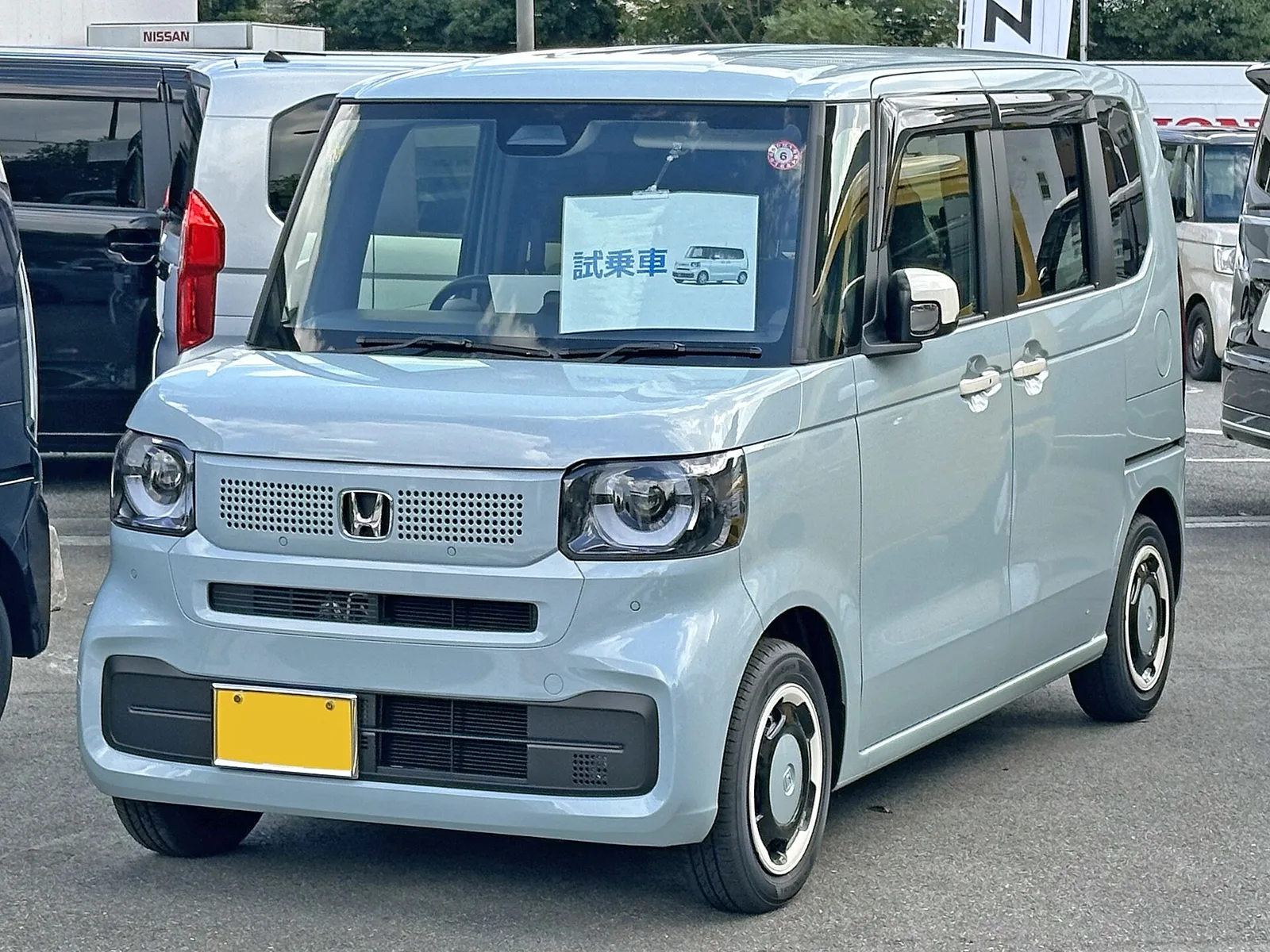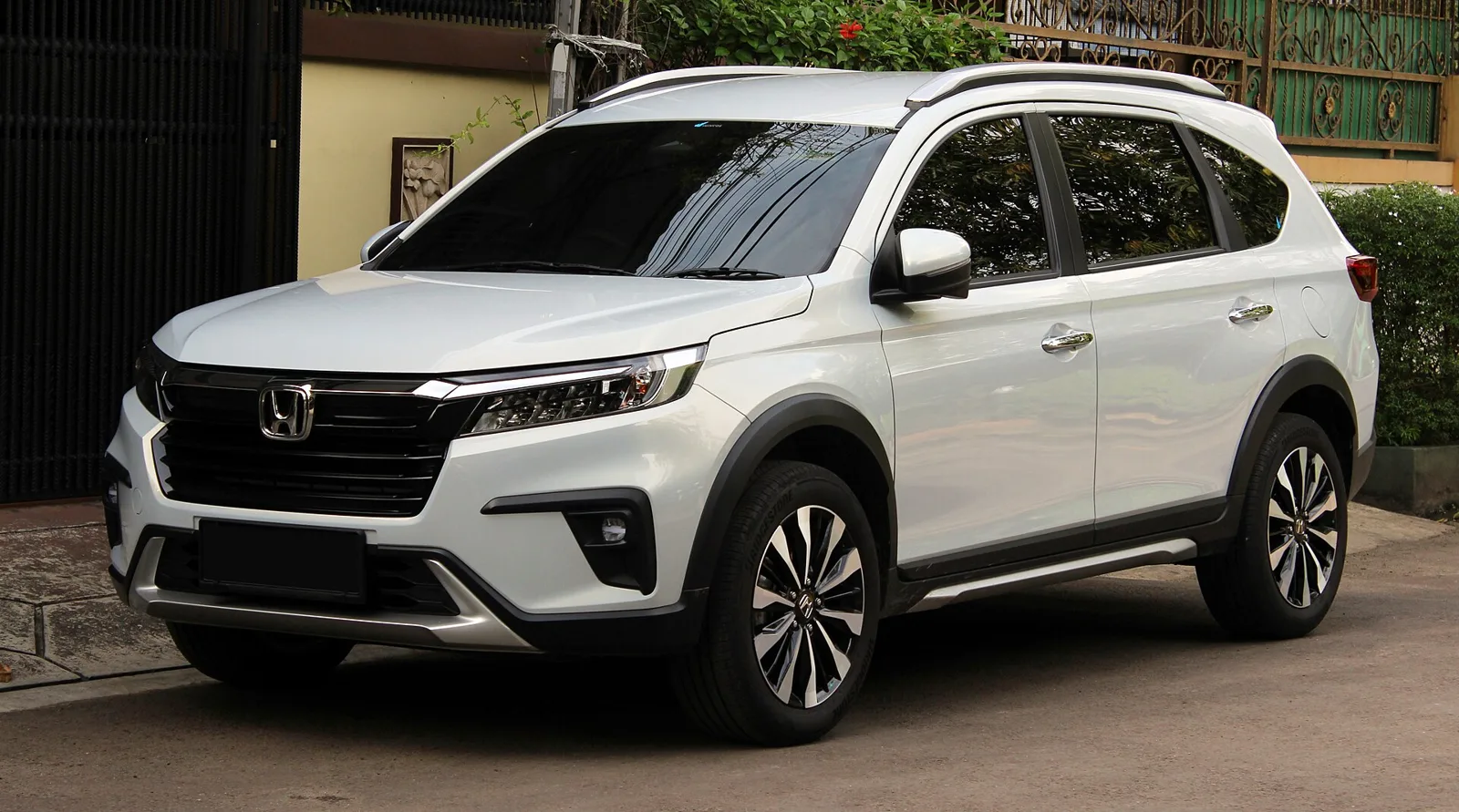
A sub-4-metre sedan shaped by Indian tax rules, an MPV that won Indonesia and two crossovers named for bold and winsome runabouts.
The Honda Mobilio, Amaze, BR-V and WR-V are small family cars built mainly for emerging markets, many from the Brio platform. The Amaze is a sub-4-metre sedan, the Mobilio an MPV, and the BR-V and WR-V are crossovers named Bold Roundabout Vehicle and Winsome Runabout Vehicle.
Honda's Amaze exists in its present form because of a tax rule. In India, cars shorter than 4 m pay lower excise duty than longer ones, so Honda built a small sedan to fit under the line, and every Amaze since has measured less than 4 m (157.5 in). The same logic of cost, size and local rules runs through the Mobilio, BR-V and WR-V, four small Honda family cars aimed largely at emerging markets rather than Japan, Europe or America.
The four share parts, plants and engineers. Many of their designs came out of Honda's Asia Pacific research centre in Thailand, and most of them began life on a lengthened or modified version of the little Brio platform.
Honda Mobilio: from Japanese mini MPV to Indonesian best-seller
The Mobilio has had two lives. The first generation was a seven-seat mini MPV that Honda built from 2001 to 2008 and sold only in Japan. It was the Small Max series' second model and used Honda's Global Small Platform and i-DSI engine. It was released on 21 December 2001 with a 1.5-litre engine, a design aimed at recreational use, and a claimed fuel rating of 17.2 km/L (49 mpg-imp; 40 mpg-US), the best in the seven-passenger class according to Honda. When the Freed arrived in May 2008, the Mobilio was withdrawn.
The cargo area was 1.86 m (6.09 ft) from front to back and 1.10 m (3.6 ft) high, with five ways of arranging it and a sliding door on each side. Honda's G-CON crash technology shaped the body, the company ran its own vehicle-to-vehicle crash programme, and more than 90% of the car could be recycled. A CVT with a seven-speed mode, called Honda Multimatic S, was fitted, and four-wheel drive was available. The Mobilio Spike of 19 September 2002 had a C-pillar twice as wide and a boxier shape.
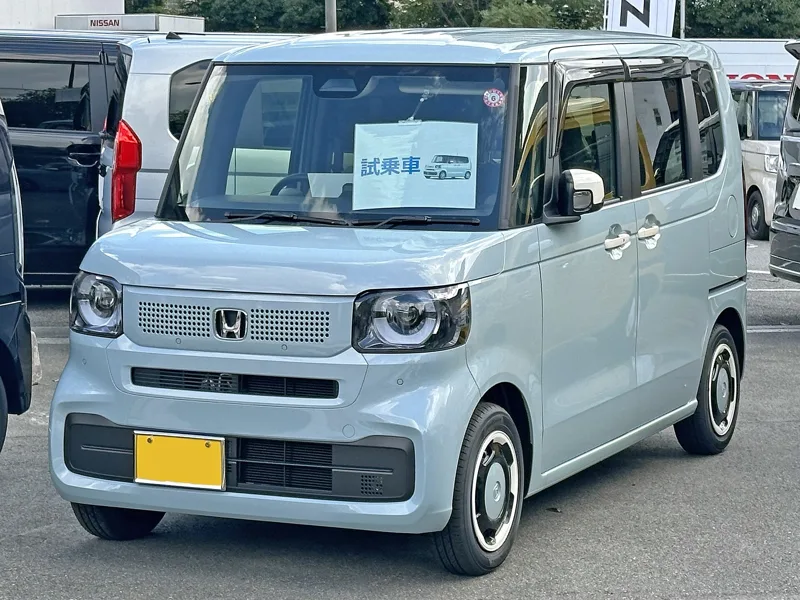
Second-generation Mobilio on the Brio platform
Honda revived the name for Indonesia. Developed by Honda R&D Asia Pacific on the Brio platform, the second-generation MPV appeared as a prototype at the 21st IIMS in Indonesia on 19 September 2013. Production began at Honda Prospect Motor's Karawang plant on 15 January 2014, and sales started ten days later. The first trims were S, E and E Prestige, with the sportier RS added in June 2014, and buyers chose between a 5-speed manual and a CVT.
Petrol Mobilios use the 1.5-litre L15Z1 i-VTEC engine, which has a 10.3:1 compression ratio and runs on 91 RON fuel. It is rated at 118 PS (87 kW), peaking at 6,600 rpm, with 145 Nm (107 lb ft) of torque coming in at 4,600 rpm. India also received the 1.5-litre N15A1 i-DTEC diesel. The Mobilio won the Otomotif Car of the Year award in Indonesia in 2014. Through August 2014 it accounted for 59,377 of the 110,457 Hondas sold there, around 54 percent, and it was Honda's top seller in Indonesia in 2016.
Other markets followed. India took it in July 2014 with over 90% local parts, but poor sales ended it in July 2017. Thailand received it in September 2014 and South Africa in October 2014, and the Philippines launched it on 28 April 2015 with cars imported from Ayutthaya, ending sales in June 2021. A facelift on 12 January 2017 brought a redesigned front end and made ABS and EBD standard. Global NCAP tested the Indian Mobilio in 2016: with no airbags and no ABS it scored 0 stars for adult occupants and 1 for toddlers, and with two airbags and no ABS it scored 3 and 2.
By April 2022 only the S trim remained in Indonesia, mainly for fleet buyers. Production there stopped in June 2024, as buyers were moving towards taller-riding vehicles like the BR-V.
Honda built its Indian sedan to fit under a four-metre tax line.
Honda Amaze generations: the sub-4-metre sedan
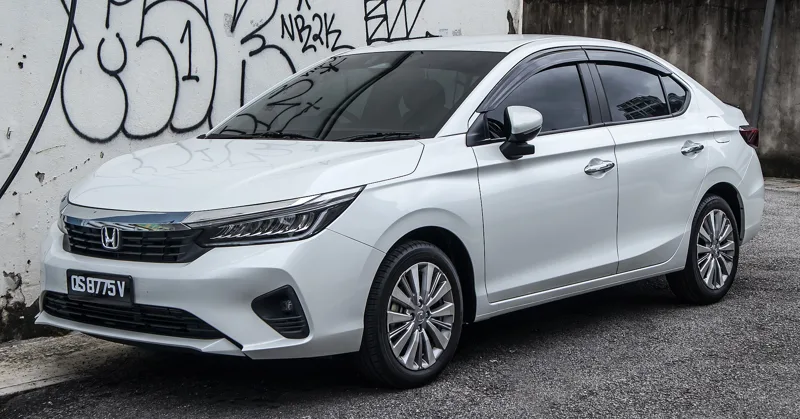
The Amaze, called the Brio Amaze in some markets for its first generation, is a sedan built since 2013. It sits below the City, and as of 2022 it is Honda's smallest sedan. The first generation was the sedan counterpart of the Brio hatchback, sharing most of its design and architecture. The second generation moved to a separate platform derived from the sixth-generation City.
First generation (DF1/2)
The first Amaze debuted in India in April 2013. Honda R&D Asia Pacific developed it in Bangkok, and it was built at Greater Noida and in Rajasthan, with a localisation level that Honda put above 90%. It was the first Honda sold in India with a diesel option. The 1.5-litre N15A1 turbo-diesel, branded i-DTEC, was made for the Amaze and later used in the Mobilio and BR-V. It descends from the 1.6-litre N16A1 of the European Civic and was shaped around India's excise rules for small cars. Honeywell built its turbocharger, and Honda claimed it was the lightest engine in its class.
Indian grades began as E, EX, S and VX. The SX slotted in during January 2014 and an Anniversary Edition followed in April. The 2016 facelift revised the grille, dashboard and tail-lights and replaced the petrol model's 5-speed torque-converter automatic with a CVT. A Privilege Edition arrived in July 2017 and a Pride Edition in January 2018.
Thailand and the Philippines sold it as the Brio Amaze. The Thai car came in S and V grades with a 1.2-litre L12B3 petrol engine, and a May 2016 facelift dropped the manual and added a CVT. The Philippines launched it at the September 2014 motor show, imported from Thailand, with a 1.3-litre L13Z1. Nepal's version arrived in June 2013 and gained a CVT option with the June 2016 facelift.
Second and third generations
Honda unveiled the second generation at India's Auto Expo in February 2018. Its looks changed, its dimensions grew slightly, and ground clearance went up from 165 mm (6.5 in) to 170 mm (6.7 in), a gain of 5 mm (0.2 in). The diesel could now be paired with a CVT, and the grades were E, S, V and VX. A facelift on 18 August 2021 dropped the V grade. Honda Cars used the slogan "The Big Move".
Safety results are mixed. The Amaze has two airbags and anti-lock brakes. A 2019 Global NCAP test of an African unit earned a four-star rating for adults, held down from five because the car lacked a front-passenger seatbelt reminder, and the child dummy was ejected when the armrest deployed. India's version scored 2 stars for adults and 0 for toddlers in 2024. In July 2018 Honda Cars India recalled 7,290 units for a power-steering issue.
Honda introduced the third Amaze in India on 4 December 2024, offering V, VX and ZX trims. South Africa followed on 20 May 2025 with Trend and Comfort trims, each available with a 5-speed manual or a CVT. Bharat NCAP gave the Indian car 5 stars for adults and 4 for toddlers in 2025.
Honda BR-V: a seven-seat crossover for Asia
The BR-V is a subcompact crossover SUV built since 2016 and mainly sold in emerging markets. Honda says the name stands for Bold Roundabout Vehicle. It is bigger than the HR-V in some dimensions but positioned below it. Honda R&D Asia Pacific in Thailand developed it, as the third model from that team after the Amaze and Mobilio. The first generation shared its platform with the second-generation Mobilio, itself based on a lengthened Brio platform. The second generation sits on a separate platform shared with the second Amaze and the WR-V.
Honda showed the prototype at the 23rd Gaikindo Indonesia International Auto Show on 20 August 2015. Tomoki Uchida, then director of Honda Prospect Motor, said it answered demand for an affordable, high-riding, good-looking SUV that could carry seven passengers. Plants in Pakistan, India, Malaysia, the Philippines, Thailand and Indonesia have all built it, and it is also sold in Brunei, Mexico and South Africa.
First generation (DG1/2)
Launches ran across Asia in 2016 and 2017. Thailand got it on 28 January 2016 in V and SV grades, the V with two rows and five seats and the SV with three rows and seven. Indonesia had sales from 23 January 2016, five days earlier, and the BR-V became Honda's second best-selling model there that year. India had a launch in Kolkata on 5 May 2016 with E, S, V and VX trims, but declining sales and BS6 emissions rules ended it in 2020. The Philippines started on 10 December 2016, South Africa in October 2016, where paddle shifters came on the CVT models but there was no EBD, and Malaysia on 5 January 2017.
Malaysia reacted strongly: bookings reached 8,500 by early March 2017 and nearly 12,000 cars sold in the first six months. Pakistan began local assembly on 21 April 2017, adding a manual on 1 April 2018, and Honda Atlas launched a facelifted car on 12 October 2019. The BR-V left Pakistan's range in 2026. The facelift had made its first appearance at the 27th Indonesian motor show on 25 April 2019, and Mexico received it on 5 November 2019.
Buyers chose between two 1.5-litre engines. The L15Z1 petrol is quoted at 88 kW (118 hp; 120 PS) and 145 Nm (107 lb ft), while the N15A1 turbo-diesel gives 73.5 kW (99 hp; 100 PS) at 3,600 rpm and a stronger 200 Nm (148 lb ft) from just 1,750 rpm.
Second generation (DG3)
Honda unveiled the second BR-V in Indonesia on 21 September 2021, after previewing it as the N7X Concept on 3 May. Large Project Leader Parinya Tangwiengwang led the effort. It uses the 1.5-litre L15ZF engine with 89 kW (119 hp; 121 PS) at 6,600 rpm and a CVT shared, with slight changes, with the seventh-generation City. Production began in Indonesia on 13 December 2021 with an 80 percent localisation level, sales started on 8 January 2022, and exports began on 16 March 2022 to about 30 countries in Africa and South America.
Malaysia did not get it, because the shorter WR-V replaced it there. Elsewhere, markets included Jamaica (4 June 2022), Thailand (27 July 2022, imported from Indonesia), South Africa (8 September 2022), the Philippines (21 November 2022), Vietnam (4 July 2023) and Mexico (8 August 2023). Honda Sensing is standard on top trims in several of them. Indonesia received an N7X Edition in February 2024, updated in 2026, while South Africa dropped the BR-V alongside the Ballade in November 2025.
Honda WR-V: the shorter crossover
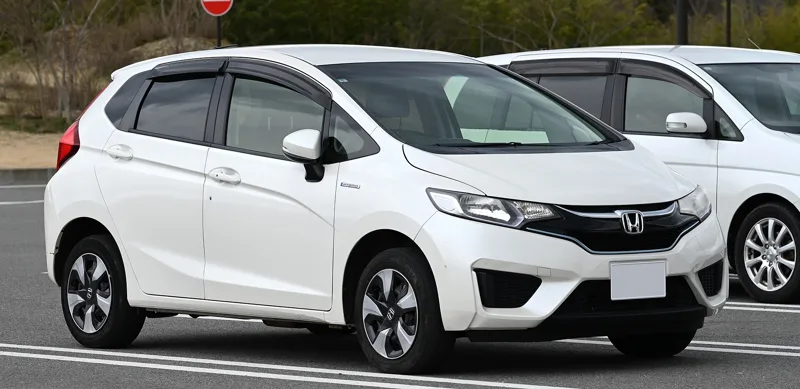
The WR-V, standing for Winsome Runabout Vehicle, is a subcompact crossover built since 2017. Its place in the range varies: under the HR-V/Vezel in some countries and under the BR-V in others. The first generation took the third-generation Fit/Jazz and gave it crossover styling with a different front end. Honda showed it at the 2016 Sao Paulo show and made it for South America and India, launching it in Brazil on 15 March 2017 and in India the next day. It was the first model developed by Honda's research centre in Brazil, together with Japan, for young Brazilian and Indian buyers.
It shared its body shell, doors, dashboard and instrument panel with the Fit/Jazz, and ground clearance was 188 mm (7.4 in). India offered the Jazz's engines: a 1.2-litre L12B i-VTEC making 66 kW (89 hp; 90 PS) and 110 Nm (81 lbf ft) with a 5-speed manual, or a turbocharged 1.5-litre i-DTEC diesel with 74 kW (99 hp; 100 PS) and 200 Nm (148 lbf ft) and a 6-speed manual. Brazil used the larger 1.5-litre L15A7 petrol. A facelift came in 2020. Brazilian sales ended in 2022, though production continued for export, and in 2022 Latin NCAP gave the base Latin American car, with two airbags, one star.
Second generation (DG4) in Southeast Asia
The second WR-V launched in Indonesia on 2 November 2022. The SUV RS concept at the 28th Gaikindo show on 11 November 2021 previewed it, and a camouflaged car appeared in August 2022. Poychat Ua-Arayaporn led development at Honda R&D Asia Pacific. The car borrows the Amaze's outer headlight units, bonnet and front doors, and its dashboard is almost the same as the Amaze's and the BR-V's. Ground clearance is 220 mm (8.7 in), or 207 mm (8.1 in) in Malaysia, 32 mm (1.3 in) more than before.
The L15ZF 1.5-litre produces 89 kW (119 hp; 121 PS) at 6,600 rpm and 145 Nm (107 lb ft) at 4,300 rpm, with no diesel on offer. In Indonesia it takes on the Toyota Raize in E and RS trims, with a 6-speed manual for the E trim added on 19 May 2023 and an update on 5 February 2026. Exports began on 28 February 2023. Thailand launched it on 10 March 2023, Brunei on 12 May 2023 and Malaysia on 13 July 2023, where it replaced the BR-V in four trims, S, E, V and RS, with Honda targeting 1,300 sales a month. Malaysian assembly began in June 2023 and a September 2026 update dropped the S trim.
The Japanese and Brazilian WR-V
There is a third WR-V. The Japanese WR-V, introduced on 16 November 2023, is unrelated to the Southeast Asian car: it is the Elevate, an SUV first launched in India, renamed and sold below the Vezel, with imports from India starting in early 2024. Brazil launched the Elevate, assembled locally, on 16 October 2025 as its second-generation WR-V, after the name had been unused for three years. Two cars therefore carry the label second-generation WR-V, and they are unrelated.
Honda Mobilio, BR-V, Amaze and WR-V compared
| Model | Body | Built since | Platform link | Notable fact |
|---|---|---|---|---|
| Mobilio (second generation) | Seven-seat MPV | 2014 | Brio platform | Honda's top seller in Indonesia in 2016 |
| Amaze | Sedan under 4 m | 2013 | Brio, then City-derived platform | First Honda in India with a diesel |
| BR-V | Seven-seat crossover | 2016 | Mobilio, then shared with Amaze and WR-V | Bold Roundabout Vehicle; exported to about 30 countries |
| WR-V | Subcompact crossover | 2017 | Fit/Jazz, then shortened BR-V platform | Winsome Runabout Vehicle |
Recent updates and endings across the four models
The Malaysian WR-V received its September 2026 update, and the Indonesian WR-V had one in February 2026. The BR-V ended in Pakistan in 2026, and the Mobilio finished in Indonesia in June 2024.