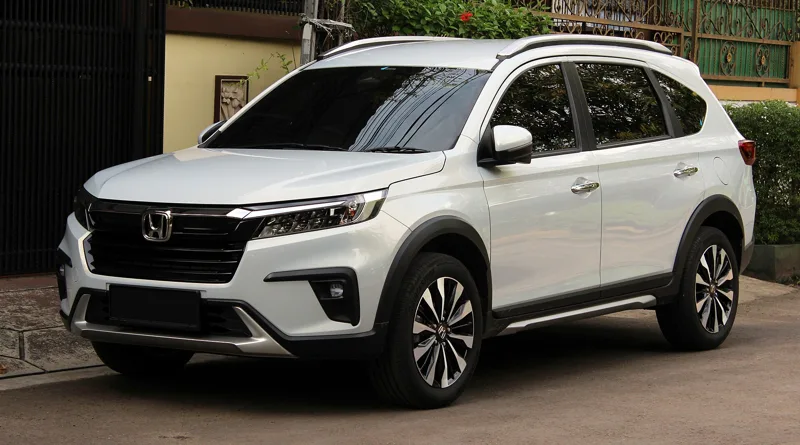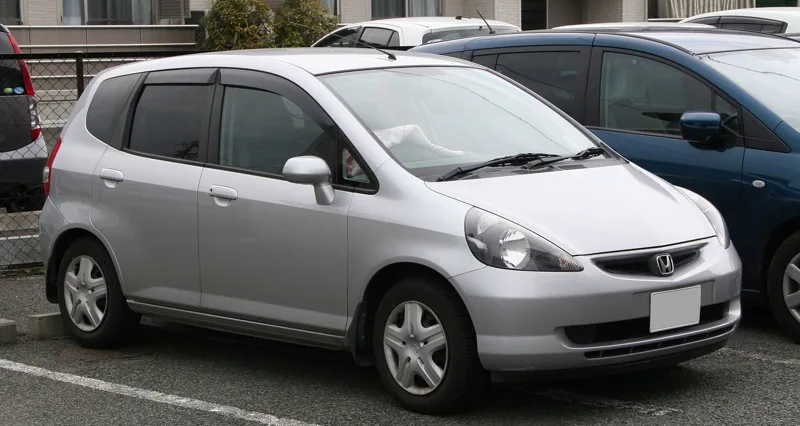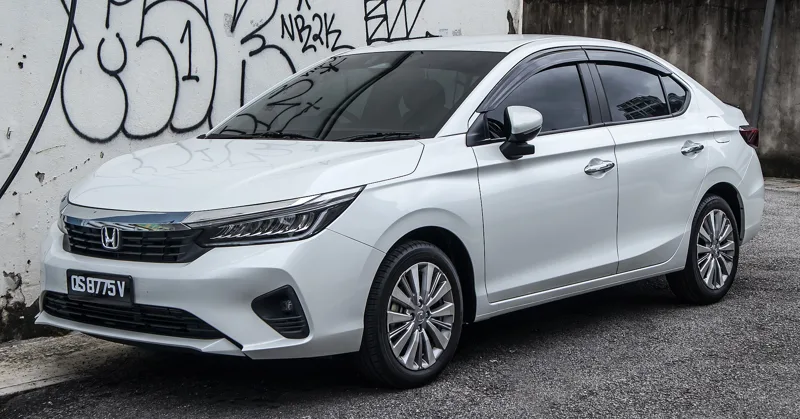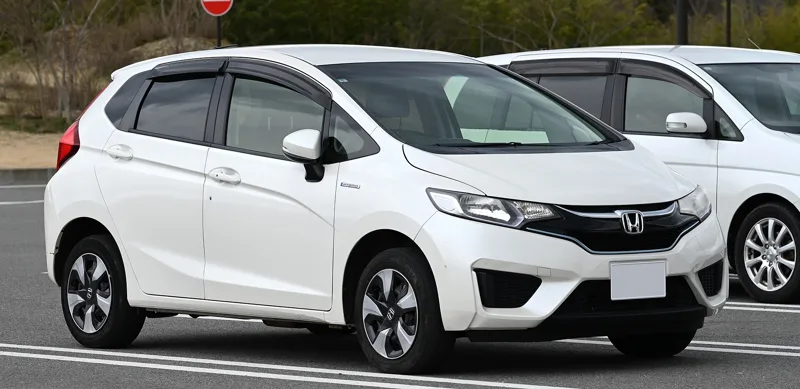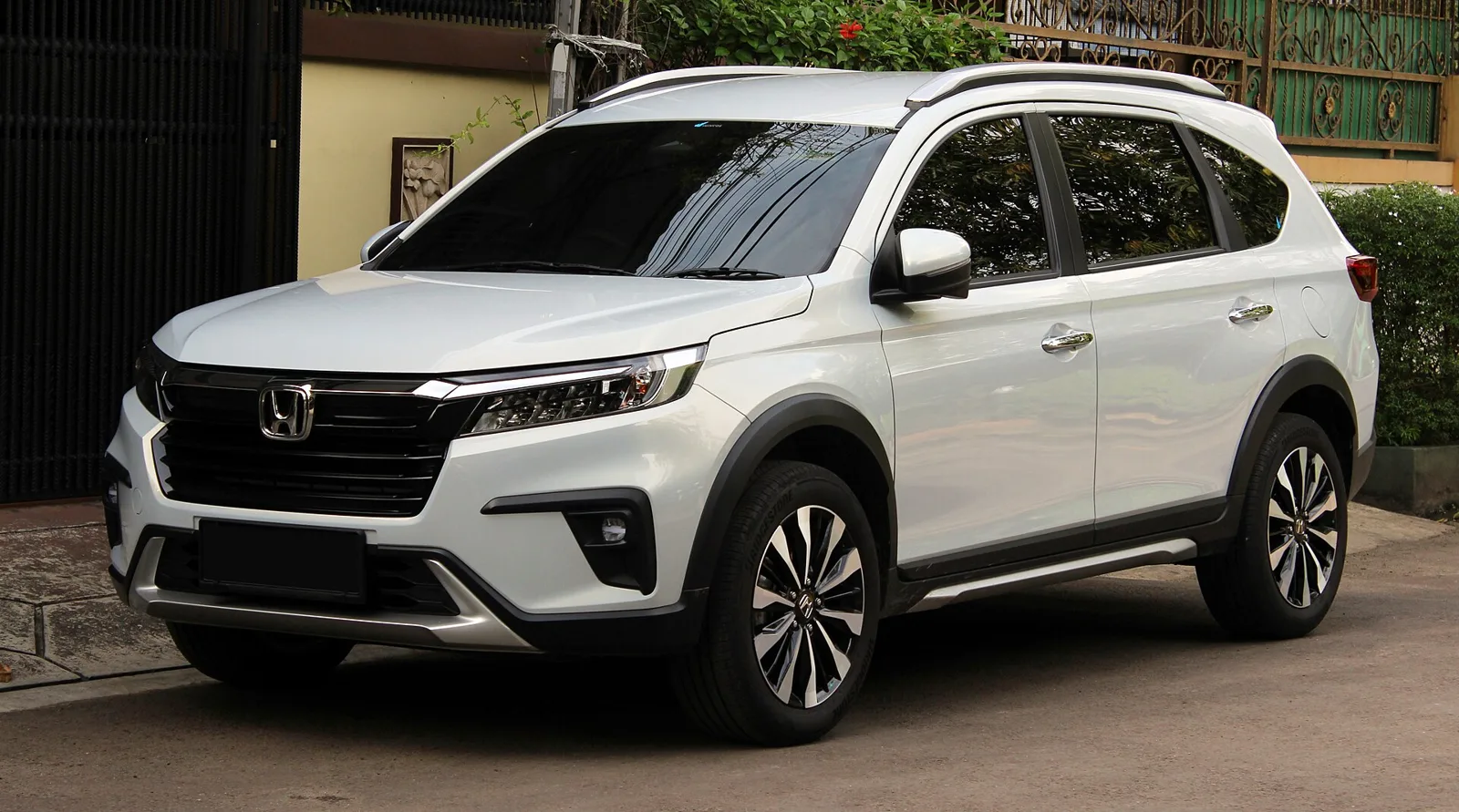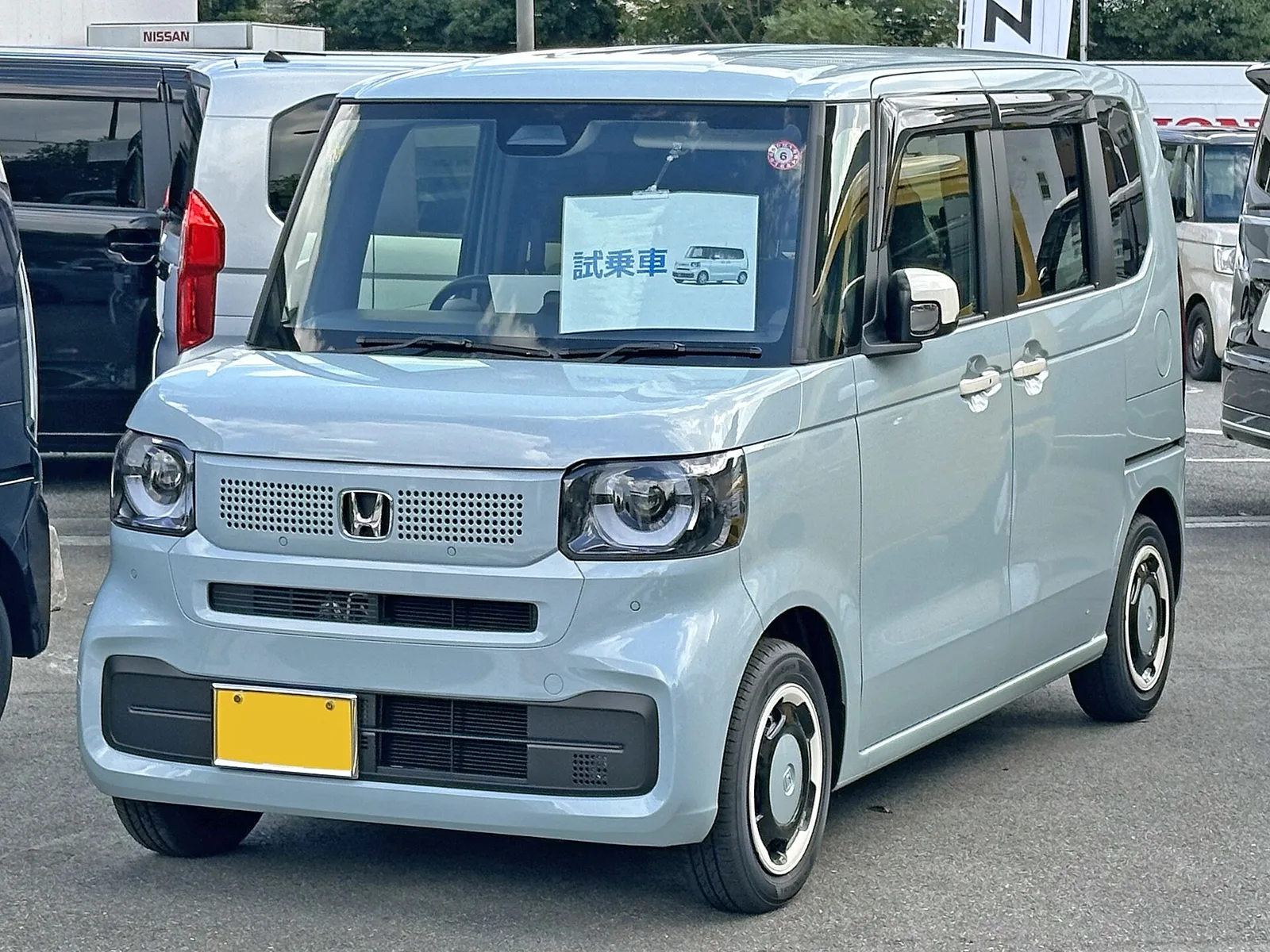
A kei minivan that sold 1.7 million, a retro hatchback that grew a widebody export version, and a mini MPV with sliding doors.
The Honda N-Box and N-One are kei cars built for Japan, with the N-Box the country's best seller for 28 straight months to December 2019. The Freed is a mini MPV built since 2008 on the Fit platform, with sliding doors and five to seven seats.
For 28 straight months, to December 2019, the best-selling car in Japan was a tall, boxy minivan. The Honda N-Box is a kei car, a class of deliberately small vehicles that Japan treats as a category of its own, and by 2019 Honda had sold 1.7 million of them since 2011.
The N-Box, the N-One and the Freed are three Hondas that grew out of that home market. One is a tall kei minivan, one a small retro hatchback and one a mini MPV with sliding doors, and all were designed mainly around Japanese roads and Japanese buyers.
Honda N-Box: the best-selling kei car
Under its tall body the N-Box has an engine up front driving the front wheels or, optionally, all four, and it is a five-door minivan. Honda has built three generations since 2011, all for the home market. It sits in the refreshed N family of kei city cars alongside the N-WGN, N-One and N-Van. The letter goes back to the N360 of the late 1960s and 1970s, where it was short for norimono, loosely a vehicle. In the modern family it is said to stand for four words at once: New, Next, Nippon and Norimono.
Sales targets show how well it did. In December 2011 Honda set a monthly goal of 12,000 units. With the second generation the target rose to 15,000 a month, and the car sold well beyond it, in six-digit annual numbers.
First generation (JF1/2)
Honda unveiled the first N-Box on 27 October 2011 and launched it on 30 November. The N-Box+ version, based on the N Concept 3, had a sloping floor at the back and a ramp that folds out, so heavy objects could be rolled into the cargo area, plus more flexible seating. A wheelchair-accessible model followed in August 2012, with four-wheel drive as standard. The top trim, the Modulo X, came in December 2012 with a reworked grille and nose, suspension 15 mm lower and front-wheel drive only.
The N-Box Slash of December 2014 was a lower-roof version with hinged rear doors, sold in G and X variants. It stayed on sale beside the second-generation car until early 2020.
Second generation (JF3/4)
Honda unveiled the second-generation car on 25 May 2017, streamed its launch live on YouTube on 31 August, and began sales on 1 September. It carries Honda Sensing, a safety package with pre-collision assist and pedestrian detection, lane departure warning with lane keeping assist, an ultrasonic system that mitigates mis-acceleration, and road sign assist.
The seats slide, recline and tip up and down, together or separately, to take passengers or long and tall cargo. The slope they create can be used for under-storage or as a ramp for wheelchairs, and with the headrests removed the seats fold into a bed. The car won the 2017-2018 Car of the Year from the Japan Automotive Hall of Fame and the 2018 Technology of the Year Award for its weight reduction. A facelift in late December 2020 slightly altered the headlights and grille and gave the lower grille a chrome crossbar. The Custom grade received a more sculptured grille, with the front plate moved to the centre of the bumper.
Third generation (JF5/6)
Honda showed the third N-Box on 3 August 2023, and it reached showrooms on 5 October. A light update followed on 18 June 2026. The Custom grade gets a new bumper and headlights with LEDs built in, the Joy grade has Honda lettering pressed into the area around its grille and fog lights, and the Fashion grade has a new two-tone paint finish at the roofline.
The best-selling car in Japan was a tall kei box.
Honda N-One: retro looks on a kei platform
The N-One arrived in November 2012, the third car in Honda's N series after the N-Box of December 2011, and it took over from the Zest. It is a retro-styled five-door hatchback with front- or all-wheel drive. Honda had previewed it as the N Concept 4 at the 2011 Tokyo Motor Show. The shape recalls the 1969-1972 N360, and under the bonnet sits the DOHC three-cylinder engine and CVT that Honda launched in 2011 with the N-Box. Honda markets it as an upmarket kei car with standard features uncommon in the class.
First generation (JG1/2)
The first N-One went on sale on 1 November 2012. A minor facelift in July 2015 added chrome to the grille and front bumper on every model, door sash trim to the Premium and Premium Tourer, a new roof shape and spoiler, and a Lowdown variant with lower suspension, which trims the height by 65 mm (2.6 in), leaving the car 1,545 mm (60.8 in) tall. The sportier RS arrived in December 2017 along with the Select variant, and after a renaming the grades read Standard, Menu, Premium and RS.
Second generation (JG3/4/5/6)
Sales of the next N-One began in November 2020. Every panel is new, yet the look stays close to the first car. The range starts with the Original, moves up through the Premium and Premium Tourer, and tops out with the sporting RS. Tourer and RS models get the stronger, turbocharged engine. The car took the Kei Car of the Year prize in the 2021-2022 Japan Car of the Year awards.
At the end of 2025 Honda dropped the CVT for the RS, which leaves the RS as the only N-One with a manual, a six-speed. Every other version has a CVT, and only the RS cannot be had with all-wheel drive.
N-One e: and Super-One
Honda revealed the battery-electric N-One e: on 28 July 2025 and began sales on 11 September in G and L grades. No electric Honda passenger car had been sold since the Honda e was dropped.
The Super-One is something else. It is a widebody N-One that is longer and wider than the kei class permits, so it is registered as a compact car. Kei rules cap power at 47 kW (64 PS), but Honda is free to offer more here, and the Super-One makes 70 kW (95 PS). Wider wheels and a somewhat wider tread come with the body. Honda showed it at the 2025 Japan Mobility Show and has pointed it at right-hand-drive countries, Southeast Asia and the UK among them. Its retro "Bulldog Style" recalls the 1983 City Turbo II, and Honda sells it in parallel with the smaller N-One e:.
The Super-One went on sale in Japan on 21 May 2026 in a single unnamed grade. Indonesia saw an unveiling on 13 July 2026, then a show debut in August and a limited sale of 100 cars. Australia began sales on 4 August 2026. Thailand unveiled it on 14 August 2026 and limited sales to 30 units, and Brunei launched it on 5 September 2026 alongside the ZR-V.
N-One racing
Since 2014 Honda has run the N-ONE Owner's Cup, a one-make series in which road-legal cars are fitted with roll cages, four-point harnesses and other race gear. Its first year had 10 races, two exhibition and eight series, across seven circuits in Japan, including Suzuka and Mobility Resort Motegi. In 2026 it also becomes eligible for the SC-N class in the Super Taikyu Challenge, a new second-tier series.
Honda Freed: the mini MPV
The Freed has been built since 2008 as a mini MPV designed mainly for the needs of Japanese buyers. It sits on the Fit/Jazz platform and replaced the first-generation Mobilio in Japan. The layouts run to five, six or seven seats, the six-seater having individual captain's chairs in the middle row. Honda also offers wheelchair-accessible versions, among them cars with a seat that lifts up at the side or for the passenger.
First generation (GB3/GB4/GP3)
The first Freed used a 1.5-litre engine making 118 hp (88 kW) and 148 Nm (109 lbf ft). It is the same unit used in the Jazz and City, which make 120 hp (89 kW) and 145 Nm (107 lbf ft), but tuned for more torque. In Japan it came in G and G Aero petrol grades and as a hybrid with i-VTEC and Honda's IMA technology. The facelifted car, launched on 28 October 2011, sold over 20,000 units in its first two weeks, and 63% were hybrids.
In 2010 Honda released the Freed Spike for Japan only, billed as a "compact multi-wagon" for active lifestyles. It wore its own nose, with a different grille and lamps, had the third side window blanked off and carried a two-level load floor.
Freed overseas
Indonesia was the second market, launched on 29 June 2009, with assembly at Honda Prospect Motor's Karawang plant and exports to other Southeast Asian countries. The Indonesian car has 20 mm more ground clearance, a seven-seat layout and a five-speed automatic instead of the Japanese CVT, and it came in A, S and E trims. It was facelifted on 8 May 2012, improved on 20 March 2013 with double-blower air conditioning, and given a second facelift at IIMS 2014. It was discontinued in June 2016 after sales fell.
Thailand received imports from Indonesia in 2010, in four trims. Malaysia launched the car on 22 April 2010 in one grade, with a target of 1,200 sales a year, then added a cheaper Grade S in July 2012 and a facelift in January 2013. Hong Kong got it on 23 January 2011, built in Japan and seating six, and in Singapore it was available through parallel importers.
Second generation (GB5 to GB8)
Honda revealed the second Freed in June 2016 and released it in Japan on 16 September. Its theme was "Dynamism and Functionality", the rear sliding doors stayed, and the marketing campaign made heavy use of the song Happy by Pharrell Williams. The Freed+, a five-seater, replaced the Freed Spike. The Modulo X, with a full body kit, came on 15 December 2017.
A facelift followed on 18 October 2019, announced on 30 August, with an angular body-coloured grille, redesigned fog lamps and a lighter dashboard trim. It also added the Freed Crosstar, a crossover-inspired version. The facelifted car went on sale in Singapore in August 2022 through Kah Motor in S7 and E7 trims.
Third generation (GT)
Honda revealed the third Freed on 9 May 2024 and released it in Japan on 28 June. It comes with either a petrol engine or the self-charging e:HEV hybrid system. There are two versions: the Air, with a simpler, higher-quality design and three rows of seats for six occupants, and the Crosstar, with rugged crossover elements and a two-row five-seat layout. The Crosstar interior is two-tone black and khaki, with a utility panel in the load bay and a fixing nut in the tailgate.
The front and rear are less cluttered than before, with design elements placed along a horizontal character line and a few cues borrowed from the Stepwgn. The cabin gets a bigger infotainment screen on its own stand, a smaller digital instrument display, more dashboard storage and ceiling vents for the rear passengers. The Freed won Japan Car of the Year for 2024-2025. Singapore received it on 29 November 2024 in HS7 and HE7 e:HEV forms, and Brunei had a preview on 12 March 2026 of an e:HEV-only model.
Honda N-Box, N-One and Freed compared
| Model | Built since | Generations | Body | Class | Notable fact |
|---|---|---|---|---|---|
| N-Box | 2011 | Three | Five-door minivan | Kei car | Japan's top seller for 28 months to December 2019 |
| N-One | 2012 | Two | Five-door hatchback | Kei car | Super-One widebody makes 70 kW (95 PS) |
| Freed | 2008 | Three | Mini MPV | Mini MPV, not kei | Won Japan Car of the Year 2024-2025 |
The three Hondas in 2026
The N-Box facelift arrived in June 2026, and the Super-One has been rolling out across Japan, Southeast Asia and Australia since May 2026. The third-generation Freed is the current car, with Brunei one of its latest markets.