A fuel allowance in place of an engine-size cap produced the fastest endurance prototypes of the 1980s, from a Nordschleife lap record that lasted 35 years to a Jaguar win at Le Mans.
Group C was an FIA sports car category from 1982 to 1993 that limited fuel, not engine size, to 600 litres per 1000 km. It produced the Porsche 956 and Jaguar XJR-9, and faded when a 1990s rule change priced out privateers.
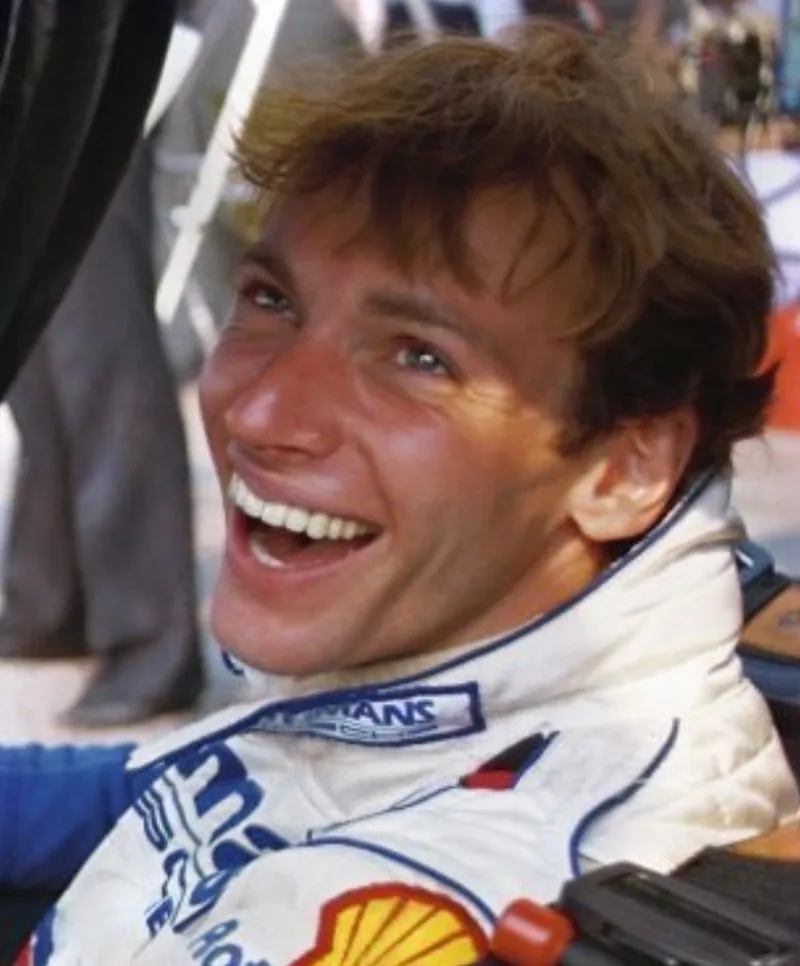
In 1983 Stefan Bellof took a Porsche 956 around the 20.832 km Nurburgring Nordschleife in 6:11.13, a qualifying lap that stood as the fastest ever there for 35 years. Group C racing produced cars like that by limiting fuel rather than engine size.
What was Group C racing?
Group C was a sports car category the FIA introduced in 1982 and ran until 1993, sitting alongside Group A for touring cars and Group B for GTs. It replaced two older classes: Group 5 special production cars such as the Porsche 935, and Group 6 two-seat racers such as the Porsche 936. The aim was one clear set of prototype rules.
The formula powered a run of championships. The World Endurance Championship used it from 1982 to 1985, the World Sports-Prototype Championship from 1986 to 1990 and the World Sportscar Championship in 1991 and 1992, with the European Endurance Championship adopting it for 1983 only. Series in Japan, Germany and Britain borrowed the rules as well, and the Interserie took Group C cars too. North America's IMSA Grand Touring Prototype class ran broadly similar regulations, which let many makers race on both sides of the Atlantic. After 1993 Group GT1 took over.
A fuel allowance, not an engine cap, decided how fast the cars could go.
How did fuel limits shape the Group C cars?
Rather than cap engine size, Group C capped the fuel a car could use. It set a minimum weight of 800 kg and a tank of no more than 100 litres, and allowed five refuelling stops in 1000 km. In effect each car got 600 litres to cover that distance, so efficiency mattered as much as power.
Think of a long drive on a fixed petrol budget. You may spend it however you like, with a big engine or a small one, flat out early or carefully throughout, but when the budget is gone you stop. The idea came from the ACO's GTP class at Le Mans in the mid-1970s, which covered roofed prototypes with certain dimensional restrictions and used fuel consumption limits instead of the usual engine capacity limits. The FIA copied the principle.
It had a motive. In the late 1970s, a few makers, Porsche and Lancia above all, had dominated sports car racing just by raising turbocharger boost pressure, especially for qualifying. The 3.2-litre Porsche 935 could make more than 800 hp. The FIA hoped a fuel limit would stop makers pouring everything into engine development. Engines also had to come from a recognised manufacturer with cars homologated in Group A or Group B.
The effect was to reward cleverness over brute force. Cars had to save fuel early in a race, and in theory a large naturally aspirated engine could now take on a small turbocharged one. Every race ran at least 1000 km, usually for more than six hours, so endurance counted for something again. Ford with the C100 and Porsche with the 956 were the first constructors in. Lancia, Jaguar, Mercedes, Nissan, Toyota, Mazda and Aston Martin followed, and several of them also entered IMSA's GTP class.
Why was the Porsche 956 so quick?
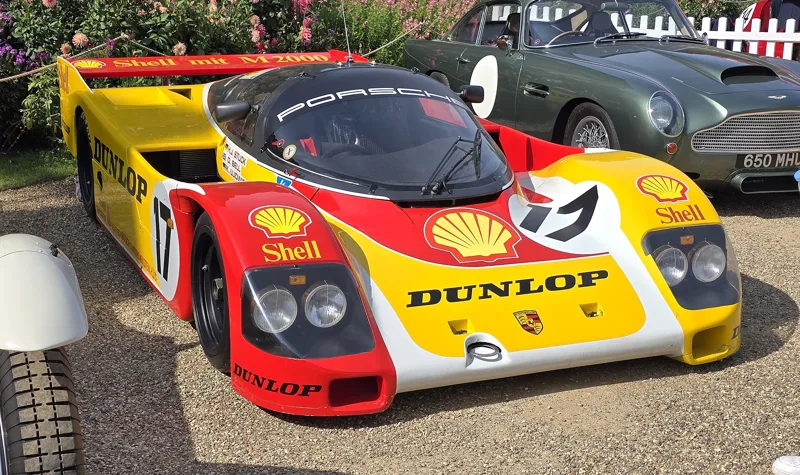
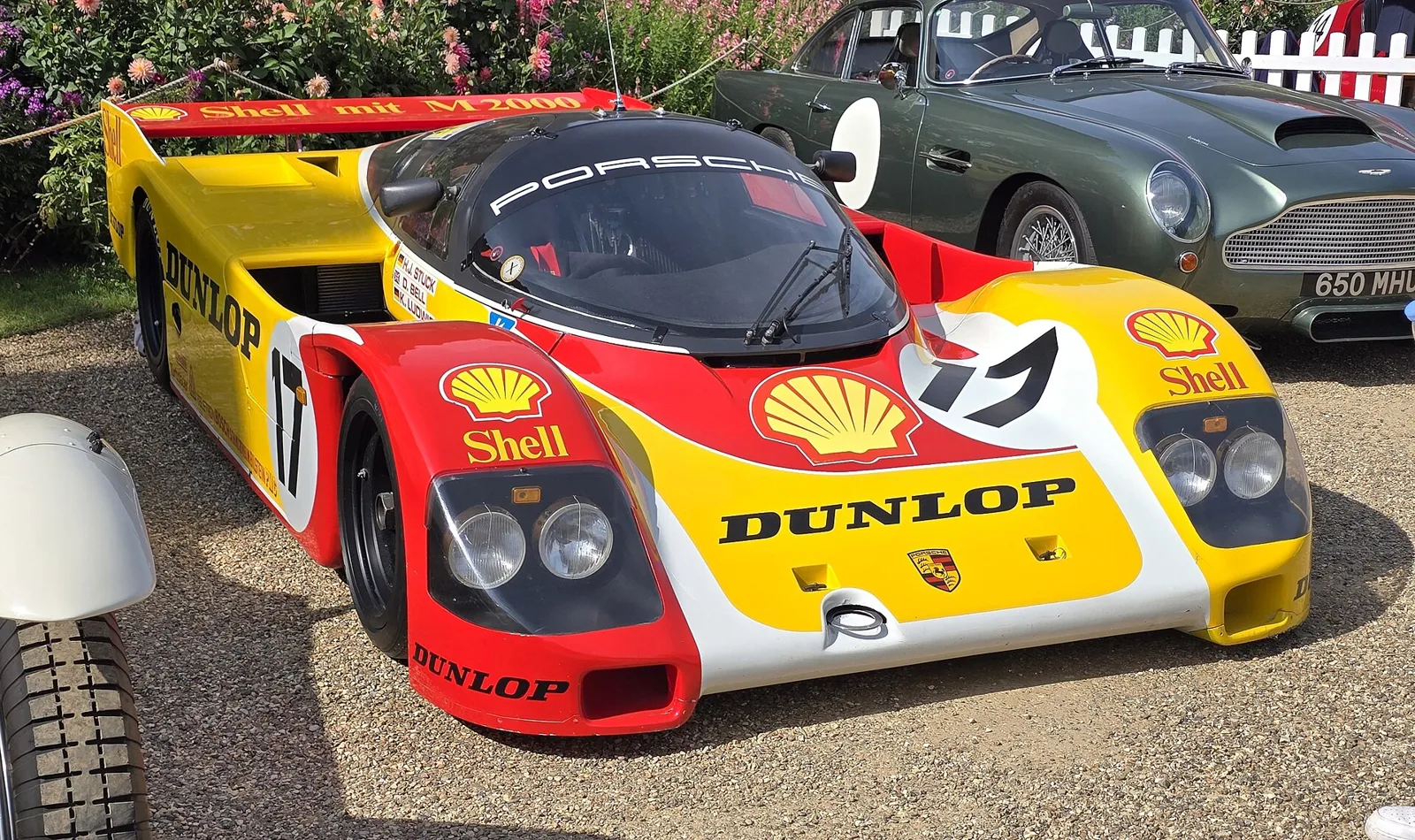
The Porsche 956, designed by Norbert Singer, combined a first-ever aluminium monocoque for Porsche, a turbocharged flat-6 of about 635 hp (474 kW) and the company's first ground-effect aerodynamics. It produced over three times the downforce of the Porsche 917 that raced more than a decade earlier.
The project began in June 1981 and the first chassis was finished on 27 March 1982, in time for the opening of the World Championship season. Jurgen Barth tested it at Porsche's private track. The monocoque helped the car meet the 800 kg (1,764 lb) minimum. The engine was the 2.65-litre Type-935 unit from the 936/81, originally developed for Indycar racing, which explains the odd capacity. For 1984 came the 956B, with a Bosch Motronic electronic system and better fuel efficiency.
Porsche fitted two rear wings. Most circuits got a larger, high-downforce wing, but at Le Mans, where top speed on the nearly 6 km (4 mi) Mulsanne Straight was essential, the car wore a smaller low-drag wing that let it reach around 362 km/h (225 mph). Some privateers tried front wings at tighter circuits, hoping for more front-end grip, but wind-tunnel work showed they disturbed the airflow and added drag, making the cars slower in a straight line. The factory Rothmans team did not use them. Many put that down to its one-piece undertray, which boosted ground-effect downforce, while customer cars used a twin undertray that disturbed the air and cost a little downforce.
On track the car arrived with a bang. It debuted at the Silverstone 6 Hour with Jacky Ickx and Derek Bell driving for the factory, skipped the next round for development reasons and then led the entire 24 Hours of Le Mans in 1982. That gave the pair a third win together. The three factory Porsches finished 1-2-3 in the order of their starting numbers, with Ickx and Bell in the car wearing number 1 because they had won in 1981 in a 936.
Porsche then sold customer 956s to privateer teams including Joest, Obermaier, John Fitzpatrick, Richard Lloyd, Kremer and Brun. In all, Porsche built twenty-eight between 1982 and 1984, and Richard Lloyd Racing assembled an unofficial 29th from spare parts. Bellof's 1983 lap came in a 956 during qualifying for the 1000 km race, at an average speed of 202 km/h (126 mph). His race lap record of 6:25.91 came from the same weekend. Timo Bernhard finally beat the qualifying time on 29 June 2018 in a derestricted Porsche 919 Evo.
The 956's story ended in sadness. Bellof died at the 1985 1000 km of Spa when his Brun Motorsport 956 collided with the factory's newer 962, driven by Ickx. Safety concerns over the 956 hastened its retirement as teams moved up to the safer 962, which officially replaced it in 1985. The last 956 win went to Joest Racing in the final race of the 1986 season, which was also the car's last race.
What did the Porsche 956 teach Porsche?
The 956 was a rolling laboratory. In 1983, chassis number 107 served as a testbed for Porsche's P01 Formula One engine, later badged as TAG and supplied only to McLaren. The engine was never the most powerful on the grid, but between 1984 and 1987 it won 25 Grands Prix and helped McLaren to two Constructors and three Drivers titles.
There was a road-car payoff too. Porsche tested its PDK dual-clutch transmission in the 956 in the early 1980s, used it in the 962 and eventually fitted it to production cars with the 2009 997 Carrera and Carrera S. Anyone driving a modern PDK Porsche is using a design that started life in Group C.
What was Group C Junior?
Group C Junior was a cheaper class the FIA added for 1983 as costs climbed. Aimed at privateers and small manufacturers, it allowed cars to weigh as little as 700 kg and to carry no more than 55 litres of fuel, which left each car roughly 330 litres per 1000 km. It was renamed Group C2 in 1984.
The rules called for engines from a recognised maker with Group A or Group B cars. Planners expected two-litre naturally aspirated units, yet most cars used either the 3.5-litre BMW M1 engine or the new 3.3-litre Cosworth DFL, and each maker still found its own solution. Alba used a small, light turbo. Tiga, Spice and Ecurie Ecosse, with Austin-Rover and later Cosworth power, were among the most competitive. The cars were cheap enough that people suggested national championships for them, and Britain briefly ran the BRDC C2 Championship, which lasted until 1990.
How good was the Jaguar XJR-9?
The Jaguar XJR-9 won the 24 Hours of Le Mans in 1988, after taking the 24 Hours of Daytona outright on its debut. It was the first Jaguar victory at Le Mans since 1957, and it was the first time since 1980 that Porsche had not won the race. Tom Walkinshaw Racing built the car.
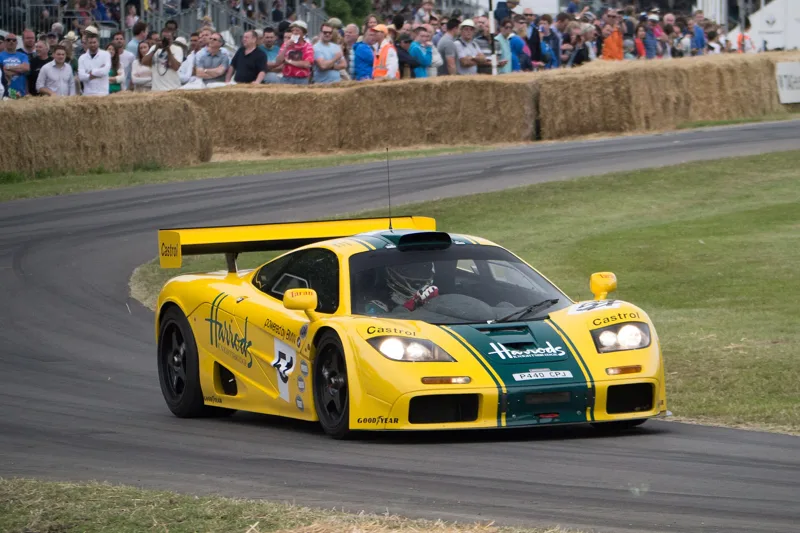
Tony Southgate designed the XJR-9 as an evolution of the XJR-8. Its naturally aspirated V12 started from the 5.3-litre unit in the Jaguar XJS road car and was enlarged to nearly seven litres for the world championship, where it displaced 6,995 cc and made 750 hp (760 PS; 559 kW) at 7,200 rpm. In IMSA the engine was smaller, at 5,996 cc. The monocoque was carbon fibre and Kevlar, the gearbox was a five-speed manual, and top speed was 394 km/h (245 mph). A low-drag variant, the XJR-9LM, was built for the Mulsanne Straight.
In the 1988 World Sports Prototype Championship, running with Silk Cut sponsorship, the XJR-9 won six of the eleven rounds. Silk Cut Jaguar took the Teams Championship and Martin Brundle won the Drivers title. In America the Castrol-sponsored cars could not add another win until the last race of the IMSA season and had to settle for third in the constructors' standings.
Then the car aged. By 1989 it was dated: Nissan kept beating it in IMSA, leaving a single win for the year, and Jaguar brought in the XJR-10 midway through the season, finishing second in the championship. In the world series Jaguar won no races and ended fourth in the Teams Championship, with the XJR-11 arriving midseason to replace the XJR-9. The XJR-9 chassis fed the R9R prototype, which by 1990 had become the XJR-15, and in 2010 the car won the Le Mans Legend race.
How did Group C and Group C Junior compare?
| Rule | Group C | Group C Junior |
|---|---|---|
| Introduced | 1982 | 1983 |
| Minimum weight | 800 kg | 700 kg |
| Maximum fuel capacity | 100 litres | 55 litres |
| Effective allowance per 1000 km | 600 litres | 330 litres |
| Typical engines | Turbo flat-6, V12 and others | 3.5-litre BMW M1, 3.3-litre Cosworth DFL |
| Later name | Group C1 | Group C2 from 1984 |
Why did Group C fade?
Group C was a victim of its own success and then of a rescue attempt. By 1989 its popularity almost matched that of Formula One, but a new formula meant to tame the speeds priced out the privateers. A lack of entries cancelled the 1993 championship before its first race.
Speeds had become a worry. C1 cars were exceeding 400 km/h on the Mulsanne Straight at Le Mans, and the WM-Peugeot recorded the highest figure, 405 km/h (252 mph), in 1988. The FIA responded by turning the class into a formula series intended to replace C2, which had proved unreliable in endurance races. The new rules restricted cars built to the original formula, such as the Porsche 962 used by many privateers, and favoured teams running F1-derived 3.5-litre engines. Those teams were effectively the big manufacturers alone, since the new cars cost more than C1 machines. Privateers like Spice and ADA could not afford the engines, and the decline was quick.
The ACO still let Group C cars race at Le Mans, with restrictions, but spectators hung cloth banners on the fences in protest. The 1994 race was the last one open to them. A former C1 car dressed as a road-legal GT in Group GT1, the Dauer 962 Le Mans, won that year after transmission problems hit the leading Toyota 94C-V. The 962 was banned afterwards. Toyota received special dispensation to run at the Suzuka 1000km, and a few C1 cars could enter the newly formed Japanese GT Championship in what was their final season.
Elsewhere the formula had its own series, and they ended too. Germany's DRM let Group C cars run from 1982 until 1985, when it became the ADAC Supercup, a Group C-only series that lasted until 1989. Britain's Thundersports mixed C Junior and C2 cars before the BRDC C2 Championship took over to 1990. In Japan the All Japan Sports Prototype Championship began in 1983 and the Fuji Long Distance Series also accepted Group C cars; both were cancelled in 1992 alongside the World Sportscar Championship.
Where this goes next
After 1993 Group GT1 took the place of Group C, and 1994 marked the last Le Mans for the class as such. Modified Group C cars without roofs carried on in a new category formed by the race organisers, and many kept racing until they crashed, broke or became uncompetitive.
The best known was the Porsche WSC-95, which won Le Mans in 1996 and 1997 using the monocoque of the Jaguar XJR-14 with Porsche 962 engine and transmission. Some of the roofless survivors raced on for years.