General Motors was fined $5,000 and its treasurer $1. Behind that verdict sits the story of National City Lines, the buses that replaced streetcars and the carmakers who came to define America's roads.
The claim holds that General Motors and allied firms plotted to dismantle US streetcar systems. In 1949 they were convicted of conspiring to monopolise bus and supply sales to National City Lines, but acquitted of conspiring to monopolise the transit industry. GM was fined $5,000. The Big Three are General Motors, Ford and Chrysler.
In 1949 a jury convicted General Motors in a case that is now often cited as proof the company destroyed America's streetcars. The fine was $5,000. The company's treasurer, H.C. Grossman, was fined $1.
The case is real, the companies are real and the streetcars did vanish from most American cities. What the court decided, though, is narrower than the legend that grew around it, and it ties into the other half of this story: the Detroit Big Three, the three carmakers that built a country around the automobile.
Did GM destroy streetcars? What the claim says
The claim holds that General Motors and its partners deliberately set out to dismantle streetcar systems across the United States and so monopolise surface transport. The origin was a federal antitrust prosecution. GM and related companies were found guilty of cornering sales of buses and supplies to National City Lines and its subsidiaries, and were also alleged to have plotted to take ownership or control of transit systems, contrary to Section 1 of the Sherman Antitrust Act. The case left behind a suspicion that the defendants had actually plotted to kill off streetcars.
The story has been told many times as an urban legend. Several authors, among them Martha Bianco, Scott Bottles and Robert Post, have written about it. Popular culture picked it up too: the film Who Framed Roger Rabbit, the documentaries Taken for a Ride and The End of Suburbia, and the book Internal Combustion all carry versions.
The verdict was about the sale of buses and supplies, not the destruction of streetcars.
Why streetcars were in trouble before the buses arrived
Streetcars started as horse-drawn vehicles and became electric. Electric traction was faster, cleaner and cheaper to run, because it removed the cost of horses and the problem of disposing of their carcasses. But the operators carried obligations. On top of ordinary business and property taxes they paid franchise fees, looked after the shared roadway, swept the streets, cleared snow and had to keep up minimum service. Because many fees were fixed or levied on gross takings, and fares did not move, the financial squeeze tightened each year. Early electric cars also kept the two-man crews of the horsecar era, and salaries outran revenue.
Many lines in the West were tied to property and shipping businesses; the Pacific Electric and the Los Angeles Railway served in effect as loss leaders for real-estate development. By 1918 half of US streetcar mileage was in bankruptcy. By 1930 most systems were ageing and losing money, and the Great Depression made it worse. The Public Utility Holding Company Act of 1935 then made it illegal for one private business to supply both public transport and electricity, forcing power companies to sell off the transit lines they used to cross-subsidise.
GM enters the bus business
John D. Hertz was an early motorbus builder and operator. He founded the Chicago Motor Coach Company in 1917 and the Yellow Coach Manufacturing Company, a bus maker, in 1923. In 1926 General Motors bought a controlling share of Yellow Coach and made Hertz a main board director. His bus lines did not compete directly with streetcars, since his core business was the more expensive motor coach.
Yellow Coach urged transit companies to swap streetcars for buses, but the power companies that owned the streetcar lines refused to motorise. So GM created a new subsidiary, United Cities Motor Transport, to finance conversions in small cities. It invested in systems in Kalamazoo and Saginaw, Michigan, and Springfield, Ohio, and converted them successfully. It then approached Portland, Oregon, with a similar offer. The American Transit Association censured the subsidiary, and it was dissolved in 1935. Around then GM also worked with New Jersey's Public Service Transportation on the All-Service Vehicle, a bus that could double as a trackless trolley.
National City Lines: the company at the centre
National City Lines began in 1920 as a minor bus operation run by E. Roy Fitzgerald and his brother. In 1936 it was reorganised to take controlling interests in bus companies, funded by loans from suppliers and manufacturers. In 1939 Fitzgerald asked Yellow Coach for more financing, and in the 1940s the company raised expansion money from Firestone Tire, Federal Engineering (a Standard Oil of California subsidiary), Phillips Petroleum, GM and Mack Trucks. Pacific City Lines, formed as a subsidiary in 1938 to buy streetcar systems in the western states, merged with NCL in 1948. American City Lines, organised in 1943 to buy systems in larger metropolitan areas, merged in 1946.
The 1947 tally for NCL stood at 46 systems, in 45 cities across 16 states. Between 1938 and 1950, with the investors' money, NCL and its subsidiaries also took control of further systems in about 25 cities, including St. Louis, Baltimore, Los Angeles and Oakland. Conversion of streetcars to buses was common, though electric traction was kept or expanded in some places.
Los Angeles and the Red and Yellow Cars
Los Angeles is the best-known case. From the 1940s NCL and Pacific City Lines took over the city's two streetcar systems, the Pacific Electric Railway, nicknamed the Red Cars, and the Los Angeles Railway, the Yellow Cars. In 1945 American City Lines bought the Los Angeles Railway for about $13,000,000 and soon announced it would scrap all but three of the Yellow Car lines. The rest of the Pacific Electric network passed to Metropolitan City Lines in 1953, and the remaining assets went to the new Los Angeles Metropolitan Transit Authority. Under that public body the final Red Car, on the Los Angeles to Long Beach line, ran on 9 April 1961, and the last Yellow Car, on the V Line, on 31 March 1963.
Elsewhere the pattern varied. Pacific City Lines held 64% of the Key System in Oakland by 1946, after a hostile takeover attempt had been blocked until 8 January 1941. The San Diego Electric Railway was sold in 1948 for $5.5 million, and its last streetcars were converted to buses by 1949. Baltimore's system was bought by NCL in 1948; ridership then fell by double digits in each of the next three years.
The investigation, trial and verdict
In 1946 Edwin J. Quinby, a former North Jersey Rapid Transit employee and the founder in 1934 of the Electric Railroaders' Association, circulated a 24-page exposure pamphlet on National City Lines' ownership, warning local officials of a planned campaign to swindle them out of their electric railway systems. His activism may have prompted federal prosecutors to act. Yet the federal government had already investigated parts of NCL's finances in 1941, which raises doubts about how central Quinby's letter really was to the legend.
On 9 April 1947 nine corporations and seven individuals were indicted in the federal district court in Southern California. The charges were conspiring to acquire control of transit companies in order to form a transportation monopoly, and conspiring to monopolise sales of buses and supplies to NCL-owned companies. In 1948 the venue moved to the federal district court in Northern Illinois after an appeal to the Supreme Court, which felt there was evidence of a conspiracy to monopolise the supply of buses and supplies.
The jury's 1949 verdict went against Firestone Tire, Standard Oil of California, Phillips Petroleum, GM and Mack Trucks on the count of cornering the market in buses and related products for the local transit firms NCL controlled. On the second count, monopolising ownership of those firms, they were cleared. An appeal court upheld the outcome in 1951. GM paid a fine of $5,000 (about $62,000 in 2025 terms), and its treasurer paid $1. The trial judge said that, having studied the transcript and exhibits, he might not have reached the same conclusion as the jury if he had been trying the case without one.
What the verdict did and did not say
That leaves a gap between court record and legend. The conviction was about selling buses, fuel and supplies to NCL subsidiaries. The charge of conspiring to monopolise the transit industry itself ended in acquittal. Neither Ford nor Chrysler appears among the investors or the convicted companies. The convicted companies were also the suppliers of the buses, tyres, fuel and trucks that the NCL systems bought, and systems under NCL control often moved from rail to bus.
Federal policy turned to urban transit in 1964. The Urban Mass Transportation Act of that year created the Urban Mass Transit Administration with a mandate to conserve and enhance the value of existing urban areas, and it described good urban transport as a national need, with private vehicles and mass transport balanced to shape and serve growth. Few American cities still run legacy streetcar networks. San Francisco, New Orleans, Newark, Cleveland, Philadelphia, Pittsburgh and Boston do, at a fraction of former size, and Norfolk is among those that have brought streetcars back.
The Big Three automakers
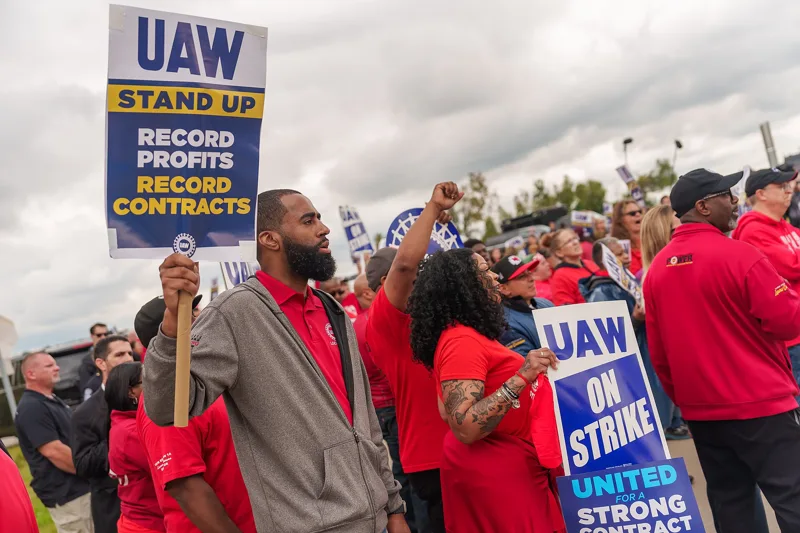
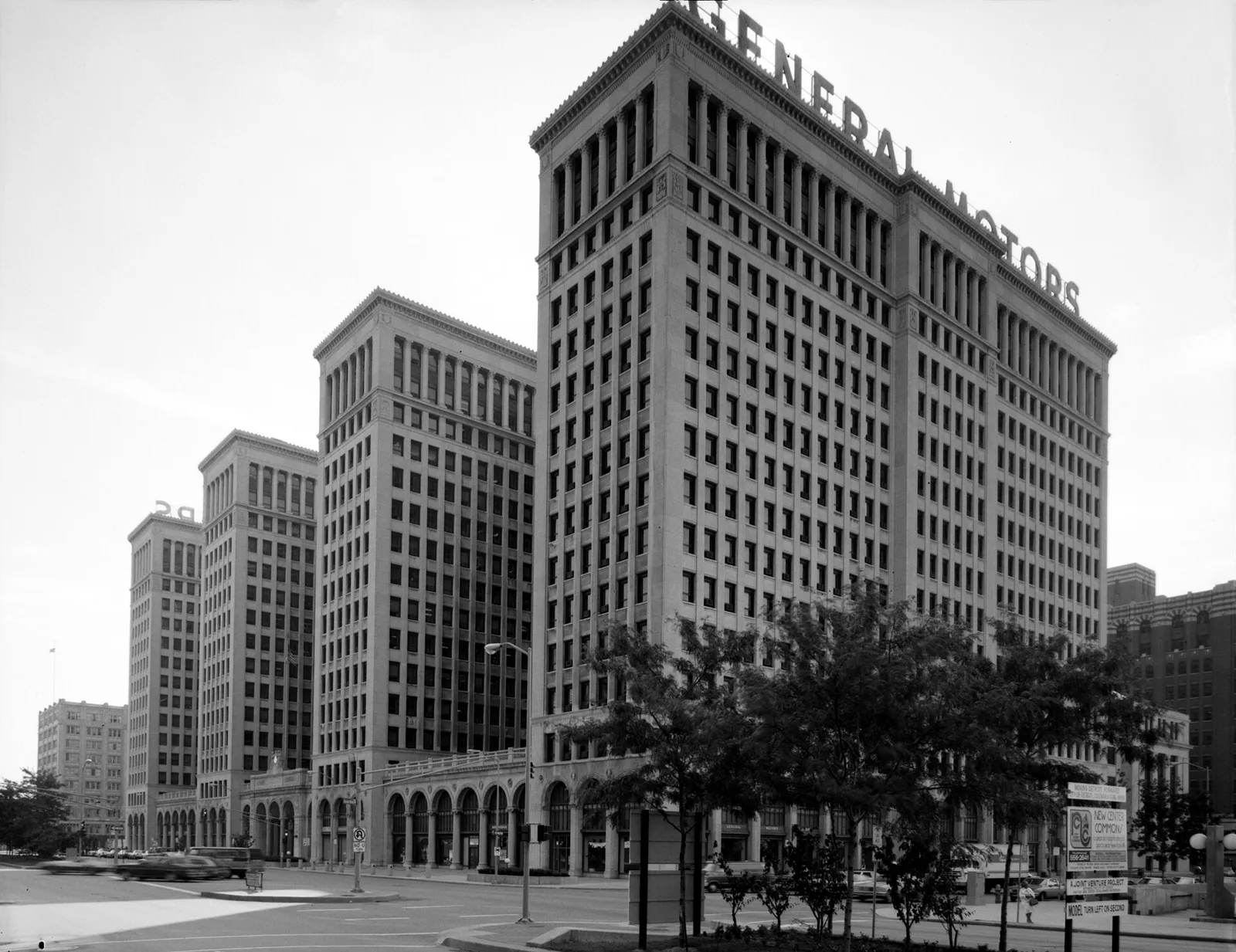
The conspiracy story attaches to General Motors, but GM was one of three. The phrase Big Three is American in origin. General Motors was first to assemble a big, multi-brand car corporation, in the 1910s, and Ford and Chrysler followed, all before the Second World War. All three have their headquarters in the Detroit area, which is why they are also called the Detroit Three, and most of their operations were unionised with the United Auto Workers and Unifor. For a time they were the three largest automakers in the world.
How the Big Three changed
The balance moved in the 2000s. Toyota passed GM as the world's largest automaker in 2006 and in the same year surpassed Chrysler in the US market. In 2007 it passed Ford as the second-largest US automaker, a title Ford had held since 1931. A recall controversy pushed Toyota back to third in US sales in the 2010s, but in 2021 it moved ahead of GM as the top seller in the American market, the first time a foreign-owned brand had led for a full year.
The costs of the model came under scrutiny. The 2005 Harbour Report put Toyota's labour productivity lead at a cost advantage of $350 to $500 per vehicle over American makers. Since the late 1990s more than half of the Big Three's profits have come from sport utility vehicles, and the 2008 Harbour Report reckoned it took ten small cars to earn what one big vehicle did. In 2009 General Motors and Chrysler went through Chapter 11 restructuring. Chrysler emerged on 10 June 2009 with Fiat buying a stake; Fiat paid $500 million for the remaining US Treasury stake on 3 June 2011, taking ownership to 53 percent, and bought the rest in January 2014. Chrysler is now part of Stellantis, formed in 2021 when FCA merged with PSA. Because of that corporate structure some media talk of a Detroit Big Two, GM and Ford, while others add Tesla and speak of a big four; as of 2021 Tesla ranked fourth among American automakers by production.
Big Three lists elsewhere
| Country | Companies called the Big Three |
|---|---|
| United States | General Motors, Ford, Stellantis North America (Chrysler) |
| Germany | Volkswagen Group, Mercedes-Benz Group, BMW |
| France | Peugeot, Renault, Citroen |
| Italy | Fiat, Alfa Romeo, Lancia |
| Japan | Toyota, Honda, Nissan |
| South Korea | Hyundai Motor Company, KG Mobility, GM Korea |
| India | Mahindra, Maruti Suzuki, Tata Motors |
| China | Private: BYD Auto, Geely Auto, Great Wall Motor. State-owned: GAC Group, BAIC Group, SAIC Motor |
| Australia | Ford, Holden and Toyota, or Ford, Holden and Chrysler |
What the story means for how cities were built
Three separate points stand out. Streetcars were in financial trouble from at least 1918, when half of US mileage was bankrupt. GM did move into buses, by owning Yellow Coach, financing small-city conversions and investing in National City Lines. And a court convicted GM and its partners of a narrower offence than the legend implies. How far those actions, as opposed to fares, franchise rules and the power-company laws, shaped the shift from rail to road is the point the legend overstates and the verdict does not settle.
For readers who drive or buy cars, the Big Three history shows how company size, union contracts, SUV profits and import competition shaped what Detroit built. Japanese makers, who specialised in compact, fuel-efficient cars, gained ground after the 1973 oil crisis. In 1981 Japan agreed to Voluntary Export Restraints to head off US tariffs or quotas, and the restraints were lifted in 1994.
Open questions about the label and the legend
Cities such as Norfolk have brought streetcars back, and Stellantis, Toyota and Tesla have changed the old Big Three order. Whether the label still describes Detroit is a matter of usage, and some commentators now say Big Two, or big four.