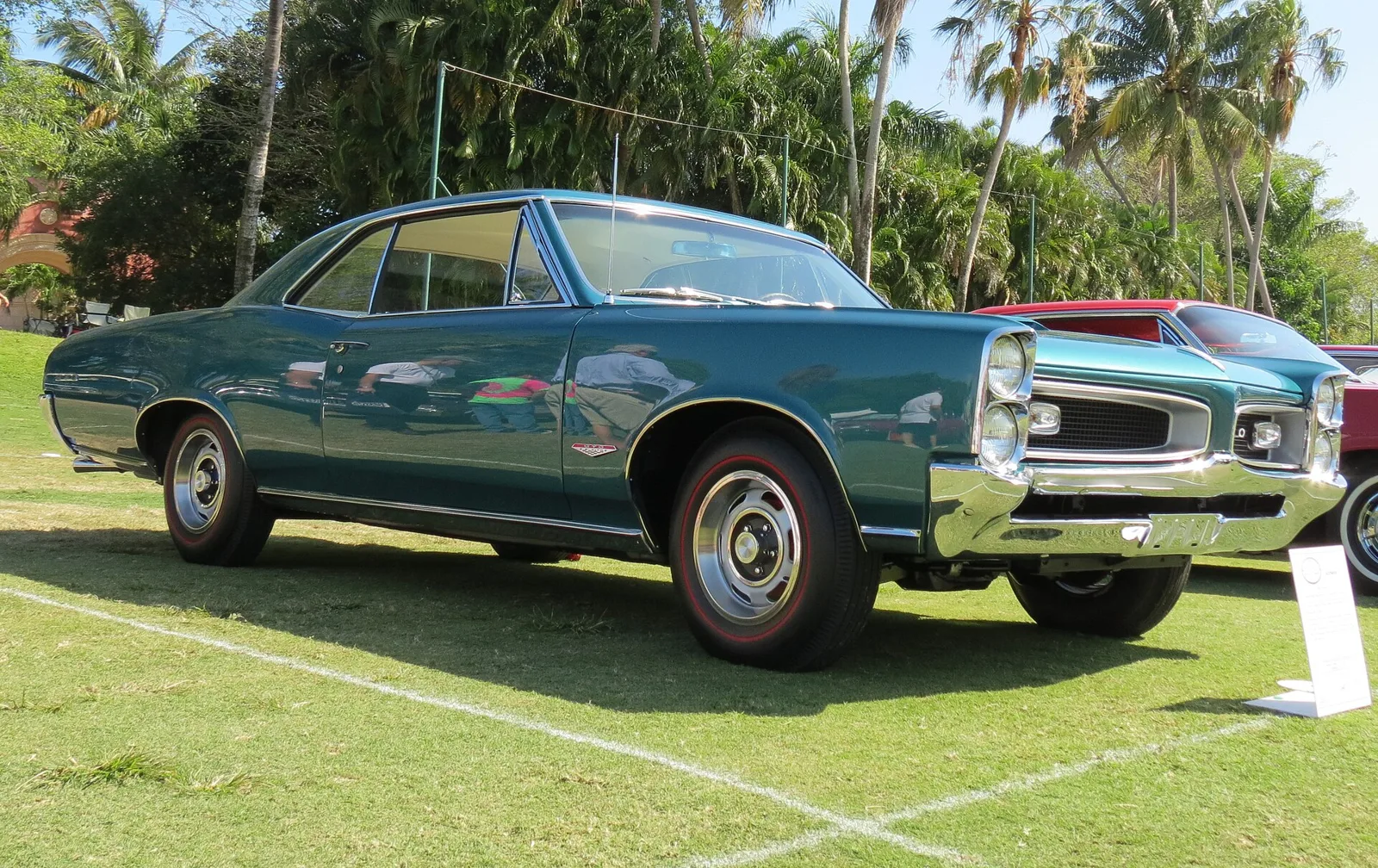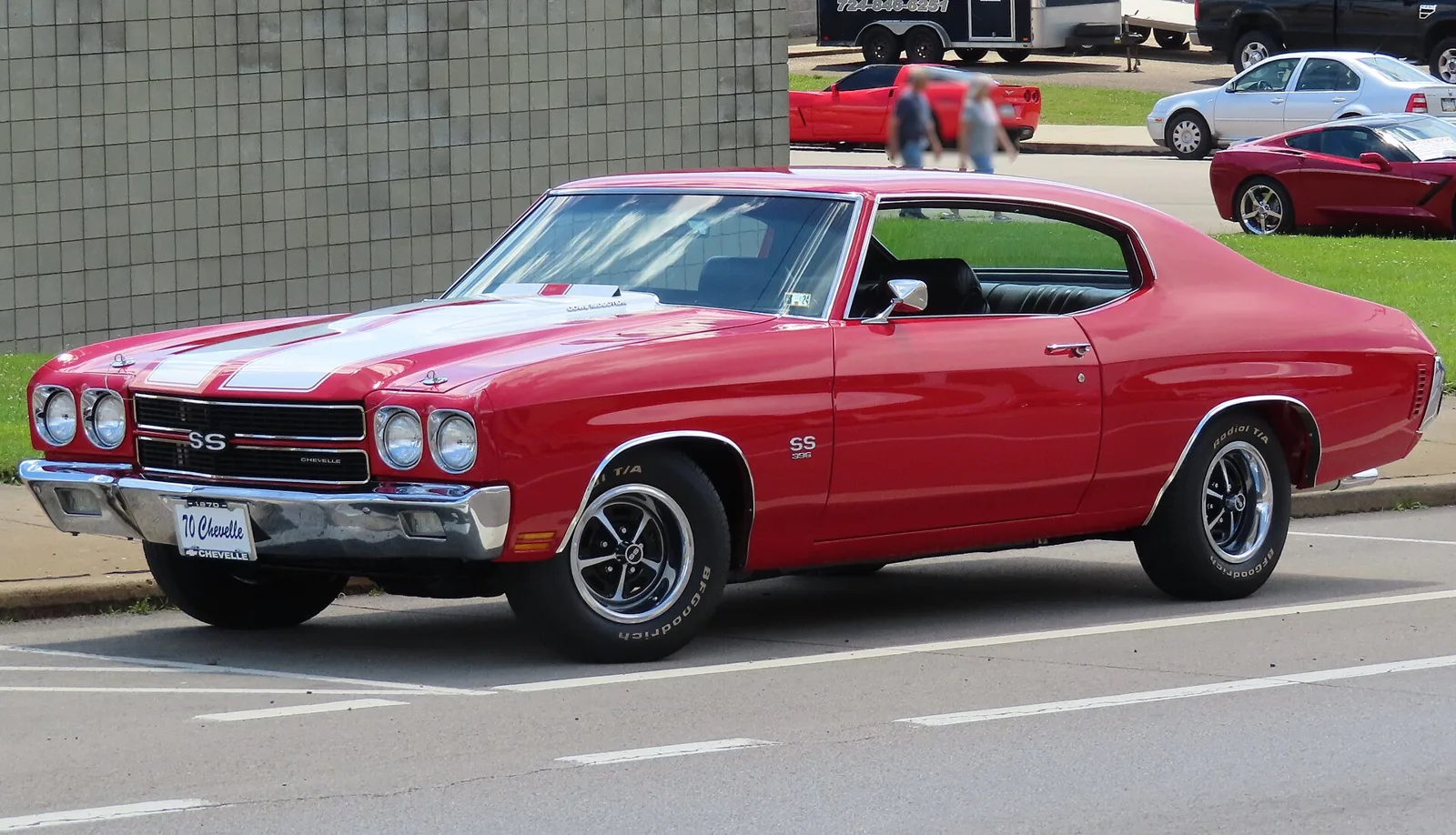
Ford's Fairlane and weak compact sales pushed GM onto the A-body platform, and the Tempest, Cutlass and Chevelle went from curiosities to muscle-car favourites.
General Motors moved the Tempest, Cutlass and Chevelle onto the shared A-body platform for 1964 after poor compact sales and Ford's 1962 Fairlane. The Pontiac GTO, Oldsmobile 4-4-2 and Chevelle SS followed as muscle-car versions, with the Chevelle SS 396 a series of its own from 1966.
In 1962 Ford launched a mid-size car called the Fairlane, and within two years General Motors had answered with three cars on one new platform. The Pontiac Tempest and the Oldsmobile F-85 and Cutlass were rebuilt from struggling compacts, and the Chevrolet Chevelle was all new. Those cars then became the foundation of the muscle-car era.
The story starts with small cars that GM did not much like selling and ends with some of its most celebrated big-engined coupes. Along the way it takes in a Pontiac with a curved driveshaft, an Oldsmobile with a turbocharger in 1962 and a Chevelle option sold in the hundreds.
Why did General Motors build mid-size cars in 1964?
GM built them because its small cars were selling badly and Ford had found a gap. Disappointing sales of the compact F-85, together with the arrival of Ford's intermediate Fairlane in 1962, prompted GM to enlarge its senior compacts for the 1964 model year. Chevrolet answered the Fairlane with a Chevelle built on a new platform.
The market was shifting. In the early 1960s American Motors had become the leading maker of small cars for several years with its Rambler American and Classic, lifting Rambler to third place in 1961 sales behind Chevrolet and Ford. The three big makers responded. At Chevrolet itself the compacts were in trouble, because both the Corvair and the Chevy II, designed to take on Ford's Falcon, were losing ground.
The answer was the GM A-body platform. Every car built on it was conventional where the earlier compacts had been experimental: a body-on-frame design with a perimeter frame, a 2,900 mm (115 in) wheelbase and a good deal more weight. The Oldsmobile grew to 5,200 mm (203 in) long and gained more than 140 kg (300 lb). The Chevelle, the Buick Special, the Pontiac Tempest and the Oldsmobile F-85 all shared the layout.
For Chevrolet it was the industry's only all-new car for 1964. It sat between the small Chevy II and the full-size cars, and Chevrolet general manager Bunkie Knudsen introduced it in August 1963. Sales in the first year reached 338,286.
A Pontiac with a curved driveshaft and an Oldsmobile with a turbocharger came before the mid-size muscle cars.
How did the Pontiac Tempest differ from other GM compacts?
The first Tempest, shown in October 1960 at the Paris Auto Show, put its engine at the front and its transaxle at the rear, joined by a bowed shaft, and gave the car a weight split close to 50/50. Buick and Oldsmobile cousins on the same platform used ordinary drivetrains.
Pontiac had wanted a clone of the Chevrolet Corvair, but GM instead handed it the lead on a programme coded X-100, run by chief engineer and general manager John Z. DeLorean. His aim was to build something more than an ordinary compact from parts GM already made. The result was Motor Trend's 1961 Car of the Year. DeLorean himself later judged it less than successful, because the car rattled badly.
The clever part was the rope drive. Because the Corvair floorpan had no driveshaft, Pontiac ran a flexible forged-steel torque shaft in a gentle downward bow, about 76 mm (3 in) deep, from the front engine to the rear transaxle. Think of it as a long springy rod doing the work of a driveshaft. It joined engine and transaxle into one unit, cut vibration and left a flat floor with no hump. The idea had been seen before only on GM's 1951 Le Sabre concept car.
The engine was just as unusual. The Trophy 4, a 3.2-litre (195 cu in) four-cylinder, was essentially the right-hand bank of Pontiac's 389 cu in V8, which meant both engines could be built on one assembly line. The best version, with a four-barrel carburettor and 10.25:1 compression, made 166 hp (124 kW) at 4,800 rpm, and economy ran from 18 to 22 mpg across the three tunes. Buick's aluminium 215 V8 was available too, but only about 3,662 buyers, roughly 1 per cent, ticked the box.
The real change came with the 326 V8 in 1963. It produced 260 hp (194 kW) and 352 lb-ft (477 N-m), and the car's weight split moved to 54/46. A GM rule against compacts with engines bigger than the Corvette's 327 meant it was badged as a 326 although it measured 336 cu in. Buyers did not mind: 52 per cent of the 131,490 Tempests and LeMans models sold for 1963 had the V8.
Pontiac also built twelve Super Duty Tempests over Christmas 1962, to race in the NHRA Factory Experimental class before an expected GM ban on factory racing. Wild Bill Shrewsberry drove one for Mickey Thompson to low 12-second quarter-mile runs at the 1963 NHRA Winter Nationals. In 2008 a missing Super Duty LeMans coupe sold at online auction for $226,521 after the seller started the auction at $500.
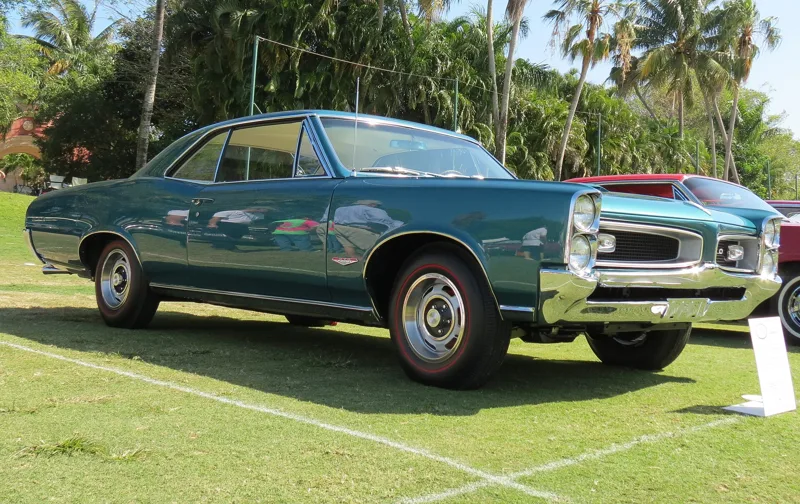
The 1964 redesign threw most of this away. The Tempest became a mid-size car with a 2,900 mm (115 in) wheelbase, a front-mounted gearbox and a solid rear axle. The base Tempest, Tempest Custom and LeMans became trim levels, and a GTO option was offered on the LeMans for 1964 and 1965 before becoming a separate model line in 1966. The new standard engine was a 3.5-litre (215 cu in) straight six of 140 hp (104 kW), a smaller-bore cousin of the Chevrolet 230 and an early example of GM's corporate engine thinking.
How did the Oldsmobile Cutlass become a muscle car?
The Cutlass began as the sporty two-door in Oldsmobile's compact F-85 line in May 1961, and became a muscle car when the 4-4-2 package arrived in March 1964 as Oldsmobile's answer to the Pontiac GTO. By then the F-85 had grown onto the A-body platform.
The name was not new. Oldsmobile first used Cutlass on a 1954 experimental coupe with a boat-tailed fastback. The F-85 took its name from the North American F-86 Sabre fighter, part of a jet-age naming habit. It was Oldsmobile's smallest and cheapest car, some 60 cm (two feet) shorter and $451 less than the full-size Dynamic 88, with an all-aluminium Rockette 215 V8 of 155 bhp (116 kW). The aluminium V8 was Oldsmobile's version of a Buick design that later became the Rover V8.
Early sales were poor until the May 1961 arrival of two pillared coupes. One was the F-85 Club Coupe, the cheapest Oldsmobile. The other, the F-85 Cutlass, came with the 185 hp (138 kW) power pack, bucket seats and a nicer interior. The total for 1961 was 80,347 F-85s, rising to 97,382 in 1962, with the Cutlass now the best seller. Car Life recorded 14.5 seconds from 0 to 60 mph for a base car and criticised its slow steering and soft suspension.
The 1962 Jetfire was more daring. Its Turbo-Rocket engine was a turbocharged 215 V8 with a Garrett AiResearch turbocharger, rated at 215 bhp (160 kW), which made it one of the first turbocharged production cars. Car and Driver clocked 9.2 seconds to 60 mph and a top speed of 110 mph (176 km/h). The price, nearly $300 over a standard Cutlass hardtop, and reliability problems held sales to 3,765. The engine was prone to spark-knock, and the only remedy then available was a 50/50 mixture of methanol and distilled water. The Jetfire ended in 1963.
The 1964 car was a different animal. Wheelbase grew to 2,900 mm (115 in), a cast-iron 330 cu in (5.4 L) V8 replaced the aluminium unit, and a Buick 3.7-litre V6 became the standard engine, the first six Oldsmobile had used since 1950. A Vista Cruiser wagon with a raised roof and tinted skylights joined the range on 4 February 1964, on a 3,000 mm (120 in) wheelbase. The 4-4-2, based on a police package, cost $285.14 extra. Sales rose to 167,002 in 1964 and 187,097 in 1965, when the 4-4-2 got a 400 cu in engine.
The name then travelled upmarket and sideways: the Cutlass Supreme in 1966, the high-performance Hurst/Olds in 1968, and in the 1980s a family of Cutlass models from the compact Calais to the Ciera and Supreme. Oldsmobile retired the name in 1999 in favour of the Alero, ending nearly 40 years of continuous production.
What made the Chevrolet Chevelle SS a muscle car?
The Chevelle Super Sport was the Chevrolet entry in the muscle-car battle. In 1964 and 1965 the SS was a Malibu badge and package, but in 1966 the Chevelle SS 396 became a series in its own right, with reinforced frames, stiffer suspension and a 396 cu in (6.5 L) V8 rated at 325, 360 or 375 hp.
The 1964 Chevelle was simple and traditional. It sat on a 2,900 mm (115 in) wheelbase, was similar in size, simplicity and concept to the standard Chevrolets of 1955 to 1957, used a four-link rear suspension, and every model could be had with two six-cylinder engines or several V8s. A unibody design had been considered under the XP-726 programme but GM stuck with body-on-frame. The name has been speculated to blend gazelle and Chevrolet. The line included coupes, sedans, convertibles and wagons, and brought back the El Camino after four years away.
The first SS package cost $162 on the Malibu hardtop and convertible and added bucket seats, a console and 14-inch wheel covers from the Impala SS. A 283 V8 made 220 hp (164 kW), and from mid-1964 buyers could order a 327 V8 in 250 or 300 hp (224 kW) form, joined in 1965 by a 350 hp 327. Then came the rarity. The Z-16 option, priced at US$1,501 in mid-1965, put a 396 Turbo-Jet big-block in a body with the boxed frame from the convertible, hooked to a Muncie four-speed manual. Only 200 production cars were built at the Kansas City plant, plus a prototype made at Baltimore, and about 75 are currently accounted for.
The SS 396 series ran from 1966 to 1968 before it became an option package in 1969. Cars for 1966 were restyled with the Coke-bottle lines then in fashion, and 1967 brought front disc brakes, a dual master cylinder and a collapsible steering column. For 1968 the Chevelle got an all-new body influenced by the Camaro, with coupes on a 112-inch wheelbase and sedans on a 116-inch one. The 1968 SS 396 sport coupe started at $2,899, $236 more than a Malibu with a 307 V8, and Chevrolet built 60,499 of them, plus 2,286 convertibles and 5,190 El Caminos. A luxury Concours range arrived in March 1968.
Tempest, Cutlass and Chevelle side by side
| Pontiac Tempest | Oldsmobile Cutlass | Chevrolet Chevelle | |
|---|---|---|---|
| Debut | 1961 compact, shown October 1960 | F-85 Cutlass coupe, May 1961 | 1964, as an all-new mid-size |
| Mid-size switch | 1964, A-body | 1964, A-body | Built on the A platform from the start |
| Muscle-car step | GTO option on LeMans, 1964 and 1965 | 4-4-2, March 1964 | Malibu SS, then SS 396 series in 1966 |
| Big engine | 326 V8, 1963 | 330 V8, 1964; 400 cu in, 1965 | 396 cu in V8, from 1965 Z-16 |
| Name ended | After 1970 | 1999 | 1977 model year; Malibu name from 1978 |
Where the names went next
The three nameplates ended differently. Pontiac dropped Tempest after 1970, replacing it with the T-37 as the base model; the LeMans name took over in 1972. Between 1987 and 1991 the name returned in Canada on a rebadged compact Chevrolet Corsica. The Chevelle ran for three generations from 1964 to 1977, with Super Sport versions through 1973 and Lagunas from 1973 through 1976, until the downsized Malibu replaced the Chevelle name completely for 1978. In Canada, GM sold a modified Chevelle with a Pontiac-style grille as the Beaumont from 1964 to 1969.
Oldsmobile's Cutlass lasted longest. By the 1980s it was a sub-marque with several lines bearing the name at once, and in 1999 the Alero replaced it. Of the three, the Cutlass was the name that spread furthest, from a 1961 compact coupe to a 1980s sub-marque with several lines of its own.