How Ford Australia built a 4.0-litre inline-six that grew to 325 kW, and how Holden's own straight-sixes ran from 1948 until the VL Commodore in 1986.
Ford's Barra was a 4.0-litre inline-six built at Geelong from 2002 to 2016, growing from 182 kW to 325 kW in turbo form. Holden built its own straight-sixes at Port Melbourne from 1948 to 1986, in Grey, Red, Blue and Black generations before Nissan engines replaced them.
The strongest six-cylinder engine ever built in Australia was a Ford Barra. In the 2016 FG X Falcon XR6 Sprint, the 325T made 325 kW (436 hp), and 370 kW (496 hp) on overboost. Holden's straight-six story ran a different course, from the Grey motor of 1948 to the Black engine of 1986.
What is the Ford Barra engine?
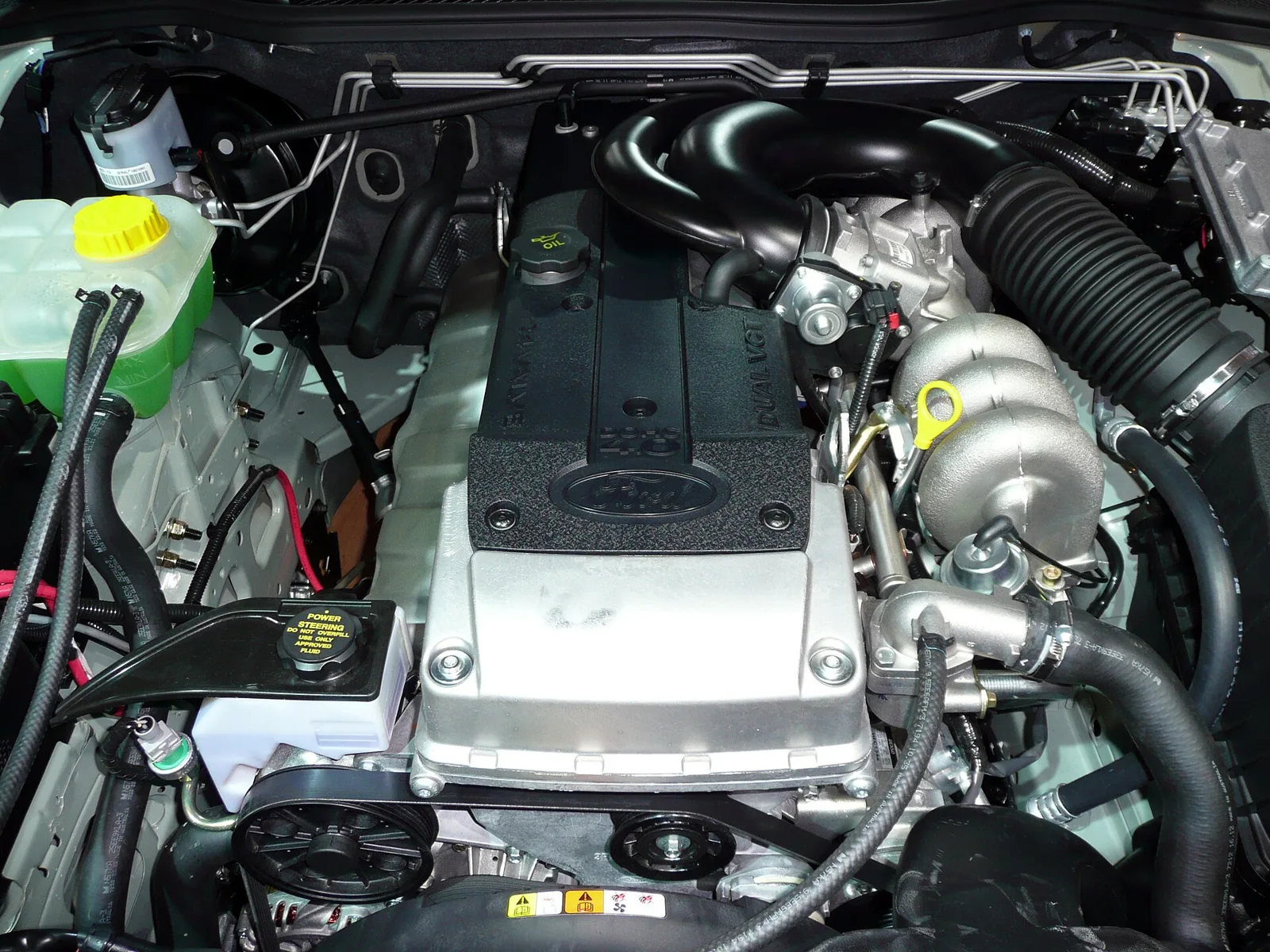
Barra is the name Ford Australia gave to a series of engines it made between 2002 and 2016. The main one is a 4.0-litre inline-six with double overhead cams, variable valve timing and 24 valves, built at Geelong in Victoria. There was also a Barra V8, imported from Canada.
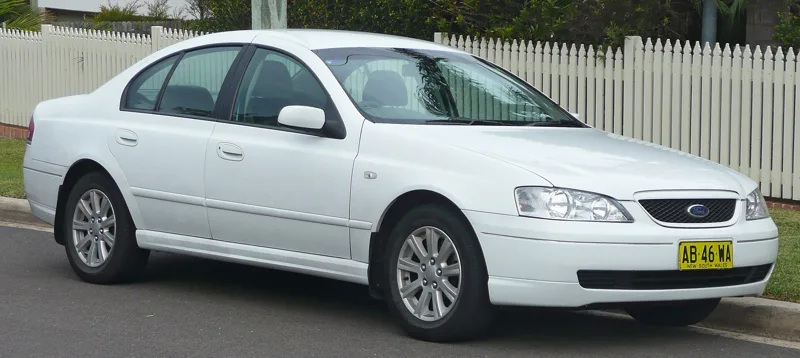
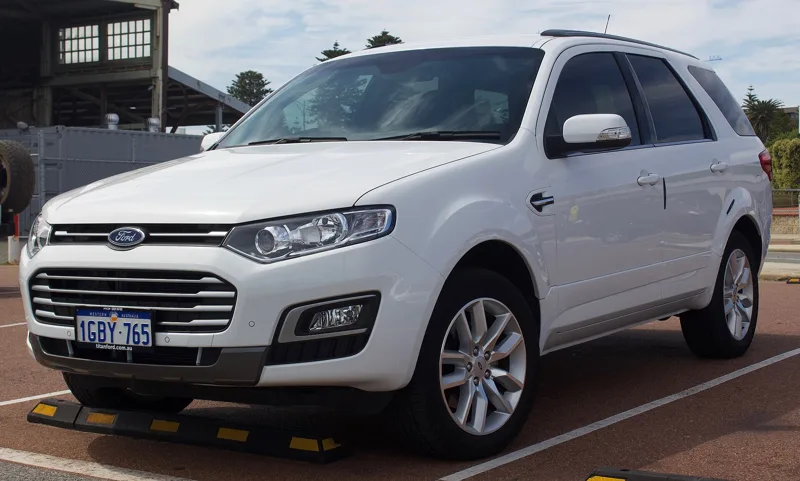
The six came in petrol, turbocharged and liquefied petroleum gas forms. It first appeared in the BA Falcon in 2002 and went into the Falcon, Fairmont, Fairlane and Territory.
One engine was ended by the factory floor, the other by an emissions rule.
Where did the Barra come from?
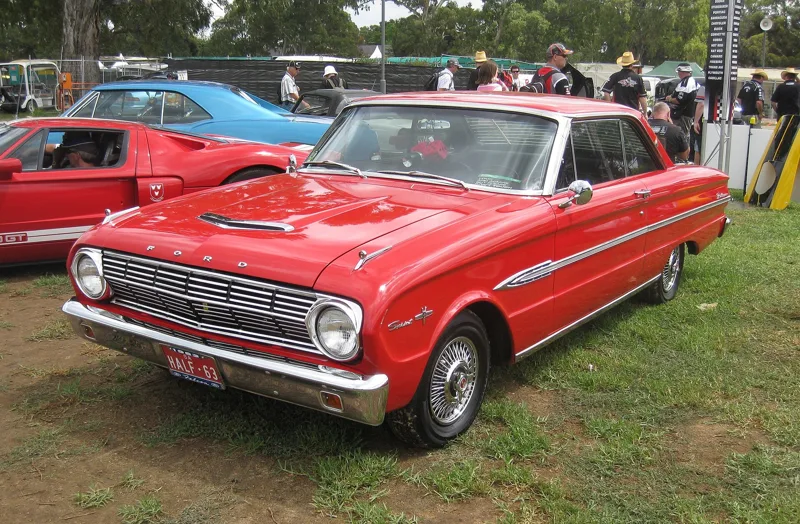
The Barra is a descendant of the original Falcon Six of 1960. The line runs back through the single-cam Intech, which was built from 1998 to 2002, and from there to the 2.4-litre Thriftpower Six of the first American Falcon.
You can tell the versions apart by the rocker covers. LPG engines had green ones, Ford Performance Vehicles engines blue, and the turbocharged engines red. The Territory Turbo and the FG X were the exceptions, finished in black.
How did the naturally aspirated Barra develop?
The first, the Barra 182, arrived in 2002 as the standard engine in the BA Falcon, Fairmont and Fairlane, and in the Territory when that car appeared in 2004. It made 182 kW (244 hp) and 380 Nm, was six percent more efficient than the engine it replaced, and met Euro II. It was also 20 percent more powerful than the Buick-derived Ecotec V6 in the Holden VX II Commodore.
In 2005 the Barra 190 came with the BF Falcon and the SY Territory. A higher compression ratio, dual independent variable cam timing and a few more kilowatts took it to 190 kW (255 hp) and 383 Nm, with efficiency up by two to six percent. It met Euro III from 2006.
The Barra 195 of 2008 was the last of the naturally aspirated sixes, fitted to the FG Falcon, the FG X and the SZ Territory. It swapped the alloy inlet manifold for a plastic one that weighed 4 kg (9 lb) less, gained an electric throttle body, and used a redesigned "Fast Burn" cylinder head that added swirl to the combustion chamber. Output rose to 195 kW (261 hp) and 391 Nm, and it met Euro IV from 2010.
How did the turbo Barra reach 325 kW?
The route was a series of incremental steps, each building on the last. The 240T arrived in 2002 in the BA Falcon XR6 Turbo, based on the 182. It had a single Garrett GT3582R turbocharger running 6 psi (0.4 bar), pistons that lowered the compression to 8.7:1, higher fuel pressure, an Inconel exhaust valve and an intercooler. It made 240 kW (322 hp) and 450 Nm.
The 245T followed in 2005 in the BF XR6 Turbo, with stronger pistons and a new intake manifold. The BF series II added tougher connecting rods borrowed from the LPG engine and improved valve springs. The SY Territory Turbo used it from 2006 to 2011, with its intercooler mounted on top rather than in the nose.
Ford Performance Vehicles took the next step. Its 270T, built from 2004 to 2009, powered the F6 Typhoon and Tornado and the Territory-based F6X. Better pistons, a bigger intercooler, strengthened rods and a revised intake lifted output to 270 kW (362 hp) and 550 Nm.
For the FG generation in 2008 the XR6 Turbo got its own 270T, with a smaller, faster-spooling turbocharger and boost raised to 10 psi (0.7 bar). An overboost function added a further 10 percent of boost. FPV's FG-based F6 used the 310T, with 13.3 psi (1 bar) of boost and 310 kW (416 hp). It was the first Australian engine to make 100 hp (75 kW) per litre, and it ended in 2014 when Ford closed Ford Performance Vehicles.
The last chapter was the 325T. It borrowed the 310T's turbocharger and injectors, added a bigger intercooler and an intake made of carbon fibre, and produced 325 kW and 576 Nm, rising to 370 kW and 650 Nm on overboost.
How did the LPG Barra work?
The Barra E-Gas, launched with the BA Falcon, ran on autogas only. It used a Vialle venturi system rather than any LPG injectors, with beefed-up valves and H-section rods. It made 156 kW (209 hp) and about 372 to 374 Nm, with the torque nudged up slightly for the BF.
The EcoLPi replaced it in 2011 in the FG Falcon, switching to liquid phase injection. Compression went to 12.0:1, power to 198 kW (266 hp) and torque to 409 Nm.
What was the Barra V8?
Despite the shared name, the V8 was a different animal. It was a version of the Ford Modular engine, assembled in Ontario, at the Essex Engine Plant in Windsor, displacing 5.4 litres with a single overhead cam, variable cam timing and three valves per cylinder. No vehicle had used that 5.4-litre three-valve layout before the Falcon.
The Barra 220 was offered from 2002 to 2005 and made 220 kW (295 hp) and 470 Nm. The Barra 230 followed until 2008 with a second knock sensor and more aggressive ignition settings, giving 230 kW (308 hp) and 500 Nm. Both went into the Fairlane and LTD as standard fitments. The Modular V8 ended in 2008 with the FG Falcon.
Why did the Barra stop being built?
Ford Australia announced on 23 May 2013 that the Barra would go the same way as the Falcon and Territory, by October 2016. The last engines were made on 26 September 2016 and the last cars assembled on 7 October. President Bob Graziano pointed to high production costs and a shrinking market share as the reasons local manufacturing was no longer profitable.
Tuners have kept it in the conversation. The engine handles a great deal of extra power and stays reliable when modified, and only minor changes are needed to reach a high figure.
What was the Holden Grey motor?
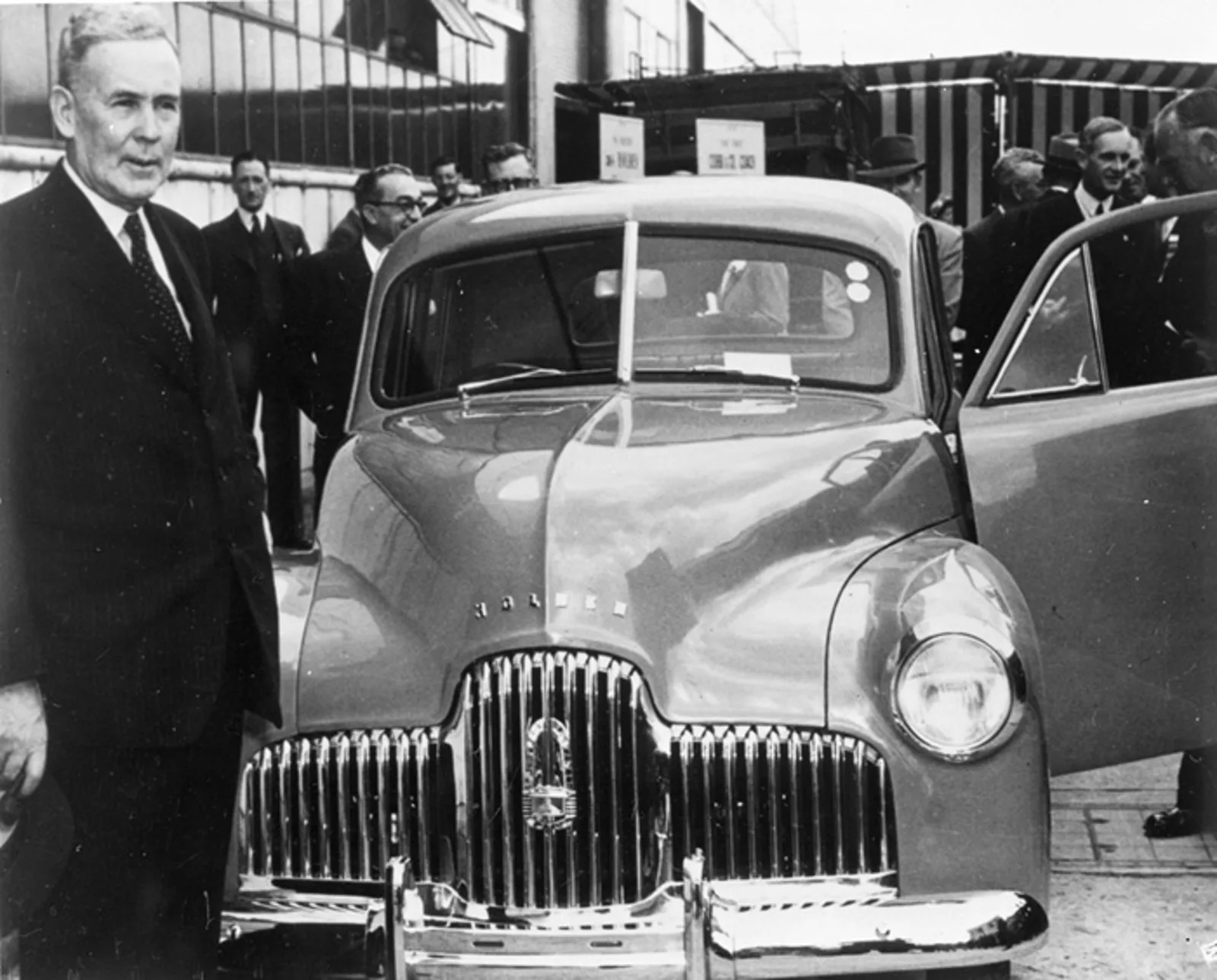
General Motors Holden built its straight-sixes at Port Melbourne between 1948 and 1986, and they went into every Australian-designed Holden of the period. The first, the Grey, was named after the colour of its cast block. It is a separate design from the later engines, which share many parts and castings.
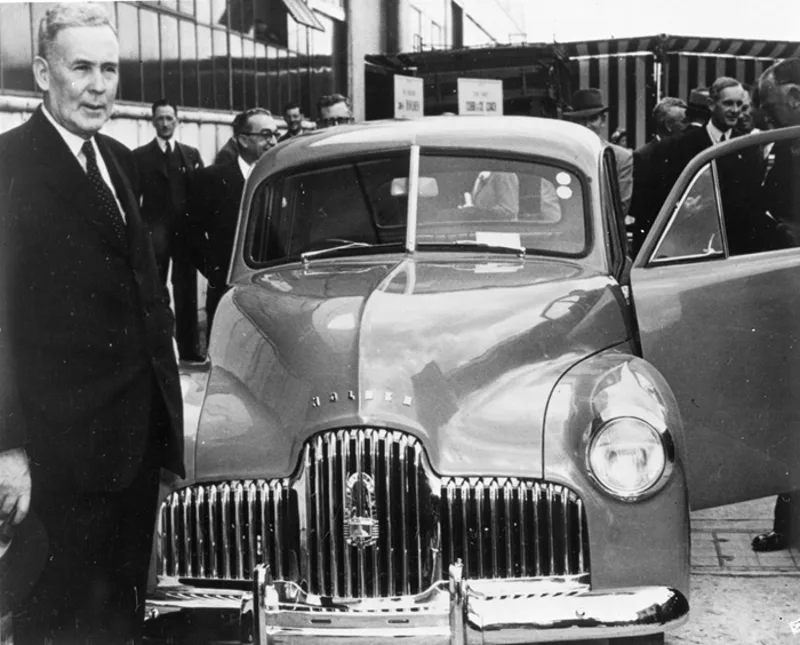
The Grey ran from 1948 to 1963, with the last built on 2 August 1963. It was an overhead valve engine in the 48-215 with a three-speed column-change gearbox, and it took its design from a pre-war Buick straight-six. At 132 cubic inches (2,160 cc) it made 60 bhp (45 kW).
The FE of 1956 lifted that to 53 kW with compression of 6.8:1. In 1960 the FB used a bored-out version of 138 cubic inches (2,260 cc) at 7.8:1, making 76 bhp (57 kW) at 4200 rpm, with its torque peak very low in the rev range. That was enough to outpace four-cylinder rivals from Austin, Morris, Vauxhall and Ford of Britain. The design was low-stress and low-compression for reliability, and it turned up in racing open-wheelers, boats and forklift trucks.
What made the Red motor different?
The Red replaced the Grey in 1963 and was completely new, not an evolution. It had a seven-bearing crankshaft, hydraulic valve lifters and a full-flow oil filter, and the whole engine was painted red, inlet manifold included. It debuted in the EH in 149 cubic inches (2,447 cc) and 179 cubic inches (2,930 cc) forms, making 100 and 115 bhp (75 and 86 kW), gains of 33 and 53 per cent over the Grey.
Forged steel crankshafts were used until January 1968. A new Nodular Iron Foundry was opened by Prime Minister Harold Holt on 10 February 1967, and the cast crankshaft it made was field-tested in the HR before full release in the HK. Forged cranks stayed in optional versions such as the X2, the 186S and the LC 186 XU1. The paint became Rocket Red from the HK, and a Rocket Red MkII arrived in 1978.
The Red grew to many capacities: 130, 138, 149, 161, 173, 179, 186 and 202. It powered the EH through the HZ, the Torana from 1969 to 1979, the first VB Commodore and the Bedford CF.
What came with the Blue and Black engines?
The Blue debuted in the 1980 VC Commodore. Its biggest change was a redesigned head with twelve ports, one per cylinder, plus a revised T5 cam. It came in 2.85 and 3.3-litre sizes, the larger with counterweights on every crank throw and stronger connecting rods. A two-barrel Varajet carburettor was standard.
The Black arrived in the 1984 VK Commodore, in 3.3 litres only. The carburettor version added computer-controlled spark timing, while the injected one used Bosch LE2-Jetronic multipoint injection with a long-runner intake and a 6-3-1 tubular exhaust. It gave better performance and economy than the carbureted engine.
The story stopped in 1986. For the VL Commodore, Holden dropped its own sixes for Nissan's RB30E and RB20E, because upcoming emission standards and the shift to unleaded fuel made it hard to re-engineer the Australian engine.
What was the Holden Starfire?
The Starfire was effectively the 2.85-litre six with two cylinders removed: 1.9 litres, built in Australia to meet local content rules. It first appeared in 1978 in the UC Sunbird and made 58 kW (78 hp). A 0-100 km/h run in the VC Commodore took 17.5 seconds, so it had to be pushed hard and fuel use ended up close to that of the sixes. It picked up the nicknames Misfire and Backfire.
Toyota Australia also took it for the Corona XT130 to meet local parts rules, calling it the 1X, with 136 Nm at 2400 rpm. In Australia the Camira's Camtech engine replaced it, but New Zealand VK Commodores kept it until 1986.
How did emission rules affect Holden's sixes?
ADR27A, an Australian Design Rule on evaporative and exhaust emissions, took effect on 1 July 1976. The Red from that date, along with the Blue, Black and Starfire, were fitted with emission controls that generally trimmed their output.
Barra vs Holden six, what set the two apart?
| Engine | Built | Capacity and notes |
|---|---|---|
| Holden Grey | 1948 to 1963 | 2,160 cc, then 2,260 cc; overhead valve; Buick-based |
| Holden Red | 1963 to 1980 | 149 and 179 cubic inches at launch; all new design |
| Holden Blue | From 1980 | 2.85 and 3.3 litres; twelve-port head |
| Holden Black | From 1984 | 3.3 litres; injected and carbureted |
| Ford Barra | 2002 to 2016 | 4.0 litres; DOHC; turbo and LPG versions |
Two things separate them. The Holden sixes grew from a low-stress overhead valve design into injected 3.3-litre units, and they stopped in 1986 because emission rules and unleaded fuel made them hard to rework. The Barra was a modern double-cam engine with variable valve timing that kept evolving, from 182 kW to 325 kW, and was ended by the economics of building cars in Australia.
Where this goes next
Neither line is still being built. The Barra ended in September 2016, along with Ford's Australian engine manufacturing, and the Falcon and Territory followed in October. Holden's sixes finished in 1986, with the Starfire four running on in New Zealand VK Commodores to the same year.