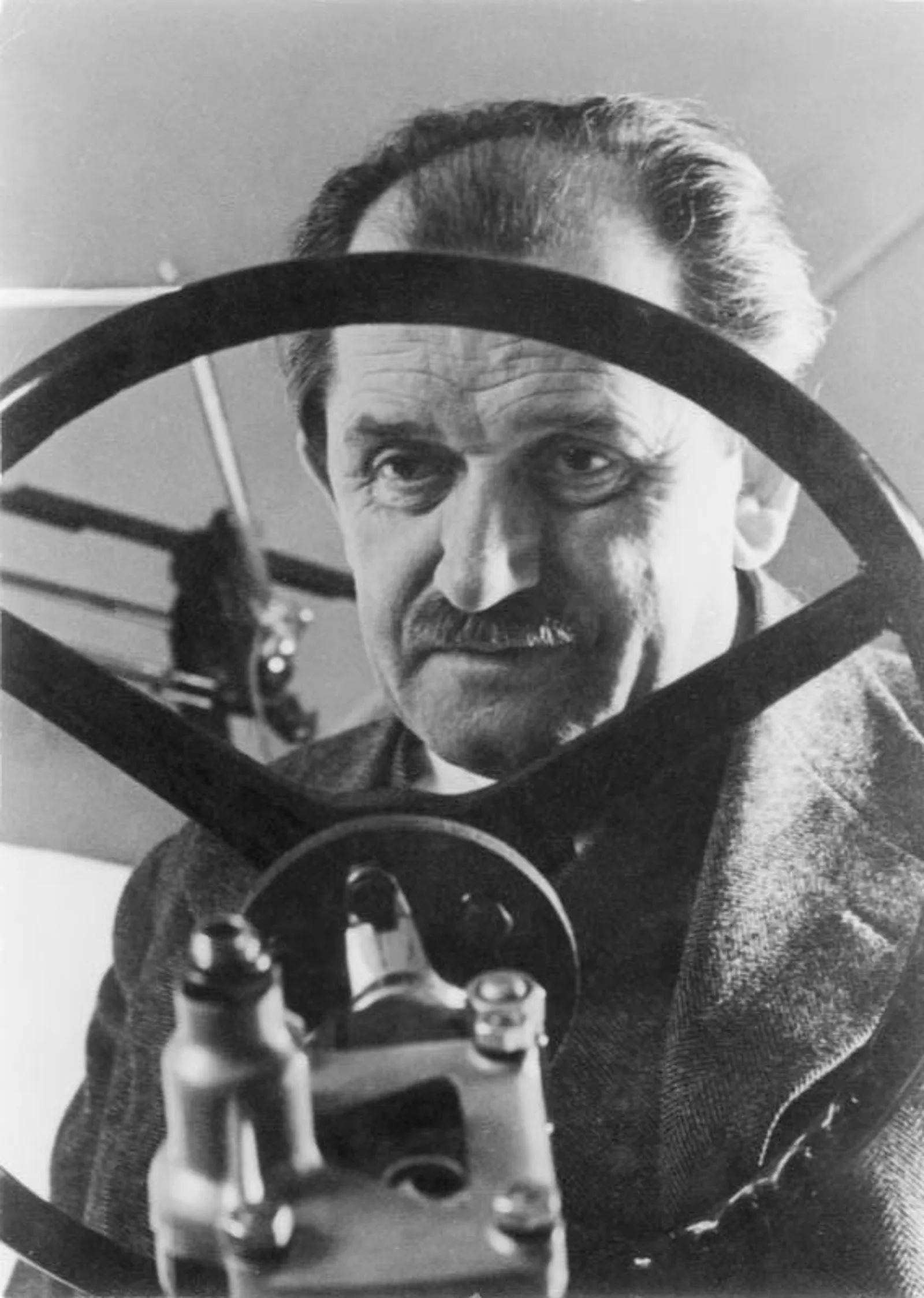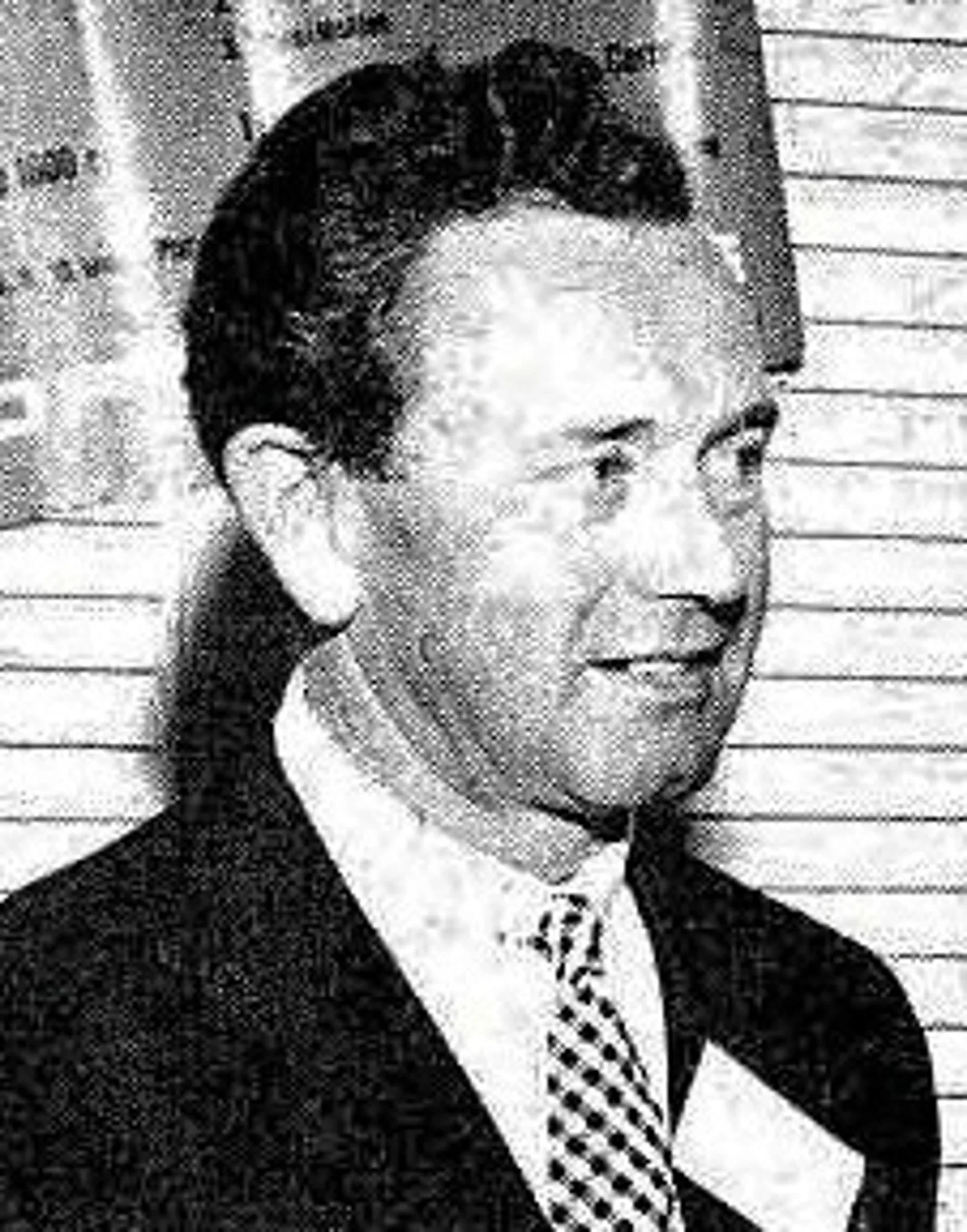
A son who kept the firm alive while his father sat in a French prison, and a grandson who took Volkswagen from the brink of bankruptcy to a group spanning Audi, Bentley, Bugatti, Lamborghini and Porsche.
Ferry Porsche turned his father's Stuttgart design office into a car maker after the Second World War, starting with the 356 built at Gmuend in Austria. His nephew Ferdinand Piech, a grandson of Ferdinand Porsche, later ran Audi and then chaired Volkswagen's executive board from 1993 to 2002.
On 15 December 1945 Ferdinand Porsche, his son Ferry and their relative Anton Piech were arrested at Wolfsburg as suspected war criminals, and bail was set of 500,000 francs for each of the Porsches. The family could pay it for only one of them. Ferry went free, to Austria, and the man who had designed the Volkswagen went to prison at Dijon.
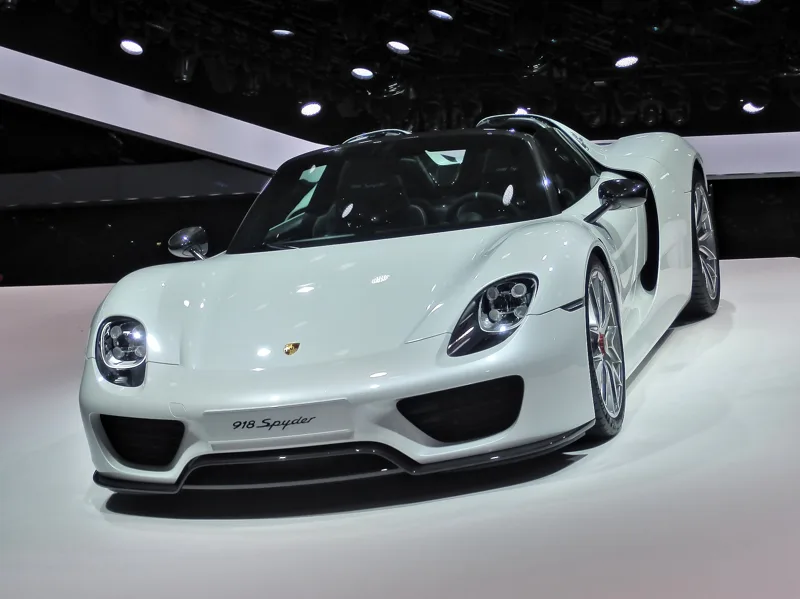
What followed shaped two of the biggest names in the industry. Ferry used his freedom to turn a design bureau into Porsche, a car maker with its own name on the bonnet. His nephew Ferdinand Piech, the grandson of the founder, went on to rebuild Audi and run the Volkswagen Group, which by his time counted Porsche among its brands.
Who was Ferry Porsche?
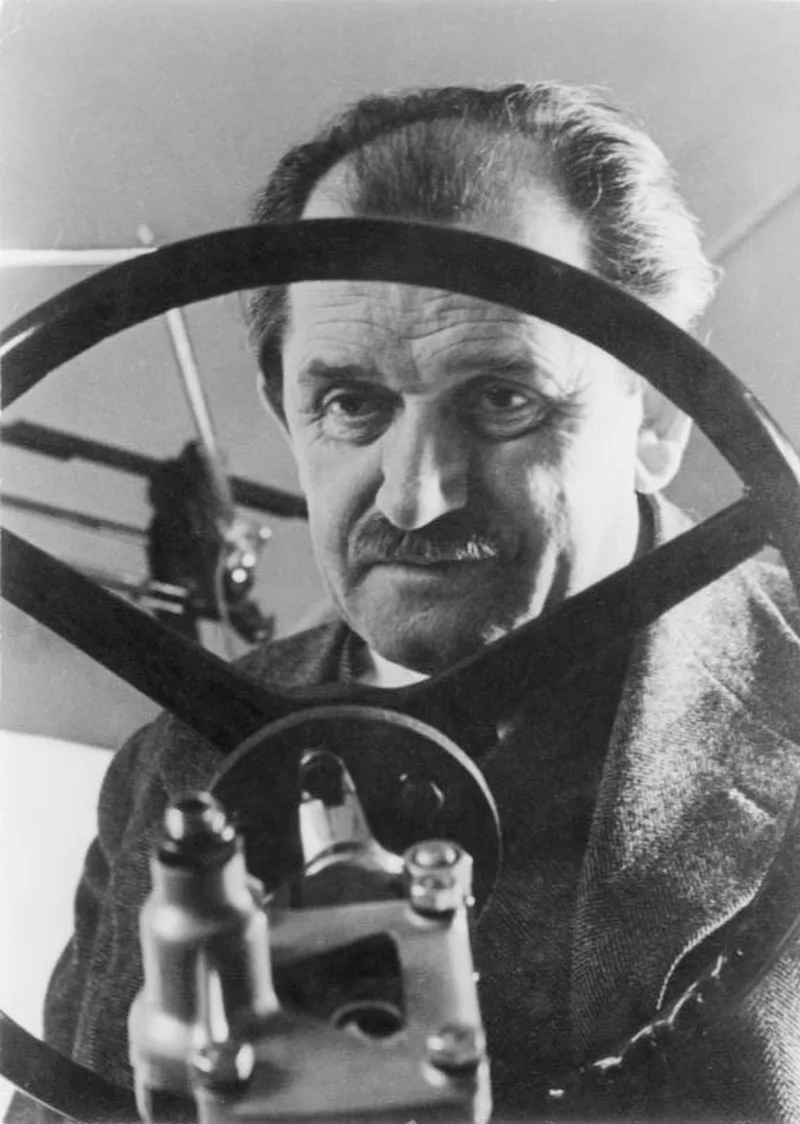
Ferry Porsche, born Ferdinand Anton Ernst Porsche on 19 September 1909, was an Austrian-German automobile designer and entrepreneur who led Porsche in Stuttgart. He lived until 27 March 1998. The family connection to the wider story is close: his father founded both Volkswagen and Porsche, his son Ferdinand Alexander worked on the Porsche 911, and his nephew Ferdinand Piech chaired the Volkswagen Group for years.
On the day Ferry was born, his father was racing a car called the Maja at Semmering and won his class. The news of the birth reached him by telegram. Ferry's mother was Aloisia Johanna Kaes, and his sister Louise was five years older.
The boy was christened with the name Ferdinand, but got the nickname Ferry because Ferdy sounded too much like a coachman's nickname, a trade his family's work would put out of business.
Bail of 500,000 francs could be found for only one of the two Porsches, so the son went free to build a car company and the father went to prison at Dijon.
Growing up around racing cars
His childhood was a tour of workshops. The family moved often, and father and son travelled around Europe and the United States racing the cars Ferdinand designed. On Christmas Eve 1920 Ferry was first handed a miniature coach pulled by a goat, then given the real present: a petrol-driven miniature car with a two-cylinder four-stroke engine his father had designed for him. He learned to drive at ten. At twelve he drove the Austro-Daimler Sascha, a car that had just won its class at the Targa Florio in Sicily in 1922.
In 1923 the family moved to Stuttgart, where Ferdinand joined Daimler Motoren Gesellschaft and became technical director. By 1929 Daimler-Benz questioned his work and halted it, since his taste for compact cars clashed with the company's liking for luxurious Mercedes-Benz models. Ferdinand spent a spell as technical director of Steyr in Austria and then returned to Stuttgart to open a consulting office. Ferry, meanwhile, had started at Bosch in 1928 and took extra lessons in physics and engineering, though he never formally enrolled in a university.
How did the Porsche design bureau start?
The design bureau opened in April 1931 with Ferry, then 21, at his father's side. Its founders were Ferdinand Porsche, Dr Anton Piech and Adolf Rosenberger, and Rosenberger put up the money while also bringing racing and technical skill. The founding line-up matters for the family tree: Anton Piech was Louise Porsche's husband, and his son Ferdinand would one day run Volkswagen.
The early 1930s were hard, with the economic crisis at its worst and few staff, but contracts came in from Wanderer, Auto Union and Zuendapp and, from 1933, from the government. Among the results were the mid-engined Auto Union Silver Arrow racers. Their first design in 1933 had a 4.5 litre V-16 engine and an aluminium frame. Ferry looked after testing, coordinated the design engineers and handled clients.
Meanwhile the small-car project took shape. The Volkswagen design began at the family home on Feuerbacher Weg, and the government accepted it on 22 June 1934. Three prototypes were built in the family garage. In 1938 the father went off to the new Volkswagen works at Wolfsburg, and Ferry stepped up as deputy head of the Stuttgart bureau, shifting its design departments to Stuttgart-Zuffenhausen.
What happened to the Porsches in the Second World War?
Bombing raids on Stuttgart forced Ferry to send part of the design work to Gmuend in Carinthia and to Zell am See, where the family owned a farm. He stayed in Stuttgart to manage a business whose factories used slave labour. His father carried on at Wolfsburg until the end of the war, where civilian small-car output had given way to the military Kuebelwagen.
After the war the French government asked the family in November 1945 to build a French version of the Volkswagen, and a group of French makers led by Jean Pierre Peugeot opposed the idea. At an official meeting at Wolfsburg on 15 December both Porsches and Anton Piech were arrested as suspected war criminals. No trial followed. Ferry's bail was found and he moved to Austria in July 1946, while his father went to Dijon.
Gmuend and the first Porsche cars
Occupying forces barred Ferry from returning to Stuttgart, so in July 1946 he moved the whole operation to Gmuend. He ran it with his sister Louise. Early on, the workshop did car repairs and sold water pumps and lathes, but two design contracts then set the course. One was for Cisitalia race cars, the other for a car of the family's own.
Carlo Abarth mediated a deal between Ferry and Piero Dusio, and the result was the Porsche 360 Cisitalia, the first car to spell out the family name. It was a smaller relation of the pre-war racers, with a supercharged 1.5 litre engine mid-mounted and four-wheel drive.
The road car was the Porsche 356, a rear-engined machine with an air-cooled four-cylinder engine of 35 hp and a design that borrowed Volkswagen components. The engine position left it a little unstable, but the balance favoured power and light weight. A Zurich dealer placed the opening order in winter 1947. Under Ferry's eye the cars were assembled by hand in an improvised workshop inside a sawmill. By June 1948 there were 50 aluminium-bodied cars, and six frames went to Beutler in Thun, Switzerland, to be fitted with cabriolet bodies.
The 356 stayed in production for years and by 1965 had sold nearly 78,000 units. It also set the pattern for every Porsche sports car that followed. In spring 1949 Volkswagen's general manager Heinz Nordhoff approached Ferry with a major contract, which brought a new chapter for the firm.
The end of Ferdinand Porsche
During 20 months in Dijon, the elder Porsche collaborated on designs for Renault, including the later popular 4CV. It is speculated that conditions in prison hurt his health. In 1947 Ferry collected the bail after early design fees arrived, and father and Anton Piech were released on 1 August 1947.
Back in Austria, Ferdinand reviewed the 360 Cisitalia and the 356 and approved both. He told staff he would have made the same designs as Ferry. Ferry also took him to see the Wolfsburg plant, by then flourishing with Beetle production under British supervision. In November 1950 Ferdinand had a stroke, and he died on 30 January 1951, aged 75.
The Porsche and Piech family tree
| Detail | Ferry Porsche | Ferdinand Piech |
|---|---|---|
| Born | 19 September 1909 | 17 April 1937, Vienna |
| Died | 27 March 1998 | 25 August 2019 |
| Place in the family | Son of Ferdinand Porsche | Grandson of Ferdinand Porsche, nephew of Ferry |
| Parents | Ferdinand Porsche and Aloisia Johanna Kaes | Anton Piech and Louise, daughter of Ferdinand Porsche |
| Early career | Bosch from 1928, then his father's bureau from 1931 | Porsche from 1963 |
| Biggest job | Led Porsche after the war | Chairman of the Volkswagen executive board, 1993 to 2002 |
| Cars linked to him | Porsche 360 Cisitalia and 356 | Porsche 917, Audi Quattro, Bugatti Veyron |
Ferdinand Piech, from Zurich to Porsche
Ferdinand Piech was born in Vienna, the third child of Anton Piech and Louise, who was Ferdinand Porsche's daughter. He went to the Swiss boarding school Lyceum Alpinum Zuoz from 1952 to 1958 and graduated from ETH Zurich in 1962 in mechanical engineering, writing a master's thesis on a Formula One engine.
He joined Porsche in 1963 under his uncle Ferry, headed the development department from 1965 and became technical director in 1971. One of his projects was the Volkswagen EA 266, planned as the Beetle's successor. It was finished in 1971, but costs and profit worries meant it never left the prototype stage, and all 48 prototypes were destroyed.
At Porsche he also worked on the 906 and the 917. The 907 of 1967 moved the driver to the right-hand side of the cockpit, which helped on circuits that turn mostly clockwise. In 1968 Porsche took a risky step and built the minimum of twenty-five 917s required for Group 4 sports cars, a class that allowed 5,000 cc engines where prototypes were held to 3,000 cc. It caught the rule makers at the FIA off guard. He also started work on a 16-cylinder engine for Can-Am, which gave way to a turbocharged version of the existing 12-cylinder unit.
Then came the family rule. In early 1972 a policy was set that no Porsche or Piech family member could take part in managing the company. Piech left that year, set up an engineering firm in Stuttgart and helped develop the Mercedes-Benz OM617 engine.
Ferdinand Piech and Audi
In August 1972 he joined Audi in Ingolstadt as head of special projects. By 1975 he was manager of technological engineering, he became deputy chairman in 1983, and in 1988 he was made chairman of the board of management.
The Audi of the 1970s and 1980s bore his mark. He was behind concepts for the Audi 80, 100 and V8 and the 1977 Audi 100 5E carried what is described as the world's first petrol five-cylinder engine. He pushed Audi towards rallying, and the car built for the world championship became the Audi Quattro, a four-wheel-drive car. The TDI diesel engine was developed under his leadership.
How did Piech build the Volkswagen Group?
He took over in 1993 as chairman of the Volkswagen board of management, succeeding Carl Hahn, at a time when the company was on the brink of bankruptcy. He worked on three fronts: optimising production and procurement, refusing compromises on quality, and widening the range into premium cars and trucks.
To cut costs he brought Jose Ignacio Lopez and seven colleagues over from General Motors, and together with a 28-hour working week introduced by Peter Hartz, this reduced production costs sharply. The group returned to profit within a few years.
Piech chaired the executive board until 2002 and the supervisory board until April 2015, and was also chairman of Scania from 2000. Under him the group gathered Volkswagen, Audi, Bentley, Bugatti, Ducati, Lamborghini, Porsche, Skoda, SEAT, Scania and MAN into a hierarchy like the one Alfred Sloan used at General Motors. According to Piech, the aim was to raise the status of each brand by drawing on Volkswagen's engineering, design and quality.
Quality and the American market
He took an exacting view of fit and finish. Engineers reinforced the Golf Mk4's B-pillar, partly by hand, so it would match the Mercedes-Benz A-Class in a side impact, and his eye for tiny panel gaps earned him the nickname Gap Ferdl. The executive Bob Lutz later recalled that Piech said he had told his body engineers they would be fired unless every Volkswagen met tolerances of 3 millimetres within six weeks.
In North America the New Beetle and improved Golf, Jetta and Passat models reversed years of decline. Volkswagen's US sales rose from under 50,000 cars in 1993 to 355,648 in 2001, and Audi sold 85,726 cars there in 2002 against 12,117 in 1991.
Marques, misses and losses
Under Piech, Lamborghini went to Audi and Bugatti Automobiles SAS was set up. The Rolls-Royce and Bentley deal was messier. Volkswagen obtained the Crewe factory, the car designs and the nameplates, but BMW held the licence to the Rolls-Royce name, and Volkswagen sold the Spirit of Ecstasy and grille trademarks to BMW. Piech said Bentley was his main interest because it sold two to one over Rolls-Royce, though many saw the loss of Rolls-Royce as a significant failure. Scania, MAN and the Italdesign Giugiaro studio were bought, and Ducati followed in 2012.
The Phaeton luxury saloon was his project, and only 3,500 were sold in North America between 2004 and 2006. The Bugatti Veyron, a turbocharged W16 that makes 1,001 horsepower (746 kW) and tops out at 407 km/h (253 mph), proved the group's technical reach. The loss was put at an estimated $6 million per Veyron and $40,000 per Phaeton.
Where the story goes after 2015
On 10 April 2015 Piech said he was distancing himself from Martin Winterkorn, Volkswagen's chief executive. On 25 April he resigned from all his posts in the group, effective at once, because the supervisory board no longer saw the mutual trust needed to work together.
His part in the emissions scandal remains unclear, particularly when he first learned of the allegations. He said he told board members at an early stage about software discrepancies, and in February 2017 he declined to testify before the Bundestag's investigative committee. In 2017 he sold the bulk of his ordinary stock in Porsche Automobil Holding SE to members of the Porsche and Piech families and left its supervisory board. He had owned exactly 10 percent of Porsche. He died on 25 August 2019, the title Car Executive of the Century having come in 1999 and a place in the Automotive Hall of Fame in 2014.