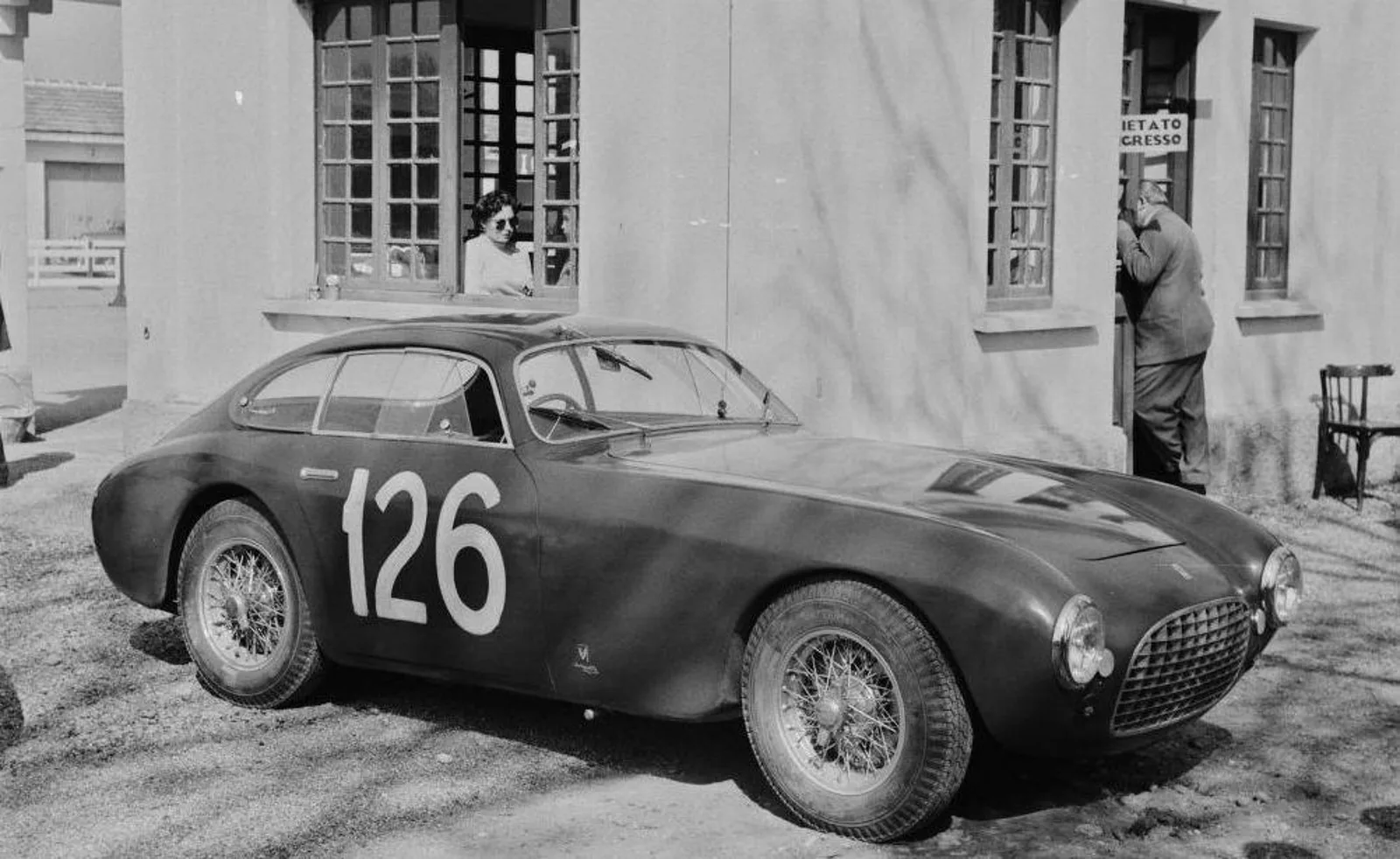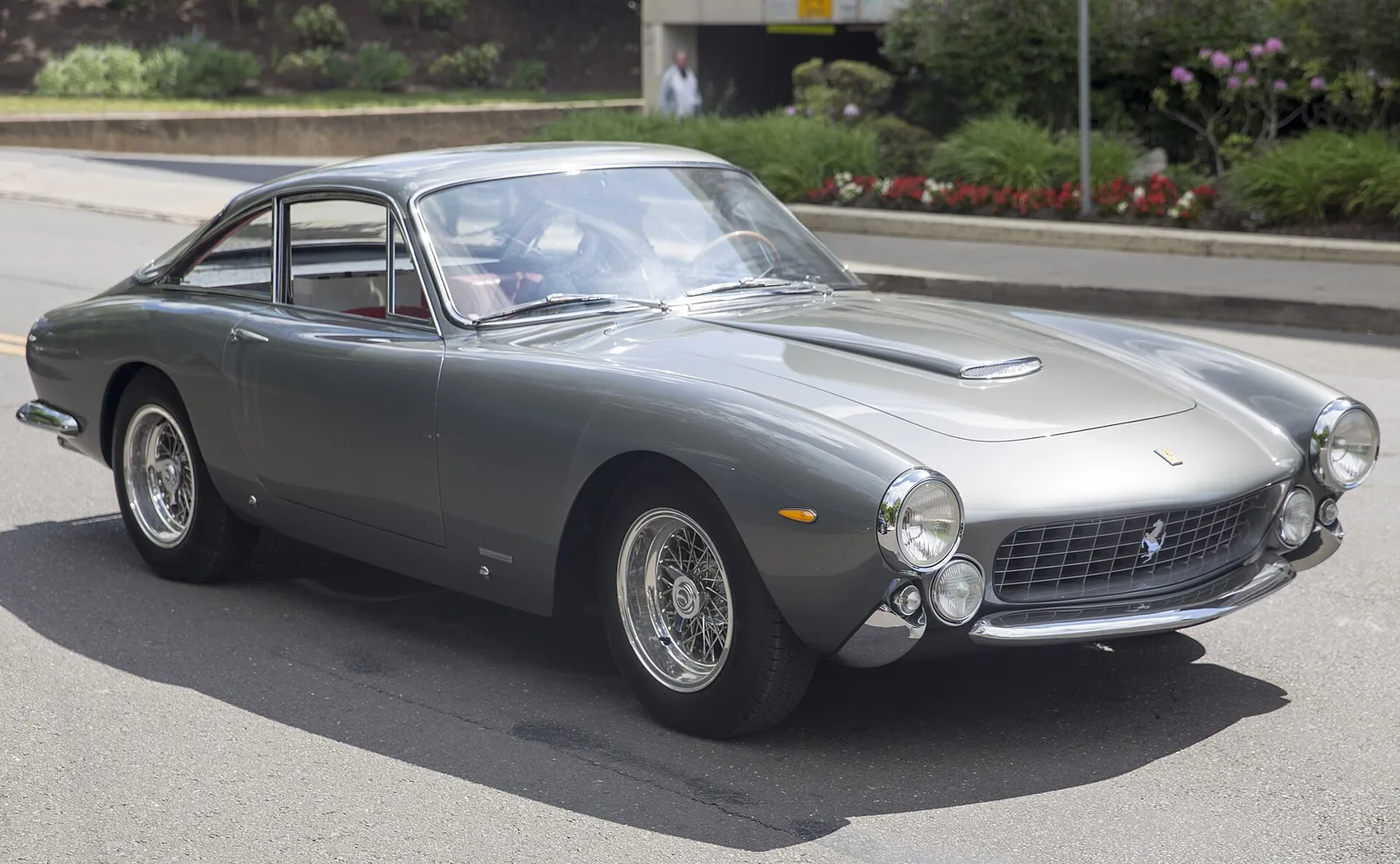
The 212 Inter won the Carrera Panamericana and opened the door to Pinin Farina, and eleven years on the Lusso became the quiet, elegant end of the 250 line.
The Ferrari 212 Inter was a 1951 road-going grand tourer with a 2.6-litre Colombo V12 and bodies by Vignale, Pinin Farina, Ghia and others. The 250 GT Lusso was a luxurious two-seat coupe built from 1962 to 1964, with 351 made and a 3.0-litre V12 giving 240 hp.
The Ferrari 212 Inter of 1951 won the Carrera Panamericana 1-2 and was the first Ferrari bodied by Pinin Farina, after he and Enzo Ferrari agreed to meet halfway between Maranello and Turin. The 250 GT Lusso of 1962 was the last of the 250 GT series, a quiet, elegant Pininfarina-designed two-seater built until August 1964.
What was the Ferrari 212 Inter?
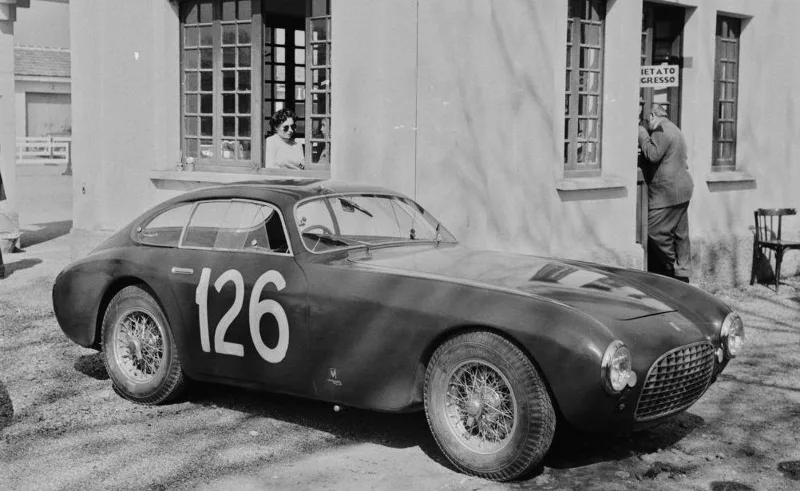
The Ferrari 212 Inter replaced the successful 166 and 195 Inter grand tourers in 1951. Brussels hosted its unveiling that year. Ferrari presented it as a development of the 166, a road car that was also capable of winning international races, and it proved the point at once. Two Vignale-bodied 212 Inter coupes took first and second in the 1951 Carrera Panamericana in Mexico, driven by Taruffi and Chinetti and by Ascari and Villoresi.
The chassis was similar to the 125's, with double wishbones at the front and a live axle at the rear. A wishbone suspension locates each front wheel with a pair of triangular arms, so the wheels move up and down independently, while a live axle ties both rear wheels to one rigid beam. Bodies came from Carrozzeria Touring, Ghia, Ghia-Aigle, Vignale and Stabilimenti Farina, and now from Pinin Farina too. Adding Pinin Farina was an important move, because he was already well known, and his styling skills were a tremendous boost for Maranello.
Pinin Farina and Enzo Ferrari were equally proud, so they met halfway between Maranello and Turin.
What engine did the Ferrari 212 Inter have, and how fast was it?
The Inter's wheelbase was 2,600 mm (102.4 in), four inches longer than the Export's 2,500 mm (98.4 in). The two models shared a larger, bored-out version of Ferrari's Colombo V12, with a 68 mm bore and a 2.6-litre capacity of 2563 cc. The Inter had a single Weber 36DCF carburettor and made 150 PS (110 kW; 148 hp), while the Export had three Webers and made 165 PS (121 kW; 163 hp). Improved cylinder heads added 5 PS (4 kW) in 1952.
The British magazine Autocar obtained what it called the first production Ferrari 212. It outperformed any car the magazine had tested before. It recorded a top speed of more than 187 km/h (116 mph), 0 to 97 km/h (60 mph) in 10.5 seconds and 161 km/h (100 mph) in 22.5 seconds. The testers had limited the engine to 6,500 rpm out of respect for how new and low-mileage the car was, so a fully run-in car should have gone better still. The test appears to have been the magazine team's first brush with a five-speed gearbox, too.
Who bodied the Ferrari 212 Inter?
Because Ferrari delivered chassis to coachbuilders, the 212 Inter came in many shapes. Vignale built the most, 37 in all variants, followed by Pinin Farina with 17 and Ghia with 15. Touring built six, Ghia-Aigle two, and Stabilimenti Farina and Abbott one each. The Vignale cars included five berlinettas, five cabriolets, 26 coupes and a single spyder. Pinin Farina built two cabriolets and 15 coupes. Ghia built one cabriolet, ten coupes and four 2+2 coupes, and Touring one barchetta and five berlinettas.
Which 212 Inters received the 2.7-litre engine?
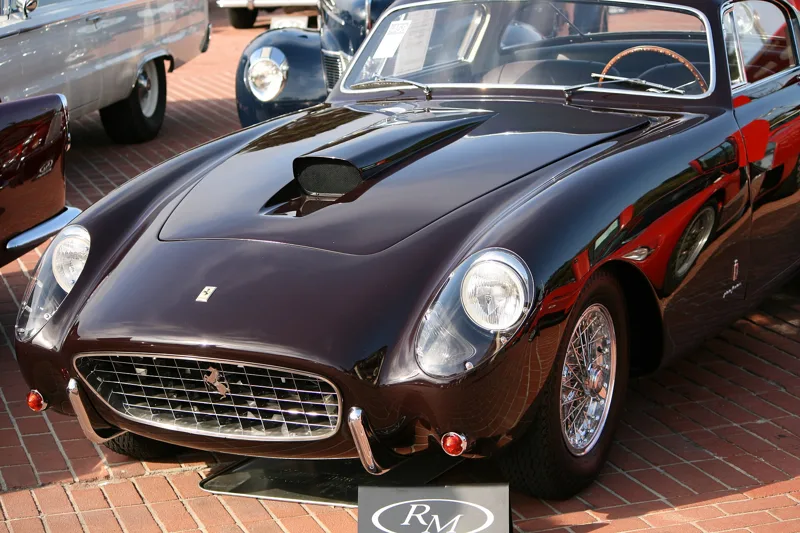
One 212 Inter, chassis number 0223EU, received the available 225 S engine, a 2.7-litre Colombo V12, in a long-wheelbase Europa-type chassis. The result was a unique car that would properly be called a 225 Inter or 225 Europa. This one-off of 1952 wore a coupe body built by Vignale to a design by Giovanni Michelotti.
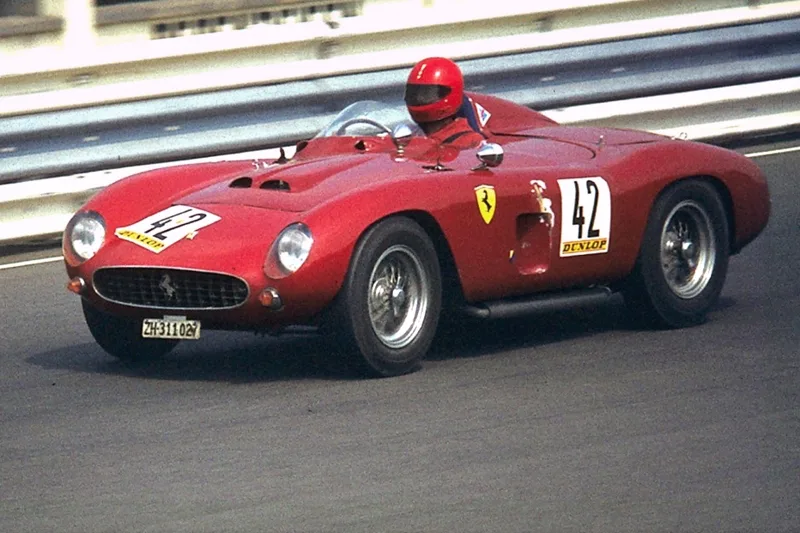
Another, chassis 0253EU, also had the three-carburettor 2.7-litre V12 and carried the last barchetta body by Carrozzeria Touring, built by their Superleggera method. Ford Motor Company bought it for Henry Ford II to study during the research that led to the Thunderbird, Ford's rival to the Corvette. Today it belongs to the Petersen Automotive Museum in Los Angeles.
What was the Ferrari 250 GT Lusso?
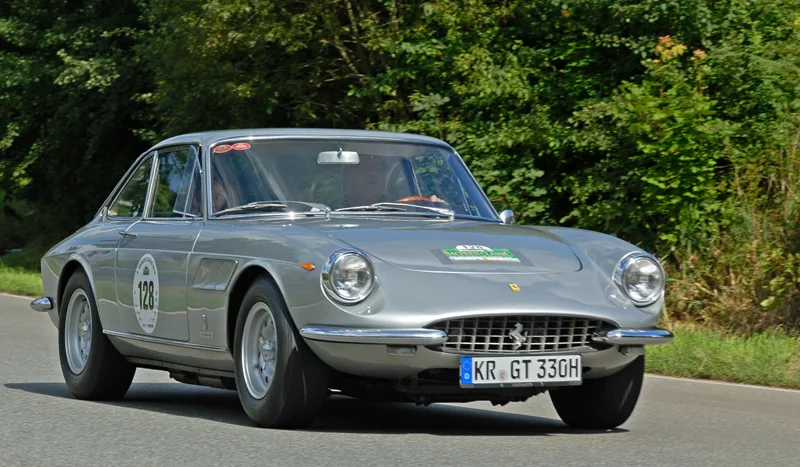
The Ferrari 250 GT Berlinetta Lusso, also called the GTL, GT/L or simply Lusso, was built from 1962 to 1964. It was larger and more luxurious than the 250 GT Berlinetta and was not meant for sports car racing. Following the practice of the time, Pininfarina designed it and Carrozzeria Scaglietti built the body. It stayed a two-seater, unlike the 250 GTE, although its interior was roomier than that of the 250 GT.
Ferrari showed the prototype at the 1962 Paris Motor Show. It was almost identical to the production car, which saw only minor changes. The Lusso filled a gap between the sporty 250 GT SWB and the luxurious 250 GTE 2+2, because enthusiasts in the 1960s had become as fond of comfortable, spacious cars as of radical sports ones. Ferrari did not skimp on details, and the weight, from 1,020 to 1,310 kg (2,250 to 2,890 lb) depending on equipment, shows it.
Production was unusually short for a Ferrari. It ran from 1962 until August 1964, a span often summed up as eighteen months. According to the long-time American Ferrari expert Peter Coltrin, construction must have started soon after the prototype appeared in Paris. Although it was not intended to compete, the Lusso made a few appearances in 1964 and 1965, including the Targa Florio and the Tour de France.
The Lusso was the final version of the 250 GT series. Ferrari built 351 before the 275 GTB replaced it, and the new name reflects a bigger engine displacement. The car was first sold for $13,375. Sales in 2021 and 2022 ran between $1.2 million and $2.1 million.
How was the Ferrari 250 GT Lusso styled?
Pininfarina borrowed aesthetic and aerodynamic ideas from the 250 GT and the 250 GTO. Many people regard the Lusso as one of the most beautiful Ferraris ever, and it drew notable owners such as Steve McQueen and Eric Clapton. Scaglietti made the steel body, with aluminium for the doors, boot lid and bonnet.
The Lusso was the first Ferrari with a small integrated spoiler at the tail, ending in an abrupt Kammback, a rear that is cut off square to keep the airflow clean. Its short tail also had a bezel sloping down to the back of the car. The glass area, including the rear window and the triangular quarter windows, gave good visibility. Four round headlights sat at the front, with exceptions such as an early London show car, chassis 4335GT, used by Battista Pininfarina himself, which had two covered headlights and a longer nose like earlier Ferraris. Other details were unique to the Lusso: the rectangular air vent on the bonnet, curved wings and chrome bumpers that were mostly decorative and sat vertically below the indicators.
What were the Lusso's interior and chassis like?
Placing the engine well forward made the cabin roomy, an unusual choice for a company known for sports cars with even weight distribution front to rear. Since it was a two-seater, the boot was fairly capacious, with a quilted leather parcel shelf. The seatbacks were fixed in position, so the car was described as recommended in preference to young and flexible passengers, but the pedals could be adjusted by 5 cm (2.0 in), as on the racing versions. The instrument panel, in soft black leather, was unusual. The tachometer, with its red zone beginning at 8,000 rpm, and the speedometer sat at the centre, tilted slightly towards the driver, while five more gauges sat in front of the driver behind an almost vertical three-spoke Nardi wheel in wood and aluminium.
The 250 GTE 2+2 had a wheelbase of 2.6 m (100 in), but the Lusso used the short 2.4 m (94 in) wheelbase of the 250 GT Berlinetta. Its chassis was adapted from the 250 GTO's tubular frame, using slimmer tubes. Author Brian Laban said it could brilliantly support comparison with its competitors. At the front were double wishbones and coil springs. The rear had a live axle on leaf springs with semi-elliptical concentric coil springs and telescopic shock absorbers. Hydraulic disc brakes sat on all four wheels behind polished aluminium Borrani wire wheels with knock-off hubs and 185VR15 Pirelli Cinturato CA67 tyres.
How fast was the Ferrari 250 GT Lusso, and what went wrong?
The Lusso used a Colombo-designed V12 of 2,953.21 cc (3.0 L), producing 240 hp (180 kW) at 7,500 rpm and 242 N m (178 lb ft) of torque at 5,500 rpm. It could reach 240 km/h (150 mph), which made it the fastest passenger car of its period, and needed only 7 to 8 seconds to go from 0 to 100 km/h (62 mph). Valves and crankshaft came from the 250 GT SWB engine, and pistons and cylinder block from the 250 GTE.
The engine was as civilised as the cabin. Each cylinder bank had a single overhead camshaft, with two valves per cylinder driven by chain, and three dual-barrel Weber 36 DCS carburettors, against the twin-cam heads and six carburettors of the high-performance models. It did have flaws. The V12 gave off heavy smoke under hard acceleration and vibrated at around 3,700 rpm, and that smoke angered Steve McQueen, who sold his Lusso in 1967 after repeated engine repairs. The gearbox also drew complaints for being too high geared.
What did the Lusso's end mean for Ferrari?
The Lusso was the last of the 250 line that began in 1952 with the 250 S. Its end in 1964 signalled a new generation of ever more luxurious, refined Ferraris, headed by the 275 and the 330. The car also marked the close of a strategy attributed to Enzo Ferrari, in which racing cars were sold to customers, so that racing could be competitive. Ferrari had become a fully functioning car maker that attracted important customers who were keen to fund its passion for racing.
How do the 212 Inter and 250 GT Lusso compare?
| 212 Inter | 250 GT Lusso | |
|---|---|---|
| Introduced | Brussels Motor Show, 1951 | Paris Motor Show, 1962 |
| Engine | 2563 cc Colombo V12, single Weber | 2,953.21 cc Colombo V12, three Webers |
| Power | 150 PS (110 kW) | 240 hp (180 kW) at 7,500 rpm |
| Wheelbase | 2,600 mm (102.4 in) | 2.4 m (94 in) |
| Quoted speed | More than 187 km/h (116 mph) in an Autocar test | 240 km/h (150 mph) |
| Bodies | Many coachbuilders | Pininfarina design, built by Scaglietti |