From the C5-R of 1999 to the C8.R, a team founded by General Motors and Pratt Miller built a record at Daytona, Sebring and Le Mans before the factory programme closed.
Corvette Racing began in 1999 as a partnership between GM and Pratt Miller and fielded successive Corvette race cars up to the C8.R, winning Le Mans nine times. The direct factory programme ended after 2023, when GM turned to customer teams with the Corvette Z06 GT3.R.
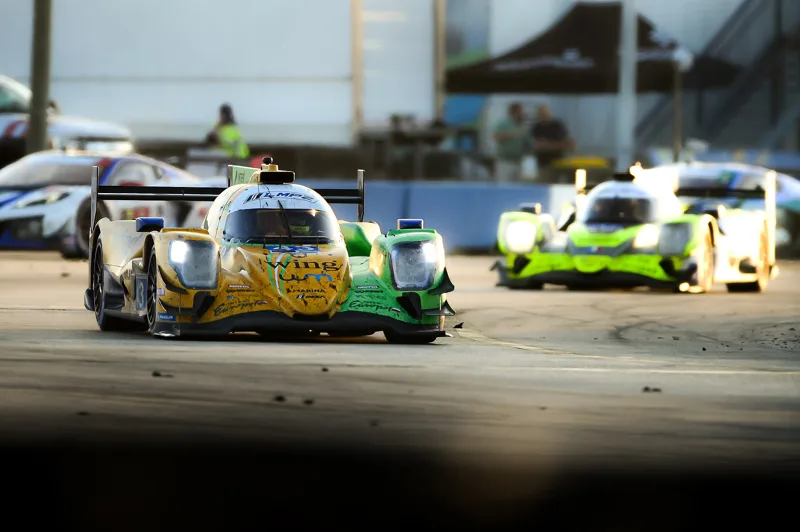
In 2015 Corvette Racing won at Daytona, Sebring and Le Mans in the same year, the endurance "triple crown". The yellow cars behind it came from a team founded in 1999 by General Motors and Pratt Miller, which ran four generations of Corvette before handing the racing over to customers with the Z06 GT3.R.
Why did General Motors start Corvette Racing?
GM wanted to prove what the fifth-generation Corvette could do, and to do it on the world stage at Le Mans as well as in North America. The company chose a production-based racer rather than a repeat of the old Corvette GTP, with Dodge and Porsche as the opposition.
The decision was a change of heart. GM had resisted approving factory support for Corvette racing, apart from some help for the IMSA GT Championship's Corvette GTPs, which ended competition in 1989. Those cars were Corvettes in name only. This time the company picked Pratt Miller of Michigan to build and develop the cars and to organise the team for a 1999 debut, while Riley & Scott ran a second team for a year. Because the rules limited the team to elements of production Corvettes, the engineers tested the engine and other equipment on heavily modified road car mules before the real chassis existed.
Yellow Corvettes won the Daytona, Sebring and Le Mans triple crown in 2015.
What made the C5-R different from the road car?
The C5-R kept only basic structural elements of the road car. Pratt Miller put a firewall right behind the driver's seat, which removed any view out of the back, added a large diffuser and wing at the rear and a splitter and bonnet vents at the front, and swapped the pop-up headlights for fixed units.
The first engine was a 6.0-litre (366 cu in) V8 based on the road car's LS1. Several months into 1999 it gave way to a 7.0-litre (427 cu in) unit, which stayed for the rest of the car's career. Katech Engine Development built them, keeping elements of the production LS1. Eleven chassis were made between 1998 and 2004, ten for Corvette Racing and one for a privateer, and a twelfth frame existed only to test ideas for the C6.R.
The car never stopped changing. In 1999 the bonnet lost its small slat vents in favour of a large open gap, so air could leave the front more freely. The third and fourth chassis, built in 2000, were three inches wider for better cornering grip. Later updates borrowed from the C6.R, including air conditioning for the drivers and a bumper camera feeding a cockpit monitor, which made up for the missing rear window.
How did the C5-R perform at Daytona and Le Mans?
It improved almost every season. At Daytona in 1999 the car of Ron Fellows, Chris Kneifel and John Paul Jr finished 18th overall, 34 laps behind the class winner. A year later it was second overall, a minute behind a factory Dodge Viper, with Justin Bell in the line-up. In 2001 the C5-Rs outlasted the prototypes and won the race outright.
The 2001 Daytona entry also featured Dale Earnhardt and Dale Earnhardt Jr, whose car finished fourth overall. Pratt Miller then ran its first full American Le Mans Series season and took six class victories, including a second Petit Le Mans win. At Le Mans the C5-R won for the first time, finishing eighth overall and 34 laps ahead of its nearest class rival.
Dominance followed. Corvette skipped Daytona in 2002 because of rule changes there, yet won nine of the ten ALMS events, the first Sebring class victory among them, and took a second Le Mans win. Only a new Prodrive Ferrari team beat it. In 2003 the Ferrari 550 GTS entries won the last four events, but Corvette still took its third championship by four points. The Ferraris did end the Le Mans run, in the 50th anniversary year of the Corvette. Prodrive stayed away from the ALMS in 2004, Corvette swept the season for a fourth straight title, and the team won a third class victory at Le Mans.
The C6.R replaced the C5-R at the start of 2005. Added up, the C5-R delivered 31 ALMS class wins, plus a trio of class victories at Le Mans and one outright win at Daytona.
Who bought customer C5-Rs?
The factory kept the car to itself until 2001, when Pratt Miller began talking to teams that wanted their own. British squad Atomic Kitten Racing planned to buy two new cars but no deal came, and the first customer sale did not happen until 2003.
That first buyer was Belgian Patrick Selleslagh, whose Selleslagh Racing Team ran in the Belcar championship. Its best result in the first season was a second place at Spa, and it also finished 18th overall at the Spa 24 Hours. In 2005 the car took control of Belcar, winning the title with five wins including the 24 Hours of Zolder, and the team later took a second place in the French FFSA GT series at Nogaro. American Tom Figge bought a former factory car for Pacific Coast Motorsports, reached the class podium once in seven ALMS races and left the series. GLPK-Carsport won at Imola and Zhuhai in the FIA GT Championship and finished fourth in the teams standings. PSI Experience won at Ledenon, with French singer David Hallyday in the driving squad. French Olympian Luc Alphand bought one of the last C5-Rs, took third in the Le Mans Series standings in 2006 and finished third in class at Le Mans behind a factory C6.R and an Aston Martin DBR9.
How did the C7.R carry the story on?
The C7.R raced from 2014 to 2019 in the GT Le Mans class of the IMSA series, replacing the C6.R and using the C7-generation Corvette as its base. It was first shown at the 2014 Detroit show, after a debut test at Laguna Seca in camouflage, and it later appeared at the 2016 Goodwood Festival of Speed.
Its first season was strong. Against a field of 12 cars over eleven races, the C7.R put together four successive wins mid-season, starting at Long Beach and Laguna Seca. Jan Magnussen and Antonio Garcia took the drivers' title on 125 points, ahead of the BMW pairing of Dirk Muller and Joey Hand, with the other Corvette crew of Oliver Gavin and Tommy Milner third.
The triple crown came in 2015. The C7.R won Daytona and Sebring with Magnussen, Ryan Briscoe and Garcia, then took the GTE-Pro class at Le Mans with Gavin, Milner and Jordan Taylor, Corvette Racing's eighth win at the circuit. After Sebring, neither Corvette finished better than third in the IMSA championship for the rest of the season.
The 2016 car got a new diffuser to meet the new Group GTE regulations. At Daytona the numbers 3 and 4 cars crossed the line .034 seconds apart in a photo finish, and the C7.R took a second Sebring win. Le Mans went badly, with the team qualifying last in GTE Pro and finishing seventh and tenth, but the number 4 car won the drivers', team and manufacturers' championships and the North American Endurance Cup. Lime Rock that season brought Corvette Racing its 100th win.
In 2017 the C7.R won at Sebring, COTA, Long Beach and VIR, and the number 3 car repeated the sweep of championships against twelve teams that included four Ford GT entries. In 2018 the number 3 Corvette took the team title without winning a race, edging the number 67 Ford GT by six points, and Garcia and Magnussen stood on the podium eight times in eleven races. The final year, 2019, brought no wins from an ageing platform. The number 3 car finished second three times and third three times, enough to tie the number 911 Porsche for second in the class.
How did the C8.R fare after 2020?
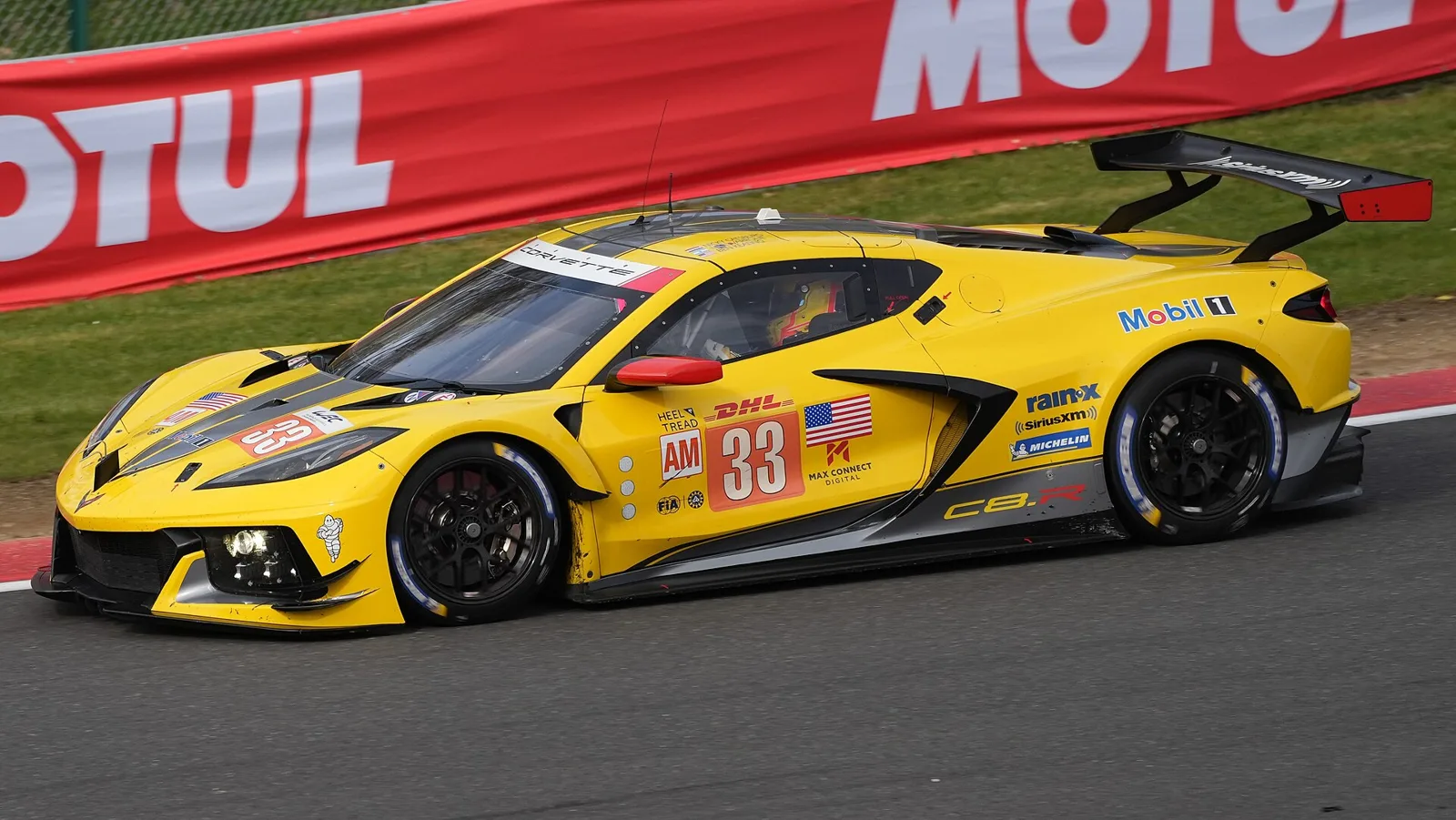
The C8.R took over from the C7.R, with the eighth-generation Corvette as its starting point. It was built to LM GTE specifications and went racing in the IMSA GTLM class from 2020. When GTLM disappeared after 2021, a GTD kit let it run on in the new GTD Pro class.
It made its debut at the 2020 24 Hours of Daytona, where the best car finished fourth in class and 16th overall after 785 laps, and the other ran last after multiple issues. The rest of the season brought six class wins, at tracks including Daytona, Sebring and Road America, and the championship for the number 3 car. Corvette also made its World Endurance Championship debut that year at Lone Star Le Mans, but had to withdraw from Le Mans itself because of the COVID-19 pandemic.
The C8.R won its class at Daytona in 2021 and at six other races, and on its Le Mans debut ran as runner-up in class, close to the winning Ferrari.
In 2022 the team entered a single car in IMSA, and its other car ran a full WEC season in GTE Pro for the first time. Daytona was a struggle with reliability and balance-of-performance trouble. The team bounced back to win at Sebring, but that was its only victory in IMSA, and it finished third in the final standings behind the Pfaff Motorsports Porsche and the Vasser-Sullivan Lexus. In the WEC it won at Monza and took seconds at Sebring and Bahrain, but Tommy Milner and Nick Tandy usually found AF Corse's Ferrari and the Porsche factory team quicker, and the pair finished tied for sixth.
In 2023 Jordan Taylor and Antonio Garcia drove the full GTD Pro season, with Tommy Milner joining them for the endurance rounds. Because the WEC dropped GTE-Pro, the other squad moved to GTE-Am, with Nicky Catsburg, Ben Keating and Nicolas Varrone winning the class at the Le Mans Centenary race. At Monza on 9 July 2023 Corvette Racing clinched the WEC's GTE Am title with two races still to run.
How do the Corvette race cars compare?
| Car | Years | Road car base | Main series | Headline results |
|---|---|---|---|---|
| C5-R | 1999-2004 for the factory team | C5 generation | American Le Mans Series | 31 ALMS class wins, three Le Mans class wins, one overall Daytona win |
| C7.R | 2014-2019 | C7 generation | IMSA GTLM | 2015 Le Mans win and triple crown, 2016 and 2017 title sweeps |
| C8.R | From 2020 | C8 generation | IMSA GTLM, then GTD Pro, and the WEC | 2020 IMSA title, 2023 GTE Am win at Le Mans and WEC class title |
| Z06 GT3.R | From 2024 | Corvette Z06 | Customer teams | Introduced as GM moved to customers |
What happened to the factory team after 2023?
The factory side of Corvette Racing wound up after the 2023 season, as General Motors shifted its attention to customer teams running the new Chevrolet Corvette Z06 GT3.R. The Z06 GT3.R did not debut until 2024, which is why the C8.R had to run on with a GTD kit in the meantime.
From 2024 the team raced in the IMSA SportsCar Championship as Corvette Racing by Pratt Miller Motorsports. In the World Endurance Championship it backs TF Sport, a team that swapped Aston Martin for Corvette in 2024. GM gives both entries only limited factory support.
What is Corvette Racing's record?
Across all its generations, Corvette Racing has taken one championship in the World Endurance Championship, five in the IMSA SportsCar Championship and ten in the American Le Mans Series. Its race wins include nine at Le Mans, where it made its official debut in 2000, four at the 24 Hours of Daytona, 11 at the 12 Hours of Sebring and eight at Petit Le Mans.